



Mexico Luxury Travel
Tailor-made trips between Mayan culture, colonial cities, and two oceans.
WHY YOU SHOULD TRAVEL TO MEXICO
Mexico is about five and a half times the size of Germany — and most travelers only see a single beach. Yet between the Caribbean and the Pacific lies a country that takes you through three millennia in a week: Mayan pyramids in the jungle, baroque cities in the highlands, a megacity at 2,240 meters with restaurants among the best in the world (World's 50 Best 2025) and a desert peninsula where humpback whales appear every winter.
We want to take you on a journey that shows you the true Mexico and its diversity and takes you to our favorite places. Perhaps you live in Roma Norte and stroll through streets filled with galleries and mezcalerías in the evenings. Perhaps you jump into a hidden cenote. Perhaps you sit in a boat off Los Cabos waiting for the humpback whales.
What makes Mexico special to us
Hardly any other country connects so much culture, nature, and gastronomy and welcomes every traveler in its own unique way. Mexico is an incredibly exciting country with countless facets, and it’s incredibly fun to embark on a discovery journey here.
For me, Mexico is an absolute way of life. When you stroll between the colorful houses in the neighborhoods of Mexico City and the music from the taquerias plays, you can’t help but feel great.
Along with amazing food, two stunning coastlines, historically rich places, picture-perfect landscapes, and incredibly warm and hospitable people.
— Luca
Mexico is complex because there is just so much to see and discover, and often time is simply not enough. That’s why we take you directly to our favorite spots so you don’t waste time. And rest assured, your first trip to Mexico is rarely your only one.
Details
Best Travel Time
November to April
Flight Time
approx. 12h from Frankfurt a. M.
Recommended Travel Duration
from 14 days


Our Mexico Tours
From Mexico City, to the whales in Baja California and the Maya sites in Yucatan. We take you to Oaxaca for Dia de los Muertos or on hikes through the landscapes of Mexico. Let yourself be inspired by our sample trips and travel to Mexico with us.

Hotels & Lodges in Mexico
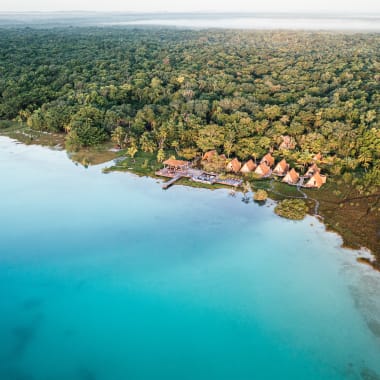
Haciendas, lagoon villas, and design houses by the Pacific




No problem! Just get in touch with us, we can definitely make your dream trip a reality.
Regions in Mexico

Chiapas
Palenque (UNESCO World Heritage since 1987), Yaxchilán on the border river Usumacinta, around 59 lakes near Montebello and Tzotzil communities at 2,200 meters: Chiapas is the region of Mexico where jungle, Maya culture and the present are most closely intertwined — five days, with a driver, without crowding.

Baja California
Humpback whales off Los Cabos from December to April, sea lions at the UNESCO island Espíritu Santo (2005), the coral reef of Cabo Pulmo, and the mission oases along Highway 1 — plus 1,500 kilometers north is the Valle de Guadalupe, where about 70 percent of Mexican wine is produced.

Jalisco & Pacific Coast
Tequila with its UNESCO Agave landscape (2006), Mexico's largest lake at Ajijic, humpback whales from December to March off Puerto Vallarta, and a 4,260-meter high volcano: Jalisco combines the origin of Tequila and Mariachi with a Pacific coast without crowds. Four days minimum, two airports.

San Miguel de Allende & Querétaro
San Miguel de Allende — Travel + Leisure's best city in the world 2025 and UNESCO World Heritage since 2008, one hour from the aqueduct of Querétaro, the wineries around Bernal and the five Baroque missions of the Sierra Gorda. Colonial highlands at 1,900 meters, without mass tourism.

Puebla & Magical Towns
Puebla — Baroque city and UNESCO World Heritage site since 1987, two hours from Mexico City: the largest pyramid in the world in Cholula, Talavera workshops since 1824, and three Magical Towns amidst volcanic views, flower fields, and cloud forests.


Mexico City
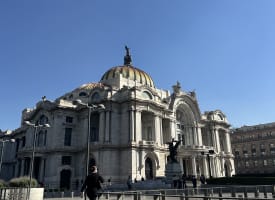
Mexico City — 22 million people at 2,240 meters, the historic center and Xochimilco since 1987 UNESCO World Heritage and with Quintonil the third best restaurant in the world (World’s 50 Best 2025). Those living in Polanco, La Condesa, or Roma Norte experience the megacity in a relaxed manner.
Riviera Maya & Caribbean Coast
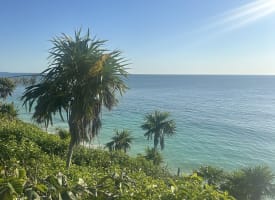
Tulum, Bacalar, Holbox, and Cozumel — the quiet side of the Mexican Caribbean: Maya ruins above the sea, a lagoon in seven shades of blue, whale sharks from May to September, and the second largest barrier reef in the world. Four days minimum, completely without a hotel zone.
5 Reasons to Travel to Mexico
1. Three millennia of culture — 36 World Heritage Sites. Mexico has 36 UNESCO World Heritage Sites, more than any other country in the Americas (UNESCO World Heritage List, as of 2025). Teotihuacán, Chichén Itzá, Palenque, and Monte Albán are on the list, as well as entire old towns: Mexico City, Puebla, and Oaxaca since 1987, Querétaro since 1996, San Miguel de Allende since 2008. Spending a week in the highlands, you pass through a different era every day — and stand in Teotihuacán before pyramids that were already ruins when the Aztecs found them.
2. A cuisine of world renown — and a UNESCO heritage. Traditional Mexican cuisine has been an Intangible UNESCO Heritage since 2010. Quintonil in Mexico City was ranked 3rd in the World's 50 Best Restaurants in 2025, Pujol and Quintonil have two stars each in the Michelin Guide Mexico 2026, and Oaxaca — the city of seven moles — has 26 establishments in the same guide. And mezcal from Oaxaca, tequila from Jalisco, cochinita pibil from Yucatán. Hardly anywhere else do you eat so well.
3. Cenotes, reefs, and whales — nature across two oceans. More than 6,000 cenotes perforate the Yucatán Peninsula, off Cozumel lies the Mesoamerican Reef — the second-largest barrier reef in the world (WWF) — and every winter off the Pacific side, humpback whales appear near Los Cabos, Puerto Vallarta, and the Oaxacan coast. Jacques Cousteau referred to the Gulf of California as the “Aquarium of the World.” With gray whales, blue whales, whale sharks, and sea lions, Baja California has a wildlife calendar with hardly any gaps from October to April.
4. Colonial cities experienced on foot. San Miguel de Allende was voted the best city in the world for the second consecutive year in 2025 by readers of Travel + Leisure (World's Best Awards), Mérida has been regarded as the best small city in the world since the Condé Nast Traveler Readers' Choice Awards 2019, and Puebla preserves the first public library in the Americas (1646) in the Biblioteca Palafoxiana. In addition, there are 177 Pueblos Mágicos (SECTUR, 2026) — small towns like Tequila, Valladolid, or Cuetzalan that the Mexican state promotes deliberately.
5. Luxury that suits the place. Mexico has hotels that rank high on global lists — for example, Rosewood Mayakoba with Forbes Five-Star 2026 and Travel + Leisure World's Best 2026 — and they are not located in hotel zones. Haciendas from the Henequén era in Mérida, villas amid mangroves in Mayakoba, cliffside houses overlooking the Pacific in Nayarit, solar villas without air conditioning near Puerto Escondido. We know these houses personally, and we know which neighborhoods in Mexico City allow for a relaxed evening walk to a restaurant.
Mexico Overview — Our Regions
Nine regions form the framework of our Mexico trips. They are far apart — more than 2,500 kilometers in straight line from Valle de Guadalupe in the north to Palenque in the south — and that’s why we usually combine two to three of them and connect them via domestic flights. We consciously omit Cancún, Playa del Carmen, and the hotel zones of the Caribbean; those who want to experience the Caribbean quietly will find it in Tulum, Bacalar, and Holbox.
Mexico City — Neighborhoods, Museums, and Pyramids
22 million people, 2,240 meters high, UNESCO World Heritage since 1987 — and yet a city that you can experience comfortably in the right neighborhoods. We stay in Polanco, La Condesa, or Roma Norte: Polanco for star-rated restaurants and the Museo Soumaya, La Condesa for art deco avenues around Parque México, Roma Norte for galleries, bars, and the bohemian vibe. From there: the Museo Nacional de Antropología, Frida Kahlo's Blue House in Coyoacán, the pyramids of Teotihuacán, and the canals of Xochimilco. Three days is the minimum. More about Mexico City

Puebla & Pueblos Mágicos — Baroque and Volcano Views
Two hours east of the capital lies Puebla, a baroque city and UNESCO World Heritage since 1987, with Talavera workshops since 1824 and the golden Capilla del Rosario. In Cholula stands the largest pyramid in the world by volume (Guinness World Records) — topped with a church and the Popocatépetl in the background. Atlixco, the flower city, and Cuetzalan in the cloud forest of Sierra Norte are Pueblos Mágicos that show why the program was invented in 2001. Two to three days, ideal as a bridge between Mexico City and Oaxaca. More about Puebla

San Miguel de Allende & Querétaro — Art, Wine, and Missions
San Miguel de Allende is the best city in the world — say the readers of Travel + Leisure (2025) — and has been a UNESCO World Heritage site since 2008: the pink Parroquia, rooftops over tiled roofs, galleries in the Fábrica La Aurora. An hour away begins the wine route of Querétaro with the monolith of Bernal and the wineries around Tequisquiapan; three hours further lie the five Franciscan missions of the Sierra Gorda (UNESCO 2003) in a biosphere reserve with 333 bird species. Highlands at 1,900 meters, cool nights, and plenty of light. More about San Miguel de Allende

Oaxaca — seven moles, mezcal, and a coast without hotel zones
Oaxaca City (UNESCO 1987) is the culinary capital of the country: seven moles, the Pasillo de Humo in the Mercado 20 de Noviembre, 26 houses in the Michelin Guide 2026, and more than 80 percent of Mexican mezcal comes from the valleys around it. Additionally, Monte Albán above the city, the petrified waterfalls of Hierve el Agua — and 200 kilometers of Pacific coast: surf beaches and bioluminescence near Puerto Escondido, nine bays and a national park near Huatulco, humpback whales from December to March. Since 2024, a highway connects the city and coast in just over three hours. More about Oaxaca

Yucatán — Mayan Culture, Haciendas, and Cenotes
The cultural peninsula: Chichén Itzá (UNESCO 1988, 2025 the most visited site in Mexico according to INAH), Ek Balam with its climbable acropolis, the white city of Mérida, and Valladolid as the gateway to the most beautiful cenotes. Restored Henequén haciendas like Chablé Yucatán are the accommodations here, not resorts. According to the Mexico Peace Index 2026, Yucatán is the most peaceful state in the country for the ninth consecutive year — with good reason, the region we first recommend to first-time visitors. Three to four days, best with a driver. More about Yucatán

Riviera Maya & Caribbean Coast — Tulum, Bacalar, Holbox, Cozumel
The quiet side of the Caribbean: Tulum's ruins above the sea, the Sian Ka'an biosphere reserve (UNESCO 1987), the lagoon of seven colors in Bacalar, the car-free island of Holbox with whale sharks from mid-May to mid-September, and the Mesoamerican Reef off Cozumel. You will stay in Mayakoba — Banyan Tree, Rosewood, and Alila share a lagoon landscape there — or in Tulum. Four days minimum; nonstop flights from Frankfurt to CUN take about twelve hours. More about the Riviera Maya
Chiapas — Palenque, Highlands, and Silent Lakes
Palenque (UNESCO 1987) at eight in the morning when the fog still hangs between the temples; Yaxchilán, reachable only by boat across the border river Usumacinta; San Cristóbal de las Casas at 2,200 meters with the Tzotzil villages of Chamula and Zinacantán; the Cascadas de Agua Azul and around 59 lakes at Montebello. Chiapas is the region where jungle, Mayan culture, and indigenous presence come together the most densely. More about Chiapas
Jalisco & Pacific Coast — Tequila, Chapala, and Puerto Vallarta
The origin of tequila and mariachi: the UNESCO agave landscape around the Pueblo Mágico Tequila (2006), Mexico's largest lake near Ajijic, and crafts in Tlaquepaque. On the coast, Puerto Vallarta — ranked 2nd in the Best Small Cities in the World (Condé Nast Traveler Readers' Choice Awards 2025) — with humpback whales from December to March, the Islas Marietas, and the Riviera Nayarit where One&Only Mandarina is perched on the cliffs. More about Jalisco
Baja California — Whales, Desert, and Wine
From Los Cabos to San Ignacio: humpback whales off the southern tip from December 15 to April 30 (season according to SEMARNAT), gray whales that come to the boat in Laguna San Ignacio, blue whales off Loreto, whale sharks and sea lions around La Paz and Isla Espíritu Santo (UNESCO 2005), the reef of Cabo Pulmo, the mission oases along Highway 1. About 1,500 kilometers north lies Valle de Guadalupe, where about 70 percent of Mexican wine is produced — with the Banyan Tree Veya as the address amidst the vines. More about Baja California
Note — Travel Advisories from the Federal Foreign Office
The Federal Foreign Office (as of 05.09.2026) currently advises against traveling to parts of Jalisco outside Puerto Vallarta and the metropolitan area around GDL airport as well as in the border area of Chiapas to Guatemala — the federal highway 307 from Palenque to Yaxchilán is expressly excluded. For the other regions on this page, the office does not issue any travel warnings. We reassess the situation with each planning and adjust routes accordingly. You can read the classification in our article Safety in Mexico and directly at the Federal Foreign Office .
When to Travel to Mexico
The short answer: November to April. During these months, it is dry across the country, the highlands have clear days at 20 to 26 degrees and cool nights, the Caribbean is around 24 to 28 degrees during the day, and whales migrate off Baja California and the Pacific coast. The rainy season from May to October brings afternoon showers, hurricanes in the Caribbean from June to November (peak from August to October) and sargassum on the beaches — but empty sites and lower prices. In Yucatán, it gets hottest in April and May with up to 40 degrees, while the highlands remain pleasant even then.
The months by region — this is how we also assess them on the regional pages:
| Region | Best Time | Good | Possible (Rainy Season) |
|---|---|---|---|
| Mexico City | Nov–Mar | Apr, Oct | May–Sep |
| Puebla & Pueblos Mágicos | Nov–Mar | Apr, Aug–Oct | May–Jul |
| San Miguel de Allende & Querétaro | Feb–Apr, Oct–Nov | Dec–Jan, May | Jun–Sep |
| Oaxaca | Nov–Mar | Apr, Jul, Oct | May–Jun, Aug–Sep |
| Yucatán | Nov–Mar | Apr, Oct | May–Sep |
| Riviera Maya & Caribbean Coast | Nov–Apr | May–Aug | Sep–Oct |
| Chiapas | Nov–Mar | Apr | May–Oct |
| Jalisco & Pacific Coast | Nov–Mar | Apr–May, Oct | Jun–Sep |
| Baja California | Nov–Mar | Apr–May, Oct | Jun–Sep |
Festivals that shape a trip: Día de Muertos (October 31 to November 2) in Oaxaca and Mexico City — hotels in downtown Oaxaca are fully booked from mid-August. The Guelaguetza in Oaxaca (2026 on July 20 and 27). The Jacaranda bloom in Mexico City from February to April with a peak in March. The Chiles en Nogada season in Puebla from July to mid-September. And the Semana Santa (2027: March 21 to 28), when the whole country is on the move. Detailed, month by month: Best Travel Time Mexico .
Insider Tip
November and early December — the window between the rainy season and the Christmas season. The landscape is still green, Agua Azul in Chiapas turns turquoise again, the whale seasons off Puerto Vallarta and Los Cabos begin, and prices are significantly lower than during the high season from mid-December.
Staying in Mexico
The best thing about Mexico's hotel landscape: it is as diverse as the country. We work with four categories — and with properties we know personally.
Haciendas and colonial houses. In Yucatán, the sisal haciendas of the 19th century became the most beautiful hotels on the peninsula. Chablé Yucatán near Mérida is the benchmark: casitas with private pool, a spa at your own cenote, the restaurant Ixi'im in the old machine hall (from 695 € per night per person). In Oaxaca, Puebla, San Miguel de Allende, and San Cristóbal, you stay in colonial palaces with courtyards — 20 to 40 rooms, based on our experience starting at around 150 € per night.
Villas in the lagoon — Mayakoba. Between mangroves, canals, and a Blue Flag beach on the Riviera Maya, three properties share a lagoon landscape: Banyan Tree Mayakoba with 163 pool villas (from 550 €), Rosewood Mayakoba with Forbes Five-Star award 2026 (from 495 €) and the newly opened in February 2026 Alila Mayakoba (from 500 €) — all prices per night per person. Our standard for the Caribbean without a hotel zone.
Design on the Pacific. Grupo Habita has built two properties before Puerto Escondido that are unlike anything else: Hotel Escondido — 16 bungalows with palapa roofs and private pools, adults only — and Hotel Terrestre by Alberto Kalach, 14 brick villas, completely solar-powered, without air conditioning (both from 280 € per night per person). On the Riviera Nayarit stands One&Only Mandarina with 105 villas and treehouses on the cliffs above the sea (from 520 €).
Resorts at the southern tip of Baja. One&Only Palmilla in San José del Cabo is located on one of the few swimmable beaches in Los Cabos — Blue Flag, 27 holes of golf (from 850 € per night per person). Amanvari at the East Cape is Mexico's Aman house: 18 casitas with private pools, one hour from SJD airport (price on request). In the north, the Banyan Tree Veya in Valle de Guadalupe complements the wine route with 30 villas and its own winery (opening in July 2024).
Insider Tip
Booking lead time. For Christmas, New Year, and Easter week, the best villas in Mayakoba, Los Cabos, and near Mérida are often booked a year in advance; for Día de Muertos in Oaxaca, mid-August is the last chance. For the rest of the dry season, we recommend four to six months lead time — then we still have a choice in room location and view.
Discover Mexico
Culture — Pyramids, Baroque and Murals
Teotihuacán (UNESCO 1987) at the gates of the capital, Chichén Itzá (1988) in Yucatán, Palenque (1987) in the Chiapas jungle, Monte Albán (1987) above Oaxaca — the four major sites are located in four regions and represent three cultures: Teotihuacán, Maya, and Zapotecs. Additionally, Baroque in Puebla and Querétaro, the murals of Rivera and Orozco in the Palacio de Bellas Artes, Frida Kahlo's Blue House, Talavera ceramics (UNESCO 2019), and the Voladores of Cuetzalan (UNESCO 2009). Our advice for all sites: at eight in the morning when they open — a good hour before the buses.
Entrance Fees 2026
- INAH Sites Category I — 210 MXN (about 11 EUR): Teotihuacán, Museo Nacional de Antropología, Monte Albán, Palenque, Cholula
- Chichén Itzá — 697 MXN (about 36 EUR), federal and local share at the cash register in one transaction
- Tulum — about 515 MXN (about 26 EUR) including Parque del Jaguar; the rate is regularly adjusted
- Opening Hours — usually 08:00–17:00, last admission 16:00–16:30
- Sunday — free admission only for Mexicans and residents. Prices as of September 2026. 1 EUR ≈ 19.6 MXN.
Nature — from the desert to the cloud forest
Cenotes in Yucatán, where you swim between root curtains. The reef of Cabo Pulmo, whose biomass has recovered by 463 percent between 1999 and 2009 (PLOS ONE 2011) — a textbook example of what a protected area can achieve. The Lacandon Forest of Chiapas, where the Montes Azules Biosphere Reserve harbors a fifth of Mexico's biodiversity on 0.16 percent of its land area (CONANP). The Sierra Gorda with its 333 bird species, the Nevado de Colima at 4,260 meters, the limestone walls of the Cañón del Sumidero, the bioluminescence of Laguna Manialtepec, the lagoon of Bacalar. And the Valle de Guadalupe, where desert meets vineyards. Those seeking nature do not have to choose in Mexico — just combine.
Culinary — Street Food, Moles, and Two Stars
The rule that distinguishes connoisseurs from tourists: tacos al pastor are eaten in the evening at the stand, fine dining is reserved weeks in advance. Quintonil (ranked 3 in the World's 50 Best 2025) and Pujol each holds two stars in the Michelin Guide Mexico 2026, Rosetta in Roma Norte one; a tasting menu costs 3,600 to 5,000 MXN (about 185 to 255 EUR). In Oaxaca, Levadura de Olla and Los Danzantes each have one star, in Mérida, Huniik is ranked 32 on Latin America's 50 Best 2025. In between: Tlayudas at Pasillo de Humo, Cochinita Pibil from the earthen oven, Chiles en Nogada in Puebla, Birria in Jalisco — and Mezcal, Tequila, and wine from Valle de Guadalupe.
Whales, Whale Sharks, and Sea Lions — the Calendar
Mexico's Pacific coast and the Gulf of California have an animal calendar that leaves little room from October to April — and the Caribbean features whale sharks in summer. The seasons are set yearly by the environmental authority SEMARNAT; the data apply for 2025/26.
| Species | Region | Season | Note |
|---|---|---|---|
| Humpback Whales | Los Cabos (Baja California) | December 15 to April 30 | Peak January–February, maximum four boats per whale group |
| Humpback Whales | Puerto Vallarta (Jalisco) | December to March (2025/26: December 8–March 23) | best months January and February |
| Humpback Whales | Puerto Escondido, Huatulco (Oaxaca) | December to March | Tours from Puerto Escondido and Santa Cruz de Huatulco |
| Gray Whales | Laguna San Ignacio (Baja California) | Tours January 20 to April 5 | best time February–March, calves come to the boat |
| Blue Whales | Loreto (Baja California) | January to March | the largest animal on earth, tours from Loreto |
| Whale Sharks | La Paz (Baja California) | October to April | Snorkeling in small groups |
| Whale Sharks | Holbox (Riviera Maya) | mid-May to mid-September | peak July and August |
| Sea Lions | Los Islotes, Espíritu Santo (La Paz) | year-round | Swimming prohibition June 1 to August 31 (breeding) |
| Olive Ridley Sea Turtles | Playa Escobilla (Oaxaca) | May to February | mass nesting mainly September–November |
Insider Tip
Gray Whales in Laguna San Ignacio — mothers push their calves up to the boats; the lagoon has been part of the UNESCO Whale Sanctuary El Vizcaíno since 1993. Two overnight stays at the camp at the lagoon are the detour that makes a Baja trip the trip of a lifetime. Tours 2026 from January 20 to April 5, 1,350 MXN (about 69 EUR) per person. More on this in our region Baja California .
Travel Guide Mexico
For detailed planning, we have outsourced the most important topics into their own articles — honest, up to date as of 2026, and based on our travel experiences:
- Best Travel Time Mexico — dry and rainy season, hurricane season, whale calendar, and a monthly table for all nine regions
- Flight to Mexico — nonstop connections from Frankfurt, layovers in the USA, domestic flights, and the airports by region
- Entry to Mexico — visa-free for up to 180 days, passport, digital entry at the airport, customs allowances
- Safety in Mexico — the honest assessment: safe regions and neighborhoods, specific rules, the Foreign Office
- Packing List Mexico — climate zones from 0 to 4,000 meters, cenote rules for sunscreen, adapter type A/B with 127 volts
- Mexico Vaccinations & Health — recommended vaccinations, altitude, mosquito protection, water, and travel health insurance
Further Inspiration
Want to dive deeper? Our travel guide Explore Mexico consolidates all articles that provide facts about the country and the questions we receive most often. Three combinations have proven effective as an introduction: Mexico City with Puebla and Oaxaca for culture and cuisine, Yucatán with the Riviera Maya for Mayan sites, cenotes, and the Caribbean, Mexico City with Baja California for museums and whales. Each can be extended — to Chiapas , San Miguel de Allende or along the Pacific coast of Jalisco .
And if you already know you want to go: Send us your inquiry — we will get back to you within one business day with a first itinerary proposal, tailored to travel time, interests, and pace. We know these regions personally and understand which order, which hotel, and which driver can make a good trip to Mexico special.
Travel and Safety Information
For all other questions, we are happy to assist you.
- Best Travel Time Mexico: Climate & Regions Overview (2026)
- Flight to Mexico: Direct Flights, Airports & Tips
- Entry to Mexico: Visa, FMM & Entry Regulations
- Safety in Mexico: What Travelers Really Need to Know
- Packing List Mexico: What to Bring
- Mexico Vaccinations & Health — What You Really Need (2026)
- Foreign Office: Travel and Safety Information Mexico
- Speaks languages: German, English, Spanish
- Phone number: +49 211 975 333 235
- Email address: luca@takememories.com
What makes us special
With us you always come first!
Frequently Asked Questions
On the routes of this site: yes, with normal caution. According to the Mexico Peace Index 2026, Yucatán is the country's most peaceful state for the ninth consecutive year, and for Yucatán, Mexico City, Oaxaca, Puebla, San Miguel de Allende, and Baja California Sur, the Foreign Office (as of 05.09.2026) does not issue any travel warning. Our rules: hotels in Polanco, La Condesa, or Roma Norte, rides with Uber or DiDi instead of street taxis, daytime overland trips with a driver, valuables in the safe. Everything else in Safety in Mexico .
At least 14 days. Mexico is about five and a half times larger than Germany, and each region takes its time: three days Mexico City , three to four days Yucatán , four days Oaxaca or Riviera Maya , five days Chiapas , seven days Baja California . Two to three regions in two weeks is a good measure; those who have three weeks can combine highland, coast, and peninsula without rushing.
November to April: dry across the country, clear days in the highlands, pleasant 24 to 28 degrees in the Caribbean, and whale season along the Pacific coast and off Baja California. The rainy season from May to October brings afternoon showers, the hurricane season (June to November) in the Caribbean, and sargassum — resulting in empty sites and lower prices. In Yucatán, it is the hottest in April and May with temperatures up to 40 degrees. Month by month: Best Travel Time Mexico .
Three classics: Mexico City with Puebla and Oaxaca — culture, cuisine, and mezcal, all connected by road or with a short flight. Yucatán with the Riviera Maya — Mayan sites, cenotes, and the Caribbean from airport CUN. And Mexico City with Baja California — museums, Michelin-starred restaurants, and whales. Chiapas connects to Yucatán, San Miguel de Allende connects to the capital.
No. German, Austrian, and Swiss citizens can enter visa-free for tourism for up to 180 days; the actual duration of stay is determined by immigration authorities upon entry — check the stamp or entry while still at the counter. The passport must be valid for at least six months upon entry; an identity card is not sufficient. The earlier FMM form is no longer required for air travel; those flying through the USA also need an ESTA. Details in Entry to Mexico .
By domestic flight with Aeroméxico, Volaris, or Viva — Mexico City is the hub, and most destinations are one to two flight hours away. Within a region, a driver will take you: during the day, on toll roads, with stops wherever you want. In Yucatán, the Tren Maya complements the route between CUN, Tulum, and Mérida. We only recommend rental cars in Yucatán and Baja California Sur. All airports and transfers by region: Flight to Mexico .
That depends on the hotel category. Our properties range from 280 € ( Hotel Terrestre , Oaxaca) to 850 € ( One&Only Palmilla , Los Cabos) per night per person; colonial houses in the cities starting from about 150 €. On site: entrance fees at INAH sites 210 MXN, Chichén Itzá 697 MXN, a two-star tasting menu 3,600 to 5,000 MXN, a driver around 3,500 MXN per day. Prices as of September 2026, 1 EUR ≈ 19.6 MXN.
Very well — if the route is right. Cenotes, the ruins of Tulum, trajineras in Xochimilco, whale sharks off Holbox, humpback whales off Los Cabos, and villas with private pools in Mayakoba or a hacienda near Mérida delight all ages; the Islas Marietas are accessible for 10 to 64-year-olds. We plan shorter travel distances, pool days between excursions, and hotels with kids clubs. There are no mandatory vaccinations; the country is malaria-free except for parts of Chiapas. More in Mexico Vaccinations & Health .
You might also like this

Colombia Safety: What really is true — and what is not
"Colombia? Isn't it dangerous?" — This question is guaranteed to come up when you tell family or friends about your travel plans. The images in their heads come from Narcos series and headlines from the 1990s. But the Colombia of 2026 has as much to do with these clichés as today's Berlin does with the fall of the Wall. 6.7 million international visitors traveled to Colombia in 2024 — a new record. This corresponds to the entire population of Switzerland. In 2025, over 10.2 million international travel movements were even registered. These people did not come despite the security situation, b...
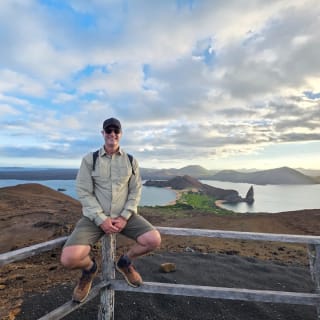
Ecuador's great natural stage
From Cotopaxi to the Galápagos Islands There are trips that impress. And there are trips that resonate long after. Our journey through Ecuador clearly belonged to the second category. Within just a few days, we moved between two completely different worlds: the heights of the Andes and the island world of the Galápagos....

My adventure in Corcovado National Park
One of my most unforgettable travel experiences was a guided hike of about 20 kilometers through Corcovado National Park in Costa Rica – right through dense jungle, without paved paths, but with plenty of mud. And with the most unsuitable shoes possible. If you want to know what a day in Costa Rica's wildest national park really feels like, I'll take you along on this tour....