

Mexico City
Cultural metropolis at 2,240 meters — neighborhoods, museums, pyramids
Cultural metropolis at 2,240 meters — neighborhoods, museums, pyramids
Mexico City — 22 million people at 2,240 meters, the historic center and Xochimilco since 1987 UNESCO World Heritage and with Quintonil the third best restaurant in the world (World’s 50 Best 2025). Those living in Polanco, La Condesa, or Roma Norte experience the megacity in a relaxed manner.
Best Travel Time
November to April
Why Mexico City is more than just a stopover
Shortly after seven in the morning, the Zócalo is still in the shadow of the cathedral, and the scent of freshly pressed tortillas wafts from the side streets. Then the sound begins that never quite leaves this city: street organs, the prolonged cry of the tamale vendors, the ringing of the trajineras' bells far out in Xochimilco. Above all, a light that is clearer and harsher at 2,240 meters than anywhere on the coast.
Most Mexico travelers use the capital as a transit point — landing, sleeping, continuing on. What they miss: Time Out ranked Mexico City 2025 at number 7 on its "Best Cities in the World", the historic center and the canals of Xochimilco have been UNESCO World Heritage since 1987, and with Quintonil there is the third best restaurant in the world (World’s 50 Best Restaurants 2025). About 22 million people live in the metropolitan area — and yet one experiences the city relaxed from the right neighborhoods.
That is exactly our approach: We consciously book your accommodation in Polanco, La Condesa, or Roma Norte — three neighborhoods that are safe, walkable, and full of good addresses. From there, you can explore museums, markets, Coyoacán, and Teotihuacán in three to four days, before your Mexico tour continues to Puebla, Oaxaca, or Yucatán.
The neighborhoods — where you stay and why
In Mexico City, the choice of neighborhood determines the entire trip. Those living in one of the three following districts can walk to dinner in the evening and reach almost every tourist attraction by Uber in 20 to 40 minutes.
Polanco — upscale residential area and Michelin-star restaurants
Polanco is the elegant address of the city: wide avenues, embassies, designer shops along Avenida Presidente Masaryk, and the country's top restaurants. Pujol by Enrique Olvera and Quintonil by Jorge Vallejo are both located here — both with two Michelin stars (Guía Michelin México 2026). In Nuevo Polanco, the curved aluminum facade of Museo Soumaya shines with around 66,000 works from Rodin to Dalí, opposite is Museo Jumex showcasing contemporary art. An ideal base for anyone who values peace, large rooms, and short distances to Bosque de Chapultepec.
Insider-Tipp
Museo Soumaya und Museo Jumex — beide gratis, fünf Gehminuten voneinander entfernt. Soumaya täglich 10:30–18:30 Uhr, Jumex Mittwoch bis Montag 10:30–18:30 Uhr.
La Condesa — Art Deco, Parque México, and cafes
La Condesa is green, quiet, and architecturally the most beautiful corner of the city: Art Deco villas from the 1920s and 1930s, the oval Avenida Ámsterdam on the footprint of a former horse racing track, and Parque México, where dog schools and Tai Chi groups practice in the morning. From late February to April, the Jacaranda trees bloom violet — March is the peak. Those who want to experience the city on foot are well-situated here, in a boutique hotel in a converted villa.


Roma Norte — bohemian chic, galleries, and bars
Roma Norte is the creative heart of the city: Art Nouveau facades along Álvaro Obregón, galleries like OMR, mezcalerías, and a new restaurant every week. Here lie the addresses that connoisseurs come for: Contramar with its tuna tostadas lunch (Durango 200, Mon–Fri 12–8 pm, Sat–Sun 11 am–8 pm) and Rosetta by Elena Reygadas in a city palace at Colima 166 — ranked 46th in the World’s 50 Best Restaurants 2025 and a Michelin star in Guía Michelin México 2026. In the evening, Roma becomes the bar mile: Licorería Limantour is ranked 9th in North America’s 50 Best Bars 2025, and the Handshake Speakeasy in the neighboring Juárez area was named the best bar in North America for the second consecutive year in 2025.
Insider-Tipp
Contramar reservieren — ab 13:30 Uhr ist das Haus voll, auch werktags. Reservier einige Tage vorher über OpenTable und bestell Tostadas de Atún und Pescado a la Talla. Zum Frühstück lohnt die Panadería Rosetta (Colima 179).
Let us put together your Mexico City program — we know which neighborhood suits your travel style and which establishments keep their promises. Schedule a consultation .
Sights in the center — from the Zócalo to Chapultepec
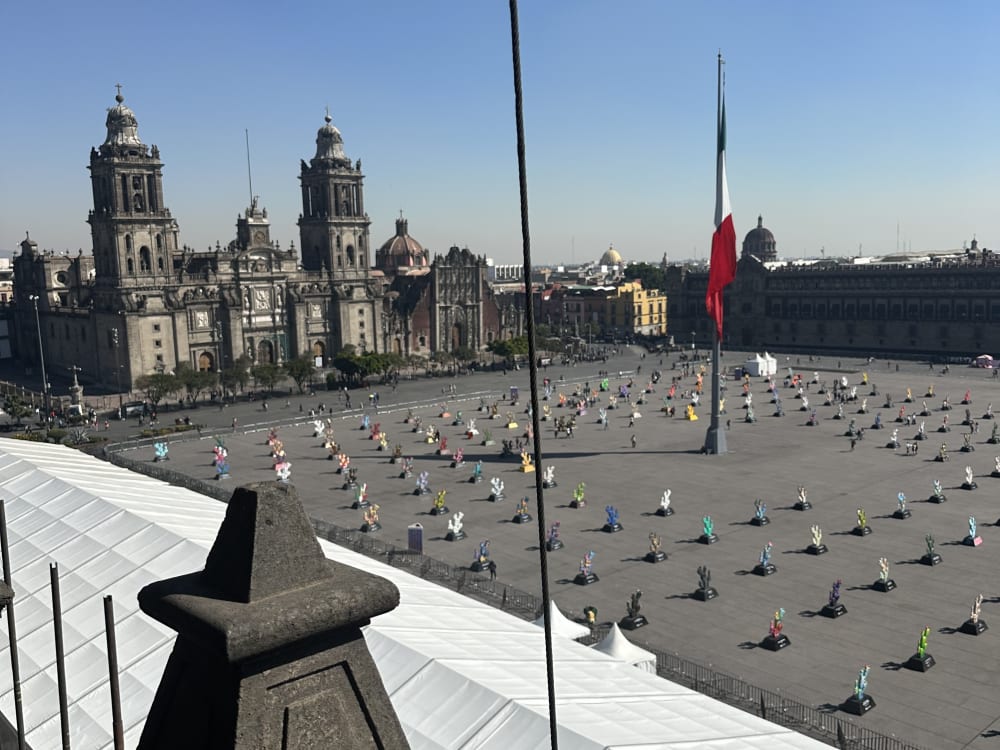
Zócalo and Templo Mayor — three layers of the city on one square
The Zócalo showcases Mexico's history in layers: beneath the cathedral and National Palace lie the foundations of Tenochtitlan, the Aztec capital destroyed in 1521. Right next to it, the Templo Mayor was uncovered in 1978 — the main temple of the Aztecs with an excellent museum housing the eight-ton stone disc of the moon goddess Coyolxauhqui (210 MXN, approx. 11 EUR, Tue–Sun 09:00–17:00). In the National Palace, you can see Diego Rivera's mural cycle on the history of Mexico — bring an ID, entry is free.
Palacio de Bellas Artes — marble, murals, and Tiffany glass
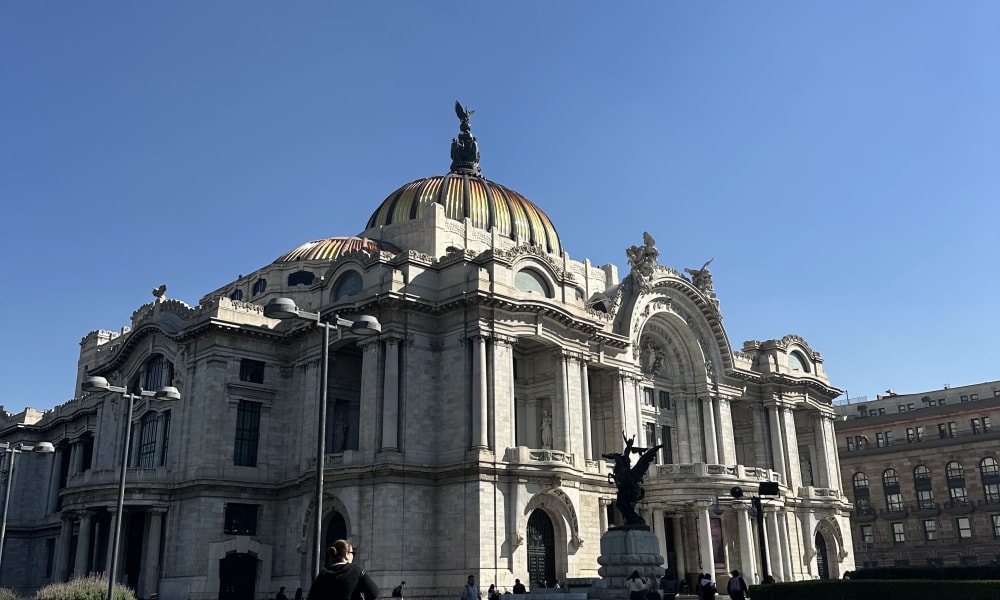
Ten minutes west stands the 1934 completed Palacio de Bellas Artes with Art Nouveau façade made of Carrara marble and Art Deco interior. On the upper floor hang 17 murals by Rivera, Orozco, and Siqueiros — including Rivera's "Man at the Crossroads", the remake of the Rockefeller commission destroyed in New York. Museum entry 90 MXN (approx. 4.50 EUR, free on Sundays), Tue–Sun 10:00–18:00.

Chapultepec and Museo Nacional de Antropología
Bosque de Chapultepec is about twice the size of Central Park at 686 hectares and houses, alongside Castillo de Chapultepec (210 MXN, Tue–Sun 09:00–17:00), the country's most important museum: Museo Nacional de Antropología exhibits the Aztec sunstone, the jade mask of Pakal from Palenque, and Olmec colossal heads across 22 halls. With 5.05 million visitors, it was the most-visited cultural site in Mexico in 2025 (INAH, January 2026).
Museo Nacional de Antropología
- Eintritt — 210 MXN (ca. 11 EUR); sonntags frei für Mexikaner und Residenten — dann sehr voll
- Öffnungszeiten — Di–So 09:00–18:00 Uhr, montags geschlossen
- Lage — Paseo de la Reforma / Calzada Gandhi, Metro Auditorio
- Tipp — Dienstag bis Freitag zur Öffnung kommen; ein privater Guide lohnt sich hier besonders
Coyoacán, Teotihuacán, Xochimilco — three excursions that linger
Coyoacán — Frida Kahlo's Blue House and a village in the city
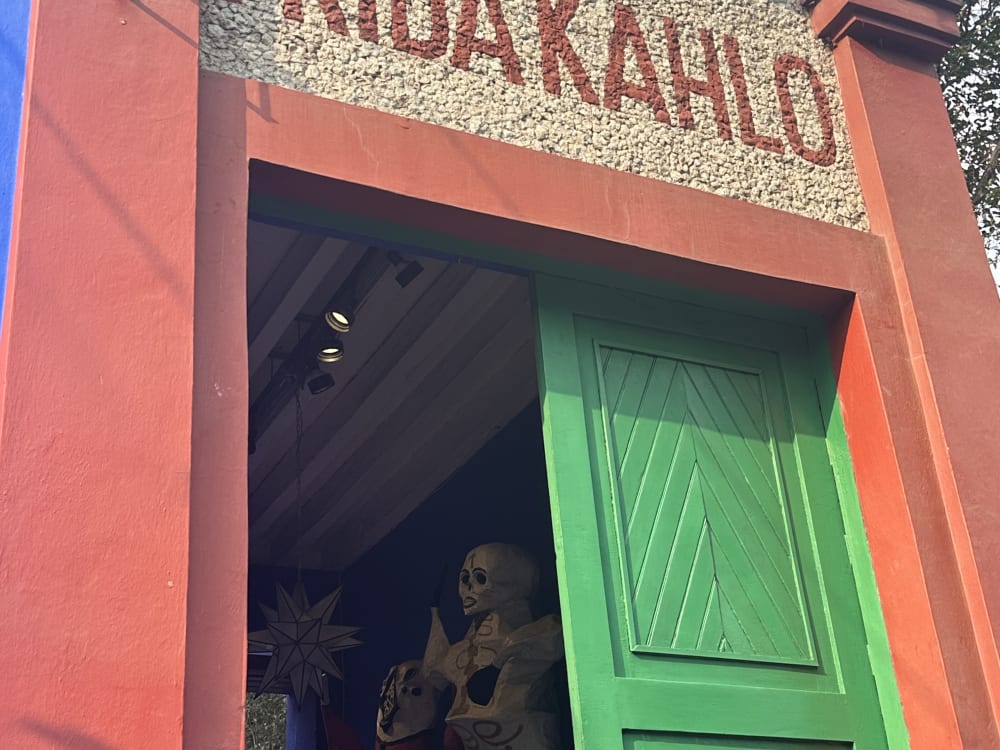
Coyoacán, ten kilometers south, feels like a small town: cobblestone streets, colorful colonial houses, mariachis in Jardín Centenario. The reason most come is the Casa Azul — Frida Kahlo's birthplace and death house, a museum since 1958, featuring her studio, garden, and dresses. Tickets are only available online; time slots book up weeks in advance during high season — we secure them as soon as your travel date is set.
Museo Frida Kahlo (Casa Azul)
- Eintritt — 320 MXN (ca. 16 EUR) für internationale Besucher; das Ticket gilt ein Jahr lang auch für das Museo Anahuacalli
- Öffnungszeiten — Di 10:00–18:00, Mi 11:00–18:00, Do–So 10:00–18:00 Uhr, montags geschlossen
- Lage — Londres 247, Coyoacán — per Uber 30–50 Minuten von Roma Norte
- Tipp — Nur über boletos.museofridakahlo.org.mx buchen, kein Kassenverkauf — vier bis sechs Wochen vorher; das erste Zeitfenster des Tages ist am ruhigsten
Teotihuacán — the pyramids at the gates of the city
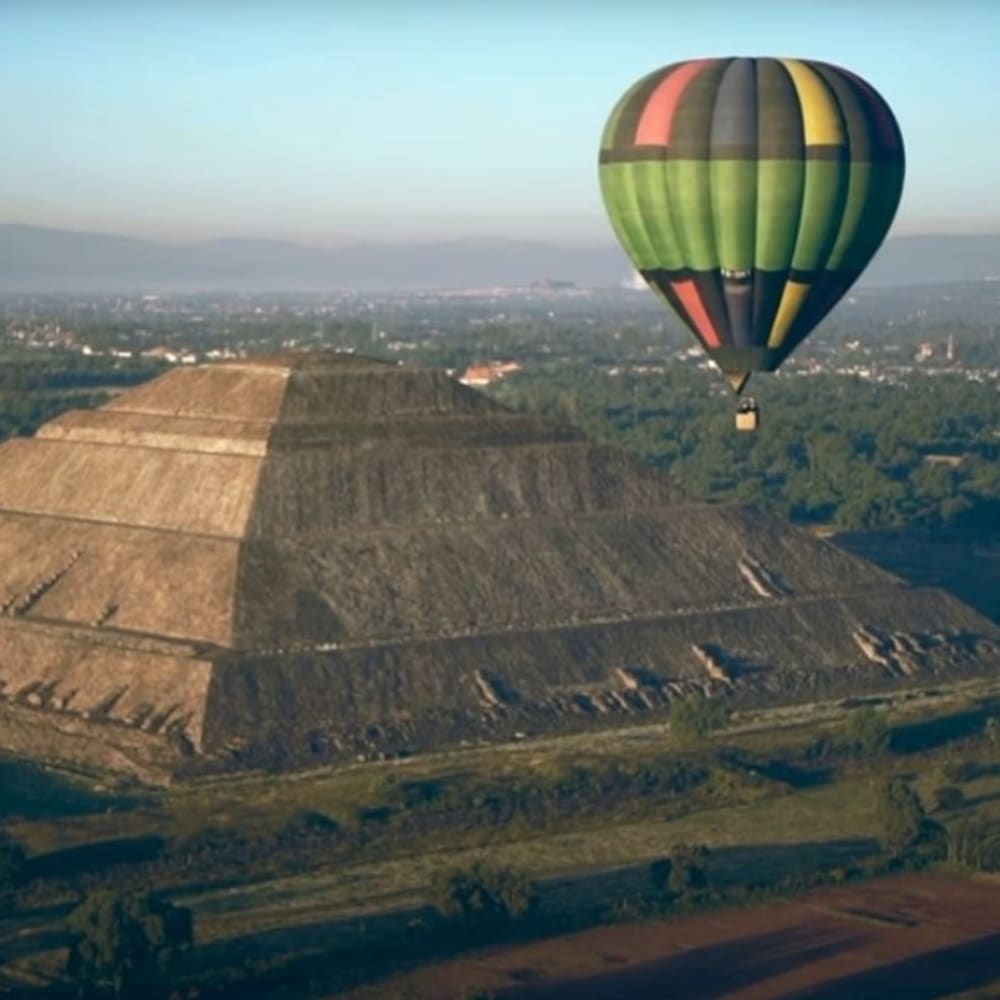
About 50 kilometers northeast lies Teotihuacán, a UNESCO World Heritage site since 1987 and one of the largest cities of the ancient world between the 1st and 7th centuries. The Pyramid of the Sun measures 65 meters, the Avenue of the Dead stretches over two kilometers to the Pyramid of the Moon. We organize a private driver leaving at 07:00 so that you can stand at the gate when it opens at 08:00 — the tour buses follow after about 10:00. Climbing the pyramids is currently not allowed. Even more impressive: a hot air balloon ride at sunrise, starting around 06:00, approximately 45 minutes in the air, starting at about 2,450 MXN (approx. 125 EUR) per person, privately from 3,900 MXN (approx. 200 EUR).
Teotihuacán
- Eintritt — 210 MXN (ca. 11 EUR), sonntags frei für Mexikaner und Residenten
- Öffnungszeiten — täglich 08:00–17:00 Uhr, letzter Einlass 16:30 Uhr
- Lage — ca. 50 km nordöstlich, 1–1,5 Stunden mit privatem Fahrer
- Tipp — Hut, Sonnenschutz und 1,5 Liter Wasser — kaum Schatten auf 2.300 Metern
Xochimilco — trajineras on the canals of the Aztecs
In the south of the city, the chinampas — floating gardens of the Aztecs — have survived to this day. Colorfully painted trajineras, flat wooden boats with tables and benches, glide along the canals, alongside mariachi boats and elote vendors. The official rate is 750 MXN (approx. 38 EUR) per boat per hour for up to 18 people — valid at all eleven landing points. On weekends, the canals are a floating party; on weekdays in the morning, you'll see herons among the chinampas and the gardeners at work.
Insider-Tipp
Embarcadero-Wahl — für die Fiesta am Samstagnachmittag Nativitas; für Ruhe ein Werktagmorgen ab Cuemanco mit drei bis vier Stunden bis zur Isla de las Muñecas. Wir buchen Trajinera und Fahrer vorab.
Culinary — from tacos al pastor to two Michelin stars
Street food — the locals' rule
Mexico City eats on the street, and you should do the same. The most important rule that distinguishes connoisseurs from tourists: Tacos al pastor are ordered in the evening when the trompo — the vertical spit of marinated pork shoulder — has been running for hours and is crispy on the outside. Classics include El Vilsito in Narvarte (auto repair shop during the day, taquería at night) and Taquería Orinoco in Roma Norte. A taco costs 20–35 MXN (approx. 1–2 EUR); choose stands with long queues.
Mercado de San Juan — the chefs' market
The Mercado de San Juan (Ernesto Pugibet 21, Centro) is the market where the city's chefs shop: chapulines and escamoles, game meat, exotic fruits, alongside stalls where you can eat seafood tostadas with a glass of wine while standing. Open Mon–Fri 06:00–18:00, Sat–Sun 07:00–17:00 — best between 10 and 13.
Fine dining in Polanco — Pujol and Quintonil
Pujol (Tennyson 133) serves Enrique Olvera's Mole Madre, which has been simmering for over 3,000 days; the menu costs 3,595 MXN (approx. 185 EUR), the taco omakase bar 3,995 MXN (approx. 205 EUR). Quintonil (Newton 55) by Jorge Vallejo and Alejandra Flores was ranked 3rd in the World’s 50 Best Restaurants 2025 — the highest placement ever achieved by a Mexican restaurant; the tasting menu costs 4,950 MXN (approx. 250 EUR). Reservations are made within hours — we ensure the tables. Honest comparison: Pujol is the more iconic experience, Quintonil has the more exciting menu.
Your Mexico City program — three days
Day 1 — Center and Chapultepec
Uber to the Zócalo: Cathedral, Templo Mayor, Rivera’s murals in the National Palace. Lunch in Mercado de San Juan, then Palacio de Bellas Artes. In the late afternoon, walk through Bosque de Chapultepec to the Castillo. Dinner in Roma Norte.
Day 2 — Anthropology and Coyoacán
At 09:00, be at the Museo Nacional de Antropología when it opens. At noon, head to Coyoacán: Casa Azul for the booked time slot, Mercado de Coyoacán, coffee at Jardín Centenario. In the evening, Pujol or Quintonil.
Day 3 — Teotihuacán and Xochimilco
Departure at 06:00 for the hot air balloon ride or 07:00 for the visit upon opening. Return around noon, pause at the hotel. In the afternoon, two hours on a trajinera in Xochimilco, then farewell drink in Roma Norte. For those with a fourth day: in the morning Casa Luis Barragán (UNESCO World Heritage since 2004, only with a booked guide), in the afternoon San Ángel.

Where to stay — Polanco, La Condesa, or Roma Norte
All hotels we recommend in Mexico City are located in one of these three neighborhoods — out of conviction: here the streets are lively in the evening, and the return paths are short. Three categories:
- Upscale accommodation in Polanco and Reforma — large rooms, spa, concierge, often with views of Chapultepec Park; from about 350 EUR per night.
- Boutique hotels in La Condesa — converted Art Deco villas with 10 to 40 rooms, courtyard and rooftop terrace; from about 180 EUR. Our recommendation for couples.
- Design guesthouses in Roma Norte — small, personally run establishments with breakfast from the market; from about 150 EUR.
Let us find the accommodation that suits your preferences together — we know the houses personally and know which rooms are on the quiet courtyard side. Submit a request .
Good to know
Altitude — 2,240 meters
Most travelers hardly feel the altitude, but on the first day, shortness of breath when climbing stairs and mild headaches are normal. Our advice: a light program on the day of arrival, plenty of water, little alcohol — and sun protection, as the UV radiation is significantly stronger here. More in our guide Vaccinations and health .
Best travel time for Mexico City
The dry season from November to April is the best travel time: clear days with 21–26 degrees, cool nights around 6–10 degrees, hardly any rain. March combines the Jacaranda bloom with the warmest dry days. From May to October, a heavy shower often occurs in the afternoon — the mornings usually remain dry. How the capital can be combined with the coasts is described in our overview of the best travel time for Mexico .
Hinweis
Sonntag ist Museumstag — alle INAH-Museen und Ausgrabungsstätten sind sonntags für Mexikaner und Residenten kostenlos und entsprechend voll. Leg Anthropologie-Museum, Templo Mayor und Teotihuacán auf Dienstag bis Freitag; der Sonntag gehört Xochimilco, der autofreien Reforma oder Coyoacán.
Arrival — Airport MEX
Lufthansa flies daily nonstop from Frankfurt to Mexico City (MEX), around 12 hours to get there, about 11 hours back. The airport is only ten kilometers east of the center — to Polanco or Roma Norte you need about 30 to 60 minutes by Uber for about 150–250 MXN (approx. 8–13 EUR); order it after luggage pickup at the signposted pickup point. The taxi counters in the terminal charge a multiple. Domestic flights to Oaxaca, Mérida or GDL also start from MEX. All details regarding flights to Mexico .
Safety in Mexico City
Mexico City is a metropolis with the usual big city issues — and at the same time a city where the neighborhoods we recommend feel safe and relaxed. Polanco, La Condesa, Roma Norte, Coyoacán, and the center are easily navigable during the day. What counts from our experience: Uber or DiDi instead of street taxis, don't walk alone through deserted streets at night, land excursions during the day with a driver. A detailed assessment can be found in our guide Safety in Mexico .
Grundregeln in Mexiko-Stadt
Uber oder DiDi bestellen, niemals ein Taxi auf der Straße anhalten. Smartphone nicht offen tragen, Geldautomaten in Einkaufszentren nutzen, Wertsachen im Hotelsafe lassen. Nachts bleibst du in den belebten Straßen von Condesa, Roma und Polanco — das Zentrum rund um den Zócalo besuchst du besser tagsüber.
Getting around locally
Uber and DiDi are the first choice for travelers: reliable, inexpensive (a ride within the neighborhoods 60–150 MXN, approx. 3–8 EUR) and without a language barrier. The metro costs 5 MXN, the Metrobús 6 MXN — efficient, but very crowded during rush hours. For everything outside the city, we organize a private driver.
Discovering more of Mexico
You can reach Puebla in two hours with the driver, San Miguel de Allende in four; by domestic flight, Oaxaca in one hour and Mérida in two — the classic route of a Mexico tour begins here.
Puebla & Pueblos Mágicos — Talavera, Cholula, and Atlixco
San Miguel de Allende & Querétaro — colonial city, wine route, and Sierra Gorda
Oaxaca — mole, mezcal, and Pacific coast
Yucatán — Mérida, Chichén Itzá, and cenotes
Further information on entry and visa can be found in our Mexico travel guide . Let us put together your Mexico City program — with the right neighborhoods, secured tickets, and a driver who knows the city. Schedule a consultation .
To book a trip or for more information, contact us. We'll help you plan and guide you through your upcoming adventure!
Frequently Asked Questions
Yes — in the neighborhoods we recommend. Polanco, La Condesa, and Roma Norte are lively, well-lit, and walkable; Coyoacán and the city center are problem-free during the day. As in any large city, use only Uber or DiDi instead of street taxis, do not wear valuables openly, and do not walk alone through empty streets at night. The Foreign Office advises normal caution for the capital. With these habits, Mexico City is easy to travel.
Three full days are the minimum: one for the center and Chapultepec, one for the Anthropology Museum and Coyoacán, and one for Teotihuacán and Xochimilco. A fourth day allows for Casa Luis Barragán, San Ángel, or a day trip to Puebla. Since you are anyway entering or leaving via MEX, it makes sense to place the city at the beginning of the trip — your body adjusts to the altitude more easily before heading to the coast.
For peace, large rooms, and star restaurants right at your door: Polanco. For strolls, Art Deco, and cafes: La Condesa — our recommendation for couples. For galleries, bars, and the feeling of living in the middle of it all: Roma Norte. All three are next to each other, allowing you to walk between Condesa and Roma at night; Polanco is reachable by Uber in 15 minutes.
Exclusively online via boletos.museofridakahlo.org.mx — there are no tickets at the box office. The price in 2026 is 320 MXN (approx. 16 EUR) for international visitors and includes entry to the Museo Anahuacalli. Time slots sell out four to six weeks in advance during peak season; book as soon as your travel date is set, or leave it to us. Open Tue 10–18, Wed 11–18, Thu–Sun 10–18.
Slightly. At 2,240 meters, many notice some shortness of breath when climbing stairs, mild headaches, or that alcohol has a faster effect on the first day. Serious altitude sickness is very rare at this height. Plan your arrival day calmly, drink plenty of water, and postpone mezcal until the second evening. Sun protection is more important than in Europe — UV radiation is significantly more intense, even on cloudy days.
November to April, the dry season: sunny days with 21–26 degrees and cool nights. March is the most beautiful month — then the Jacaranda trees in Condesa and Roma bloom purple. During the rainy season from May to October, short, heavy showers usually fall in the afternoon; mornings are dry, and the museums are noticeably less crowded. Around the Christmas holidays and during Semana Santa, hotels book up early.
Yes, but we recommend a private driver: The site is located 50 kilometers northeast, taking 1–1.5 hours by car, and those who arrive at the gate by 08:00 when it opens have the Avenue of the Dead almost to themselves. The entrance fee is 210 MXN (approx. 11 EUR), open daily from 08:00 to 17:00. Climbing the pyramids is currently not allowed. If you wish, you can start with a hot air balloon ride at sunrise (from approx. 2,450 MXN per person).
Absolutely — if you know what you want. On Saturdays and Sundays, the canals at Nativitas are a floating fiesta with mariachi boats; on weekday mornings, they are quiet, with herons and gardeners on the chinampas. The official rate is 750 MXN (approx. 38 EUR) per trajinera and hour, regardless of whether there are two or eighteen people. Two hours are enough for the impression, four for the Isla de las Muñecas. UNESCO World Heritage Site since 1987.