

Mexico Vaccinations & Health — What You Really Need (2026)
Vaccinations, Dengue, Altitude & Clinics
Vaccinations, Dengue, Altitude & Clinics
For direct entry from Germany, Mexico does not require any mandatory vaccinations — the Foreign Office confirms this as of 05.09.2026. What you really need is manageable: current standard vaccinations, Hepatitis A, consistent mosquito protection on the coasts, and a calm first day at 2,240 meters in Mexico City. Malaria is practically not an issue on our routes, while dengue is. This guide organizes vaccinations, altitude, water, sun, and clinics for your Mexico trip — factually, with sources, and without panic.
- Vaccinations for Mexico — what is mandatory and what is sensible
- Dengue, Zika, and Chikungunya — mosquito protection on the coasts
- Malaria — only in a few rural areas
- Altitude Mexico City — the first 24 hours
- Food, water and stomach — avoid "Montezuma's Revenge"
- Sun, heat and sea — rip currents and jellyfish
- Doctors, clinics and insurance — well taken care of in case of emergency
- More travel information about Mexico
- Discover Mexico — our travel destinations
Vaccinations for Mexico — what is mandatory and what is sensible
The short answer first: There is no mandatory vaccination. "For direct entry from Germany, no mandatory vaccinations are required," states the Foreign Office (as of 05.09.2026). Mexico does not require a yellow fever vaccination certificate — the CDC does not list yellow fever for Mexico as an entry requirement or a recommendation (as of 03.09.2026). Those traveling through yellow fever endemic areas in South America clarify the vaccination status in travel medical consultation.
Note: This guide does not replace travel medical consultation
We are tour operators, not doctors. The information on this page summarizes the status from the Foreign Office (05.09.2026), the Robert Koch Institute, and the CDC — it does not replace individual consultation. Schedule an appointment with a travel medical practice or tropical institute six to eight weeks before departure; you can find the doctor search of the German Society for Tropical Medicine at dtg.org .
Standard vaccinations according to STIKO — the basic protection
Before thinking about travel vaccinations, it's worth taking a look at your vaccination booklet. The Standing Committee on Vaccination recommends all adults have current protection against tetanus, diphtheria, and pertussis (booster every ten years), against polio, and two measles vaccinations for anyone born after 1970; the CDC explicitly recommends full MMR protection for travelers to Mexico.
Travel vaccinations — depending on route and travel style
Hepatitis A is the one vaccination we strongly recommend for every Mexico traveler: The Foreign Office explicitly recommends it, the virus is transmitted through food and water, and one dose two weeks before departure protects already — the second after six to twelve months provides protection for decades. Hepatitis B, Typhoid and Rabies are recommended by the Foreign Office "for long-term stays or special exposure." For two to three weeks with hotels in Polanco, Mérida, and Tulum, this is usually not necessary; those staying longer, in villages in Chiapas or the Sierra Gorda, eating a lot of street food or dealing with animals, should discuss the three during consultation.
Dengue: The Qdenga vaccine is recommended by STIKO only for travelers who have already contracted a dengue infection (RKI, as of 05.08.2026). For first-time travelers, mosquito protection remains the prevention — more on that below.
Table: Vaccination, recommendation, and lead time
| Vaccination | Recommendation for Mexico | Lead time and schedule |
|---|---|---|
| Tetanus, diphtheria, pertussis, polio | Standard for all (STIKO) | Booster every 10 years |
| Measles (MMR) | Standard for all born after 1970 (STIKO, CDC) | 2 doses spaced 4 weeks apart |
| Hepatitis A | Recommended for all travelers (Foreign Office) | 1 dose at least 2 weeks before departure, 2nd dose after 6–12 months |
| Hepatitis B | For long-term stay or special exposure | 3 doses over 6 months; rapid schedule 0/7/21 days plus booster |
| Typhoid | For long-term stay or special exposure | 1 injection 2 weeks before departure, protection lasts about 3 years |
| Rabies | For long-term stay, animal contact, remote regions | 2–3 doses over 1–4 weeks, 6 weeks lead time |
| Dengue (Qdenga) | Only after having contracted a dengue infection (STIKO) | 2 doses spaced 3 months apart — plan early |
| Yellow fever | Not required, not recommended (AA, CDC 2026) | Only if continuing travel to endemic areas in South America |
Most health insurances cover travel vaccinations entirely or partially — the question is the lead time: For hepatitis B or rabies it takes four to six weeks to achieve full protection.
Dengue, Zika, and Chikungunya — mosquito protection on the coasts
Dengue is the health risk you should take seriously in Mexico — not malaria. The virus is transmitted by daytime-active Aedes mosquitoes, which occur in cities and hotels as well as on the beach: on Yucatán , at the Riviera Maya , in Puerto Vallarta and on the coast of Oaxaca , especially during the rainy season from June to October. In high altitude above 2,000 meters, the risk is significantly lower. Zika and Chikungunya are transmitted by the same mosquitoes; the Foreign Office recommends exposure prophylaxis for all three.
Symptoms — and when you should go to the clinic
Dengue begins four to ten days after the bite with suddenly high fever, severe headaches, muscle, and joint pain, and often a rash starting on the third day. Most cases are unpleasant but end within a week. Warning signs for a severe course are persistent abdominal pain, repeated vomiting, bleeding gums or nosebleeds, and sudden weakness — then you should go to a clinic immediately, not stay in your hotel bed.
Note: Do not take Ibuprofen or Acetylsalicylic acid if you have a fever
Those who get a fever in Mexico should only use Paracetamol for self-treatment. Ibuprofen, Acetylsalicylic acid (Aspirin), and other blood-thinning painkillers can worsen bleeding in a dengue infection. Have a doctor check any fever from the second day onwards — private clinics test for dengue.
Effective mosquito protection
- Repellent — 30 to 50 percent DEET or 20 percent Icaridin, reapply in the morning and after bathing, apply after sunscreen
- Clothing — light, long, and loose in the twilight; for Palenque, Holbox, and Bacalar, wear pants and socks treated with Permethrin
- Accommodation — air conditioning or mosquito net; our partner hotels on the coast meet this
- Zika and pregnancy — Zika can harm the unborn child; pregnant women and couples wishing to have children should discuss a trip to the coastal regions with their doctor in advance
You can find the complete equipment — from repellent to clothing — in our Packing List for Mexico .
Malaria — only in a few rural areas
Mexico is considered "malaria-free" according to the Foreign Office, except for Chiapas and certain areas in other states (as of 05.09.2026). The CDC cites transmission in Campeche, Chiapas, and southern Chihuahua as well as isolated cases in Oaxaca, Sinaloa, Sonora, and Tabasco (as of 03.09.2026). For Mexico City, Puebla , San Miguel de Allende , Oaxaca City, Jalisco , Baja California and the tourist coasts of Yucatán and the Riviera Maya, malaria is not an issue — prophylaxis is not planned there.
Different in Chiapas: San Cristóbal at 2,200 meters is above the transmission threshold, but the lowland around Palenque, Yaxchilán, Bonampak, and the Laguna Miramar is not. German sources consider the risk to be low — the tropical institute currently sees neither prophylaxis nor emergency medication as necessary — the CDC recommends chemoprophylaxis for Chiapas. Those spending several nights in the jungle decide this during travel medical consultation; for one to two days in Palenque, consistent mosquito protection remains the recommendation of German sources.
Fact Box: Malaria in Mexico — Status 2026
- Foreign Office — malaria-free except for Chiapas and certain areas of other states (05.09.2026)
- CDC — transmission in Campeche, Chiapas, southern Chihuahua; prophylaxis recommended there (03.09.2026)
- Tropical Institute — low risk, prophylaxis currently not required (reports until 08/2026)
- Our routes — highlands, Yucatán, Riviera Maya, Pacific, Baja: no prophylaxis; Chiapas lowland: clarify with a doctor
- Always — mosquito protection in twilight, as Anopheles mosquitoes bite at night
Altitude Mexico City — the first 24 hours
You land after a twelve-hour flight at 2,240 meters — and you notice it in the evening: Your head throbs, the hotel stairs seem long suddenly, your sleep is restless. This is normal. Mexico City is below the altitude where real altitude sickness threatens but high enough that your body needs a day to adapt. The same applies to Puebla (2,135 m), San Cristóbal (2,200 m), and in milder form for San Miguel de Allende (1,910 m).
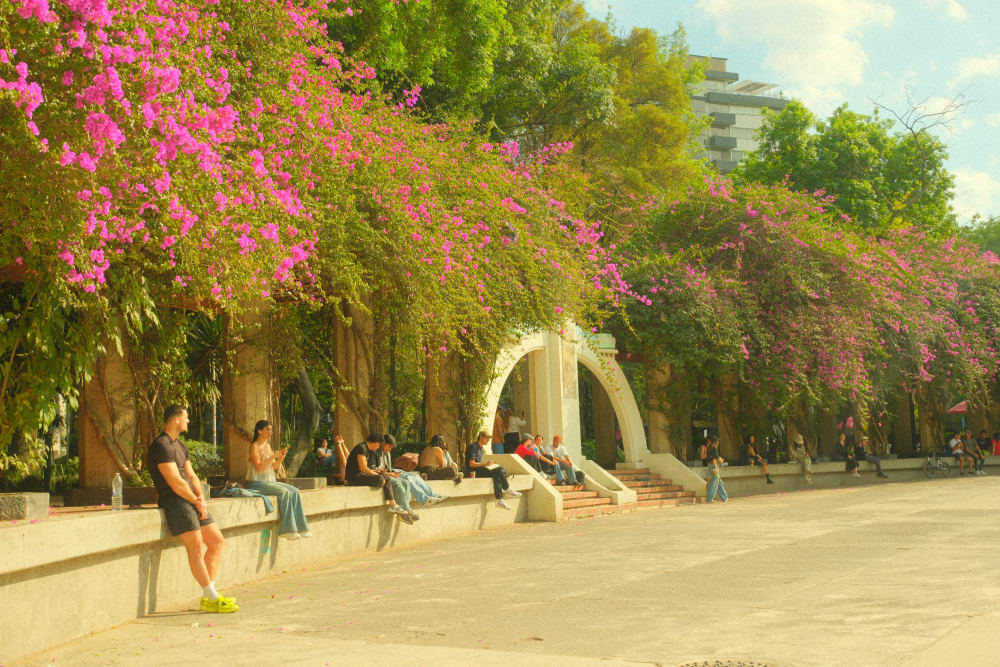
- Start calmly on the first day — Chapultepec and museums instead of Teotihuacán
- Two to three liters of water, little alcohol, light food on the first evening
- No endurance sports in the first 24 hours; Teotihuacán from day two or three
- For headaches, take paracetamol; for persistent shortness of breath, confusion, or vomiting, seek medical help
- If you have high blood pressure or heart problems, clarify the altitude beforehand with your family doctor
Insider tip
Plan a route with altitude — if you travel to the Caribbean first and leave Mexico City for last, you arrive rested at 2,240 meters. And if you want to go to 4,260 meters at Nevado de Colima in Jalisco, acclimatize yourself in the highlands beforehand. The Foreign Office also points out the air pollution in Mexico City — asthmatics should take their emergency spray in their hand luggage. How we arrange the order of your regions is something we discuss in the personal consultation .
Food, water and stomach — avoid "Montezuma's Revenge"
Tap water in Mexico is not intended for drinking anywhere — "Only drink water from safe sources," advises the Foreign Office. It's simple: Hotels provide bottles, restaurants serve filtered water ("agua purificada"), and ice cubes in good restaurants and bars come from purified water from ice factories — the margarita in Polanco is safe. When brushing your teeth, use the bottle.
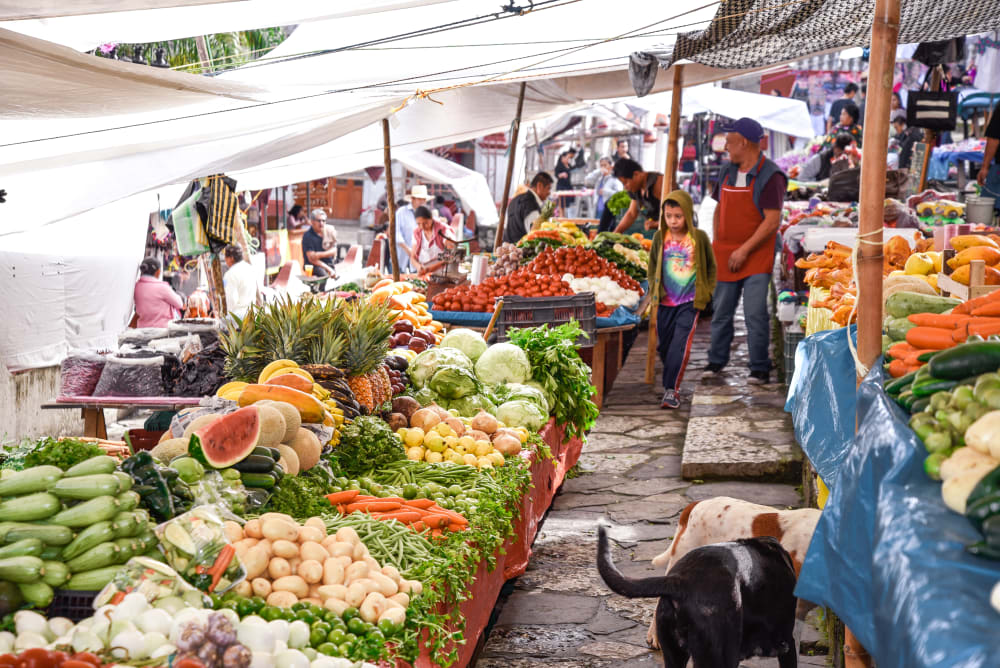
Traveler's diarrhea remains the most common health issue — usually passes after two to three days and is more a matter of adjustment than hygiene. What helps: eat where it’s busy and the pots are steaming; salads and unpeeled fruit with caution; street food yes, but freshly cooked. Electrolyte solution and rest are the therapy, loperamide only for the transfer day. With fever, blood in stools, or more than three days of discomfort, you should see a doctor — in the cities, that means a call to the hotel.
Insider tip
Agua purificada and Garrafón — the 20-liter bottles that you see in every household and hotel are Mexico's standard drinking water. Good hotels refill your bottle for free; this saves plastic and money. The myth of dangerous ice comes from a time before ice factories — in a cocktail bar in Roma, it is no longer valid.
Sun, heat and sea — rip currents and jellyfish
Mexico's sun is high all year round; in Yucatán, temperatures reach 40 degrees in April and May, and in the highlands, the altitude increases UV radiation. Hat, sunscreen SPF 50, shade between 12 and 3 PM, and plenty of water are the simple rules. Heat exhaustion announces itself with headache, dizziness, and nausea — then seek shade, cool down, and drink electrolytes.

At the Pacific, the sea poses a greater danger than the sun. Playa Zicatela in Puerto Escondido — the "Mexican Pipeline" — breaks from April to October with waves of several meters, and rip currents pull even experienced swimmers out. Only swim there in the protected bays of Carrizalillo and Puerto Angelito, and heed the flags. At Playa Las Viudas near Los Cabos, the current is stronger than appearances suggest. At the Caribbean, the reef breaks the waves — here, jellyfish and sea urchins are more of a concern.
Note: Rip currents on the Pacific
If you get caught in a rip current, don't swim against it, but parallel to the shore to get out of the pull, and then let the waves carry you back. A red flag means a swimming ban, not a recommendation. In case of jellyfish contact: rinse tentacles with seawater, do not rub with fresh water, vinegar soothes — ask at the beach club or hotel about it.
Doctors, clinics and insurance — well taken care of in case of emergency
Private clinics in the major cities operate at a high level. The German Embassy lists, among others, Hospital Español in Polanco, Centro Médico ABC (Observatorio and Santa Fe), and Médica Sur in Mexico City, Amerimed and Hospital Galenia in Cancún, Faro del Mayab, Star Médica, and Clínica de Mérida in Mérida, as well as Amerimed and Costamed in Cozumel. In Oaxaca, San Cristóbal, or Loreto, the care is simpler — in rural areas, according to the Foreign Office, not comparable to German standards. For minor issues, pharmacies with attached doctor's offices ("consultorio") are a Mexican specialty: short waiting times, small fees, prescriptions next door.
Two things are crucial. First: Private clinics require advance payment — according to the embassy, billing often happens every two to three days, your credit card needs sufficient credit. Second: A foreign health insurance with repatriation is considered "urgently required" by the Foreign Office — the statutory health insurance covers nothing in Mexico, and repatriation costs five figures. How to move about carefully beyond that, you can read in our guide to the Safety in Mexico .
Fact box: Emergency in Mexico
- Emergency call — 911, nationwide, also in English
- German Embassy Mexico City — +52 55 5283 2200; emergency outside office hours +52 55 5431 2177
- Doctors' and hospital lists from the embassy — Regional doctor service Mexico City (Doctor list as of 11.06.2026)
- Travel and safety advice — Foreign Office: Mexico (as of 05.09.2026)
- Insurance — policy number and 24-hour emergency number printed in your wallet
- Latin Memories — your contact person is available during the trip and knows the local clinics
Do you want to plan your route with regard to altitude, coastline, and clinics? We advise you sincerely. Inquire now without obligation .
More travel information about Mexico
Plan your Mexico trip with our specialized guides:
- Best travel time Mexico — climate, rainy season, and hurricane season
- Flight to Mexico — direct flights and airports
- Safety in Mexico — regions and behavioral rules
- Entry Mexico — visa, FMM, and passport
- Packing list Mexico — travel pharmacy, mosquito repellent, adapter
Discover Mexico — our travel destinations
From 2,240 meters to sea level — discover the regions for which this guide was written:
- Mexico City — Polanco, Roma, Teotihuacán
- Yucatán — Mérida, Chichén Itzá, cenotes
- Riviera Maya & Caribbean Coast — Tulum, Bacalar, Holbox
- Oaxaca — highland city and Pacific Coast
- Puebla & Pueblos Mágicos — Cholula, Atlixco, Cuetzalan
- San Miguel de Allende & Querétaro — wine route, Sierra Gorda
- Jalisco & Pacific Coast — Tequila, Chapala, Puerto Vallarta
- Baja California — whales, Cabo Pulmo, Valle de Guadalupe
- Chiapas — San Cristóbal, Palenque, Lagos de Montebello
- Mexico at a glance — all regions on one page
We know each of these regions from personal experience. Arrange a consultation .
Your dream holiday, tailor-made by true connoisseurs.
From the first spark of inspiration to the moment you return home full of stories, we’re by your side – whether by phone, email or WhatsApp, whenever you need us. Every journey we design is as unique as you are: individually crafted with exclusive privileges and exceptional arrangements that make your experience truly unforgettable.
Experts for your trip