


Best Travel Time Mexico: Climate & Regions Overview (2026)
Climate, Regions & Monthly Table
Climate, Regions & Monthly Table
The best travel time for Mexico is during the dry season from November to April — then the highlands, Caribbean, and Pacific are all equally well accessible. However, since the country ranges from cities at 2,200 meters high to the desert, the ideal time depends on your route: whales in Baja California, Día de Muertos in Oaxaca, or clear Caribbean beaches each have their own time window. Those who are planning a Mexico trip will find all the information here for the right date selection — region by region and month by month.

- Mexico's climate at a glance — dry season, rainy season, and altitude
- Best travel time by region — nine regions, three climate zones
- Monthly table — the best travel time per region
- Día de Muertos, Holy Week, Christmas — Festivals and Peak Season
- Rainy season and hurricane season — is the trip still worth it?
- More Mexico travel information
- Discover Mexico — our travel destinations
Mexico's climate at a glance — dry season, rainy season, and altitude
Forget the four seasons. In Mexico, two phases determine the rhythm, and the altitude decides how they feel: a dry season from November to April with clear skies and cool nights in the highlands, a rainy season from May to October with warm mornings and thunderstorms in the afternoon. There is also the hurricane season on both coasts from June to November.
- Dry Season (November to April): The most popular travel time — stable, sunny, in Mexico City 5–25 mm of rain per month. High season over Christmas, in February and March, and during Semana Santa.
- Heat in April and May: The hottest weeks of the year in the lowlands — on Yucatán and in Palenque, temperatures of 38–40 °C are possible before the rain cools the air.
- Rainy Season (May to October): Mostly short, heavy showers in the late afternoon; the mornings remain sunny. Lush green landscapes, full waterfalls, 20–30 percent cheaper hotels.
- Hurricane Season (June to November): Affects the Caribbean, Gulf, and Pacific coast, most likely from August to October. The highlands are not affected by this.
Altitude is crucial: Mexico City (2,240 m), Oaxaca (1,550 m), and San Cristóbal de las Casas (2,200 m) remain spring-like all year round — 21 to 27 °C during the day, in winter 5 to 7 °C at night. At the Caribbean and Pacific, temperatures are consistently 27 to 33 °C with high humidity.
Highlands and coast in one trip
Mexico City in January: morning 7 °C, afternoon 22 °C. Cancún on the same day: 28 °C and beach weather. Two flight hours separate the two worlds — pack in layers, a light sweater and a windbreaker also belong in the carry-on in winter. All details in our Packing List Mexico .
Best travel time by region — nine regions, three climate zones
Our nine regions are distributed across three climate zones: the central highlands, the tropical coasts of the Caribbean and Pacific, and the desert of Baja California. What is museum weather in Mexico City can already be sargassum season in Tulum.
Mexico City — Jacaranda bloom in March, clear air in winter
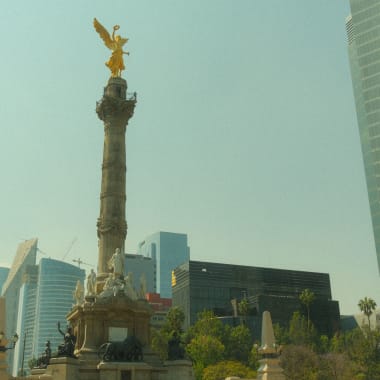
The best travel time for Mexico City is November to April: dry days with 21 to 27 °C, cool nights, clear visibility of the volcanoes. From late February to late April, the jacarandas color the avenues of La Condesa and Roma violet — the peak occurs in March. During the rainy season, the mornings belong to museums, the afternoons to thunderstorms; you visit Teotihuacán right at 08:00.
Puebla and the Pueblos Mágicos — Chiles en Nogada in late summer
Puebla shares the highland climate of the capital: dry season November to April with 21 to 26 °C during the day and 3 to 9 °C at night, rain from May to October. The rainy season speaks for the season of Chiles en Nogada (2026: July 1 to September 16); Atlixco shines from late November to early January in the Villa Iluminada.

San Miguel de Allende and Querétaro — spring-like year-round
At 1,900 meters, San Miguel de Allende is pleasant all year round: annual average 17.9 °C, dry season November to April, rain mainly from June to September. The nights from December to February become noticeably cool at around 5 °C. In the Sierra Gorda, it gets hot in April and May with up to 35 °C; the wine route of Querétaro celebrates the Arte, Queso y Vino Festival in Tequisquiapan in May (2026: May 7 to 24).
Oaxaca — Guelaguetza in July, whales in winter on the coast
The city of Oaxaca is located at 1,550 meters and is spring-like year-round; it is dry from November to April, with the most rain from June to September. Two cultural dates determine demand: the Guelaguetza on the two Mondays after July 16 (2026: July 20 and 27) and Día de Muertos at the end of October. On the coast, humpback whales pass by from December to March, the olive ridley sea turtles nest on Escobilla beach with the peak from September to November, and Zicatela's big surf swells come from May to October.

Chiapas — turquoise waterfalls only in the dry season
For Chiapas , the clearest recommendation is: November to April. San Cristóbal at 2,200 meters has dry days around 20 °C and nights down to 4 °C; Palenque in the lowland is most pleasant from December to February before the heat rises above 40 °C from March to May. The turquoise of the Cascadas de Agua Azul only exists in the dry season — from May to October, the river flows with brown high water, and in September, Palenque sees around 400 mm of rain.
Yucatán — cultural peninsula between Nortes and heat
On the Yucatán Peninsula , the best travel time is between November and March: 22 to 32 °C, hardly any rain, pleasant nights in Mérida and Valladolid. From December to February, the Nortes, cold fronts from the north, occasionally bring wind and clouds. April and May are the hottest months with up to 40 °C — Chichén Itzá then only opens at 08:00; during the equinoxes in March and September, the crowds are largest.

Riviera Maya and Caribbean coast — hurricane and sargassum season
The Riviera Maya is most beautiful from November to April: 24 to 30 °C, clear water, the best visibility for divers off Cozumel. The hurricane season officially runs from June 1 to November 30, with August to October being particularly critical. The whale sharks off Holbox come from mid-May to mid-September, most reliably in July and August.
Sargassum season at the Caribbean
From May to October, brown algae drift to the Caribbean shores, most strongly in June and July — the forecast from the University of South Florida predicts a record year for 2026. The clearest beaches are from November to February. Those traveling in summer resort to cenotes, the Bacalar lagoon, and the northern coast of Holbox. To be honest: For a pure beach holiday, June to September in the Caribbean is not the first choice.
Jalisco and Pacific coast — humpback whales from December to March
For Puerto Vallarta and Jalisco , we recommend November to May: 2 to 6 rainy days per month, 23 to 27 °C, in March and April there is practically no rain. The humpback whales in the Bahía de Banderas can be seen from December to March — in the 2025/26 season officially from December 8 to March 23 — best seen in January and February. In September, it rains the most with around 370 mm; for the Nevado de Colima, the dry season is a must.
Baja California — whales, whale sharks, and desert
Baja California has two faces: Los Cabos and La Paz in the south are ideal from mid-November to March (26 to 28 °C, nights 15 to 17 °C), in summer it gets very hot with 32 to 39 °C, and from August to October, the hurricane risk is highest. The Valle de Guadalupe in the north has a Mediterranean climate with winter rain and mild, dry summers; the Fiestas de la Vendimia in August are the big event. The real reason for a winter trip is the whales:
Whale Calendar Mexico 2025/26
- Humpback Whales Los Cabos — official season December 15 to April 30 (SEMARNAT), peak in January and February
- Gray Whales Laguna San Ignacio — Tours January 20 to April 5, best time February and March — the calves come close to the boat
- Blue Whales Loreto — mid-January to the end of March in the National Park Bahía de Loreto
- Whale Sharks La Paz — October to April; sea lions at Los Islotes year-round, swimming ban June 1 to August 31
- Whale Sharks Holbox (Caribbean) — mid-May to mid-September, peak in July and August
Monthly table — the best travel time per region
The overview evaluates each month from the perspective of an individual trip: ●● ideal — dry season, pleasant temperatures, the seasonal events of the region; ● good — shoulder or rainy season with afternoon showers, quieter and cheaper; ○ limited — heat, high water, sargassum, or hurricane risk. January to June:
| Region | Jan | Feb | Mar | Apr | May | Jun |
|---|---|---|---|---|---|---|
| ●● | ●● | ●● | ●● | ● | ● | |
| ●● | ●● | ●● | ●● | ● | ● | |
| ●● | ●● | ●● | ●● | ● | ● | |
| ●● | ●● | ●● | ● | ● | ○ | |
| ●● | ●● | ●● | ● | ○ | ○ | |
| ●● | ●● | ●● | ● | ○ | ○ | |
| ●● | ●● | ●● | ●● | ● | ○ | |
| ●● | ●● | ●● | ●● | ● | ○ | |
| ●● | ●● | ●● | ● | ● | ○ |
July to December:
| Region | Jul | Aug | Sep | Oct | Nov | Dec |
|---|---|---|---|---|---|---|
| ● | ● | ● | ● | ●● | ●● | |
| ● | ● | ● | ● | ●● | ●● | |
| ● | ● | ● | ●● | ●● | ●● | |
| ● | ● | ○ | ●● | ●● | ●● | |
| ○ | ○ | ○ | ● | ●● | ●● | |
| ○ | ○ | ○ | ● | ●● | ●● | |
| ○ | ○ | ○ | ○ | ●● | ●● | |
| ○ | ○ | ○ | ● | ●● | ●● | |
| ○ | ○ | ○ | ● | ●● | ●● |
Read the table as a guideline, not as a prohibition: A rainy season month in the highlands is a good travel month with brief showers; a ○ in the Caribbean means Sargassum and hurricane risk, not continuous rain.
Día de Muertos, Holy Week, Christmas — Festivals and Peak Season
Mexico's calendar has three peaks with fully booked hotels and significantly higher prices: the Christmas and New Year's weeks from December 20 to January 6, Holy Week before Easter (2027: March 21 to 28), and Día de Muertos around November 1 and 2. Additionally, the Mexican summer vacation in July and August sees the entire country traveling to the coasts.
Día de Muertos in Oaxaca and Mexico City
Día de Muertos is the most emotional festival in the country and is most intensely experienced in Oaxaca where it can be experienced most closely: Comparsas, sand carpets, the night vigils in the cemeteries of Xoxocotlán and Atzompa on October 31 and November 1. Hotels in the Centro are typically fully booked by mid-August; Sectur Oaxaca reported an occupancy rate of 88 to 90 percent in five-star hotels for the holiday period in 2025. In Mexico City the Gran Desfile de Día de Muertos has been parading along the Paseo de la Reforma to the Zócalo since 2016 — the date is usually announced shortly before, often on the weekend before November 2.
Booking Lead Time for Día de Muertos
For trips between October 25 and November 3 to Oaxaca or Mexico City, we strongly recommend securing hotels and domestic flights six to nine months in advance — the boutique hotels in the Centro of Oaxaca are small. As a tour operator, we occasionally have access to contingents; inquire early.
Other dates that may affect your planning
- Guelaguetza, Oaxaca: two Mondays after July 16 (2026: July 20 and 27), plus the Feria del Mezcal — book hotels early.
- Chiles en Nogada season, Puebla: July 1 to September 16, 2026.
- Fiestas de la Vendimia, Valle de Guadalupe: wine harvest festivals in August.
- Equinox Chichén Itzá: March 20/21 and September 22/23.
Insider Tip — the underestimated window
Mid-November to mid-December: The dry season has begun, the Sargassum is gone, the first whales have arrived — and the Christmas prices are not yet here. For us, this is the best time for a round trip from the highlands to the coast.
Rainy season and hurricane season — is the trip still worth it?
Yes — with the right route. The rainy season almost never brings continuous rain: Typically, there are one to two hours of thunderstorms in the late afternoon, after which it clears up. The highlands from Mexico City through Puebla and San Miguel to Oaxaca are green, cool, and less crowded from May to October; hotels are 20 to 30 percent below winter prices. The coasts are more critical: In the Caribbean, Sargassum and hurricane season coincide, while September is the wettest month in Chiapas and Puerto Vallarta.
Hurricanes are less frequent than headlines suggest — but real, as Otis demonstrated in 2023 in Acapulco. Those traveling to a coast between August and October need travel insurance that covers cancellation and rebooking in case of weather warnings — and a tour operator who can replan on site.
Insider Tip Rainy Season
Plan excursions for the morning, have lunch leisurely, and keep the afternoon flexible — the rain is warm and usually passes after one to two hours. We prefer to conduct summer trips through Mexico City, Puebla, Oaxaca, and San Miguel de Allende, ending in the Valle de Guadalupe.
Does your desired date fit your route? We are happy to check this — free and without obligation. Now request a consultation .
More Mexico travel information
Plan your Mexico trip with our guides:
- Flight to Mexico — direct flights, airports, and domestic flights
- Entry and Visa — 180 days visa-free, passport, customs
- Safety in Mexico — safe regions and specific behavioral rules
- Packing list Mexico — layers for the highlands, sunscreen for the cenotes
- Vaccinations and Health — standard vaccinations, dengue protection, altitude
Discover Mexico — our travel destinations
Each region has its own climate and best travel time:
- Mexico City — museums and jacarandas (Nov–Apr, bloom in March)
- Puebla & Pueblos Mágicos — baroque and chiles en nogada (Nov–Apr; Jul–Sep for the cuisine)
- San Miguel de Allende & Querétaro — colonial town and wine route (year-round)
- Oaxaca — mezcal and Pacific coast (Nov–Apr; July Guelaguetza, late October Día de Muertos)
- Chiapas — Palenque and turquoise waterfalls (Nov–Apr)
- Yucatán — Mérida, Chichén Itzá and cenotes (Nov–Mar)
- Riviera Maya & Caribbean Coast — Tulum, Bacalar, Holbox (Nov–Apr; whale sharks Jun–Aug)
- Jalisco & Pacific Coast — Puerto Vallarta, tequila, humpback whales (Nov–May; whales Dec–Mar)
- Baja California — whales and Valle de Guadalupe (mid Nov–Mar; Vendimia August)
- Mexico Overview — the country page with all regions and hotels
Let us find the travel period that suits your wishes — we know every region from personal experience. Arrange a consultation .
Your dream holiday, tailor-made by true connoisseurs.
From the first spark of inspiration to the moment you return home full of stories, we’re by your side – whether by phone, email or WhatsApp, whenever you need us. Every journey we design is as unique as you are: individually crafted with exclusive privileges and exceptional arrangements that make your experience truly unforgettable.
Experts for your trip