

Baja California
Whales, desert, and the aquarium of the world
Whales, desert, and the aquarium of the world
Humpback whales off Los Cabos from December to April, sea lions at the UNESCO island Espíritu Santo (2005), the coral reef of Cabo Pulmo, and the mission oases along Highway 1 — plus 1,500 kilometers north is the Valle de Guadalupe, where about 70 percent of Mexican wine is produced.

Best travel time
November to April
Why Baja California — desert, sea, and the aquarium of the world
Shortly after seven, the bay of La Paz is smooth as glass — and then, twenty meters next to the Panga, a spotted back breaks through the surface, seven meters long. A whale shark that filters plankton. Behind you, cardon cacti and red rock glow, in front of you, nothing but turquoise. This is how Baja smells: of salt, creosote bush, and sunscreen.
Most travelers to Mexico skip the 1,200-kilometer-long peninsula in the west. What they miss: Jacques Cousteau called the Gulf of California 'the aquarium of the world' (quoted from Infobae, 2026), UNESCO included its islands and protected areas on the World Heritage list in 2005, and between December and April, humpback, gray, and blue whales pass by the coast — each species at its own location. Plus, a coral reef that has measurably recovered, mission oases, and 1,500 kilometers north, the wine valley Valle de Guadalupe.
For us, luxury and wilderness connect here most honestly: resorts on one side, pangas and gravel roads on the other. Whoever includes Baja in a Mexico round trip plans seven to ten days — and puts the whales at the forefront in the calendar.
Baja California Sur — from Los Cabos to San Ignacio
A state of its own with the Pacific on the west and the Gulf on the east — the places follow Highway 1, we describe them from south to north.
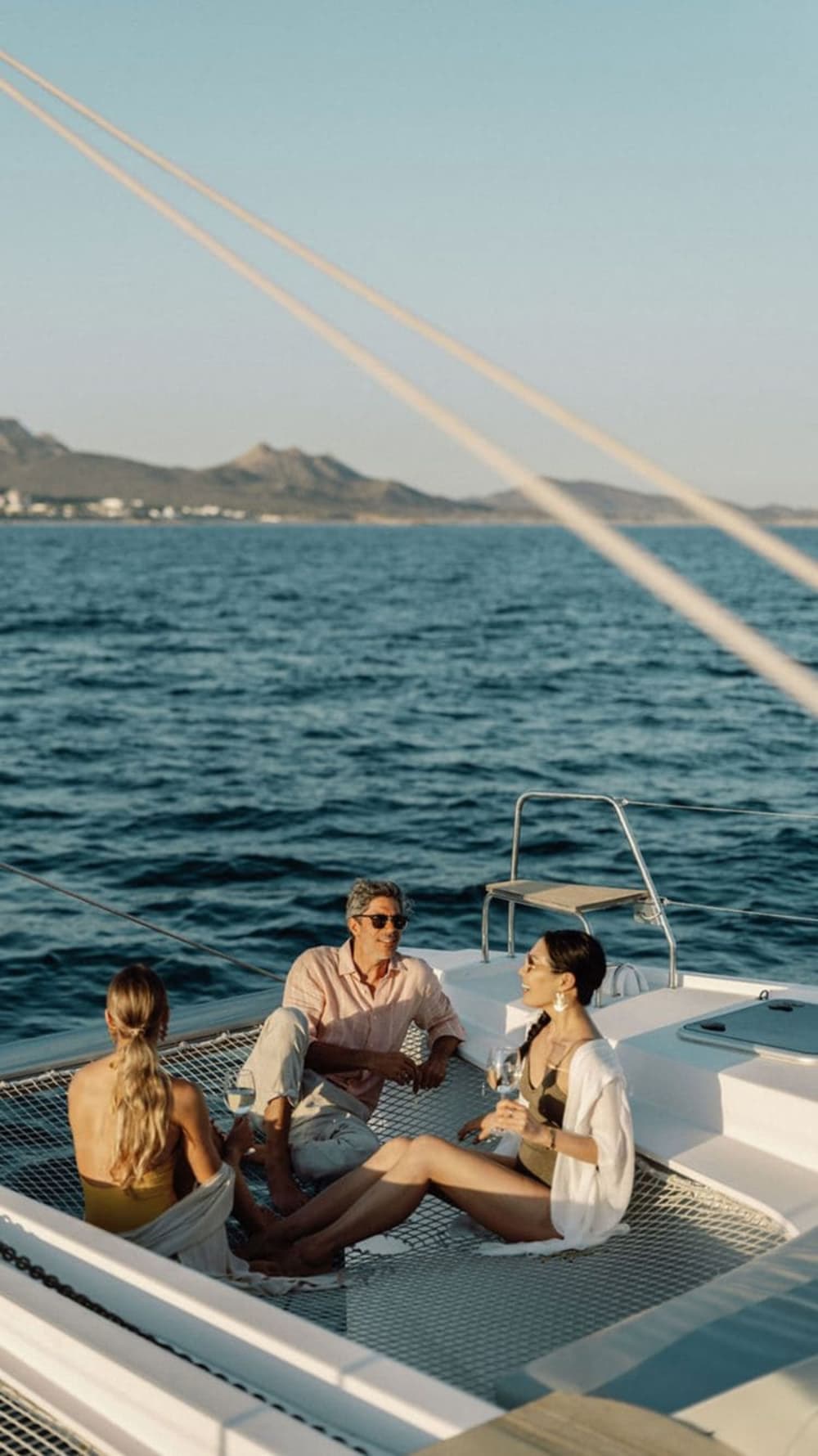
Los Cabos — San José, San Lucas, and the Blue Flag beaches
Los Cabos consists of two places along a 33-kilometer-long corridor. San José del Cabo is the quiet one: mission church from 1730 and the Gallery District around Calle Álvaro Obregón, which opens every Thursday from November to June for the Art Walk — 5 to 9 p.m., free admission. Cabo San Lucas is loud, with a marina, nightlife, and the rock arch El Arco where the Pacific and the Gulf meet.
In between lies the beaches where one can swim — at the Pacific, the surf prohibits that. Playa El Chileno was the first Blue Flag beach of Los Cabos and has a rock reef right in front of the sand — before nine o'clock, before the tour boats arrive, the best snorkeling area without a boat. Playa Las Viudas, the 'Widow's Bay,' is the smallest and emptiest of the 27 Blue Flag beaches (season 2025/26): granite rocks, tidal pools, no sunbeds — but stronger waves, so only swim when the sea is calm.
From mid-December to April, the humpback whales calve off the southern tip and jump so close to the coast that you can see them from the breakfast table.
Humpback whales Los Cabos — season 2025/26
- Season — December 15 to April 30 (SEMARNAT 2025); best sightings January and February
- Tour — about 2 hours from both marinas, approximately 1,600–2,600 MXN (about 80–130 EUR); we book small pangas with a biologist
- Rules — only providers with SEMARNAT pennants, maximum four boats per whale group, exclusion zones off Cabo Pulmo (NOM-131)
Todos Santos — Magical Town on the Pacific
An hour north of Cabo San Lucas, on the Pacific side, lies Todos Santos: a mission village from the 18th century in a palm oasis, recognized as Pueblo Mágico since 2006. It became famous due to the Hotel California — that the Eagles wrote their song here is a myth; the house is now a restaurant and bar. Worthwhile are galleries and farm-to-table restaurants; fifteen minutes south lies Playa Los Cerritos, the surf beach of Baja Sur with schools for beginners.
La Paz and Isla Espíritu Santo — sea lions, whale sharks, Balandra
La Paz is the capital and the most relaxed city of the peninsula: five kilometers of Malecón, fish tacos, sunsets in orange. In front of the bay lies Isla Espíritu Santo, part of the UNESCO World Heritage site 'Islands and Protected Areas of the Gulf of California' since 2005. At the rocks of Los Islotes lives a colony of California sea lions — 943 animals were counted by CONANP in 2024 — whose pups curiously circle around snorkelers; from October to April, whale sharks come to the bay. On the mainland, 27 kilometers north lies Balandra: a shallow lagoon through which one walks 100 meters at low tide, featuring the mushroom rock El Hongo as a landmark.
Isla Espíritu Santo and Balandra
- Tour Espíritu Santo — day trip with snorkeling at Los Islotes from about 2,000 MXN (about 100 EUR); swimming ban with sea lions June 1 to August 31
- Whale sharks — October to April, from about 1,600 MXN (about 80 EUR)
- Balandra — time slots 08:00–12:00 and 13:00–17:00, 450 persons per slot, about 125 MXN (about 6.50 EUR), QR wristband CONANP
Cabo Pulmo — the reef that came back
At the East Cape, around 100 kilometers north of Cabo San Lucas and the last 25 on gravel roads, lies the village of Cabo Pulmo before the only coral reef ecosystem in the Gulf of California (according to the National Park Authority CONANP) — the northernmost coral reef of the eastern Pacific, about 20,000 years old. After its designation as a national park in 1995, the fishing families gave up their nets: between 1999 and 2009, the fish biomass increased by 463 percent (Aburto-Oropeza et al., PLOS ONE 2011). Today, you snorkel in schools of thousands of spiny mackerel.
Cabo Pulmo National Park
- Entry — protected area wristband CONANP, included in boat tours; snorkeling tour about 1,500 MXN (about 77 EUR), departures at 09:00 and 13:00
- Best time — October to December for visibility and schools; July to September warm, but hurricane season
- Location — about 2 hours from San José del Cabo; no ATM
Loreto and Isla Coronado — blue whales and the first mission
Loreto is the oldest city of Baja: in 1697, the Jesuit Juan María de Salvatierra founded the mission Nuestra Señora de Loreto here, the first permanent Spanish settlement of the peninsula and until 1777 the capital of both Californias. In front lies the national park Bahía de Loreto (1996): five uninhabited volcanic islands, recognized as UNESCO World Heritage since 2005. Isla Coronado, eight kilometers off the coast, has a beach like in the South Seas and a colony of sea lions (snorkeling tour 1,660–1,960 MXN, about 85–100 EUR). From mid-January to the end of March, the blue whales feed in the bay: five-hour panga tours cost 2,200–5,000 MXN (about 110–255 EUR) plus about 120 MXN park fee.
Mulegé and San Ignacio — oases, cave paintings, and gray whales
North of Loreto, Baja becomes lonely. After the turquoise bays of Bahía Concepción comes Mulegé, a river village under date palms with the mission church from 1766; 135 kilometers further is San Ignacio, a palm grove around a spring pond with the mission church completed in 1786.
In the Sierra de San Francisco, designated by UNESCO in 1993, meter-high deer, whales, and human figures cover the ceilings of about 250 rock overhangs — the oldest paintings date back to 5500 B.C.; the Cueva del Ratón is accessible with INAH permission and a guide by off-road vehicle, the Cueva Pintada only with mule. And 60 kilometers west, in the Laguna San Ignacio in the El Vizcaíno Biosphere Reserve (UNESCO whale protection area since 1993), gray whales give birth to their calves — and bring them close to the boats.
Gray whales Laguna San Ignacio
- Season — officially December 15 to April 30; tours January 20 to April 5, best time February and March
- Price — boat tour about 1,350 MXN (about 69 EUR) with nature guide; private boat 10,800 MXN (about 550 EUR)
- Location — about 60 km trail west of San Ignacio; camps with tent cabins
- Tip — two nights in camp — the first trip is awe, the second is observation
Cañón de la Zorra — the waterfall of Sierra de la Laguna
Back in the south: Above the East Cape, the Sierra de la Laguna rises to 2,090 meters, a biosphere reserve since 1994. Near the village of Santiago, 42 kilometers north of San José del Cabo, the Cañón de la Zorra has cut into the granite: ten kilometers of trail, a steep descent over rock steps — and you stand at Sol de Mayo, a twelve-meter-high waterfall over a pool where swimming is allowed. Access through the Rancho Ecológico Sol de Mayo, 250 MXN (about 13 EUR, as of 2025), best in the morning; alcohol is prohibited.
Let us put together your Baja California program — we know pangas, camps, and resorts personally and know where the whales are in February. Schedule a consultation .
Valle de Guadalupe — Mexico's wine valley in the north
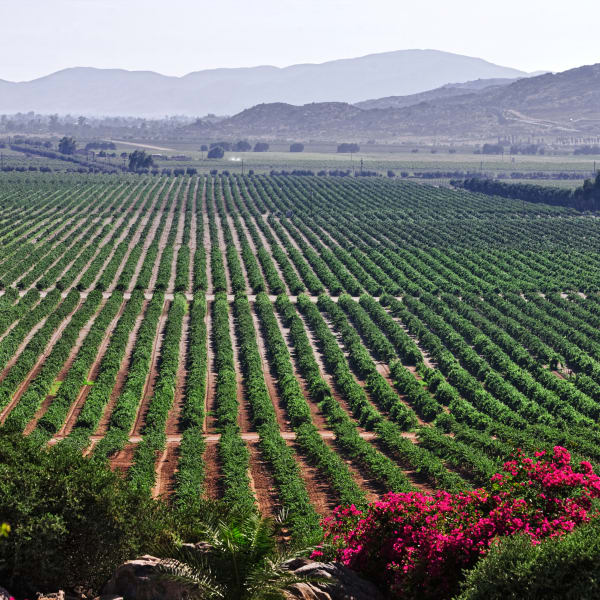
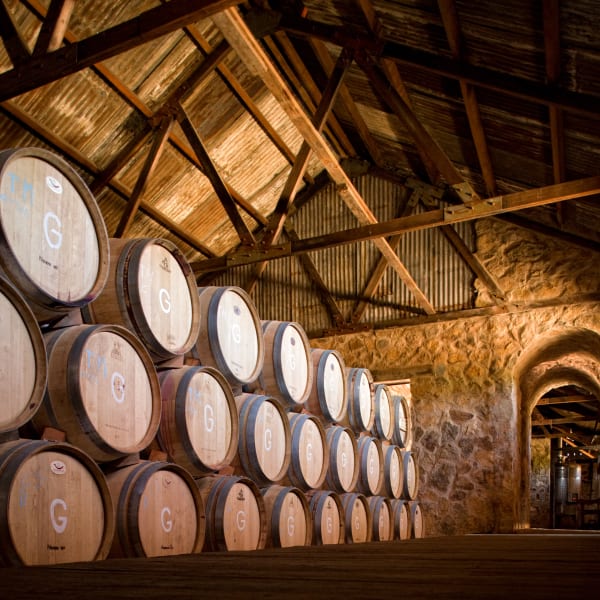
At the other end of the peninsula, 1,500 kilometers north of Los Cabos and 113 kilometers from the border with San Diego, lies the Valle de Guadalupe in the state of Baja California: a high valley 20 kilometers inland from Ensenada, which, with a Mediterranean climate and around 150 wineries (2023), produces about 70 percent of Mexican wine. From six wineries in 1999, it has grown into a region with outdoor dining and the Fiestas de la Vendimia every August.
Ruta del Vino — which wineries are worth visiting
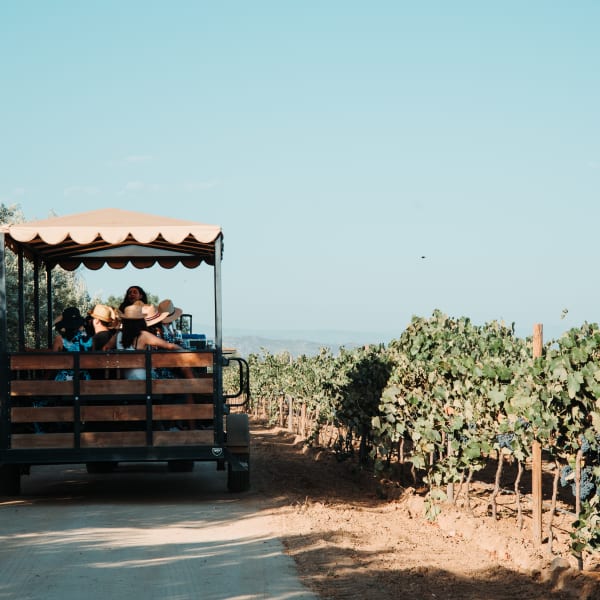
Three houses along highway 3 showcase the range: Monte Xanic, a pioneer of Mexican fine wine, known for Cabernet and Sauvignon Blanc; Adobe Guadalupe, a hacienda with wines named after archangels; and Bruma, a winery with hotel and restaurant between rocks and ancient oaks. Also the campestre cuisine at open grills under the trees.
Banyan Tree Veya Valle de Guadalupe — our address in the valley
Since July 2024, the valley has a house that we recommend without reservation: The Banyan Tree Veya Valle de Guadalupe features 30 villas with private pools, fireplaces, and terraces spread over a hill with views of the vineyards. The Mexican architect Michel Rojkind designed the property along with the winery Pictograma (only Grenache); in the restaurant Aldea, they cook from the valley, and the spa has its own temazcal.
Insider tip
Weekdays in the valley — from Friday to Sunday, half of Tijuana and San Diego comes to Valle, restaurants are fully booked. Tuesday to Thursday, the wineries are quiet. Book six months in advance for the Vendimia in August.
Your Baja California program — seven days Baja Sur
Seven days for the southern half; you can add the Valle de Guadalupe over Tijuana for two to three days. January to March all three whale species are present.
Day 1 — Arrival in Los Cabos
Landing in San José del Cabo (SJD), transfer to hotel; Thursday evenings Art Walk.
Day 2 — Humpback whales and Playa El Chileno
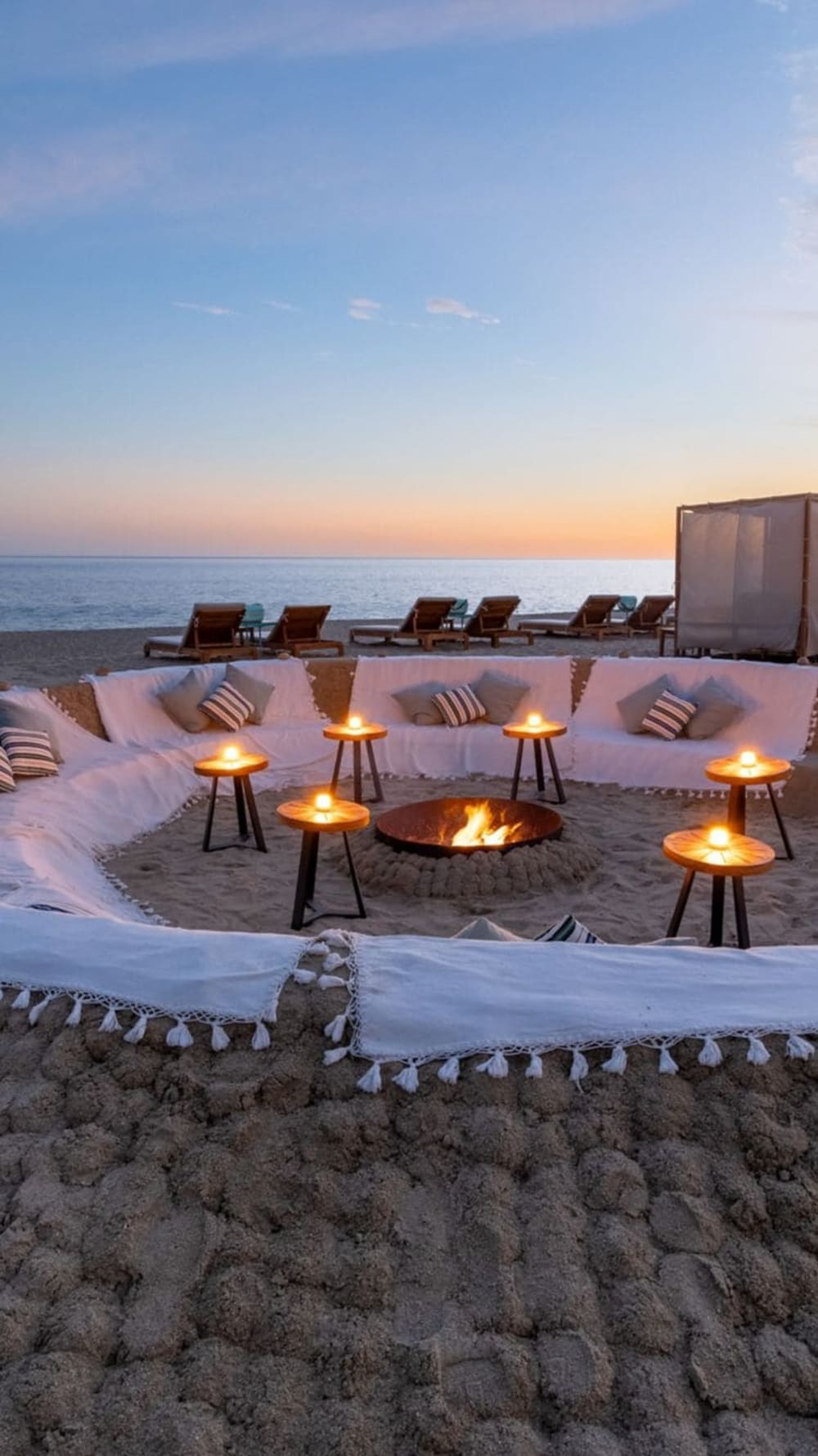
At eight o'clock whale tour from the marina, noon snorkeling at Chileno, evening fish tacos in San José.
Day 3 — Cañón de la Zorra or Cabo Pulmo
Early start to Santiago to Sol de Mayo — or all the way to Cabo Pulmo to the reef; those who want both will stay in the village.
Day 4 — Todos Santos and La Paz
Via Highway 19 to Todos Santos, surf break at Los Cerritos, evening Malecón in La Paz.
Day 5 — Isla Espíritu Santo
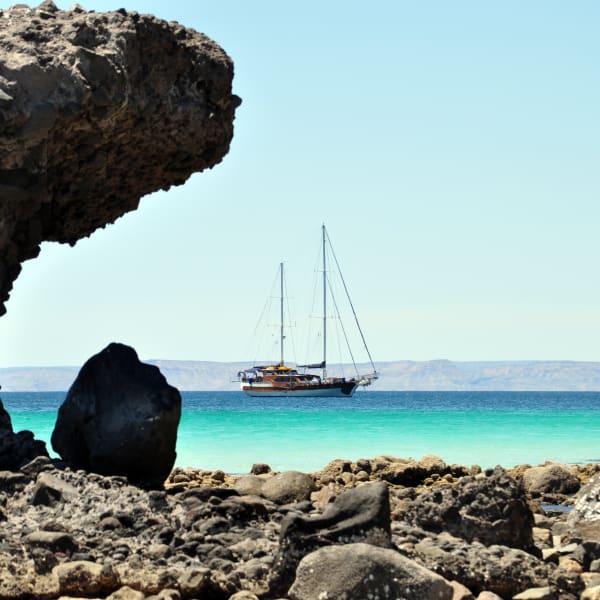
All-day boat tour with sea lions at Los Islotes and whale sharks in the bay; in the afternoon Balandra at low tide.
Day 6 — Highway 1 to Loreto
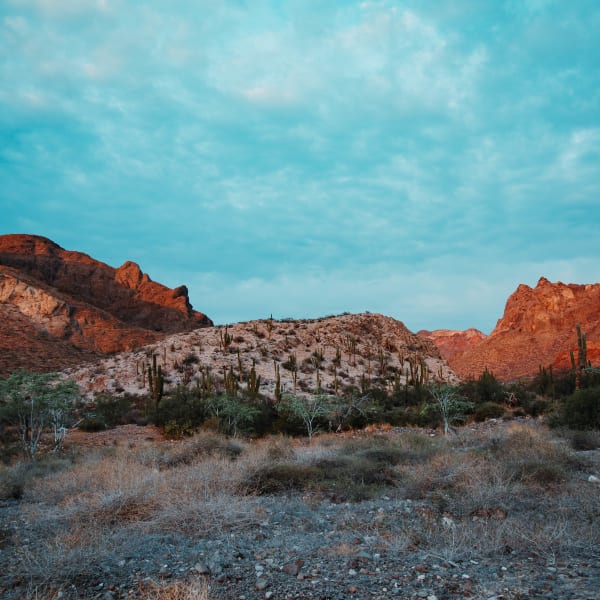
Four to five hours through the cactus desert, evening mission square in Loreto.
Day 7 — Blue whales and Isla Coronado
In the morning to the blue whales, in the afternoon Isla Coronado. Return flight from Loreto (LTO) — or continue to San Ignacio for gray whales, turning it into ten days.
Where to stay — resorts at the southern tip, camps in the north
Resorts at the southern tip, boutique hotels and tent cabins in the north — we personally know two houses:
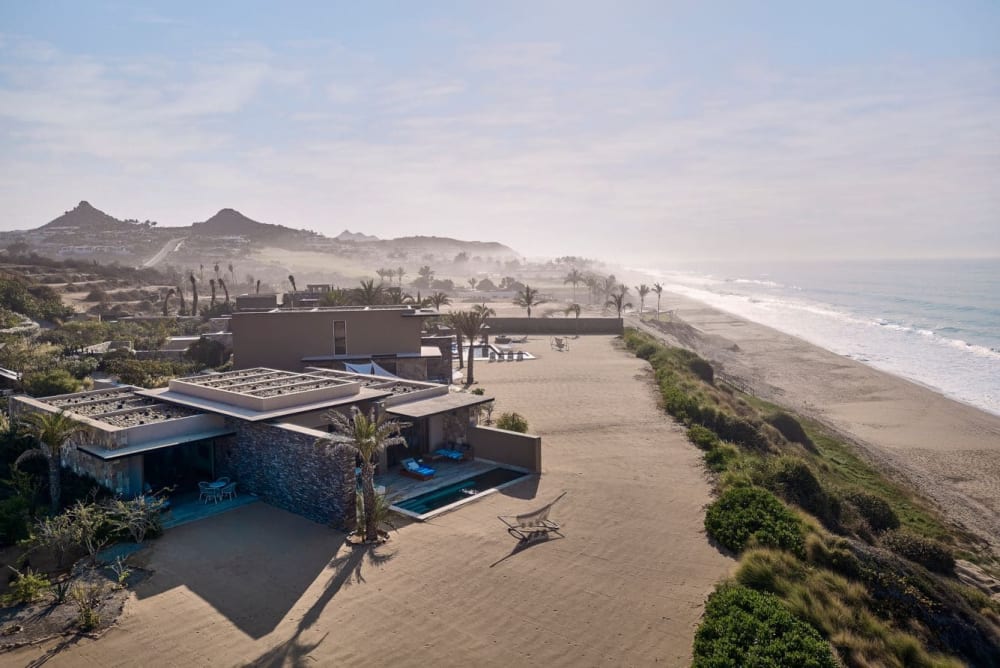
One&Only Palmilla — the grande dame of Los Cabos: The beach is one of the few swimmable ones at the southern tip and has the Blue Flag, plus 27 holes of golf by the sea and a spa in the palm grove. From the terrace, you can see the humpback whales jumping in February. From about 16,700 MXN (850 EUR) per person and night.
Amanvari — the new Aman at the East Cape, an hour north of the airport: 18 casitas with private pools on the beach or at the river mouth, three restaurants, a spa with temazcal, and almost five kilometers of swimmable coast; Cabo Pulmo is a half-day trip. Price on request.
In Valle de Guadalupe, the Banyan Tree Veya is our address; in La Paz, Loreto, and Todos Santos we choose small houses. We know which casita has the sunrise and which camp has warm water. Make an inquiry .
Good to know
Best travel time
November to April: dry air, 24 to 28 degrees, and all the whales off the coast — January to March is the busiest time. May and June are hot and empty, July to October is hurricane season with the clearest water in Cabo Pulmo. The Valle de Guadalupe harvests in August. More about the best travel time for Mexico .
Whale calendar Baja California
| Species | Location | Time | Note |
|---|---|---|---|
| Humpback whale | Los Cabos | December 15 to April 30 | Peak January/February; jumps, mother with calf |
| Gray whale | Laguna San Ignacio, Ojo de Liebre, Bahía Magdalena | January to early April | Peak February/March; calves come to the boat |
| Blue whale | Bahía de Loreto | Mid-January to the end of March | Feeding ground; also fin whales |
| Whale shark | Bay of La Paz | October to April | Snorkeling with guide, licensed boats |
| Sea lion | Los Islotes, Espíritu Santo | September to May | Swimming prohibited June 1 to August 31 |
Arrival — SJD, LAP, LTO, and Tijuana
From Europe, the usual route goes nonstop to Mexico City and in about two hours onward to San José del Cabo (SJD), La Paz (LAP), or Loreto (LTO); alternatively via US hubs. For the Valle de Guadalupe, fly to Tijuana (TIJ) or San Diego (SAN) — the Cross Border Xpress pedestrian bridge leads directly to Tijuana airport, from there it takes 1.5 hours to the valley. Both chapters connect via the domestic flight La Paz–Tijuana. Details in the travel tip Flight to Mexico .
Safety in Baja California Sur
Baja California Sur has been one of the safest states in Mexico for years — Los Cabos, Todos Santos, La Paz, Loreto, and the mission villages can be easily experienced both during the day and in the evening. In the north, we stay in the Valle de Guadalupe and Ensenada and avoid downtown Tijuana. Like everywhere: Uber, DiDi, or hotel taxis instead of street taxis, overland trips only in daylight, valuables in the safe. Current advice from the Foreign Office is summarized in the travel tip Safety in Mexico together.
Basic caution
Highway 1 is two-lane, with no hard shoulder and unlit at night — cattle on the road are the most common cause of accidents. Refuel in every town. Swim only at designated beaches along the Pacific.
Transportation — rental car or driver
Baja Sur is rental car country: good roads, little traffic; an SUV is worth it for Cabo Pulmo and Laguna San Ignacio, full coverage without deductible is mandatory. If you prefer to watch rather than drive, we can provide a driver for the roughly 800 kilometers to San Ignacio — in the valley, he is the right choice after the second tasting anyway. What to pack is listed in our Packing list for Mexico .
Costs at a glance
- Humpback whale tour Los Cabos — approx. 1,600–2,600 MXN (approx. 80–130 EUR), 2 hours
- Isla Espíritu Santo with sea lions — from approx. 2,000 MXN (approx. 100 EUR); whale shark snorkeling from approx. 1,600 MXN (approx. 80 EUR)
- Cabo Pulmo snorkeling tour — approx. 1,500 MXN (approx. 77 EUR) including wristband; Cañón de la Zorra 250 MXN (approx. 13 EUR); Balandra approx. 125 MXN (approx. 6.50 EUR)
- Blue whale tour Loreto — 2,200–5,000 MXN (approx. 110–255 EUR) plus approx. 120 MXN (approx. 6 EUR) park fee
- Gray whale tour Laguna San Ignacio — approx. 1,350 MXN (approx. 69 EUR); private boat 10,800 MXN (approx. 550 EUR)
- Accommodation — boutique hotel in La Paz or Loreto from approx. 3,000 MXN (approx. 150 EUR); One&Only Palmilla from approx. 16,700 MXN (850 EUR) per person
Prices as of September 2026. 1 EUR ≈ 19.6 MXN.
Discover more of Mexico
- Mexico City — museums, Roma, and Polanco, the hub
- Jalisco & Pacific Coast — tequila and Puerto Vallarta
- Oaxaca — mezcal, markets, and the surfing coast of Puerto Escondido
- Yucatán — cenotes, Chichén Itzá, and Holbox
You can find all travel information — from entry requirements to vaccinations — in our Mexico travel guide . Let's put together your Baja California program — with the right month for your whales and houses that we know ourselves. Schedule a consultation .
To book a trip or for more information, contact us. We'll help you plan and guide you through your upcoming adventure!
Frequently Asked Questions
Baja California Sur has been one of the safest states in Mexico for years; Los Cabos, La Paz, Todos Santos, Loreto, and the mission villages are easy to travel during the day and in the evening. In the north, we focus on the Valle de Guadalupe and Ensenada. The usual rules apply: Uber or hotel taxi instead of street taxi, drive Highway 1 only in daylight, keep valuables in the safe. Current advice from the Foreign Office can be found in our travel tip on safety in Mexico.
From mid-December to the end of April — depending on the species at a different location. Humpback whales breach off Los Cabos (season December 15 to April 30, peak January/February), gray whales calve in Laguna San Ignacio (tours January 20 to April 5), blue whales feed from mid-January to the end of March in Bahía de Loreto, and whale sharks swim from October to April in the Bay of La Paz. If you want to see all four, travel in the second half of February.
Seven days for Baja Sur: two in Los Cabos with humpback whales and Playa El Chileno, one for Cabo Pulmo or Cañón de la Zorra, two in La Paz with Isla Espíritu Santo and Balandra, two in Loreto with blue whales and Isla Coronado. With the gray whales in San Ignacio, it will be ten. The Valle de Guadalupe in the north is a chapter of its own with its own approach via Tijuana — two to three days are sufficient.
Not in the open Pacific at Cabo San Lucas and Todos Santos — the currents are dangerous. However, in the corridor between the two places: Playa El Chileno, Santa María, Palmilla, and Las Viudas have the Blue Flag (27 beaches in Los Cabos, season 2025/26) and are located in protected bays. El Chileno has the best snorkeling reef without a boat, Las Viudas is the emptiest bay but should be approached with caution in waves.
A day trip from La Paz with snorkeling at the sea lion colony Los Islotes, lunch on the beach, and boat ride through the UNESCO island bays (2005) costs from approx. 2,000 MXN (approx. 100 EUR) per person. Whale shark snorkeling in the bay costs from approx. 1,600 MXN (approx. 80 EUR). From June 1 to August 31, swimming with sea lions is prohibited due to their breeding season; the island itself remains accessible.
Yes, if you start early: From San José del Cabo it takes about two hours, the last 25 kilometers are unpaved. The snorkeling tour to the reef costs about 1,500 MXN (approx. 77 EUR) including the protected area wristband and starts at 09:00 and 13:00. If you want to see the large schools and the best visibility, come between October and December — and spend the night in the village to be the first on the water in the morning.
The easiest way is through San Diego (SAN) or Tijuana (TIJ). From Tijuana airport, it’s about 113 kilometers and about 1.5 hours along the coastal highway to the valley, 20 kilometers behind Ensenada; the Cross Border Xpress pedestrian bridge connects San Diego directly with the terminal in Tijuana. From Baja Sur you can fly Mexican domestic La Paz–Tijuana. We organize the transfer with a driver who will also accompany you on the Ruta del Vino.
For the southern half, it’s the best choice: Highway 1 is well developed, the distances are clear — Los Cabos–La Paz about two hours, La Paz–Loreto four to five. An SUV with ground clearance helps for Cabo Pulmo and Laguna San Ignacio, full coverage without deductible is mandatory, and driving is only in daylight. Alternatively, we provide a driver; in Valle de Guadalupe, he is useful due to the tastings.