

Packing list Mexico: This belongs in your luggage
Climate zones, cenote rules & adapters
Climate zones, cenote rules & adapters
Mexico is not a country for a suitcase full of options — it is a country for the right layering system. At 2,240 meters in Mexico City, you need a jacket in the evening, water shoes in a cenote in Yucatán, a windbreaker and binoculars on the whale watching boat off Baja California, and a shirt for two Michelin stars in Polanco. This packing list sorts by region, season, and experience what really belongs in your baggage. Those who plan a Mexico trip with Latin Memories will have it tailored specifically to their route.
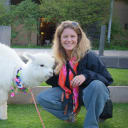
- Three climate zones, one suitcase — an overview of Mexico's regions
- Clothing — layers instead of options
- Sun, reef, and cenotes — the right protection
- Rain, mosquitoes, and hurricane season — June to October
- Technology, whales, and cultural sites — the equipment for each experience
- First aid kit and documents — what must not be missing
- More Mexico travel information
- Discover Mexico — our travel destinations
Three climate zones, one suitcase — an overview of Mexico's regions
In the morning, there is frost on the roof tiles of San Cristóbal, at noon the air shimmers over the cenote at 30 degrees, and in the evening a cool breeze blows through the Jacaranda alleys of Roma. Three seasons in one day. Most packing mistakes occur because travelers forget the highlands.
The highlands — Mexico City (2,240 m), Puebla (2,135 m), San Miguel de Allende (1,910 m), Oaxaca City (1,550 m) and San Cristóbal in Chiapas (2,200 m) — is spring-like during the day, but cools down at night in the dry season from November to April to 3 to 9 degrees; in San Cristóbal, the January average is below 11 degrees.
The coasts — Yucatán and the Riviera Maya on the Caribbean, Puerto Escondido and Huatulco in Oaxaca, Puerto Vallarta in Jalisco — are tropical: 23 to 32 degrees, reaching up to 40 degrees in April and May in Yucatán. Baja California is desert by the sea: hot days, cool nights, and on the whale watching boat a breeze that goes through your T-shirt even at 24 degrees.
Table: Region, Climate, and what belongs in the luggage
| Region | Climate | This belongs in your luggage |
|---|---|---|
| Mexico City & Puebla | Highland, daytime 21–26 °C, cool nights, rain from May to Oct | Layers, fleece jacket, closed shoes, rain jacket, an elegant outfit |
| San Miguel de Allende & Querétaro | Highland, dry, sunny, cool nights | Cardigan, hat, sunscreen, comfortable shoes for cobblestones |
| Spring-like city (1,550 m), hot coast, rain from June to Oct | Linen for the city, UV shirt for the coast, water shoes for Hierve el Agua | |
| Cool and humid highlands (May–Oct), hot and humid lowlands around Palenque | Fleece and rain jacket for San Cristóbal, long light pants and mosquito repellent for Palenque | |
| Tropical, 23–32 °C, hurricane season June–Nov | Reef-friendly sunscreen, water shoes, snorkeling gear, hat, mosquito repellent | |
| Jalisco & Pacific Oaxaca | Tropical, dry season Nov–Apr, rain May–Oct | Swimwear, rash guard, sandals with grip for boats, binoculars for whale season Dec–Mar |
| Desert climate, hot days, cool nights, wind at sea | Windbreaker, binoculars, warm layer for boat tours, sturdy shoes |
Which region works best when, you can read in our guide to the best travel time for Mexico .
Clothing — layers instead of options
The rule for Mexico is the onion principle: thin merino or cotton layers, a packable fleece or down jacket, and a rain jacket for the day bag. This will get you through a morning in Teotihuacán and an evening in Condesa without having to return to the hotel; at the coast, keep linen, cotton, and swimwear.
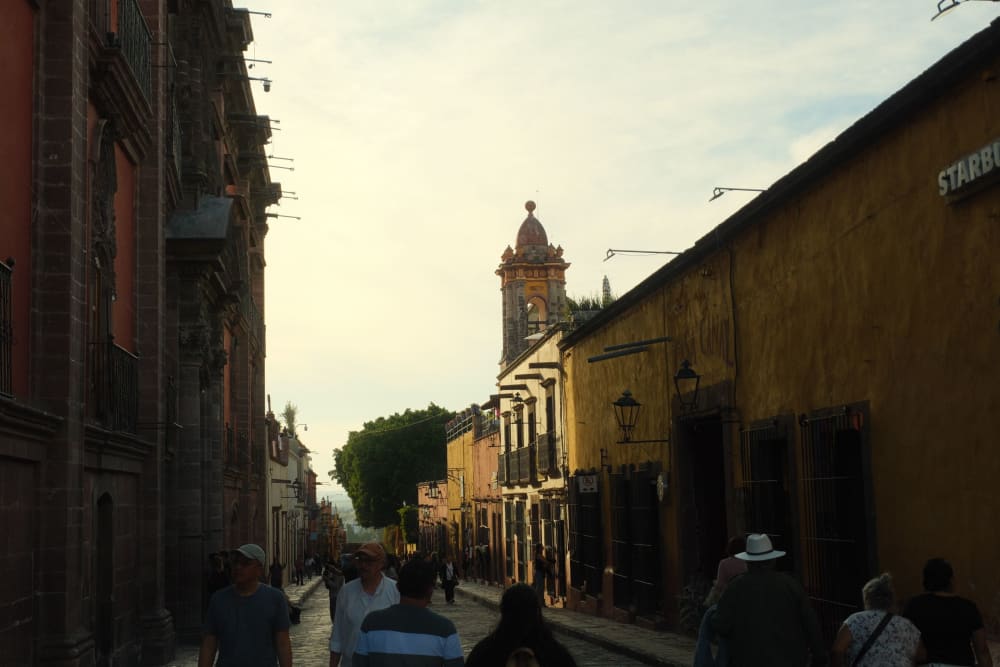
Clothing checklist
- 3–4 light tops, at least one long-sleeved (sun, mosquitoes, air conditioning)
- 1 light long pants, 1 pair of jeans or chinos for the highlands
- Packable fleece or down jacket for evenings above 1,500 meters, warm socks and a thin cap for San Cristóbal
- Rain jacket with hood — essential from June to October
- Worn-in sneakers or light hiking shoes with grip
- Sandals with grip for boats and beach, water shoes for cenotes
- Swimwear, rash guard or UV shirt, sun hat with a wide brim
- An elegant outfit for Polanco or Roma, a light scarf for churches
Fine Dining in Polanco — what to wear in the evening
Pujol and Quintonil in Polanco each hold two stars in the Guía Michelin México 2026, and Quintonil ranks third in the World's 50 Best Restaurants 2025. There is no formal dress code — but Mexico City dresses deliberately in the evening: long pants and shirt, dress or blouse, closed shoes. Shorts and activewear look out of place; a cardigan is worth it, as the air conditioning is powerful.
Insider tip
A large scarf made of merino or cashmere is the most versatile item in the Mexico suitcase: warmth at night in San Cristóbal, shoulder cover in the church of Cholula, blazer substitute in a fine dining restaurant, and wind protection on the whale watching boat. We always pack it in our carry-on.
Churches, monasteries, and villages — dressed respectfully
In churches and monasteries — from Santo Domingo in Oaxaca to the missions of Sierra Gorda — it is required to cover shoulders and knees, hat off. In the Tzotzil villages of San Juan Chamula and Zinacantán near San Cristóbal, as well as in Santa María Tonantzintla near Cholula, photography is prohibited inside the churches — otherwise, in Chamula, you risk your camera.
Sun, reef, and cenotes — the right protection
The sun is high in Mexico all year round, and at 2,240 meters in Mexico City, UV radiation is significantly stronger than at sea level. A hat, sunglasses with UV filter, SPF 50, and a UV shirt for snorkeling days belong in your carry-on.
Reef-friendly sunscreen — where it is mandatory and where it is prohibited
The cenotes of Yucatán are closed freshwater systems: In Ik Kil, Suytun, Xkekén, and Samulá near Valladolid, sunscreen is completely prohibited — even the 'reef-safe' version — and taking a shower before swimming is mandatory. In Gran Cenote near Tulum, only reef-friendly cream is permitted.

In marine protected areas, the reversal applies: At Playa Balandra near La Paz, the CONANP only allows biodegradable sunscreen, the parks in Cozumel explicitly recommend 100 percent biodegradable products (cozumelparks.com, as of 2026), and in Cabo Pulmo — a national park since 1995 — snorkeling providers ask for this upon check-in. The correct answer is always the same: mineral filters based on zinc oxide or titanium dioxide, without oxybenzone and octinoxate — two tubes, as they are expensive or sold out locally.
Fact box: cenote rules
- Sunscreen — completely prohibited in most cenotes, only reef-friendly in Gran Cenote
- Shower — mandatory before swimming, even without cream
- Life jacket — required in cave cenotes like Xkekén and Samulá
- Water shoes — limestone is sharp, ladders are slippery
- Snorkel and mask — personal equipment is worthwhile from the second day, rental masks are often scratched
- Cash — Dos Ojos, Xkekén, and many village cenotes do not accept cards
Water and reef checklist
- Reef-friendly sunscreen (mineral), 2 tubes, SPF 50
- Own mask with good fit and dry snorkel — fins can be rented on-site
- Water shoes with sturdy soles: cenotes, Hierve el Agua, Cañón de la Zorra
- Dry-bag for phone and passport on every boat
- Microfiber towel, UV shirt, cap with band
Rain, mosquitoes, and hurricane season — June to October
The rainy season brings short, heavy showers almost everywhere from May to October in the afternoons; the Caribbean rains the longest in September and October. Hurricane season officially runs from June to November, peaking from August to October. A hurricane is rare, a wet shoulder is certain — pack a rain jacket, rain protection for the day bag, and quick-drying clothing; wet cotton jeans stay wet in the jungle for two days.
More important than the rain are its consequences: mosquitoes. Dengue, Zika, and Chikungunya are transmitted by daytime-active Aedes mosquitoes — the Foreign Office explicitly recommends exposure prophylaxis (as of 05.09.2026). This means: repellent with 30 to 50 percent DEET or 20 percent Icaridin, light long clothing at dusk, and additionally for Palenque, the Lacandon region, and Holbox trousers and socks impregnated with permethrin. Our guide to vaccinations and health in Mexico .
Note
Aedes mosquitoes bite during the day, in cities and on hotel terraces — also in Mérida, Tulum, and Puerto Vallarta. Apply the repellent in the morning after sunscreen (first sunscreen, then mosquito protection) and renew it after swimming. There is no vaccination against dengue for first-time travelers, only prevention.
Technology, whales, and cultural sites — the equipment for each experience
Adapters and power — Type A/B, 127 volts
Mexico uses Type A and B power outlets — the flat American plugs — at 127 volts and 60 hertz (worldstandards.eu, as of 2026). Euro plugs do not fit without an adapter; it costs a few euros and is available in every OXXO, but not in every hotel room. Chargers work with 100 to 240 volts and do not need a converter; hairdryers and straighteners only run at full power with a 110-volt specification.
- Travel adapter Type A/B, at least two pieces
- Power bank with 10,000 mAh for long transfer days
- eSIM or Mexican SIM (Telcel) for Uber, DiDi, and offline maps
- Waterproof phone case, headphones
Whale watching — windbreaker, binoculars, dry bag
From mid-December to the end of April, humpback whales migrate near Los Cabos, gray whales calve in Laguna San Ignacio, and blue whales cross off Loreto (official season 15.12.–30.04., SEMARNAT). The humpback whale season lasts from December to March in Puerto Vallarta and the coast of Oaxaca. The boats leave early, the water splashes, the wind cools — pack a windbreaker, cap with strap, polarized sunglasses, binoculars, and a dry bag; take travel sickness tablets an hour before departure.
Insider tip
Binoculars instead of telephoto lens — the gray whales in Laguna San Ignacio come close to the boat, while the blue whales off Loreto stay 200 meters away. An 8×42 binoculars weighing 400 grams is sufficient for both; for the camera, 200 to 300 millimeters is sufficient, anything above that shakes on the boat. You can find the season and providers on our page about Baja California .
Cultural sites — Teotihuacán, Chichén Itzá, Palenque, Monte Albán
The major INAH zones open at 8 AM — those who are there then can enjoy Teotihuacán or Palenque for almost an hour alone. There is hardly any shade. Category I zones like Teotihuacán, Palenque, and Monte Albán cost 210 MXN (about 11 EUR) for foreigners since January 1, 2026, Chichén Itzá with country share 697 MXN (about 36 EUR) — often only in cash.
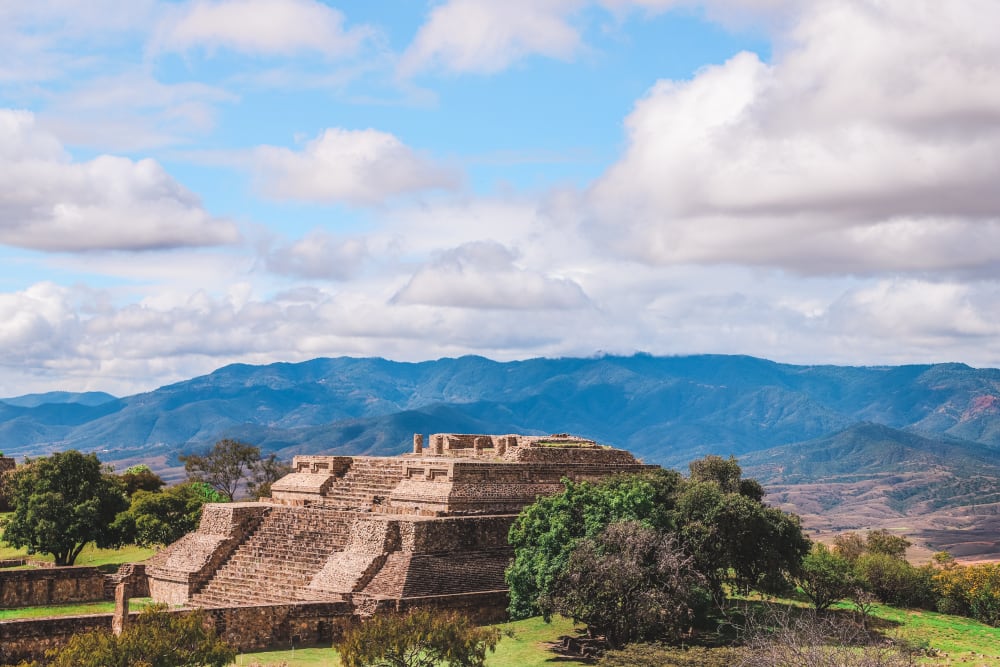
- Water 1.5 liters per person, electrolyte powder for hot days in Yucatán
- Hat with a wide brim, sunglasses, sunscreen SPF 50, light long-sleeve shirt
- Closed shoes with grip — the steps are high and smooth, no sandals
- Cash in small bills for entry, parking, and guides
- Small day backpack — large backpacks are left at the counter in Teotihuacán
Note: Drones and tripods
In the archaeological zones of INAH, drone flights are prohibited without prior approval from the institute — a separate process with lead time and fees, which is practically never granted for holiday photos. CONANP also prohibits drones in marine protected areas like the Islas Marietas. Tripods and professional camera equipment are considered subject to approval in INAH zones; phones and cameras without tripods are welcome everywhere. Our advice: leave the drone at home.
First aid kit and documents — what must not be missing
Checklist first aid kit
Pharmacies in Mexico are well-stocked — nevertheless, a basic supply belongs in your luggage, especially for Chiapas, Holbox, and the Sierra Gorda. Personal medications travel in original packaging with a prescription copy, doubled, and distributed between checked luggage and carry-on. What is medically sensible — up to the question of which painkiller is taboo at the suspicion of dengue — can be read in our guide to vaccinations and health .
- Electrolyte powder, a remedy for travel diarrhea (Loperamide only for transfer days)
- Paracetamol as a pain and fever medication — no ibuprofen, no acetylsalicylic acid for fever in dengue areas
- Plasters, blister plasters, disinfectant spray, tweezers
- Insect repellent (DEET 30–50% or Icaridin 20%), after-sun, cooling gel for stings
- Tablets against motion sickness for boat tours
- Vaccination card; blood type and allergies on a card in the wallet
Checklist documents
German citizens do not need a visa; passport, duration of stay and customs can be summarized in our guide to entry into Mexico together. Travel health insurance with repatriation is deemed urgently necessary by the Foreign Office — private clinics require prepayment (as of 05.09.2026), so your credit card needs an increased limit.
Fact box: Document check before departure
- Passport — valid for at least 6 months, 2 copies (suitcase and cloud), original in hotel safe
- Travel health insurance — with repatriation, printed policy and emergency number
- Credit card — increased limit, bank informed, second card kept separately
- Driver's license — the German one is sufficient for rental cars, the international is the safe addition
- Emergency numbers — 911 (emergency call Mexico), German Embassy +52 55 5283 2200, emergency +52 55 5431 2177, your contact person at Latin Memories
- Booking confirmations — stored offline, address of the first hotel for entry
Do you want a packing list that fits your itinerary? We will compile it with your travel plan. Request a consultation now, no obligation .
More Mexico travel information
Plan your Mexico trip with our specialized guides:
- Best travel time Mexico — climate month by month
- Flight to Mexico — direct flights and luggage
- Safety in Mexico — regions and behavior rules
- Entry into Mexico — visa, FMM, and entry regulations
- Vaccinations & health — dengue, altitude, first aid kit
Discover Mexico — our travel destinations
Each region packs differently. Discover the destinations for which this list has been written:
- Mexico City — Polanco, Roma, Teotihuacán
- Yucatán — Mérida, Chichén Itzá, cenotes
- Riviera Maya & Caribbean coast — Tulum, Bacalar, Holbox
- Oaxaca — Highland city and Pacific coast
- Puebla & Pueblos Mágicos — Cholula, Atlixco, Cuetzalan
- San Miguel de Allende & Querétaro — wine route, Sierra Gorda
- Jalisco & Pacific coast — tequila, Chapala, Puerto Vallarta
- Baja California — whales, Cabo Pulmo, Valle de Guadalupe
- Chiapas — San Cristóbal, Palenque, Lago de Montebello
- Overview of Mexico — all regions on one page
We know each of these regions from our own experience — and know what is ultimately really missing in the suitcase. Schedule a consultation .
Your dream holiday, tailor-made by true connoisseurs.
From the first spark of inspiration to the moment you return home full of stories, we’re by your side – whether by phone, email or WhatsApp, whenever you need us. Every journey we design is as unique as you are: individually crafted with exclusive privileges and exceptional arrangements that make your experience truly unforgettable.
Experts for your trip