

Yucatán
Maya culture, Haciendas and Cenotes — the quiet side of the peninsula
Maya culture, Haciendas and Cenotes — the quiet side of the peninsula
Chichén Itzá (UNESCO World Heritage since 1988), the white city Mérida, restored Haciendas and more than 6,000 Cenotes: Yucatán is the cultural peninsula of Mexico — and according to the Mexico Peace Index 2026, it is the most peaceful state in the country.

Best travel time
November to March
Why Yucatán — the quiet side of the peninsula
Shortly after eight in the morning, Chichén Itzá is still shrouded in mist. The limestone steps of the Kukulcán Pyramid are cool, a motmot calls from the bush, it smells of damp stone. An hour later, the buses from the coast arrive — but by then, you are already sitting in a cenote, looking through the hole in the cave ceiling at the sky and only hearing the dripping from the roots.
Most travelers to Mexico experience the peninsula from the Caribbean coast: hotel zone, day trip, back to the beach. What they miss is the real Yucatán — the state in the northwest with the colonial capital Mérida, Maya cities like Chichén Itzá (UNESCO World Heritage since 1988) and Ek Balam, restored Henequén Haciendas, and more than 6,000 registered Cenotes. And: The Mexico Peace Index 2026 from the Institute for Economics & Peace ranks Yucatán as the most peaceful state in the country for the ninth consecutive year.
Who is planning a Mexico round trip finds here the cultural heart of the peninsula. We consciously leave out the hotel zone of Cancun and Playa del Carmen — those who want to experience the Caribbean quietly, will find it in Tulum, Bacalar, and Holbox in our region Riviera Maya & Caribbean coast .
Sights in Yucatán — Mérida, Maya cities, and Cenotes
Mérida — the white city and Paseo de Montejo
Mérida is the capital of Yucatán, with around one million inhabitants, it is the largest city on the peninsula — and yet one that you experience on foot. The nickname 'white city' comes from the bright limestone facades; in 2019, readers of Condé Nast Traveler voted Mérida in the Readers' Choice Awards as the 'World's Best Small City'. The Paseo de Montejo showcases the wealth from the Henequén boom around 1900: Palacio Cantón, Casas Gemelas, Flamboyant trees.
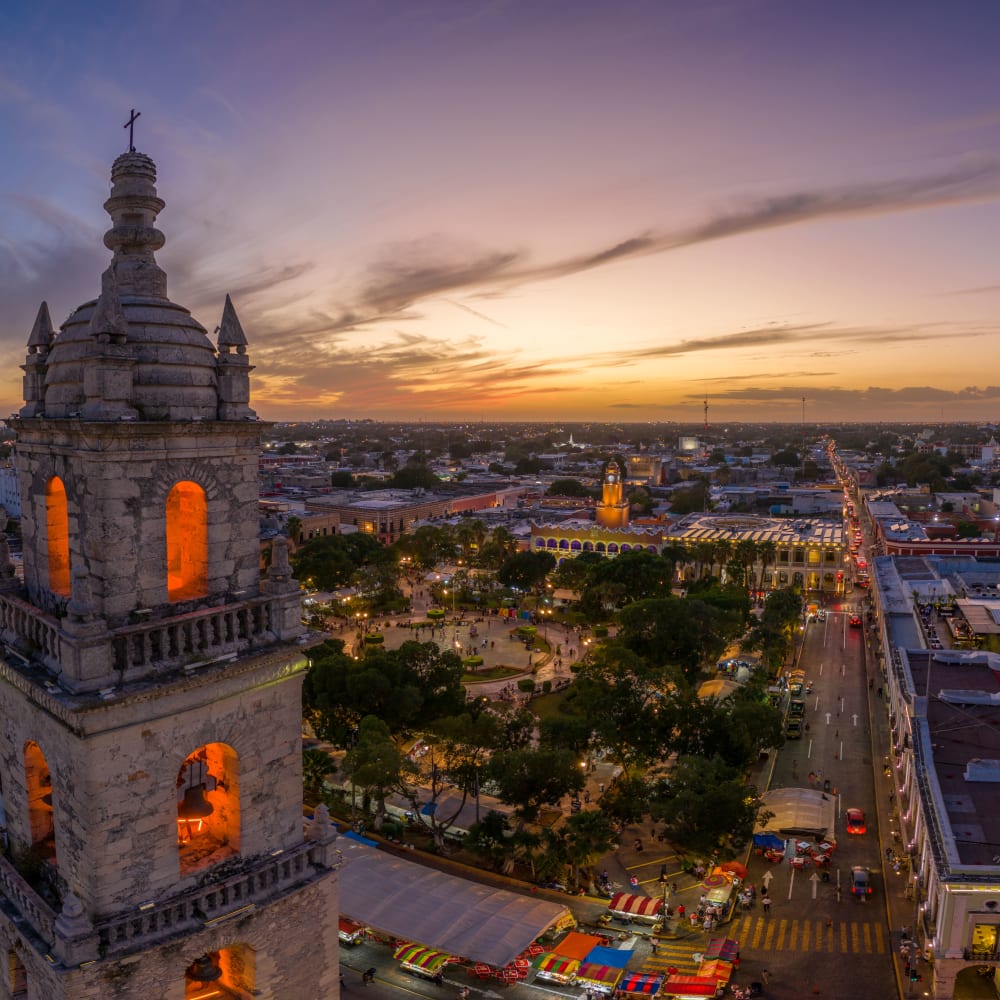
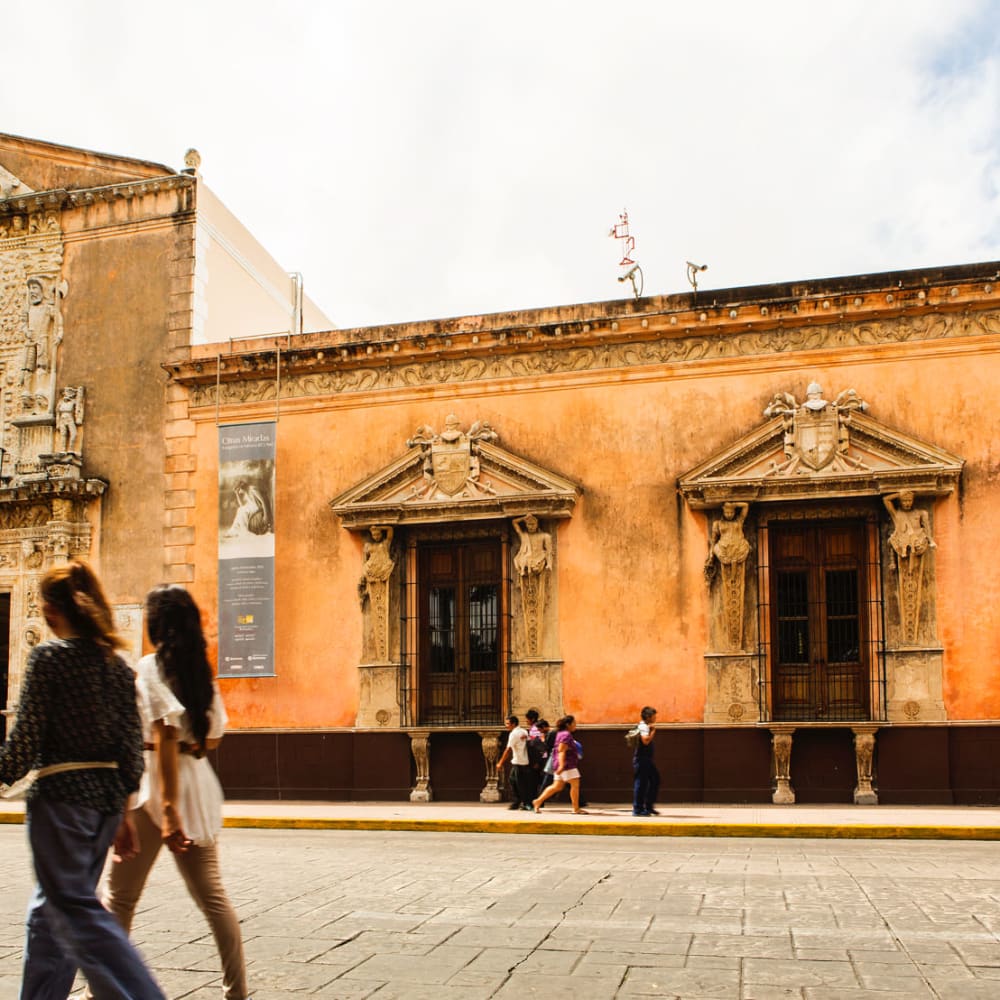
The center around the Plaza Grande with its cathedral (1598) and Casa de Montejo is lively and safe in the evenings; Santiago and Santa Ana are the districts for boutique hotels in colonial houses. We recommend the Gran Museo del Mundo Maya before visiting Chichén Itzá: once you have seen the stelae and jade objects, you will interpret the site differently.
Gran Museo del Mundo Maya
- Entrance fee — 150 MXN (approx. 8 EUR)
- Opening hours — Tue–Sun 09:00–17:00, Mon closed
- Location — Calle 60 No. 299, north of Mérida, about 15 min. by taxi from the center
- Tip — Plan for the day of arrival — the air-conditioned halls are a blessing in the midday heat
Insider tip
Sunday in Mérida — from 08:00 to 12:30 the Paseo de Montejo is closed for Biciruta: five kilometers car-free to Plaza Grande, bikes available along the route. Afterwards 'Mérida en Domingo' at Plaza Grande with market stalls, Vaquería dances, and Marquesitas.
Chichén Itzá — UNESCO World Heritage since 1988
Chichén Itzá is the best-known Maya city in Mexico and a UNESCO World Heritage site since 1988. In 2025, INAH counted 2,182,034 visitors here — the most visited archaeological site in the country. That is exactly why the time matters: the site opens at 08:00, and until about 10:00, the Kukulcán Pyramid, Great Ball Court, and Temple of the Warriors are almost yours alone. The entrance is split — federal share for INAH, state share for Yucatán (CULTUR), totaling 697 MXN. At the equinox on March 20/21, the afternoon sun casts a snake shadow on the staircase — spectacular but with tens of thousands of spectators; on the days before and after, the phenomenon is almost identical, with a fraction of the crowds.
Chichén Itzá
- Entrance fee — 697 MXN (approx. 35 EUR) for foreign visitors — 105 MXN INAH (federal) + 592 MXN CULTUR (state of Yucatán); card (Visa/Mastercard) or cash
- Opening hours — Daily 08:00–17:00, ticket sales and last entry at 16:00; parking approx. 124–150 MXN
- Location — 120 km east of Mérida (approx. 1 h 45 via highway 180D), 45 km west of Valladolid (approx. 40 min.)
- Tip — Stand at the entrance before 08:00 and go to the ball court first — the groups start at the pyramid
Insider tip
Stay overnight in Valladolid or a Hacienda nearby: Departure from Mérida means early entry at 06:00, from Valladolid 07:15 is sufficient. The cenote Ik Kil is three kilometers further — for a cool down around 11 am.
Valladolid — Pueblo Mágico and the gateway to Ek Balam
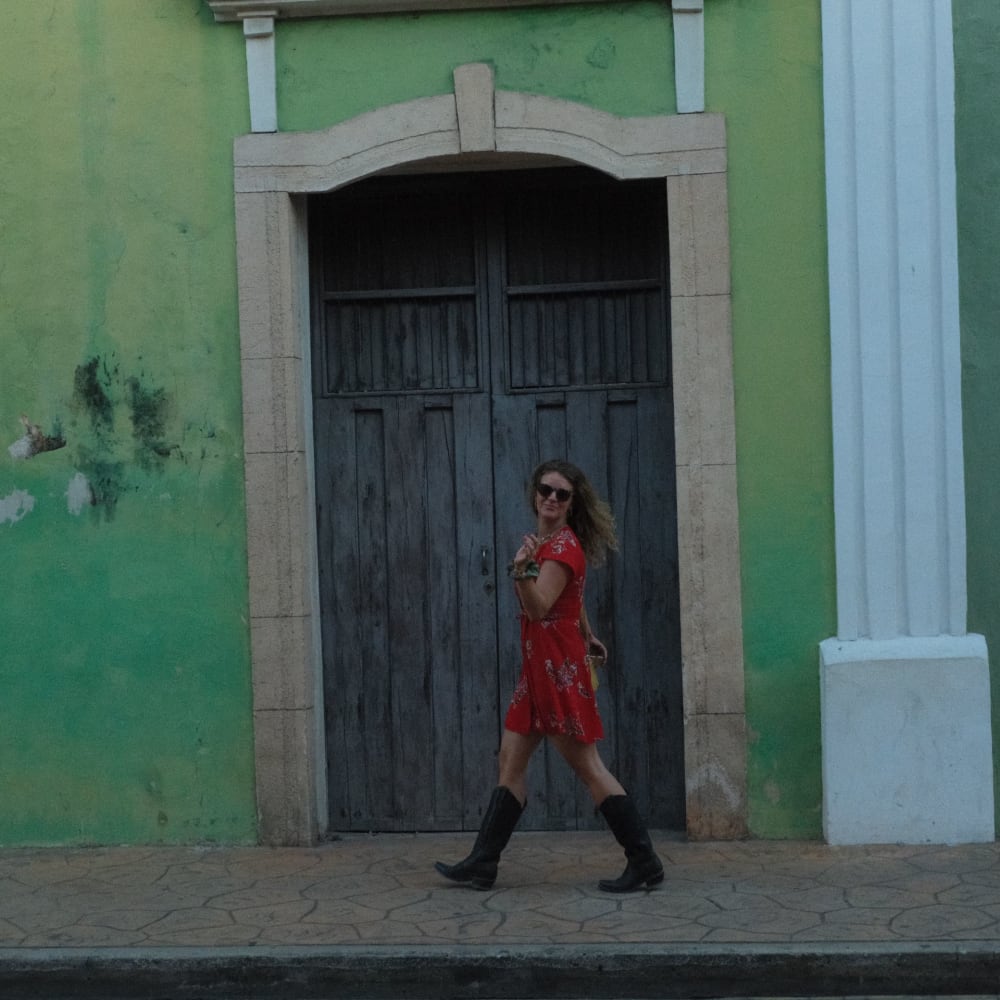
Valladolid, a Pueblo Mágico since 2012, is the city that many travelers love the most: pastel-colored facades, the Calzada de los Frailes with concept stores and coffee houses, the Franciscan monastery San Bernardino de Siena (1560) at the end of the avenue, and the cenote Zací right in the city. Two nights here are worth more than a third in Mérida.
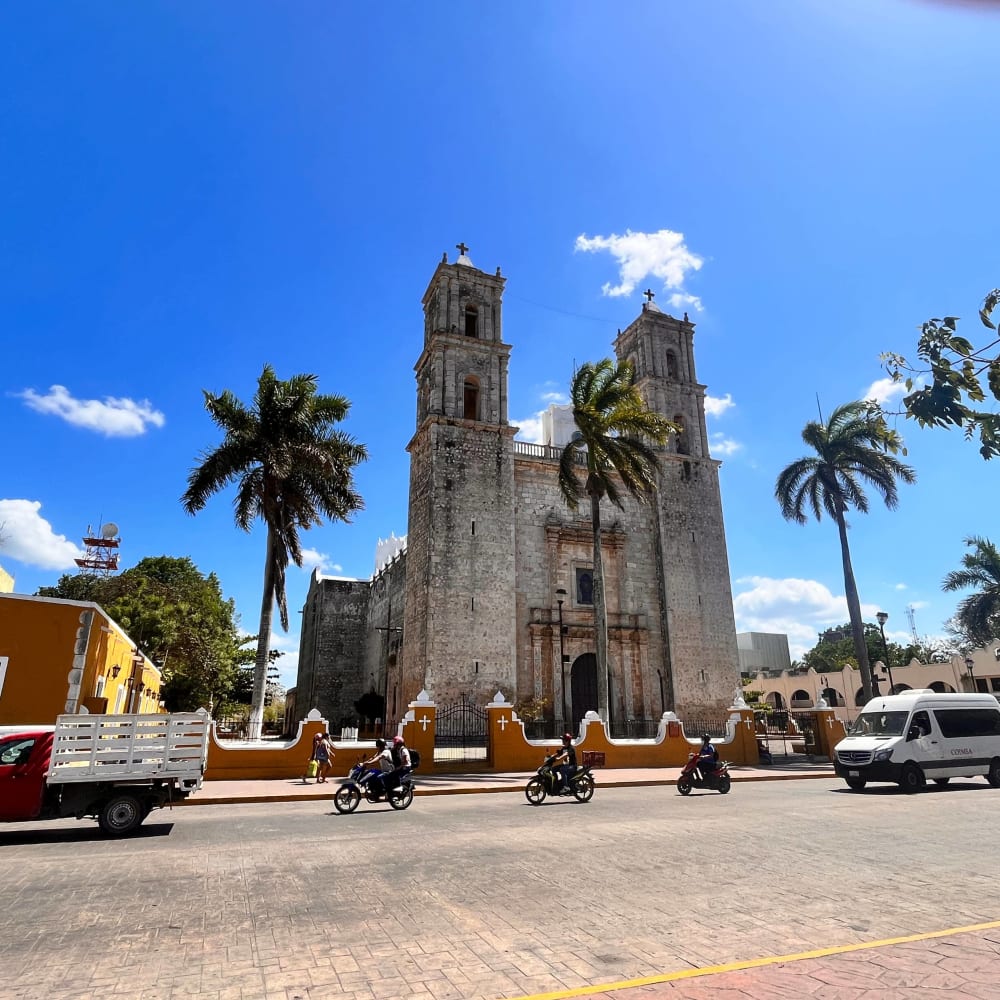
30 kilometers north lies Ek Balam — for us the more beautiful alternative if you want to climb steps: The 31-meter-high Acropolis is accessible, halfway up the stucco frieze with winged figures and the maw of the earth monster waits, and from the top, you can only see forest to the horizon. Additionally, the cenote Xcanché is two kilometers further by rental bike.
Ek Balam
- Entrance fee — 534 MXN (approx. 27 EUR) for foreign visitors, cash only — no ATM on site
- Opening hours — Daily 08:00–17:00, last entry at 16:00
- Location — 30 km north of Valladolid (approx. 30 min.); cenote Xcanché approx. 170 MXN including rental bike, last entry at 15:30
- Tip — First the Acropolis before 10 o'clock, then the cenote — otherwise, you climb in the midday heat
Cenotes — open, semi-open, and in caves
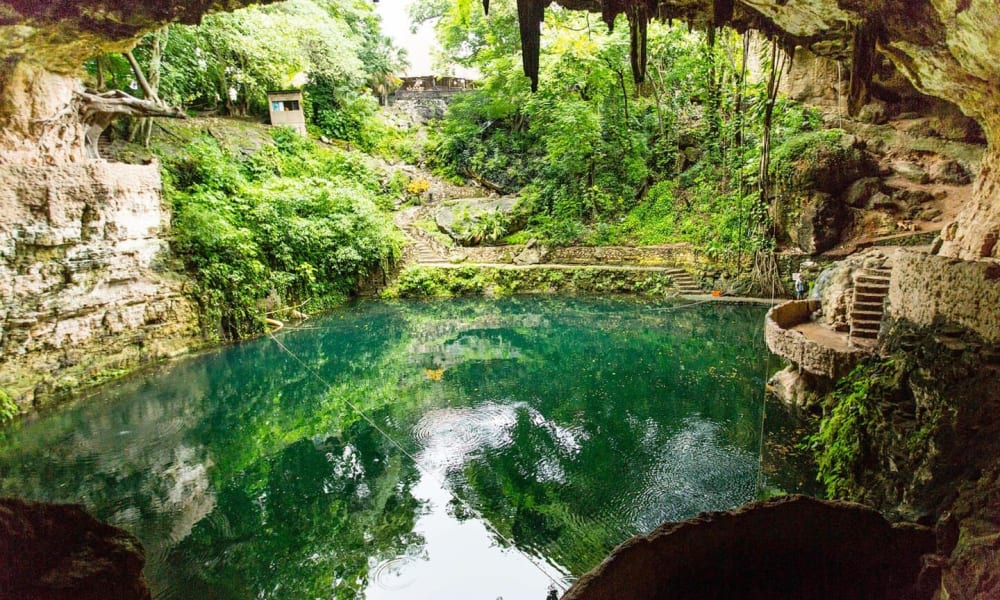
Cenotes are collapsed limestone caves that expose the groundwater — for the Maya, entrances to the underworld Xibalbá, for you, bathing spots at a constant 24 to 26 degrees. Three types: open cenotes like Ik Kil or Oxman (crater with root curtains), semi-open ones like Suytun (cave with a ceiling opening, a light beam falls at noon), and cave cenotes like Xkekén and Samulá near Dzitnup (stalactites, water like black glass). All are located between Chichén Itzá and Valladolid, never more than 30 minutes apart.

An honest note: Ik Kil and Suytun are the Instagram addresses, crowded between 10 and 14 hours. Oxman has the same drama — 20-meter root curtain, swing — with a tenth of the visitors.
Cenotes — entrance and times
- Ik Kil — approx. 180–200 MXN (approx. 9–10 EUR), 09:00–17:00; 3 km from Chichén Itzá
- Suytun — approx. 200–250 MXN (approx. 10–13 EUR), 09:00–17:00, light beam approx. 11–13 hours; 8 km east of Valladolid
- Oxman — approx. 150 MXN (approx. 8 EUR) including pool of Hacienda San Lorenzo, 08:00–18:00; 4 km west of Valladolid
- Xkekén & Samulá — combination ticket approx. 125–235 MXN (approx. 6–12 EUR), 08:00–17:00, life jacket required; 7 km southwest of Valladolid
Insider tip
Sunscreen is prohibited in cenotes — including 'reef-safe' products, because the water flows directly into the groundwater. Shower before swimming, wear a UV shirt instead of cream, bring cash. Best time: the first hour after opening or the last before closing.
Haciendas and Culinary Delights — Henequén, Cochinita Pibil, and Sikil Pak
Haciendas — from green gold to boutique hotel
Around 1900, the fiber of the Henequén agave — the 'green gold' — made Yucatán one of the richest regions of Mexico; hundreds of Haciendas were built. As synthetic fibers took over the market, they fell into disrepair; today, the most beautiful hotels, restaurants, and living museums. The Hacienda Sotuta de Peón south of Mérida showcases the entire process — fiber extraction with machines from 1900, horse-drawn wagons on the field railway, bathing in cenote Dzul Há. About three hours, approx. 550 MXN (approx. 28 EUR).
Southwest of Mérida begins the Ruta Puuc with Uxmal (UNESCO World Heritage since 1996) — stone mosaics of the Puuc style, significantly fewer visitors than at Chichén Itzá.
Yucatecan cuisine — unlike the rest of Mexico
The cuisine of Yucatán is distinct — Maya roots, Spanish monasteries, Lebanese immigrants. The signature dish is Cochinita Pibil: pork marinated with achiote and bitter orange, cooked overnight in banana leaves in an earthen oven, served with pickled red onions and habanero. Along with Sikil Pak, a dip made from roasted pumpkin seeds, tomatoes, and cilantro, Sopa de Lima, and Panuchos.
In fine dining, Mérida now ranks alongside Mexico City and Oaxaca: Huniik by Roberto Solís, the founder of Nueva Cocina Yucateca, ranks 32nd on the Latin America's 50 Best Restaurants 2025 (tasting menu starts at approx. 2,000 MXN / 100 EUR). More down-to-earth: La Chaya Maya in the center for Poc Chuc and Relleno Negro (main dishes approx. 200–300 MXN).
Insider tip
Mercado Lucas de Gálvez — Mérida's main market (daily from 06:00, best until approx. 15:00): Cochinita tortas, fresh Chaya juices, habanero salsas in twenty levels of spiciness. In the evening at Plaza Grande, a Marquesita — crispy waffle roll with Edamer and Cajeta, approx. 40 MXN. Sounds strange, but it is Mérida's answer to ice cream.
Your Yucatán program — three days
Three days are enough for the essence: one night in Mérida, two in Valladolid or at a Hacienda in between.
Day 1 — Mérida: Museum, Paseo de Montejo, and culinary
In the morning Gran Museo del Mundo Maya, at noon Cochinita at Mercado Lucas de Gálvez, then Siesta in the hotel pool — between 13 and 16 hours Mérida is not made for walking. From 17:00 Paseo de Montejo, dinner at Huniik or La Chaya Maya.
Day 2 — Chichén Itzá before the buses, Ik Kil and Valladolid
Departure at 06:00 from Mérida, entry at 08:00, two hours with a guide. Around 11:00 at cenote Ik Kil, then 40 minutes to Valladolid: Calzada de los Frailes, San Bernardino Monastery, in the evening Lomitos at Parque Principal.

Day 3 — Ek Balam, Xcanché, and Hacienda evening
08:00 at Ek Balam, Acropolis before the heat, then by bike to cenote Xcanché. At noon Oxman or Suytun. In the afternoon back towards Mérida with a Hacienda stop — or continue east, Tulum is two hours away. A fourth day belongs to Uxmal, a fifth to the flamingos of Celestún.
Where to stay in Yucatán — Chablé Yucatán and Haciendas
Accommodation in Yucatán is part of the experience. We recommend a house we know personally, and two categories depending on route and budget:
Chablé Yucatán — Hacienda, Cenote, and Casitas in the forest
Chablé Yucatán near Chocholá, 25 to 30 minutes from Mérida airport, is a Henequén hacienda from the 19th century, situated in a forest with free-standing casitas with private pools; the restaurant Ixi'im (Prix Versailles 2018) is located in the old machine hall. From approx. 695 EUR per night per person.
- Casitas from approx. 180 m² with private pool, villas up to over 700 m²
- Spa at a natural cenote, Maya rituals, yoga in the forest
- Ixi'im (farm-to-table, large tequila collection) and Ki'ik' by the pool
- Ideal for two to three nights between Mérida and Uxmal
Haciendas between Mérida and Chichén Itzá — restored mansions with 10 to 40 rooms, pool in the machinery yard, dinner under the arcades; ideal for early entry to Chichén Itzá. Approx. 250–500 EUR per night.
Boutique hotels in Mérida and Valladolid — colonial houses with 6 to 20 rooms in Santiago, Santa Ana, or along the Calzada de los Frailes: courtyard, small pool, breakfast with Chaya juice. From approx. 120–250 EUR per night.
Let us help you find the accommodation that fits your route — we know these houses and know which casitas overlook the forest and which overlook the pool. Submit inquiry .
Good to know
Best travel time for Yucatán
The dry season from November to March is the best travel time: 22 to 32 degrees, little rain, clear cenotes. April and May are the hottest months with up to 40 degrees in Mérida. From June to October, the rainy season brings short afternoon showers; the hurricane season officially runs from June to November, with peak risk in September and October. All regions compared in our guide to the best travel time for Mexico .
Travel — Mérida airport (MID) or CUN
There are no nonstop flights from Germany to Mérida. Condor and Discover Airlines fly nonstop from Frankfurt to CUN (approx. 11 to 12 hours); from there it is about 300 kilometers and 3.5 hours to Mérida via highway 180D. Alternatively, you can fly with a stopover in Mexico City, Miami, or Houston to MID, 25 minutes from the center. The Tren Maya takes about 3 hours 40 minutes from CUN to the Teya station on the outskirts of Mérida (from approx. 400 MXN). Details in our guides Flight to Mexico and Entry and visa .
Safety in Yucatán
In Yucatán, the security question is easy to answer: The Mexico Peace Index 2026 from the Institute for Economics & Peace ranks it as the most peaceful state in Mexico for the ninth consecutive year, and in the ENVIPE 2025 survey from the statistical office INEGI, Mérida is one of the cities with the lowest perception of insecurity in the country. The center of Mérida, the Paseo de Montejo, Santiago, and Santa Ana are lively even in the evenings; in Valladolid, you will still find families at 11 pm in Parque Principal; the country roads to the cenotes are hassle-free during the day.
The usual rules apply: In Mérida use Uber or DiDi instead of street taxis, do not walk alone through deserted streets at night, keep valuables in the hotel safe, schedule overland trips for the day — due to free-roaming animals and unlit topes. The assessment of the Foreign Office and our rules for the whole country can be found in the guide Safety in Mexico .
Calmly on the way
The biggest risk in Yucatán is the sun, not crime: two to three liters of water a day, no sites between 12 and 3 PM, cenotes as a lunch break. Don’t leave anything visible in the rental car, stay friendly during police checks, and insist on a receipt. Emergency number 911 applies nationwide.
Transport — Rental cars, drivers, and buses
Yucatán is the region of Mexico where renting a car makes the most sense: flat, well-built roads, little traffic, cenotes away from any bus line. A compact car costs from about 800–1,200 MXN (about 40–60 EUR) per day including full insurance; the Mérida–CUN highway is toll-required (about 500 MXN, cash). Alternatively, we can book you a private driver (from about 3,500 MXN per day). ADO buses connect the cities (Mérida–Valladolid about 300 MXN), not the cenotes.
Heat, mosquitoes, and health
No vaccinations are required for Yucatán; we recommend standard vaccinations and hepatitis A as for all of Mexico. Mosquito repellent is a must in the rainy season — dengue occurs especially from July to October. More in our guides Vaccinations and health and Packing list Mexico .
Costs at a glance
- Chichén Itzá — 697 MXN (about 35 EUR), guide from about 1,200 MXN (about 60 EUR) per group
- Ek Balam — 534 MXN (about 27 EUR), cenote Xcanché about 170 MXN (about 9 EUR)
- Cenotes — 60–250 MXN (about 3–13 EUR) depending on the cenote
- Hacienda Sotuta de Peón — tour with cenote about 550 MXN (about 28 EUR)
- Food — Torta at the market 40–60 MXN (about 2–3 EUR), main dish 200–300 MXN (about 10–15 EUR), tasting menu from about 2,000 MXN (about 100 EUR)
- Rental car — from about 800–1,200 MXN (about 40–60 EUR) per day including insurance; toll Mérida–CUN about 500 MXN (about 25 EUR)
- Private driver — day trip from about 3,500 MXN (about 180 EUR)
- Accommodation — boutique hotel from about 120–250 EUR, hacienda from about 250–500 EUR, Chablé Yucatán from about 695 EUR per person
Prices as of September 2026. 1 EUR ≈ 19.6 MXN.
Explore Mexico further
To the east, it is two hours to the Caribbean, to the south a short flight to Chiapas. In a Mexico round trip we usually connect the region with a few days on the coast and in the highlands:
Riviera Maya & Caribbean coast — Tulum, Bacalar, and Holbox, two hours east of Valladolid
Chiapas — Palenque, San Cristóbal, and the waterfalls of Agua Azul
Mexico City — museums, Roma Norte, and Teotihuacán, from Mérida in two flight hours
Oaxaca — mezcal, markets, and Pacific coast, the second great cuisine of Mexico
Let’s put together your Yucatán program — with the right times for Chichén Itzá, the quiet cenotes, and the hacienda that suits you. Schedule a consultation .
To book a trip or for more information, contact us. We'll help you plan and guide you through your upcoming adventure!
Frequently asked questions
Yes — Yucatán is considered the safest state in Mexico: The Mexico Peace Index 2026 from the Institute for Economics & Peace ranks it first for the ninth consecutive year, and according to ENVIPE 2025 (INEGI), Mérida is among the cities with the lowest perception of insecurity in the country. The center and Paseo de Montejo in Mérida as well as Valladolid are lively even in the evenings. As everywhere, use Uber or DiDi instead of street taxis, keep valuables in the safe, and take overland trips during the day. With normal caution, Yucatán is easily travelable.
Three days is the minimum: one day in Mérida with a museum, Paseo de Montejo, and cuisine, one day at Chichén Itzá at 8 AM with cenote Ik Kil and Valladolid, one day at Ek Balam with cenotes like Xcanché, Oxman, or Suytun. With four to five days, Uxmal and the Ruta Puuc, a hacienda night, or the flamingos of Celestún can be added. After that, the onward journey to the Caribbean coast (two hours from Valladolid) or a flight to Chiapas is feasible.
For foreign guests 697 MXN (about 35 EUR), made up of 105 MXN for INAH (federal) and 592 MXN for CULTUR (state of Yucatán). Payment is made at the cash register with Visa/Mastercard or in cash, parking costs about 124–150 MXN. Open daily from 08:00 AM to 05:00 PM, ticket sales and last entry at 04:00 PM. The free Sunday regulation applies only to Mexican citizens and residents. A licensed guide costs from about 1,200 MXN per group.
November to March: 22 to 32 degrees, little rain, clear cenotes, and pleasant mornings at the sites. April and May are the hottest months with up to 40 degrees — then only in the early morning to Chichén Itzá. June to October is rainy season with short afternoon showers; hurricane season officially runs from June to November, with the highest risk in September and October. During the equinox on March 20/21, Chichén Itzá is extremely crowded — the days before and after are the better choice.
Both, in this order: one night in Mérida for museums, Paseo de Montejo, and the restaurant scene (boutique hotels in Santiago or Santa Ana from about 120–250 EUR), then two nights in Valladolid or in a hacienda in between — from there, Chichén Itzá, Ek Balam, and the cenotes are reachable in 30 to 45 minutes, and early entry at 8 AM becomes doable. If you'd like a hacienda night, choose it for the evening after Chichén Itzá or the Chablé Yucatán near Mérida.
One for every type: Ik Kil (open, 3 km from Chichén Itzá, about 180–200 MXN) for cooling off after the site, Suytun (half-open, about 200–250 MXN) for the light beam around noon, Oxman at the Hacienda San Lorenzo (about 150 MXN) as a quieter alternative with a root curtain and swing rope, and the cave cenotes Xkekén and Samulá near Dzitnup (combined ticket about 125–235 MXN) in the early morning. The rule applies everywhere: no sunscreen, shower beforehand, bring cash.
Nonstop from Germany only goes to CUN (Condor and Discover Airlines from Frankfurt, about 11–12 hours); from there, it is 3.5 hours via highway 180D to Mérida — ideal with a stop in Valladolid or Chichén Itzá. Alternatively, you can fly with a layover in Mexico City, Miami, or Houston directly to Mérida (MID), 25 minutes from the center. The Tren Maya takes around 3 hours 40 minutes from CUN to the Teya station on the outskirts of Mérida (from about 400 MXN).
A rental car is the best choice in Yucatán: flat, well-built roads, little traffic, and cenotes that no bus goes to. A compact car costs from about 800–1,200 MXN (about 40–60 EUR) per day including full insurance; the toll Mérida–CUN is about 500 MXN in cash. Drive during the day — due to speed bumps and animals on the road. If you don’t want to drive yourself, you can book a private driver through us (from about 3,500 MXN per day); ADO buses connect the cities, not the cenotes.