

Jalisco & Pacific Coast
Origin of Tequila and Mariachi — Pacific without crowds
Origin of Tequila and Mariachi — Pacific without crowds
Tequila with its UNESCO Agave landscape (2006), Mexico's largest lake at Ajijic, humpback whales from December to March off Puerto Vallarta, and a 4,260-meter high volcano: Jalisco combines the origin of Tequila and Mariachi with a Pacific coast without crowds. Four days minimum, two airports.

Best travel time
November to April
Why Jalisco — Agave, Mariachi, and a Pacific without crowds
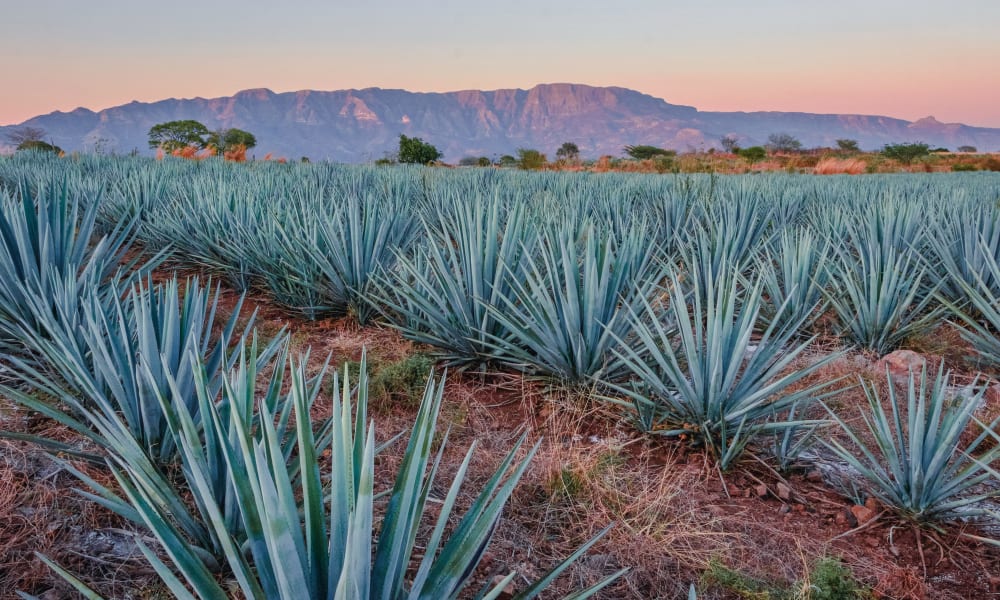
Shortly after sunrise, frost lies on the agave fields around Tequila. The blue-grey rosettes stand in rows to the foot of the volcano, a Jimador cuts off the leaves with the coa, and from the distillery on the edge of town, the smell of cooked agave heart wafts — sweet, earthy, a little like caramel. Three hundred kilometers to the west, a humpback whale's fin breaks the surface in Bahía de Banderas at the same hour.
Most Mexico travelers know Jalisco only from the label. Yet from this state come the two things that represent Mexico worldwide: tequila, whose agave landscape has been a UNESCO World Heritage site since 2006, and mariachi, which has been an Intangible Cultural Heritage of Humanity since 2011. Additionally, Mexico's largest lake, a 4,260-meter high volcano, and a Pacific coast without hotel zones.
We are building Jalisco as a Pacific chapter into a Mexico round trip one: Puerto Vallarta and the Riviera Nayarit as the base, Tequila and Lago de Chapala as the interior, and the Nevado de Colima for anyone wanting to stand over 4,000 meters. Four days is the minimum.
Tequila, Chapala, Tlaquepaque — the interior of Jalisco
Three places in the highlands around the GDL airport are worth the detour — close enough together for two days.
Tequila — Magical Town in the Agave landscape
Tequila, recognized as a Magical Town since 2003, is a place of around 30,000 inhabitants at 1,201 meters below the Volcán de Tequila. The special begins before the town signs: 34,658 hectares of agave fields, haciendas, and old distilleries that UNESCO added to the World Heritage list in 2006 as a cultural landscape.


In the town center lies La Rojeña, the distillery of José Cuervo — according to the establishment, the oldest distillery in Latin America. The tour shows stone ovens, fermentation tanks, and copper stills and ends with a tasting; at the 'Tequilero Gourmet', you mix your own blend. The José Cuervo Express, a day trip train from GDL, operates only on Saturdays and lasts eleven hours — for a custom program, we recommend arriving with a driver.
La Rojeña — Mundo Cuervo
- Admission — 'Jose Cuervo Experience' 585 MXN (approx. 30 EUR), 1.5 hours; 'Tequilero Gourmet' 3,790 MXN (approx. 195 EUR), 3 hours — adults only
- Opening hours — daily 11:00 AM–5:00 PM, tours hourly, English times 11:00 AM, 1:00 PM, 3:00 PM, and 5:00 PM
- Location — in the main square of Tequila, about 65 kilometers or 70 minutes from the GDL airport
- Tip — José Cuervo Express: Saturdays from GDL, 3,250–4,810 MXN (approx. 165–245 EUR) depending on class
The honest counterpoint is Fortaleza: founded in 1873 by Don Cenobio Sauza, revived in the early 2000s by his great-grandson Guillermo Erickson Sauza. The agave here is still crushed with the Tahona stone and distilled in small copper stills; the 90-minute tour ends with a tasting in the cave beneath the premises.
Insider tip
Fortaleza reservations weeks in advance. The slots are allocated exclusively by the distillery; in the dry season, they are often booked out weeks in advance. We make the reservation for you — and suggest an overnight stay in Tequila so that the tasting does not end with a return trip.
Lago de Chapala and Ajijic — Mexico's largest lake
About half an hour south of the GDL airport, without going through the city, Lago de Chapala opens up at 1,520 meters: 80 kilometers long, up to 18 kilometers wide, 1,112 square kilometers — according to the Ramsar Convention, which listed it as a wetland of international importance in 2009, the largest lake in Mexico. White pelicans fish in the winter off the shores, and in the evenings, the water before the Michoacán mountains turns copper red.
On the northern shore lies Ajijic, recognized as a Magical Town since December 2020: cobblestones, bougainvillea, murals on nearly every house wall, a malecón with piers into the lake. Since the 1930s, the town has drawn artists and retirees from North America — hence the galleries, cafes, and the Wednesday market. From the neighboring town of Chapala, boats take 15 minutes to Isla de los Alacranes, a sanctuary of the Wixárika.
Ajijic and Chapala
- Admission — Malecón and town center free; boat to Isla de los Alacranes 300–470 MXN (approx. 15–24 EUR) per boat from Malecón Chapala
- Opening hours — Tianguis Ajijic Wednesday mornings; Patron festival San Andrés around November 30 with fireworks and mariachi
- Location — Ajijic about 37 kilometers or 35 minutes from the GDL airport via Carretera a Chapala
- Tip — Ajijic is suitable as a quiet first night after arrival in GDL — altitude 1,551 meters, pleasantly mild
Tlaquepaque — handicrafts and El Parián
Tlaquepaque, recognized as a Magical Town since October 2018, is the place where Jalisco's crafts are sold: pottery from Tonalá, blown glass, silver, furniture made from Equipal leather. Along the Andador Independencia are galleries and workshops in colonial houses; the Museo Regional de la Cerámica shows how clay has been fired here for centuries.
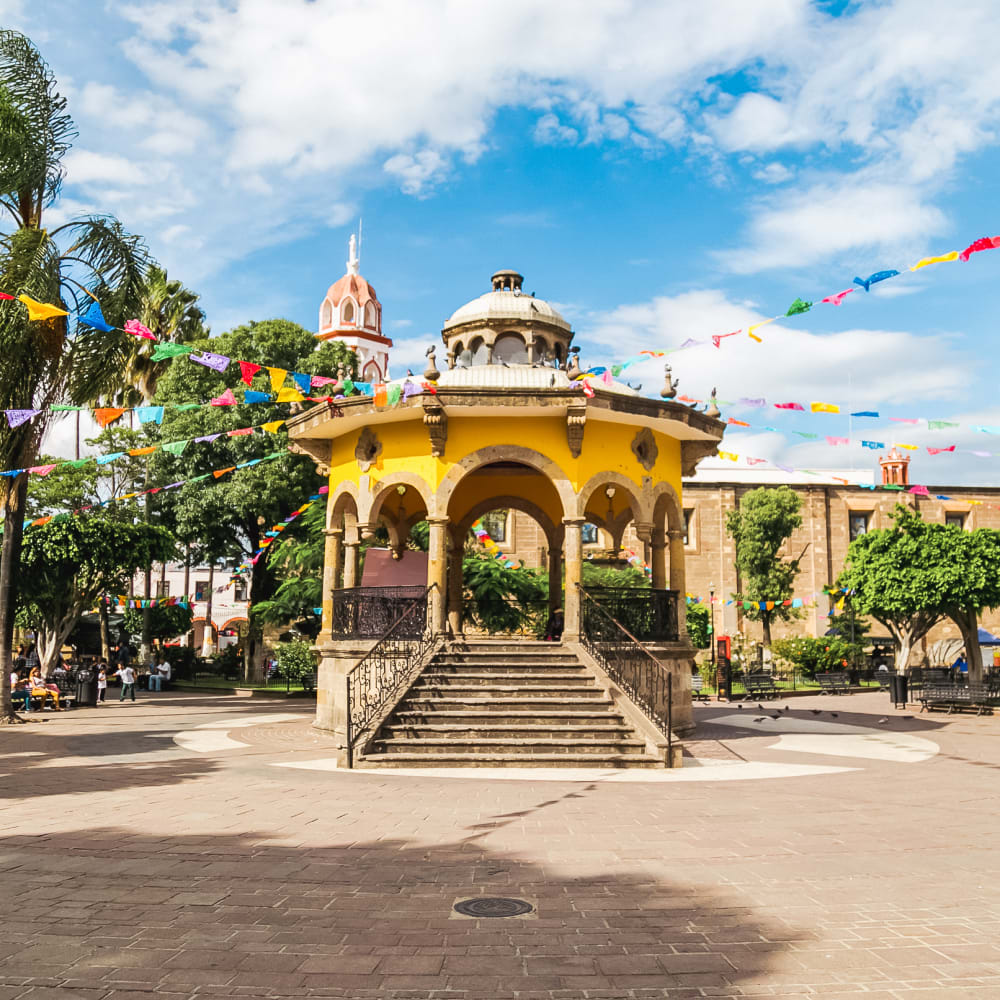
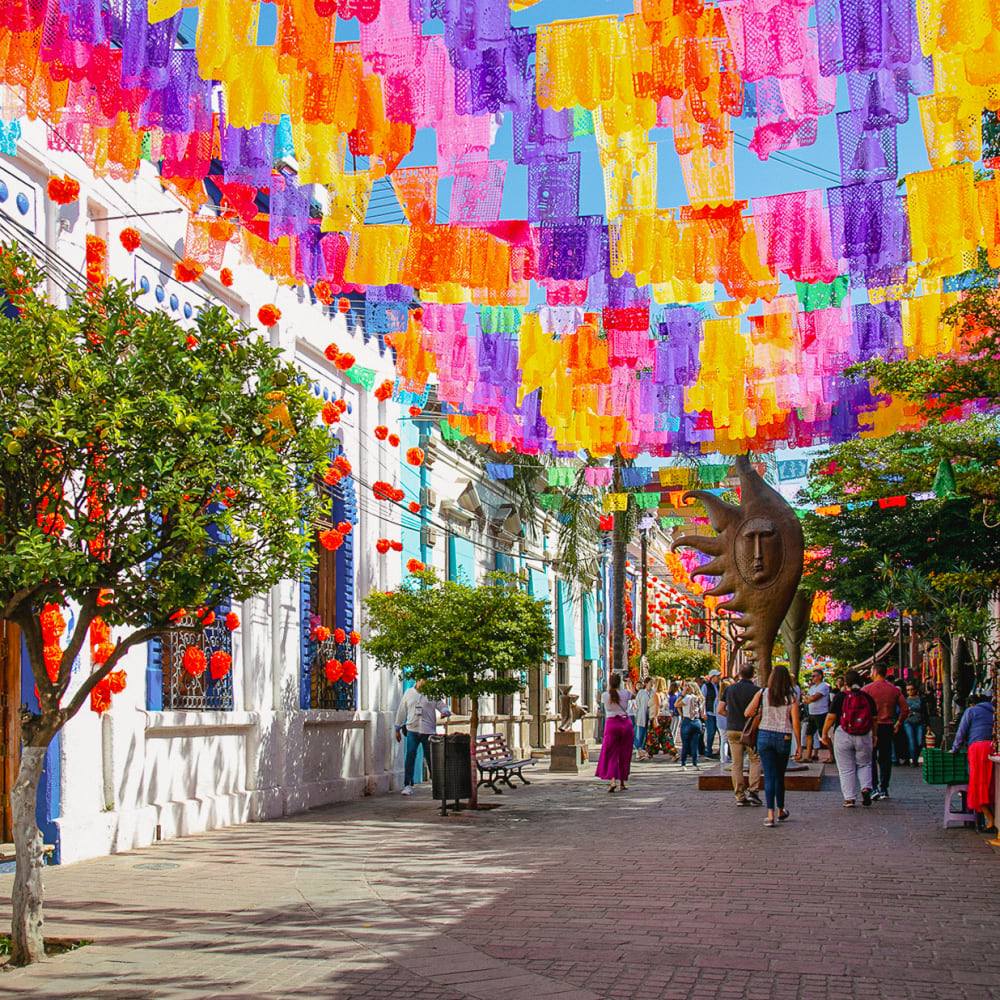
The centerpiece is El Parián, a block of cantinas around a music pavilion where mariachi groups play in the afternoons and evenings — that music whose origin lies in nearby Cocula. Tlaquepaque is a suburb in the vicinity of the GDL airport; we plan it as a half day on the way to the airport, with lunch in Parián (Sunday to Thursday 10:00 AM–12:00 AM, Friday and Saturday until 1:00 AM).
Puerto Vallarta and the Riviera Nayarit — Pacific without crowds
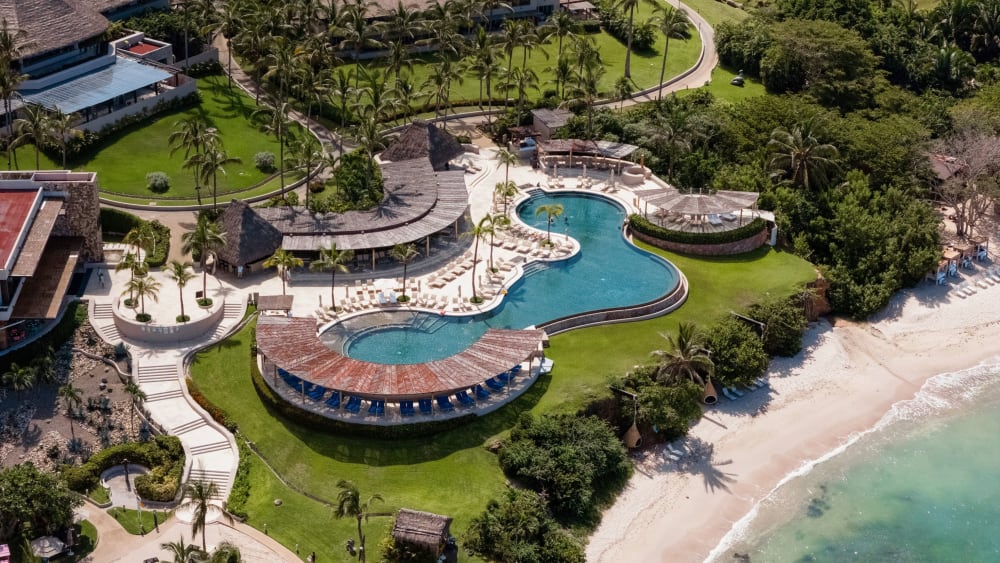
Puerto Vallarta lies in the middle of Bahía de Banderas, to the north begins the Riviera Nayarit — more fishing villages, more jungle, no continuous resort strip.
Puerto Vallarta — Malecón, Zona Romántica, and a spot on the world list
When John Huston filmed 'The Night of the Iguana' in Mismaloya in 1963, Puerto Vallarta was a fishing village. Today the city has about 220,000 inhabitants and was ranked second in the Condé Nast Traveler Readers' Choice Awards 2025 for 'Best Small Cities in the World' — the highest ranking for a Mexican city. The core has remained: the approximately one-kilometer-long Malecón, the Parroquia de Guadalupe, and the Zona Romántica south of the Río Cuale — cobblestones, rooftop bars, and the beach Los Muertos with its pier.
Half a day of greenery is offered by the Jardín Botánico de Vallarta 24 kilometers south: orchid house, bathing area in the Río Los Horcones, from May to October more than a dozen species of hummingbirds (300 MXN, approx. 15 EUR; 09:00 AM–6:00 PM).
Islas Marietas — the hidden cove
Off Punta de Mita lie the Islas Marietas, a national park of volcanic rocks with boobies colonies and the Playa Escondida — a beach in a collapsed crater that you can only reach by swimming through a roughly 100-meter long rock tunnel. The environmental authority CONANP allows 116 visitors per day; the tour is a pre-booked half day, no spontaneous boat ride.
Islas Marietas — Playa Escondida
- Admission — small group tour from Punta de Mita 2,250–2,813 MXN (approx. 115–145 EUR) per person including CONANP wristband
- Opening hours — tours in the morning, 3 hours; 116 people per day, 30 minutes at the beach
- Location — Departure Punta de Mita, about 45 minutes north of Puerto Vallarta
- Tip — Age 10 to 64 years, life jacket required, no shoes, no drones
Humpback whales — December to March in Bahía de Banderas
From early December to late March, humpback whales migrate from the North Pacific to the warm bay to calve — in the 2025/26 season, tours were allowed from December 8 to March 23. January and February are the most reliable months, as the animals breach in sight of the Malecón. Choose only providers with SEMARNAT license.
Whale watching Puerto Vallarta
- Season — December to March, best sightings in January and February
- Price — group tour starting from 62 USD per person (Vallarta Adventures, online price), 3–4 hours
- Location — Departures in Marina Vallarta, Nuevo Vallarta, and Punta de Mita, mostly around 08:30 AM
- Tip — From a terrace with a sea view, you can also see the blow fountains without a boat
Riviera Nayarit — Sayulita, San Pancho, Punta de Mita
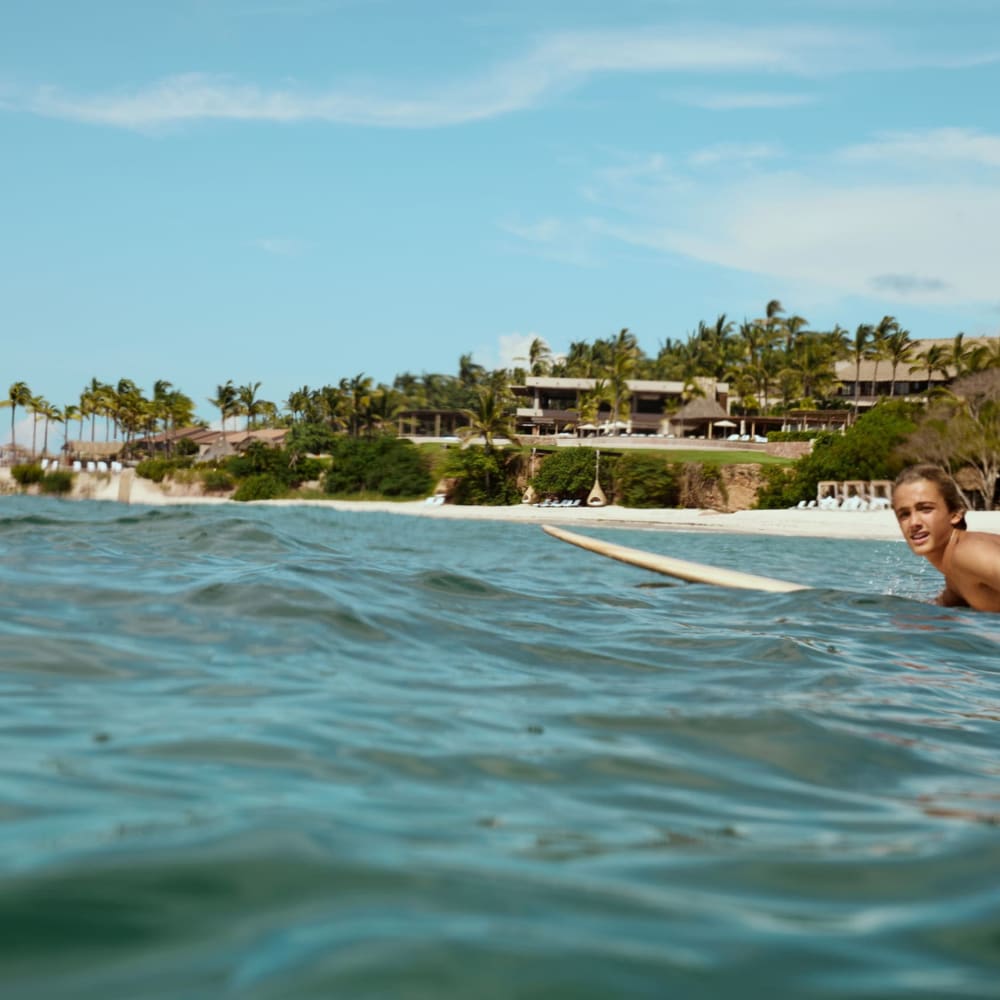
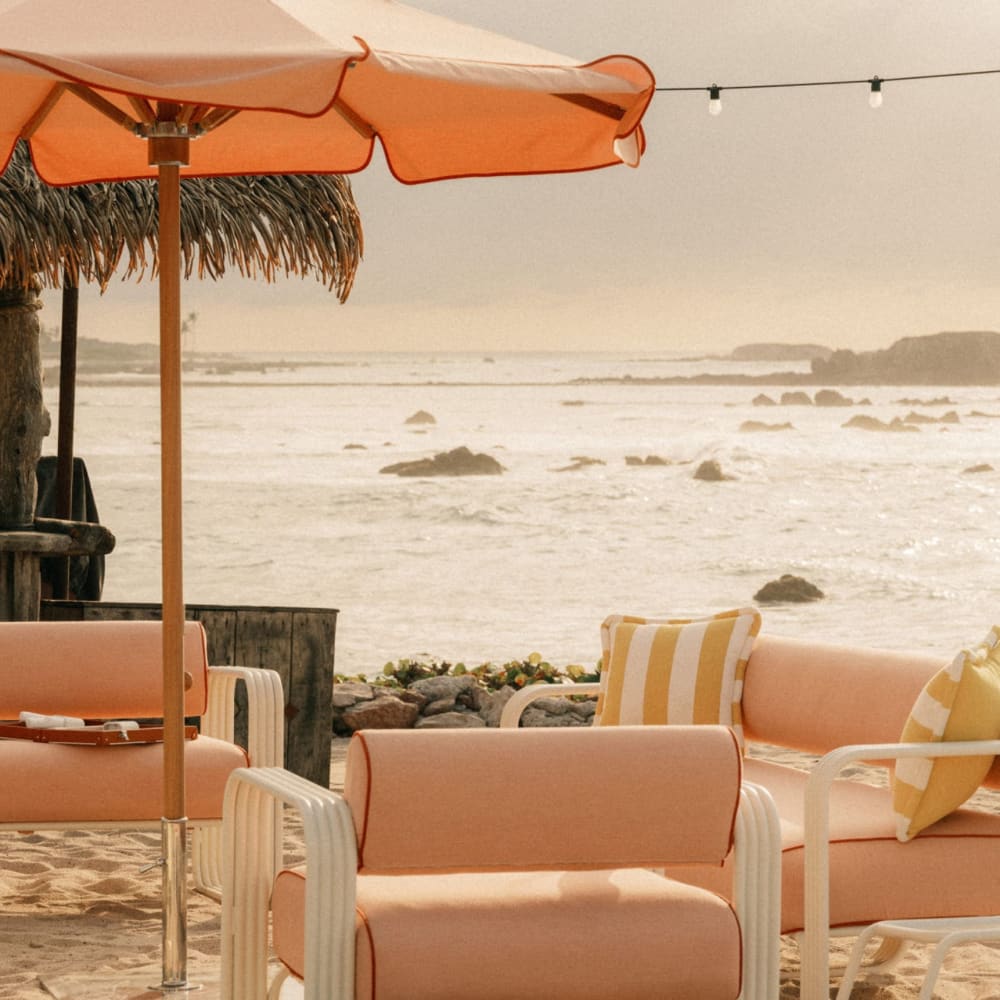
North of the PVR airport begins the Riviera Nayarit — the part of the coast we prefer for your overnight stays. Sayulita, a Magical Town and surf village 38 kilometers from the airport, is colorful and loud; San Pancho, ten minutes further, is the quiet sister. Punta de Mita forms the northern tip of the bay — and on the cliffs of Mandarina lies the hotel we most recommend here.
Nevado de Colima — hike to 4,260 meters
Two volcanoes stand side by side in the south of Jalisco: the extinct Nevado de Colima, 4,260 meters and a national park since 1936, and the Volcán de Colima, 3,860 meters, which according to the volcanologists' association IAVCEI is one of the 16 'Decade Volcanoes' on Earth, last active from 2015 to 2017.
The access road leads from Ciudad Guzmán via a path to the base camp La Joya at about 3,400 meters. From there, you ascend through pine forests, lava sand, and a rock ridge to the Pico del Águila and return in five to six hours — 8.7 kilometers, 1,100 meters of elevation gain, technically easy, but thin air. Those who stay in the mountain lodge Oyamel will be up at sunrise.
Nevado de Colima — National Park
- Admission — 60 MXN (approx. 3 EUR) per person; sleeping place in the mountain lodge Oyamel 500 MXN (approx. 25 EUR), reserve two weeks in advance
- Opening hours — 07:00 AM–8:00 PM; in winter operations, access is only in the mornings and max. 200 vehicles per day
- Location — from Ciudad Guzmán about 1.5 hours on the path to La Joya; from Ajijic about three hours
- Tip — Dry season November to April, snow possible in January and February — we provide four-wheel-drive vehicle, driver, and mountain guide
Culinary — Birria, Tortas ahogadas, and Raicilla
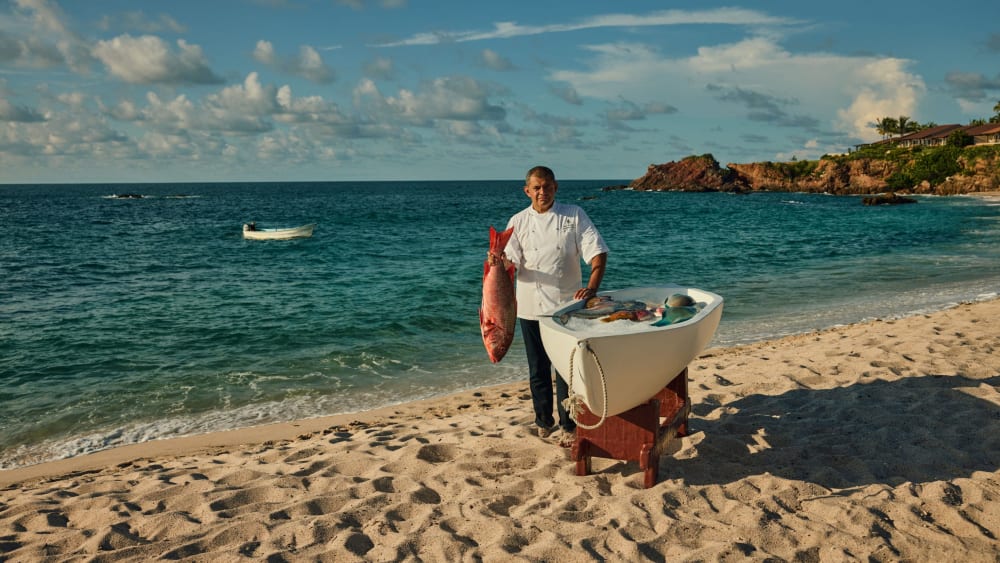
Jalisco eats heartily. Birria, goat meat braised in chili broth in agave leaves, originated in the 16th century in Valle de Ameca; the Torta ahogada, crispy Birote bread with pork, 'drowned' in tomato sauce, is the breakfast after a mariachi night. In Tequila, you drink the Cantarito from the clay jug, and on the coast comes Pescado zarandeado to the table — fish grilled over mangrove wood in Nayarit style.
To top off, a Raicilla — the agave spirit from the Sierra Madre, since June 28, 2019, with its own designation of origin for 16 municipalities of Jalisco.
Insider tip
Raicilla instead of tequila shot. The best Raicillas come from Mascota and San Sebastián del Oeste, two mountain villages two hours behind Puerto Vallarta — smoky, herbal, often from wild agaves. Order pure, with an orange slice and chili salt, never as a shot.
Your Jalisco program — four days
Two airports make the loop easy: You land in PVR on the coast and fly from GDL further — or vice versa. Whether the days in the interior fit into your program we will decide with you based on the assessment of the situation at the time of travel (see 'Good to know').
Day 1 — Arrival in PVR, Malecón, and Zona Romántica
Transfer in 20 minutes to the city. In the afternoon, walk along the Malecón to the Parroquia de Guadalupe, sunset at the Los Muertos pier, dinner in the Zona Romántica.
Day 2 — Islas Marietas or whales, then Riviera Nayarit
Early to Punta de Mita: Playa Escondida and snorkeling, humpback whales in season. In the afternoon San Pancho, overnight at the Riviera Nayarit.
Day 3 — on the toll road to Tequila
Just under four hours with a driver into the highlands. In the afternoon Fortaleza or La Rojeña, in the evening Cantaritos at the main square, nighttime in Tequila.
Day 4 — Ajijic, Lago de Chapala, and Tlaquepaque
In the morning at the Malecón of Ajijic, boat ride from Chapala, lunch at El Parián in Tlaquepaque — then departure from GDL. For the Nevado de Colima, you can add two days between Day 3 and 4.
Where to stay — One&Only Mandarina and boutique houses
Villas and treehouses on the cliff — Riviera Nayarit
From about 900 USD per night
- 105 villas and treehouses with private pool, since 2020, Condé Nast Traveler Hot List 2021
- About an hour north of PVR, in the jungle above its own cove
- Jetty Beach Club, spa, riding and polo club, kids club
- Carao — Mexican cuisine under Enrique Olvera (Pujol)
In Puerto Vallarta, we love Casa Kimberly in Zona Romántica: nine suites in the former homes of Elizabeth Taylor and Richard Burton, according to the establishment, the only hotel in the city with a Michelin Key. In Tequila, Solar de las Ánimas is located in the main square next to La Rojeña; in Ajijic, there are boutique hotels in colonial houses with lake views starting at around 150 EUR per night.
Let us find the accommodation that suits your wishes — we know which villas in Mandarina have sunset views. Submit request .
Good to know
Best travel time
November to April is the dry season: on the coast 23 to 27 degrees, two to six rainy days a month, water temperature around 26 degrees; in the highlands warm during the day, cool at night. December to March brings the humpback whales. From May to October, it usually rains in the afternoons on the coast, peaking in September (around 18 rainy days) and hurricane risk from August to October. All months compared in our guide to the best travel time for Mexico .
Getting there — PVR and GDL
There are no direct flights from Germany to the Pacific coast; with a stop in Mexico City, Los Angeles, or Houston, you are in Puerto Vallarta (PVR) in 13 to 18 hours. For the highlands, you use the GDL airport: you can reach Ajijic from there in 35 minutes, Tequila in 70, without city traffic. Several airlines fly daily between GDL and PVR in 45 to 60 minutes. Details in our guide Flight to Mexico .
Safety in Jalisco
Jalisco requires an honest classification: The Federal Foreign Office expressly excludes Puerto Vallarta when arriving by plane or ship as well as the metropolitan area around the airport GDL from its travel advisory for the state — for the rest of Jalisco, including Tequila, Lake Chapala and the Nevado de Colima, it currently advises against travel (as of September 2026).
Puerto Vallarta and the Riviera Nayarit are therefore the anchor of your program: Malecón, Zona Romántica, Marina, Punta de Mita, and Mandarina are areas where millions of guests visit each year. We plan the interior exclusively as day trips with a local driver on the toll road, Tlaquepaque as a half-day trip from the airport — and assess the situation before each departure.
Basic caution
Only use Uber, DiDi, or official taxis from the Sitio — no street taxis. Travel long distances only during the day and on the toll road. Do not carry valuables openly, avoid crowds and police actions, and reach your destination before dark. We summarize the current recommendations of the Federal Foreign Office in our guide Safety in Mexico together.
Transportation
At the coast, Uber and taxis are sufficient; it takes 45 minutes to Punta de Mita. For the highlands, we provide a driver: Tequila, Ajijic, and Tlaquepaque are 35 to 75 minutes from the airport GDL, the toll road between the coast and the highlands has largely been developed. Don’t forget cash in pesos for markets and boats — our Packing list helps.
Altitude
Tequila is at 1,200, Ajijic at 1,550 meters — feasible without acclimatization. The Nevado de Colima is another category: 3,400 meters at the base camp, 4,260 at the summit. Do not plan the hike directly after a long-haul flight and turn back if you have a headache.
Costs at a glance
- Tour La Rojeña “Jose Cuervo Experience” — 585 MXN (approx. 30 EUR); “Tequilero Gourmet” 3,790 MXN (approx. 195 EUR)
- José Cuervo Express from GDL, Saturdays — 3,250–4,810 MXN (approx. 165–245 EUR)
- Islas Marietas, small group tour from Punta de Mita — 2,250–2,813 MXN (approx. 115–145 EUR) per person
- Whale watching, group tour — from 62 USD per person (online price Vallarta Adventures)
- Botanical Garden of Vallarta — 300 MXN (approx. 15 EUR)
- Boat to Isla de los Alacranes — 300–470 MXN (approx. 15–24 EUR) per boat
- Nevado de Colima — entry 60 MXN (approx. 3 EUR), mountain lodge Oyamel 500 MXN (approx. 25 EUR) per person
- Domestic flight GDL–PVR — from approx. 800 MXN (approx. 40 EUR), 45–60 minutes
- Boutique hotel in Ajijic or Tequila — from approx. 3,000 MXN (approx. 150 EUR) per night; One&Only Mandarina from approx. 900 USD
Prices as of September 2026. 1 EUR ≈ 19.6 MXN.
Explore Mexico further
Jalisco is the Pacific chapter of a Mexico round trip — and can be extended in both directions: from PVR to Baja California to see gray whales and vineyards, from GDL in just over an hour to Mexico City . Those who love the colonial highlands connect Tequila with San Miguel de Allende ; those who want to try Mezcal travel further to Oaxaca .
Let us put together your Jalisco program — with driver, mountain guide, and the right villas on the Riviera Nayarit. Schedule a consultation .
To book a trip or for more information, contact us. We'll help you plan and guide you through your upcoming adventure!
Frequently Asked Questions
Puerto Vallarta and the Riviera Nayarit are exempt from the travel advisory of the Federal Foreign Office for Jalisco when arriving by plane or ship and are visited by millions of guests each year; for the interior, the office currently advises against travel (as of September 2026). We plan Tequila, Chapala, and the Nevado only as day trips with a driver on the toll road and check the situation before departure. Use Uber or Sitio taxis, travel only during the day over land, and do not carry valuables openly.
Four days is the minimum: two at the coast for Malecón, Islas Marietas, or whales and the Riviera Nayarit, two in the highlands for Tequila, Ajijic at Lake Chapala, and half a day in Tlaquepaque. Six days also allow for the Nevado de Colima with one night in the mountain lodge or two relaxing days at One&Only Mandarina. Two airports — PVR and GDL — make a route without a return possible.
November to April: dry, 23 to 27 degrees at the coast, clear water, and mild days in the highlands. The humpback whales are in Bahía de Banderas from December to March, most reliably in January and February; the agave fields around Tequila are at their bluest from October to May. The rainy season from May to October brings afternoon showers and around 18 rainy days in September; from August to October, there is a hurricane risk.
From early December to late March — in the 2025/26 season, tours were approved from December 8 to March 23. January and February are the best months when mothers with calves are in the bay. Boats leave around 8:30 AM in Marina Vallarta, Nuevo Vallarta, or Punta de Mita and are out for three to four hours; group tours start at 62 USD per person. Only book providers with SEMARNAT license — we reserve the spots for you.
At José Cuervo in La Rojeña, the 90-minute “Jose Cuervo Experience” costs 585 MXN (approx. 30 EUR), the three-hour “Tequilero Gourmet” with a personal blend costs 3,790 MXN (approx. 195 EUR); tours daily from 11:00 AM to 5:00 PM. Fortaleza only allocates its spots directly and often weeks in advance — the price is mentioned at the time of reservation. The José Cuervo Express from GDL operates on Saturdays for 3,250 to 4,810 MXN per class.
Yes, with licensed providers from Punta de Mita. The CONANP limits access to Playa Escondida to 116 people per day and 30 minutes per person; you swim about 100 meters through a rock tunnel, life jackets are mandatory, ages 10 to 64 are allowed. Small group tours cost 2,250 to 2,813 MXN (approx. 115–145 EUR) per person for three hours including snorkeling and a CONANP wristband. In high season, spots are booked weeks in advance.
From Germany with one stop — usually Mexico City, Los Angeles, or Houston — in 13 to 18 hours to PVR; the airport is six kilometers north of the center. To Tequila, it is 275 kilometers on the toll road, just under four hours with a driver. Alternatively, you can fly in 45 to 60 minutes to GDL and from there be in Tequila in 70 minutes or in Ajijic in 35 minutes, without city traffic.
Boutique hotels in colonial houses in Ajijic or Tequila start at around 3,000 MXN (approx. 150 EUR) per night, the Solar de las Ánimas in the main square of Tequila is above that. In the Zona Romántica of Puerto Vallarta, you pay for a good house 200 to 400 EUR, Casa Kimberly with nine suites significantly more. The One&Only Mandarina on the Riviera Nayarit starts depending on the season at around 900 USD per night for a villa with a private pool.