

San Miguel de Allende & Querétaro
Art city, wine route and Baroque missions at 1,900 meters
Art city, wine route and Baroque missions at 1,900 meters
San Miguel de Allende — Travel + Leisure's best city in the world 2025 and UNESCO World Heritage since 2008, one hour from the aqueduct of Querétaro, the wineries around Bernal and the five Baroque missions of the Sierra Gorda. Colonial highlands at 1,900 meters, without mass tourism.
Best travel time
November to April
Why San Miguel de Allende — Art, colonial gold, and the best city in the world
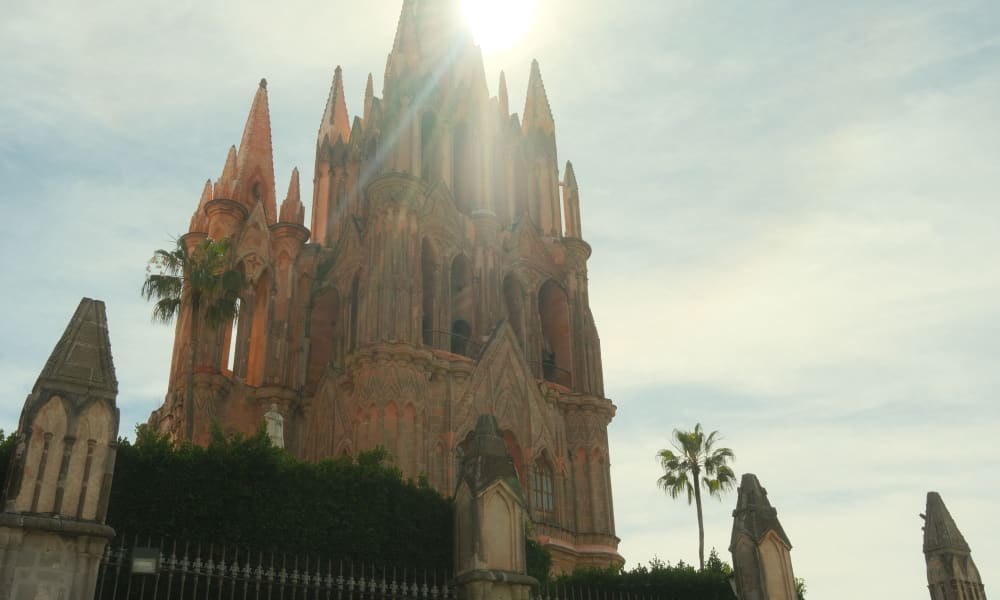
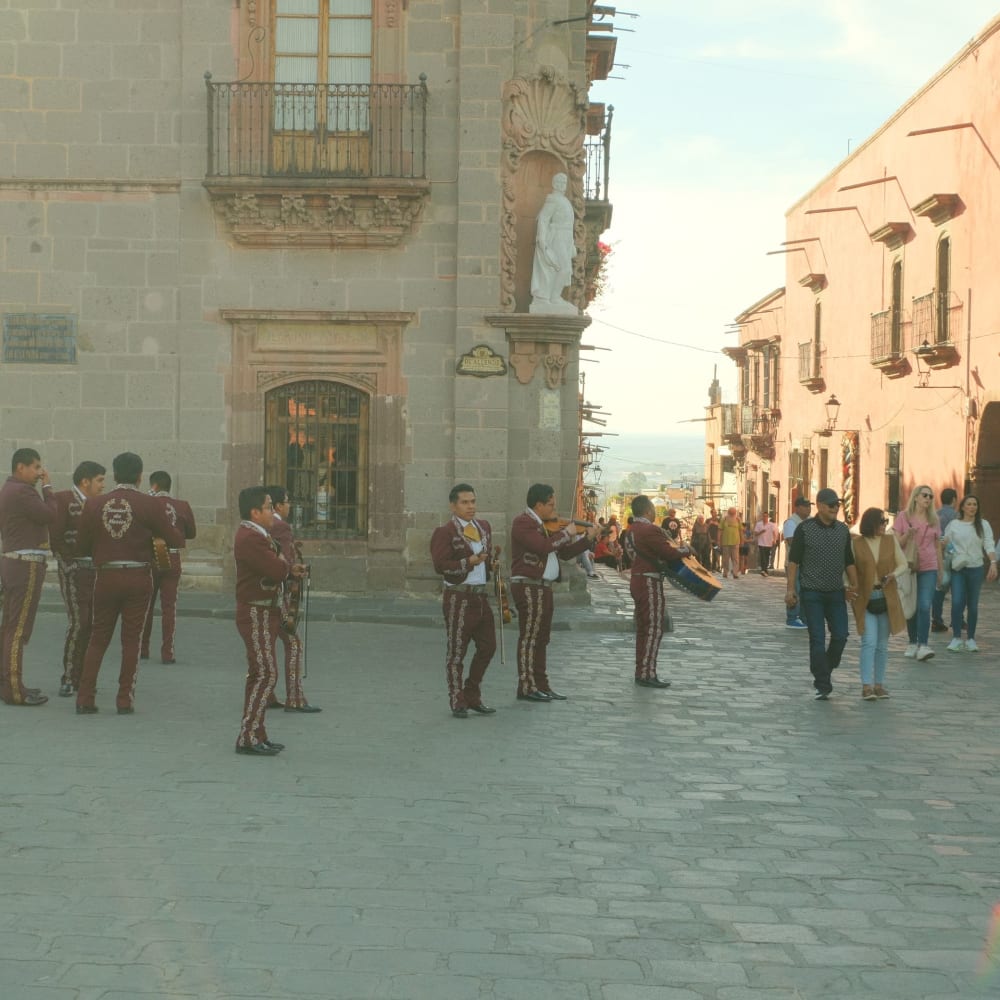
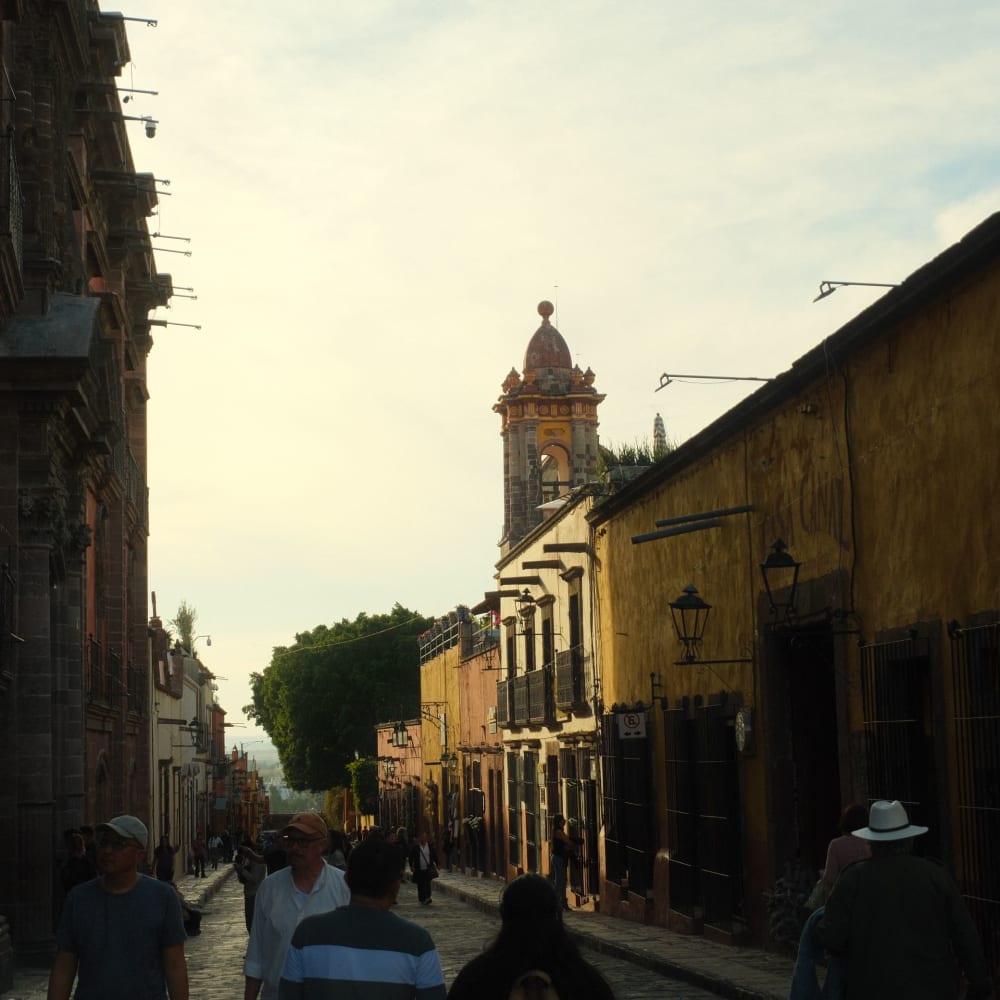
Around six o'clock in the evening, the pink sandstone facade of the Parroquia de San Miguel Arcángel turns orange, then deep red, while below in the Jardín Principal the bells start to ring for the evening. The streets smell of roasted corn, glasses clink from the rooftops, and swallows circle over the domes in the last light. An evening in San Miguel de Allende is an evening in a painting — just louder, warmer, and with better wine.
Most travelers to Mexico commute between the capital and the Caribbean, skipping the colonial highlands in between. What they miss: Travel + Leisure named San Miguel de Allende the best city in the world for the second consecutive year in 2025 (World's Best Awards 2025), Condé Nast Traveler chose it as the best small town in the world (Readers’ Choice Awards) in 2025, and the old town has been a UNESCO World Heritage site since 2008. One hour south lies Querétaro with its 74-arch aqueduct and a historic city center on the World Heritage list since 1996 — beyond that, vineyards, the monolith of Bernal, and the Sierra Gorda begin.
For us, this is the most beautiful highland stage of a Mexico round trip : three to five days at 1,900 meters between galleries, wineries, and Baroque missions — honest, relaxed and without mass tourism.
San Miguel de Allende — Sightseeing in the art city
San Miguel is small enough to reach everything on foot and dense enough for three days: an old town from the 17th and 18th centuries on the hillside, a magnet for artists since the 1940s — first US veterans at the Instituto Allende, today gallery owners, ceramists, and chefs from across the country.
Parroquia and Jardín Principal — the heart of the city
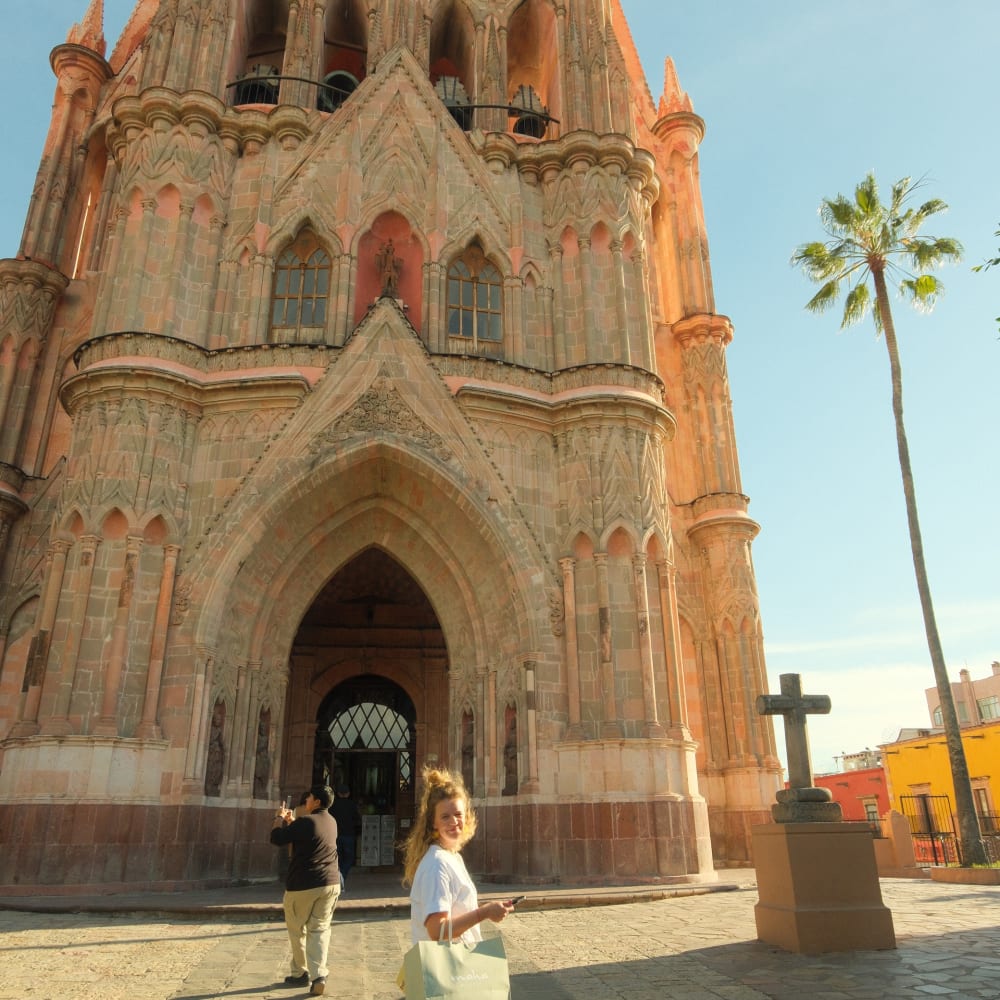
The neo-Gothic facade of the Parroquia made of pink cantera stone was created between 1880 and 1890 after designs by master stonemason Zeferino Gutiérrez, who is said to have been inspired by postcards of European cathedrals. In front lies the Jardín Principal with trimmed laurel trees, mariachis, and benches where half of San Miguel spends the evening; around it, the Casa de Allende, the birthplace of the independence hero, and the arcades with the oldest cafés.
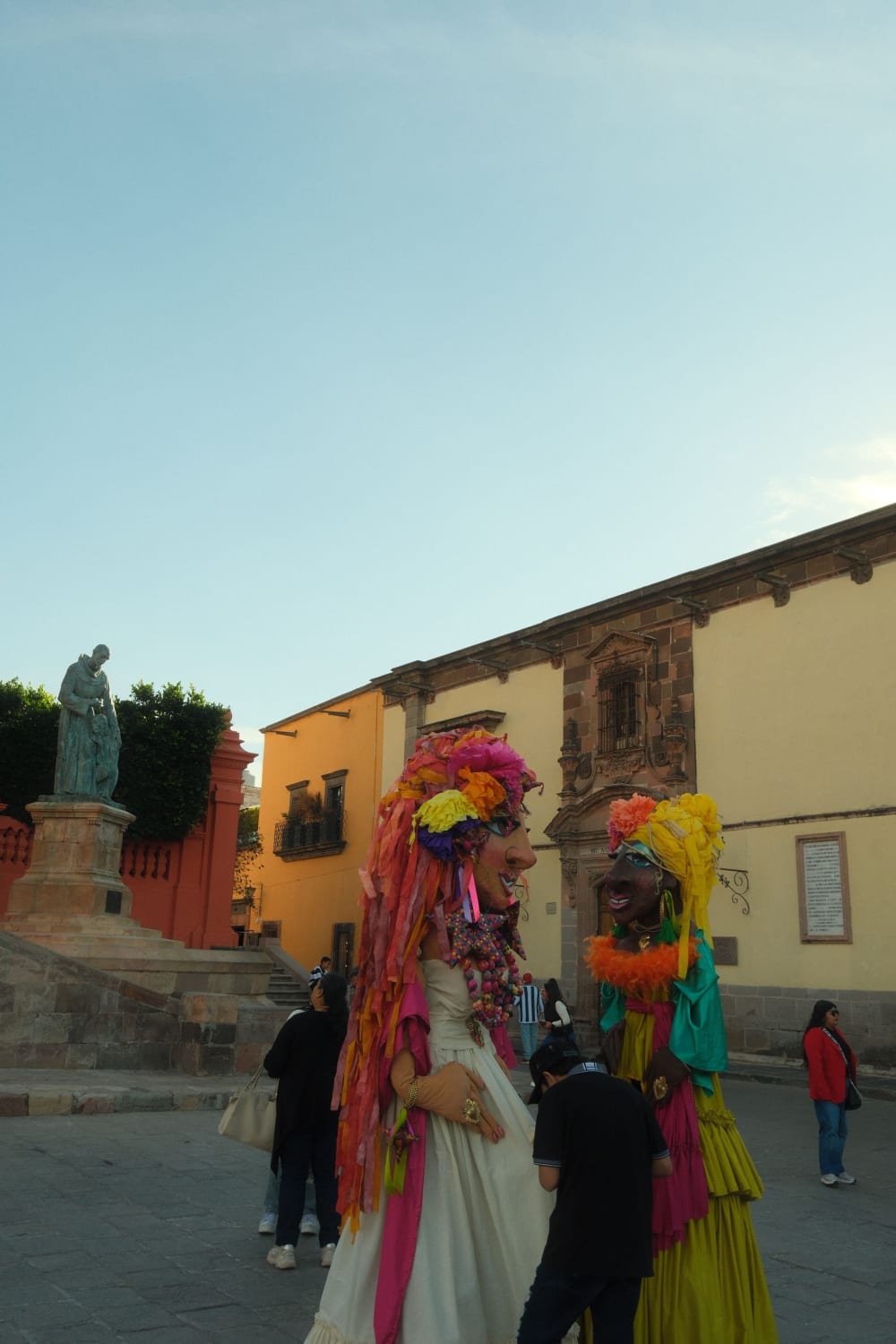
Fábrica La Aurora — Art in the old textile factory
Ten minutes' walk to the north stands the Fábrica La Aurora, a cotton spinning mill that opened in 1902, was closed in 1991, and transformed into a center for art and design. In the halls with cast-iron columns, around 50 galleries, studios, and antique dealers now work — the most beautiful place in the city to buy art or spend a rainy afternoon.
Fábrica La Aurora
- Admission — free; each gallery has its own opening hours
- Opening hours — Mon–Sat 10:00–18:00, Sun 10:00–17:00
- Location — Calzada de la Aurora s/n, 10–15 minutes' walk from the Jardín Principal
- Tip — Come in the morning — then many artists work in their open studios
Rooftops, Atotonilco and El Charco del Ingenio
One spends sunset in San Miguel on a rooftop: The Luna Rooftop at Rosewood faces the Parroquia directly, Quince at the Cuna de Allende is the busiest address. If you take cocktails seriously: Bekeb on Calle Hidalgo ranks 24th in North America's 50 Best Bars 2026.
Fourteen kilometers outside lies the Santuario de Jesús Nazareno de Atotonilco, with the old town a UNESCO World Heritage site since 2008: a pilgrimage church from the 18th century, whose walls and vaults were completely painted by Miguel Antonio Martínez de Pocasangre — the 'Sistine Chapel of Mexico'. Next to it, the thermal springs La Gruta (approx. 350 MXN, Wed–Sun 07:00–17:00). On the outskirts, the botanical garden El Charco del Ingenio protects 67 hectares of cacti and gorges (100 MXN, open daily 09:00–17:00) — ideal for an early morning with hummingbirds.
Insider tip
Come during the week — from Friday evening to Sunday, San Miguel fills up with weekend guests from Mexico City and Querétaro, and the restaurants are fully booked. Tuesday to Thursday the city belongs to you; we leave the wine route for the weekend when the wineries operate at full throttle.
Let's put your San Miguel de Allende program together — we know galleries, rooftops, and restaurants personally and know which order carries the day. Schedule consultation .
Querétaro city — Aqueduct and UNESCO old town
Santiago de Querétaro is the honest counterbalance to San Miguel: a growing industrial and university city, whose colonial center is so intact that UNESCO declared it a World Heritage site in 1996. One day is enough for the aqueduct, old town, and dinner at Plaza de Armas.
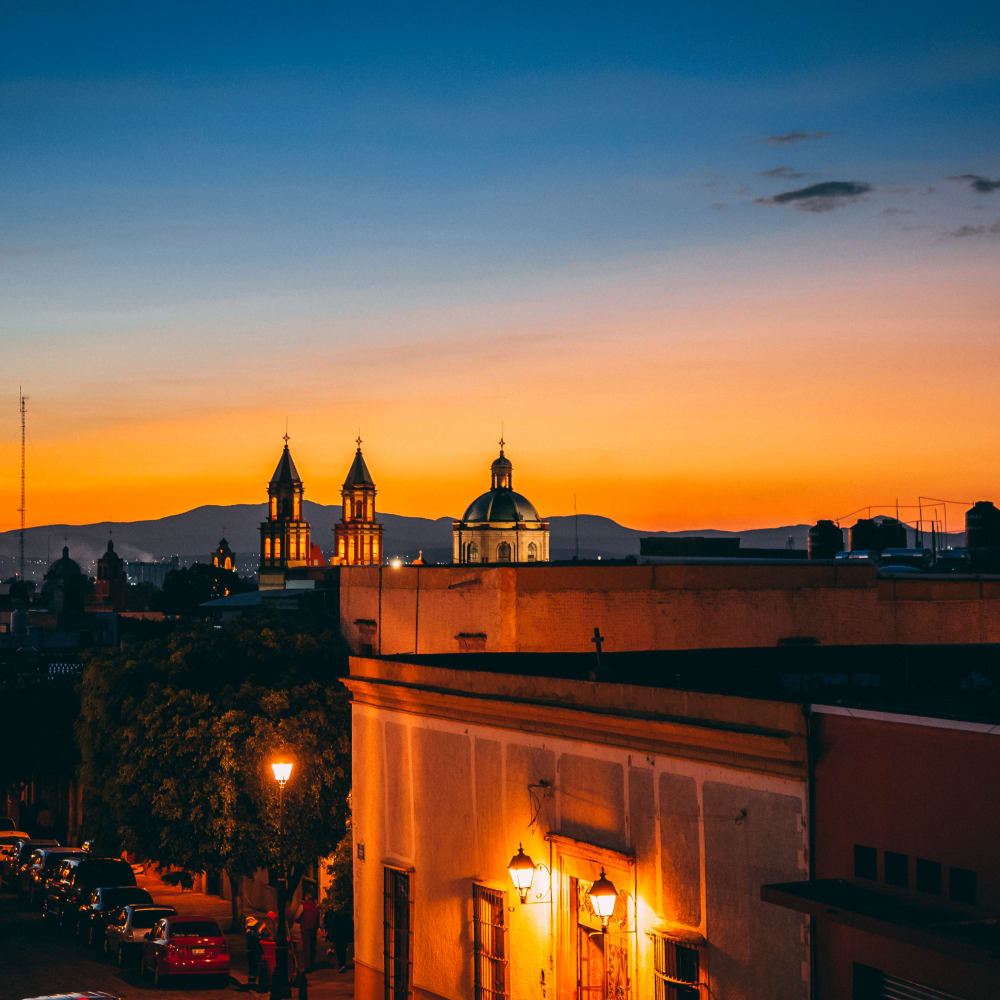
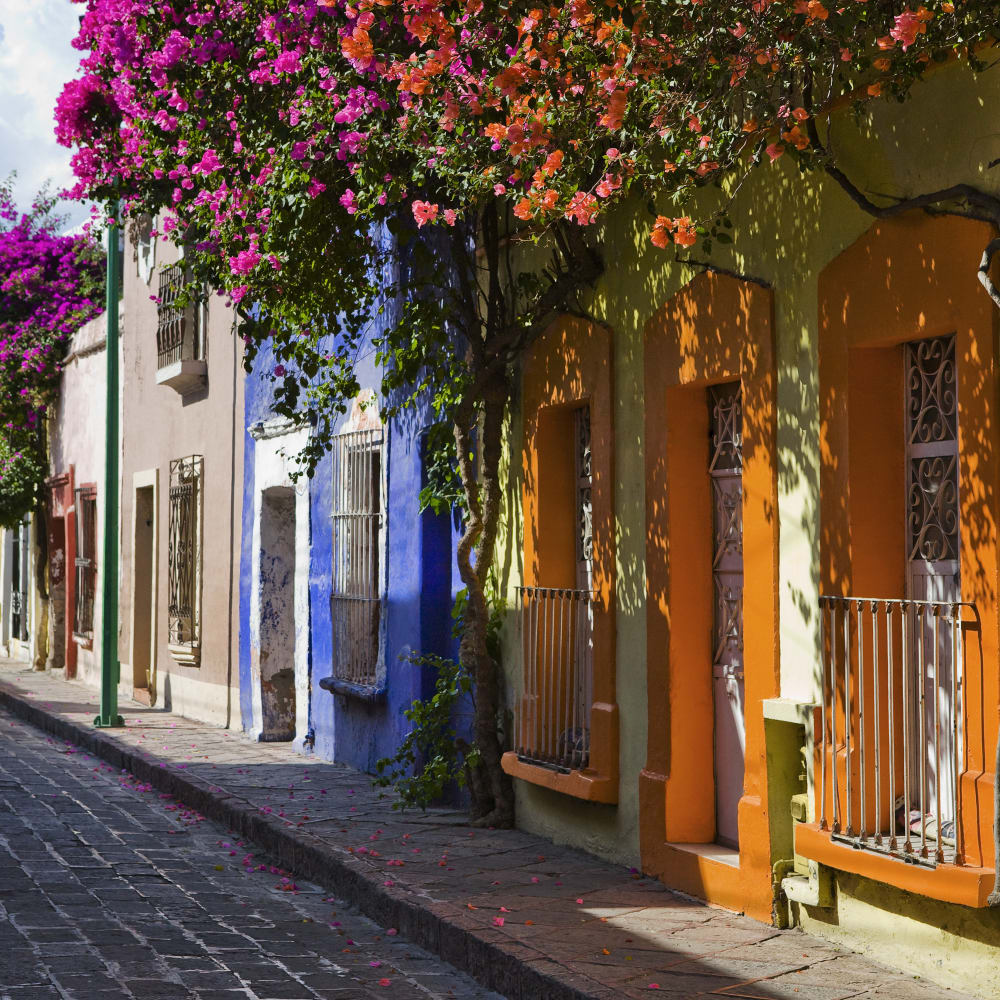
The aqueduct — 74 arches above the city
The landmark was built between 1726 and 1735 to channel spring water from La Cañada into monasteries and fountains: 74 arches made of pink stone, 1,280 meters long and an average of 28.5 meters high. It is most beautiful seen from the Mirador de los Arcos in the east of the old town — during the day against the mountains, illuminated in the evening.
Old town — squares, monasteries, and museums
Querétaro's old town is a pedestrian zone and lives from its squares: the Plaza de Armas with its arcades, the Jardín Zenea with the Templo de San Francisco. The Museo Regional in the former Franciscan monastery tells the history of the state up to the constitution of 1917; the Museo de Arte in the Augustinian monastery shows Baroque painting around a magnificent Baroque cloister.
Museo Regional de Querétaro
- Admission — 205 MXN (approx. 10.50 EUR) for international visitors
- Opening hours — Tue–Sun 09:00–18:00, closed on Mondays
- Location — Corregidora 3 Sur, directly at Jardín Zenea
- Tip — Afterwards go to the Museo de Arte (Allende 14 Sur, Tue–Sun 10:00–18:00, free admission) — two blocks away
Wine route Querétaro — Bernal, Tequisquiapan and the wineries
Between Querétaro city and the Sierra Gorda lies one of Mexico's most important wine regions at 1,900 to 2,100 meters after Baja California. Cool nights and limestone soil produce mineral white and sparkling wines — that's why Freixenet settled here in 1979. The Ruta del Arte, Queso y Vino connects around a dozen wineries, cheese dairies, and two Pueblos Mágicos.
Bernal and the Peña de Bernal — the monolith
Above the village of San Sebastián Bernal, named Pueblo Mágico in 2005, the Peña de Bernal rises vertically by 288 meters — over ten million years old volcanic neck, which the Mexican Ministry of Tourism Sectur ranks as the third highest monolith in the world after Gibraltar and Sugarloaf. A path leads to a chapel halfway up in 15 to 20 minutes with a view over semi-desert and vineyards; the summit remains reserved for climbers. Down in the village: the Museo de la Máscara with around 300 dance masks.
Peña de Bernal
- Access to the path — approx. 30 MXN (approx. 1.50 EUR), free for children and seniors
- Opening hours — daily 08:00–17:00
- Location — Municipality of Ezequiel Montes, approx. 60 km east of Querétaro city, about 1 hour
- Tip — Start ascending before 09:00 — then it is cool, empty, and the light lies on the rock wall
Tequisquiapan — Cheese, baskets, and thermal water
Tequisquiapan, also Pueblo Mágico, is the cozier place: bougainvillea-covered streets around Plaza Miguel Hidalgo, a basket market, thermal baths, and around are the cheese dairies of the region, where Manchego-style, Gouda, and aged goat cheese are produced. Every year in May, the town celebrates the Festival Internacional del Arte, Queso y Vino; in 2026, the 50th edition took place from May 7 to 24, with free admission at Parque La Pila.
Wineries with tastings — our selection
Three houses suffice for an impression. Freixenet México in Ezequiel Montes offers tours of its 25-meter-deep cellar daily from 11:00 to 17:30 — allegedly the deepest in Latin America — and tastings in the cloister of Finca Sala Vivé. Viñedos La Redonda, founded in 1972 and thus the oldest winery in the region, receives visitors among the vines and poplars; here, lunch outdoors is worthwhile. De Cote brought European grape varieties to the region and is considered one of the most awarded houses in the highlands.
Insider tip
Weekend is wine day — on Saturdays and Sundays, all wineries offer their full program with tours, music, and cuisine; during the week, some are only open upon request. Tours with tastings cost 250–620 MXN (approx. 13–32 EUR). We will book you a driver for the day.
Sierra Gorda de Querétaro — Missions and biosphere reserve
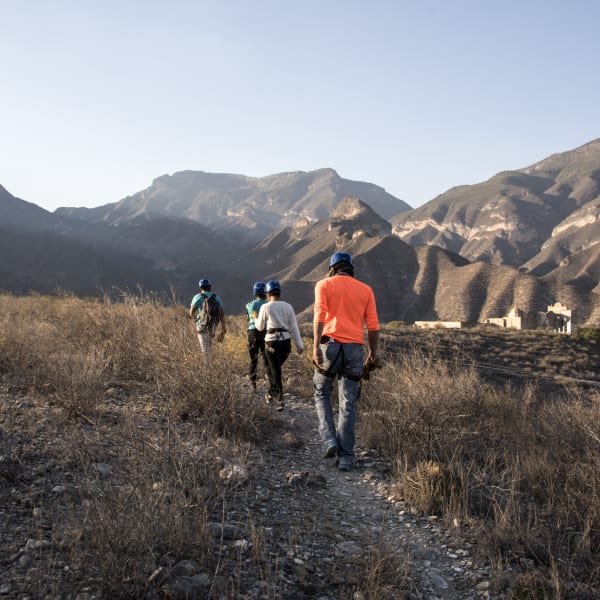
North of the vineyards, the landscape changes: Ruta 120 winds through the pass at Pinal de Amoles from semi-desert to pine forest and descends into the humid hot valleys of the Sierra Gorda. The biosphere reserve, created by decree in 1997, protects 383,567 hectares with 333 bird and 111 mammal species, including jaguars and green macaws. Allow three to four hours of travel from Querétaro to Jalpan de Serra.
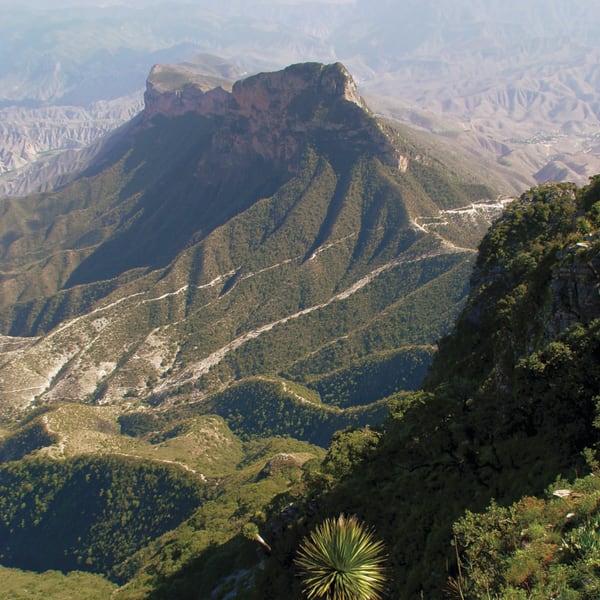
The five Franciscan missions — UNESCO World Heritage since 2003
Between 1750 and 1760, Franciscan Junípero Serra — who later founded the missions in California — had five churches built here, whose facades were filled by indigenous craftsmen with angels, suns, jaguars, and corn cobs. UNESCO included them in 2003 as an outstanding example of popular Baroque on the World Heritage list. Santiago de Jalpan (1751–1758) is located at the main square of the town, Santa María del Agua de Landa is considered the finest; Tilaco, Tancoyol, and Concá can be done in one day with a driver. All five are parish churches with free admission.
Nature — Puente de Dios, Chuveje, and bird watching
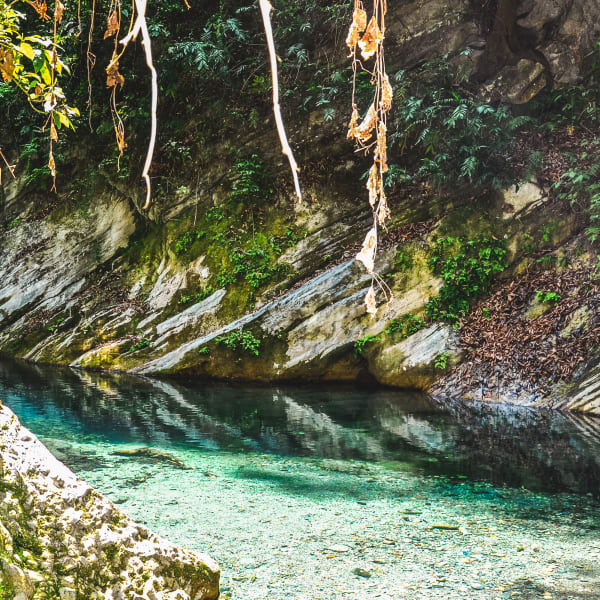
Between them lie the nature destinations: the Puente de Dios near Jalpan, where the Río Escanela pushes turquoise through a cave — about 45 minutes hiking each way, only with a local guide; the Cascada El Chuveje near Pinal de Amoles, which falls 30 meters into a basin between poplars; and at dawn on the outskirts of Jalpan, parrots, motmots, and with luck a flock of green macaws.
Puente de Dios
- Admission — 181 MXN (approx. 9 EUR) including guide and reserve fee; parking 30 MXN
- Best time — November to May — during the rainy season, the water is turbid and access is occasionally closed
- Location — near Jalpan de Serra, about 30 minutes from the town
- Tip — Bring swimwear and water shoes; the basins are open for swimming
Note
The Sierra Gorda is not a half-day tour. Plan at least one overnight stay in Jalpan de Serra — the mountain road has several hundred curves, and the missions appear most beautiful in the morning light. We organize the route with a driver who knows the way.
Your San Miguel de Allende program — three days
Three days is the minimum — one for San Miguel, one for the wine route with Bernal, one for Querétaro.
Day 1 — San Miguel de Allende on foot
Morning coffee under the arcades at the Jardín, then Parroquia, Casa de Allende, and Calle Aldama to Parque Juárez. Lunch tacos at Mercado Ignacio Ramírez, afternoon galleries in Fábrica La Aurora, sunset on a rooftop.
Day 2 — Bernal and the wine route
Departure at 08:00 with a driver to Bernal (about 1.5 hours), ascent to Peña before it gets hot. Then a tour and tasting at Freixenet or De Cote, lunch among the vines at La Redonda, afternoon cheese in Tequisquiapan.
Day 3 — Querétaro and Atotonilco
Morning in Querétaro's old town with Museo Regional and aqueduct, lunch at Plaza de Armas. On the way back a stop at the Santuario de Atotonilco and two hours in the thermal baths of La Gruta.
Where to stay — Colonial houses, wineries, and the Sierra
San Miguel de Allende has a remarkably dense boutique hotel scene. We distinguish three categories: the large luxury houses in Centro like the Rosewood San Miguel de Allende or the Belmond Casa de Sierra Nevada; boutique hotels with ten to thirty rooms in converted city palaces; and haciendas outside the city for tranquility and starry skies. In Querétaro, we recommend a boutique hotel in the old town, on the wine route a room directly at a winery in Ezequiel Montes or with a view of the Peña in Bernal. In the Sierra Gorda, the houses in Jalpan are simpler — here the location matters, not luxury.
We know the houses personally and know which rooms have a view of the Parroquia and where weekend music at night does not disturb. Request consultation .
Good to know
Best travel time
The highlands have a mild, dry climate with an annual average of around 18 degrees. The best travel time is November to April: sunny days with 22 to 27 degrees and little rain — in December and January, however, cool nights around five degrees. October and November are the most beautiful months for the wine route when the vines change color. More on the best travel time for Mexico .
Arrival — QRO, BJX or via Mexico City
Two regional airports are at your doorstep: Querétaro (QRO), about 1 hour 15 minutes from San Miguel, and León/Guanajuato (BJX), about 1.5 hours away. Those coming from Europe usually arrive nonstop in Mexico City and travel with a driver via Highway 57 in about three hours to Querétaro and about four to San Miguel. Details in the travel tip Flight to Mexico .
Safety in San Miguel de Allende
The Bajío highlands around San Miguel and Querétaro have been among the most relaxed travel regions in Mexico for years — Querétaro is considered one of the safest states in the country. The old town of San Miguel, the center of Querétaro, Bernal, Tequisquiapan, and the wine route can be experienced without problems during the day and evening. As everywhere, it applies: leave valuables at the hotel, choose well-lit streets at night, plan overland trips during the day and with a driver. Current advisories from the Federal Foreign Office are summarized in the travel tip Safety in Mexico together.
Basic caution
Use Uber, DiDi or taxis ordered from the hotel instead of street taxis in the cities. You should only drive the Bergstraße into the Sierra Gorda during daylight — due to curves, fog, and free-roaming animals. Cobblestones and steep alleys in San Miguel require sturdy shoes.
Local transport
You explore San Miguel on foot — compact, but steep. A taxi from the hotel is sufficient for Atotonilco, La Gruta, and the Botanical Garden. For the wine route and Sierra Gorda, we book a private driver — after the third tasting, no one wants to drive themselves anyway.
Altitude and climate
San Miguel is located at 1,910 meters, Querétaro at 1,820 — high enough for intense sun and cool evenings, too low for altitude sickness. A hat, sun protection, and a warm jacket for the rooftop belong in your luggage; in the Sierra Gorda (760 meters) you need mosquito repellent. Our Packing list for Mexico helps with sorting.
Costs at a glance
- Museo Regional de Querétaro — 205 MXN (approx. 10.50 EUR)
- Museo de Arte de Querétaro, Fábrica La Aurora, Missions of the Sierra Gorda — free entry
- El Charco del Ingenio — 100 MXN (approx. 5 EUR)
- Thermal Springs La Gruta — approx. 350 MXN (approx. 18 EUR)
- Peña de Bernal, access to the path — approx. 30 MXN (approx. 1.50 EUR); Museo de la Máscara 30 MXN
- Winery tour with tasting — 250–620 MXN (approx. 13–32 EUR)
- Puente de Dios including guide — 181 MXN (approx. 9 EUR); Cascada El Chuveje from approx. 50 MXN (approx. 2.50 EUR)
- Dinner at a good restaurant in San Miguel — approx. 800–1,500 MXN (approx. 40–75 EUR) per person with wine
- Boutique hotel in the center of San Miguel — from approx. 3,500 MXN (approx. 180 EUR) per night; luxury houses from approx. 12,000 MXN (approx. 610 EUR)
Prices as of September 2026. 1 EUR ≈ 19.6 MXN.
Discover more of Mexico
The highlands lie between the capital and the colonial cities of the south — and can be extended in both directions.
- Mexico City — cultural metropolis at 2,240 meters, three hours by car away
- Puebla & Pueblos Mágicos — Talavera, Cholula, and volcanic views
- Oaxaca — Mezcal, markets, and the coast of Puerto Escondido
- Yucatán — Mérida, Chichén Itzá, and cenotes
All travel information — from entry to vaccinations — can be found in our Mexico travel guide . Let us put together your San Miguel de Allende program — with the right weekdays, a driver for the wine route, and houses we know ourselves. Schedule a consultation .
To book a trip or for more information, contact us. We'll help you plan and guide you through your upcoming adventure!
Frequently Asked Questions
Yes. San Miguel de Allende and Querétaro are among the most relaxed travel regions in Mexico; Querétaro is one of the safest states in the country, and San Miguel has a large international community living here permanently. The historic center, wine route, Bernal, and Tequisquiapan can be experienced trouble-free during the day as well as in the evening. The usual rules apply: Use Uber or hotel taxi instead of street taxi, keep valuables in the hotel, travel during daylight. Current advisories from the Federal Foreign Office can be found in our travel tip regarding safety in Mexico.
Three days are the minimum: one for walking in San Miguel, one for Bernal and the wine route, one for Querétaro with Atotonilco and the thermal springs La Gruta on the way back. For the Sierra Gorda with its five UNESCO missions, plan for two additional days and a night in Jalpan de Serra, as the journey from Querétaro takes three to four hours. Five days make for a well-rounded highland stage.
The title comes from the World’s Best Awards by the US magazine Travel + Leisure, where readers rate cities based on sights, culture, cuisine, hospitality, and value for money. San Miguel won in 2017, 2018, 2024, and 2025 — most recently with 93.33 points. Condé Nast Traveler also named the city the best small town in the world in 2025. Reasons include the intact colonial architecture (UNESCO World Heritage since 2008), the gallery and restaurant scene, and walkable size.
The fastest way is via the regional airports Querétaro (QRO, approx. 1 hour 15 minutes) or León/Guanajuato (BJX, approx. 1.5 hours), which are connected to Mexico City, Houston, and Dallas. From Mexico City, the drive with a driver via the highway 57 takes about four hours, to Querétaro around three; comfortable buses from Primera Plus leave from Terminal Norte. We organize the transfer from the airport or capital with a private driver.
Absolutely — as a day trip from San Miguel or Querétaro. At an altitude of 1,900 to 2,100 meters lies one of Mexico's most important wine regions: Freixenet México offers tours of its 25-meter deep cellar daily from 11:00 AM to 5:30 PM, La Redonda and De Cote offer tastings among the vines, tours cost 250–620 MXN (approx. 13–32 EUR). Combine two wineries with the ascent of Peña de Bernal and cheese in Tequisquiapan — and take a driver.
Access to the path costs around 30 MXN (approx. 1.50 EUR), children under 12 and seniors over 60 pay nothing; it is open daily from 08:00 AM to 05:00 PM. It takes 15 to 20 minutes uphill over steps and rocks to reach the chapel halfway up — sturdy shoes suffice, the summit remains reserved for climbers. Come before 09:00 AM, then the path is empty and the 288-meter high rock wall is illuminated in the morning light.
November to April: dry, sunny days with 22 to 27 degrees and clear highland air. In December and January, the nights get cool at about five degrees — pack a jacket. October and November are ideal for the wine route when the vines change color; the cheese and wine festival in Tequisquiapan took place in 2026 from May 7 to 24. During the rainy season from June to September, it usually rains only briefly in the afternoons, but the hills and prices are pleasant.
From Querétaro, Ruta 120 leads in three to four hours over the pass at Pinal de Amoles to Jalpan de Serra; we recommend a driver and an overnight stay on site. The five Franciscan missions (UNESCO 2003) are parish churches that can be visited without a guide and with free entry. For Puente de Dios, a local guide is mandatory — 181 MXN (approx. 9 EUR) including reservation fee — just as for birdwatching in the reserve.