


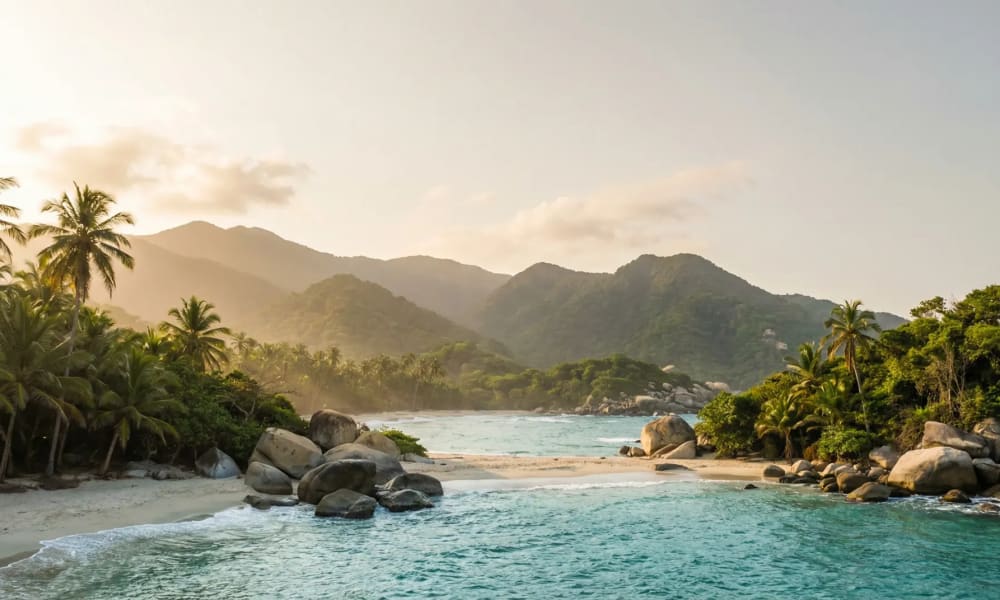
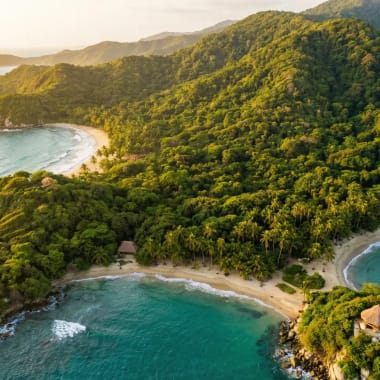
This image was generated with AI.
Best Travel Time Colombia
Climate, Regions & Month by Month
Climate, Regions & Month by Month
The best travel time for Colombia is from December to March as well as from June to August — the two dry seasons of the country. However, since Colombia is located near the equator and has five different climate zones, the ideal travel time strongly depends on your planned route. The Caribbean coast around Cartagena follows a different rhythm than the Andes highlands near Bogotá or the Amazon rainforest. Those planning a Colombia round trip will find all the information for the right choice of dates here.

Colombia's Climate at a Glance
Forget summer and winter. In Colombia, the rhythm is not determined by four seasons, but by two dry seasons and two rainy seasons — a system directly related to the proximity to the equator:
- First Dry Season (December to March): The most popular travel time — dry, stable weather in most regions. High season with correspondingly higher prices.
- First Rainy Season (April to May): Shoulder season with cheaper prices and short afternoon showers. Still well-travelable for many regions.
- Second Dry Season (June to August): Ideal for European summer vacationers. Less crowded than December to March.
- Second Rainy Season (September to November): The calmest phase. Few tourists, affordable prices — and Cano Cristales shows its most spectacular colors.
A common misconception: Rainy season in Colombia almost never means continuous rain. Typically, there are short, intense showers in the afternoon — often lasting no longer than one to two hours. Mornings usually remain sunny and dry. Colombia is, therefore, fundamentally travelable all year round. The decisive factors are the region and your priorities.
Why Colombia does not have a classic climate — the altitude zones
The climate in Colombia is not determined by seasons but by altitude. The so-calledthermal floors (climate zones) explain why you can sweat at 32 degrees in Cartagena on the same day and need a jacket just two flight hours later in Bogotá:
- Tierra caliente (0–1,000 m): Over 24 degrees year-round — Caribbean coast, Pacific, Amazon
- Tierra templada (1,000–2,000 m): 17–24 degrees — Medellin, Coffee Region around Salento
- Tierra fria (2,000–3,000 m): 12–17 degrees — Bogotá, Villa de Leyva
- Paramo (3,000–4,000 m): Below 10 degrees — unique high mountain vegetation
These climate zones make Colombia a country where you can switch from tropical beach climate to fresh mountain air within a few hours. For your packing list, this means: layers are essential.
Note
Even in the hot Tierra caliente on the Caribbean coast, it is rarely unbearable — the sea breezes moderate the heat. Cartagena has pleasant temperatures of 27–30 degrees year-round. In Bogotá, however, temperatures drop below 10 degrees in the evening. Anyone combining both cities in one trip should definitely pack layers — a temperature difference of 14 degrees with only two flight hours of distance.
Climate Table Colombia — Temperatures and Precipitation by Region
| Month | Cartagena (0 m) | Santa Marta (0 m) | Medellin (1,495 m) | Bogotá (2,600 m) | Salento (1,900 m) | Leticia (82 m) |
|---|---|---|---|---|---|---|
| Jan | 28°C · 1 mm ☀️ | 28°C · 5 mm ☀️ | 22°C · 55 mm ☀️ | 14°C · 45 mm ☀️ | 17°C · 100 mm 🌤 | 26°C · 260 mm 🌧 |
| Feb | 28°C · 1 mm ☀️ | 28°C · 2 mm ☀️ | 23°C · 65 mm ☀️ | 14°C · 55 mm ☀️ | 17°C · 110 mm 🌤 | 26°C · 250 mm 🌧 |
| Mar | 28°C · 3 mm ☀️ | 29°C · 5 mm ☀️ | 23°C · 100 mm 🌤 | 15°C · 80 mm 🌤 | 17°C · 150 mm 🌧 | 26°C · 310 mm 🌧 |
| Apr | 29°C · 50 mm 🌤 | 29°C · 30 mm ☀️ | 22°C · 200 mm 🌧 | 15°C · 150 mm 🌧 | 17°C · 200 mm 🌧 | 26°C · 300 mm 🌧 |
| May | 29°C · 100 mm 🌧 | 29°C · 60 mm 🌤 | 22°C · 190 mm 🌧 | 14°C · 120 mm 🌧 | 17°C · 180 mm 🌧 | 26°C · 280 mm 🌧 |
| Jun | 28°C · 80 mm 🌤 | 28°C · 40 mm 🌤 | 22°C · 140 mm 🌤 | 14°C · 60 mm ☀️ | 17°C · 130 mm 🌤 | 26°C · 200 mm 🌧 |
| Jul | 28°C · 60 mm 🌤 | 28°C · 35 mm ☀️ | 22°C · 110 mm ☀️ | 14°C · 40 mm ☀️ | 17°C · 90 mm ☀️ | 25°C · 170 mm 🌧 |
| Aug | 28°C · 80 mm 🌤 | 28°C · 50 mm 🌤 | 22°C · 120 mm ☀️ | 14°C · 45 mm ☀️ | 17°C · 100 mm ☀️ | 26°C · 170 mm 🌤 |
| Sep | 28°C · 130 mm 🌧 | 28°C · 80 mm 🌤 | 22°C · 170 mm 🌧 | 14°C · 80 mm 🌤 | 17°C · 160 mm 🌧 | 26°C · 190 mm 🌧 |
| Oct | 28°C · 230 mm 🌧 | 28°C · 130 mm 🌧 | 22°C · 200 mm 🌧 | 14°C · 130 mm 🌧 | 17°C · 200 mm 🌧 | 26°C · 220 mm 🌧 |
| Nov | 28°C · 120 mm 🌧 | 28°C · 80 mm 🌤 | 22°C · 160 mm 🌧 | 14°C · 100 mm 🌧 | 17°C · 160 mm 🌧 | 26°C · 250 mm 🌧 |
| Dec | 28°C · 30 mm ☀️ | 28°C · 20 mm ☀️ | 22°C · 100 mm 🌤 | 14°C · 55 mm ☀️ | 17°C · 110 mm 🌤 | 26°C · 270 mm 🌧 |
☀️ Dry season · 🌤 Transition · 🌧 Rainy season — Temperatures as daily averages, rainfall in mm per month
Travel time by region — which season is suitable where?
Colombia unites five distinctly different climate zones within its territory. What is considered perfect beach weather on the Caribbean coast has little in common with conditions in the Amazon rainforest or the Andean highlands. Exactly this makes a trip to Colombia so diverse — and choosing the right time window so important.
Caribbean coast — Cartagena, Santa Marta, and Tayrona
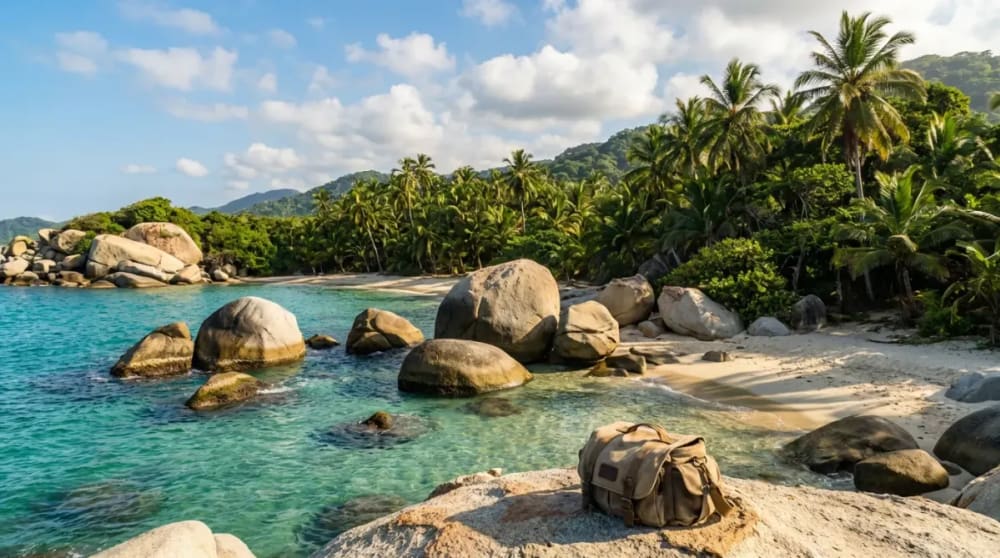
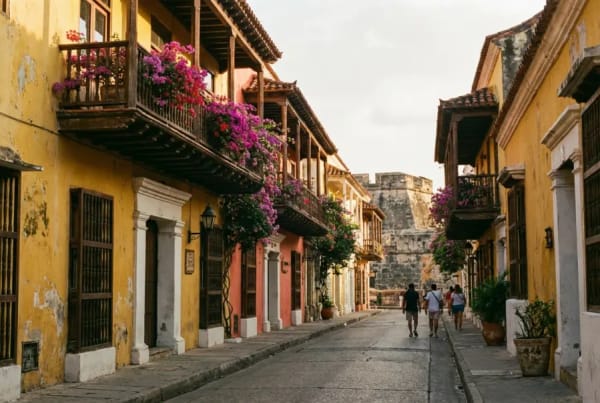
The Caribbean coast is Colombia's most popular vacation region — and the best travel time for Cartagena, Santa Marta, and Tayrona is clearly in the dry season from December to April. Cartagena de Indias records only 1–3 mm of rainfall during these months at a constant 28 degrees air temperature. The water remains pleasantly at 27–29 degrees year-round. Santa Marta , located a bit further north, will become the hottest place on the coast in March with up to 34 degrees.
The trade winds — known in Colombia as Alisios — blow particularly strong in January and February. This delights kite surfers, but may make calm beach days on the open sea a bit windy. From March onwards, the winds decrease.
Insider tip
If you want to avoid Cartagena's high season (mid-December to mid-January) but still need good weather, you should consider April or May. Conditions on the Caribbean coast are still acceptable then — brief showers in the afternoon, significantly fewer crowds, and hotel prices that are 20–30 percent cheaper. Popular hotels in Cartagena's old town are booked out four to eight weeks in advance during high season.
The Tayrona National Park is one of the most beautiful places on the Colombian Caribbean coast — but closes three times a year for about two weeks each time. The closures serve to regenerate the ecosystem and for the spiritual rituals of the indigenous peoples Arhuaco, Kankuamo, Kogui, and Wiwa:
- February 1–15 (Kugkui Shikasa)
- June 1–15 (Saka Juso)
- October 19 – November 2 (Nabbat)
Exact dates may vary slightly — check the current dates in advance at parquesnacionales.gov.co . During Semana Santa (Easter), Tayrona is open, but with around 250,000 visitors per year, it is one of the most visited parks in Colombia — correspondingly overcrowded on holidays.
Attention
In February, the Tayrona National Park is closed — exactly when many Germans fly off to winter vacation. Those planning to visit Tayrona should consider December, January, or March instead. Late March and early April — just after Semana Santa — often offer the best conditions: still dry, but significantly fewer visitors.
Coffee region — Salento, Manizales, and the Cocora Valley
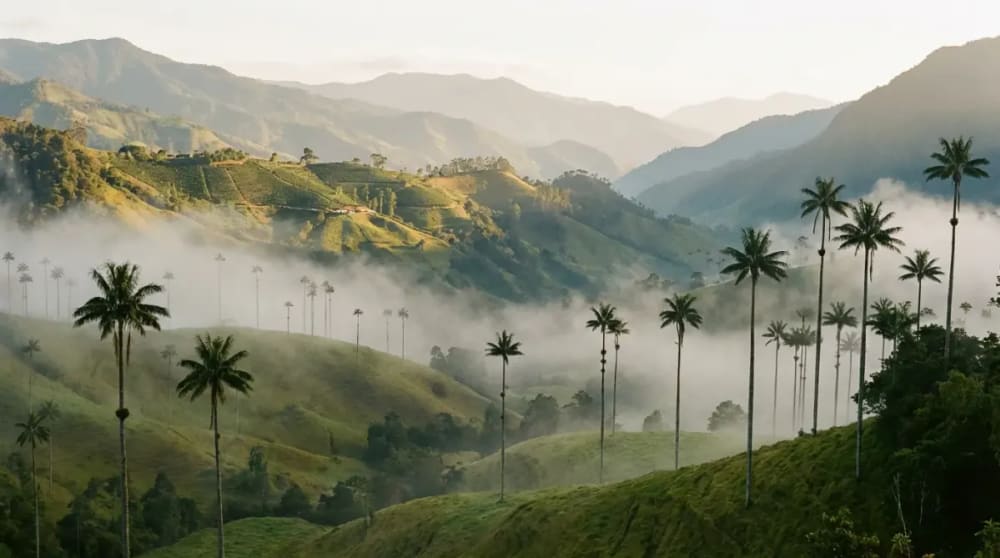
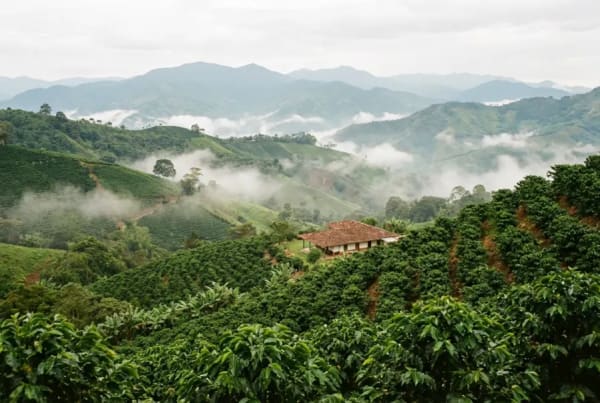
The Coffee region Salento is located at 1,500–2,000 meters in the Tierra templada — making it generally accessible year-round. The climate resembles a Central European spring: temperatures between 17 and 27 degrees, neither oppressively hot nor unpleasantly cold. The driest and best months for hiking in the Cocora Valley are January to March and July to August, when the paths are less muddy and visibility of the wax palms is clearer.
However, the rainy season also has its charm. Then, the coffee plantations shine in a more intense green, and the waterfalls of the region carry more water, and there are noticeably fewer tourists.
Insider tip
During the rainy season, the coffee region shows its lushest side: lush green plantations, full waterfalls, and authentic tranquility. Anyone who accepts some mud on the hiking paths will experience Salento with fewer crowds — and save on accommodations and tours.
Medellin and the Andes — the eternal spring
Medellin at an altitude of 1,495 meters is nicknamed City of Eternal Spring — the city of eternal spring. For good reason: with temperatures between 16 and 29 degrees throughout the year and hardly any seasonal fluctuations, there is no bad travel month here. In 2024, Medellin first welcomed more than a million international visitors, establishing itself as Colombia's second most important destination after Bogotá.
The driest months are January and February, as well as July and August (55–120 mm of rainfall). It rains the most in April and October (around 200 mm), but even then typically only in the afternoon. A special travel tip: at the beginning of August, the Flower Festival takes place, Medellin's most colorful cultural festival and one of the most beautiful festivals in South America. The city transforms into a sea of flowers, music, and parades for a week.
Bogotá — cultural city at an altitude of 2,600 meters
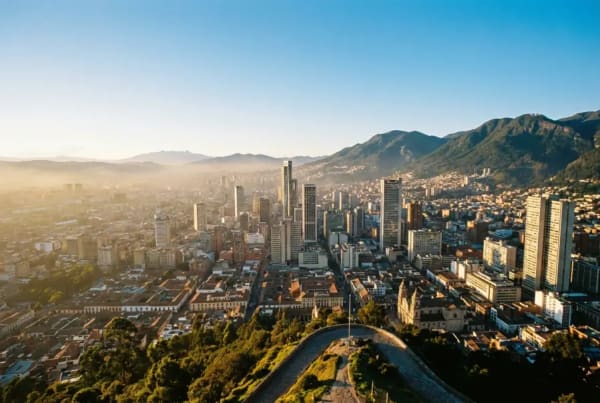
Bogotá is located in the Tierra fría and has a constantly cool climate: 18–20 degrees during the day, 7–9 degrees at night — and that all year round. The driest months are December to February and June to August. In April and October, most rain falls.
For Bogotá as a cultural and gastronomy destination, the weather plays a subordinate role, however. Museums, restaurants, and the vibrant scene in districts like La Candelaria or Chapinero operate independently of the season. Plan to allocate the first one to two days of your trip for altitude acclimatization — at 2,600 meters, mild shortness of breath in the first hours is normal.
Note
Bogotá at 2,600 meters and Cartagena at sea level — only two flight hours apart, but with a 14-degree temperature difference. If both cities are on your travel itinerary, layered clothing is essential. Many travelers underestimate how chilly Bogotá can be in the evenings.
Amazon — tropical rainforest around Leticia
The Colombian Amazon around Leticia knows year-round 26 degrees and high humidity. There isn't a real dry season here — but from June to September, there is comparatively less rain. During these months, the region is particularly suitable for wildlife observations: animals gather at the remaining waterholes and are easier to spot. The hiking trails are drier and more passable.
In the rainy season (April and May), the Amazon floods large areas of forest and transforms the rainforest into a water landscape. Unique canoeing through the flooded jungle is possible then — an experience that only occurs during this time of year.
Insider tip
In the Amazon, it holds true: the rainy season is not bad, but different. The flooded forests offer an experience that is only possible for a few months of the year. Mosquito protection with DEET is essential in both seasons. Also read our Health advice for Colombia — a yellow fever vaccination is strongly recommended for the Amazon region.
Pacific coast — Nuquí, Bahía Solano, and the humpback whales
The Colombian Pacific coast is one of the rainiest regions in the world, with about 6,725 mm of annual rainfall. For comparison: Berlin has about 590 mm for the entire year. It rains almost all the time on the Pacific coast — and this is exactly what has kept this remote region so unspoiled.
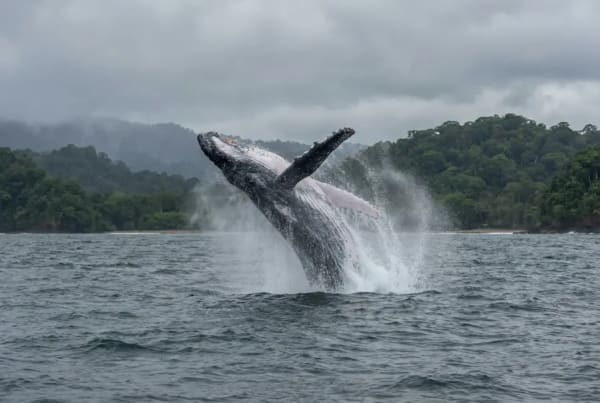
The reason travelers still come here is spectacular: from July to November humpback whales migrate from Antarctica to the coast of Colombia to mate and raise their calves. The peak of whale watching is between August and October. Nuquí and Bahía Solano — the two main towns in the region — are only accessible by small plane, which keeps visitor numbers low and the experience intimate. Early booking is advisable.
Note
August to October is the perfect time for nature travelers: whale watching on the Pacific can be ideally combined with the Cano Cristales season. Two of Colombia's most extraordinary natural spectacles within one trip — a combination that is only possible for a few months of the year.
Cano Cristales — the river of five colors
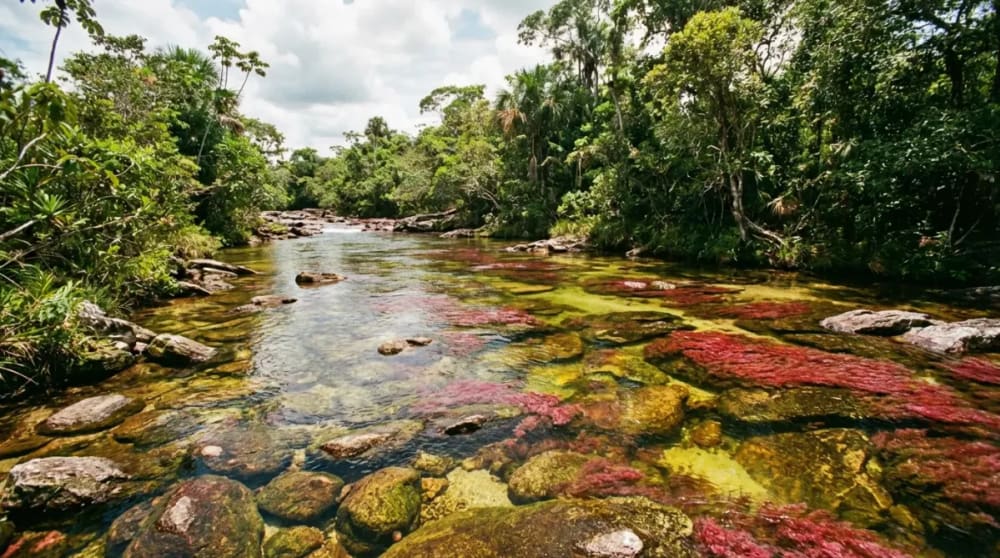
Cano Cristales is perhaps Colombia's most extraordinary natural wonder — and contradicts every intuition about travel times: Not the dry season brings the best conditions, but the Rainy season. The season runs from mid-June to mid-December. Only when enough water flows and the sun simultaneously hits the riverbed does the endemic aquatic plant Macarenia clavigera begin to bloom and colors the water in spectacular shades of red, yellow, green, blue, and pink.
- Most intense colors: September and October — the algae are in full bloom
- Best compromise (vivid colors with less rain): August
- Closed: December to May — too little water for the algal bloom
Cano Cristales is located in the Sierra de la Macarena National Natural Park and can only be reached by flight to La Macarena (via Bogotá or Villavicencio). A visit is only permitted with an official local guide. Visitor numbers are strictly limited to protect the sensitive ecosystem. Book flights and tours at least two to three months in advance — especially for trips between July and September.
Month by month — Colombia from January to December
January
Peak season on the Caribbean coast. Cartagena and Tayrona present themselves at their best — dry, hot, lots of sun. Strong trade winds blow along the coast, perfect for kite surfers. Bogotá and the coffee region are relatively dry and pleasantly accessible. Cano Cristales is closed.Recommendation: One of the best months for beach, Caribbean, and tours.
February
The driest month for Cartagena — only 1 mm of precipitation on average.But caution: The Tayrona National Park is closed from February 1 to 15. Instead, the Carnival of Barranquilla entices, one of the largest cultural festivals in Latin America and recognized by UNESCO as an intangible cultural heritage. Medellín and Bogotá offer pleasant conditions.Recommendation: Perfect for Cartagena, cities, and culture — avoid Tayrona.
March
Last month of the first dry season and one of the best all-round months for Colombia. The Caribbean coast is still dry, and the Tayrona National Park offers optimal conditions. Semana Santa may fall in March (dates vary annually). In the Andes and the coffee region, the first showers herald the coming rainy season without significantly restricting travel.Recommendation: Excellent for tours and Caribbean holidays.
April
The first rainy season begins. Semana Santa often falls in April — then hotels are full and prices temporarily higher. Tayrona is open, but overcrowded during Easter week. The coffee region and Bogotá become wetter. However, outside of Easter week, April is an ideal shoulder season with significantly fewer tourists.Recommendation: Ideal for price-conscious travelers outside of Semana Santa.
May
The wettest month in many regions of Colombia. Hotels offer the lowest prices of the year. In the Amazon, water levels rise — canoe trips through the flooded rainforest become possible. The Cano Cristales season begins in mid-May. The coffee region showcases lush green.Recommendation: For budget-conscious travelers and anyone wanting to experience the Amazon in its most impressive phase.
June
The rain decreases, and the second dry season begins.Tayrona is closed from June 1 to 15. Medellín and the coffee region become drier. Cano Cristales is completely open and displays initial colors. From the second half of June, most regions of Colombia are again easily accessible.Recommendation: From mid-June, a solid travel month for all regions except Tayrona.
July
One of the best all-round months for a Colombia tour. The second dry season ensures stable weather in the Andes and along the Caribbean. The humpback whale season begins on the Pacific coast. Cano Cristales enters its first intense color phase. Colombian school holidays bring a little more domestic tourism, but international demand is still lower than in December.Recommendation: Most versatile month — ideal for nature, culture, and the Caribbean.
August
The dry season is at its peak. Medellín celebrates the Feria de las Flores in the first week of August — colorful flower parades, music, and pure Colombian joie de vivre. Cano Cristales increasingly shows intense colors. Whale watching on the Pacific picks up pace. European summer holidays slightly increase prices.Recommendation: The best month for anyone wanting to combine nature and festivals.
September
The second rainy season sets in. Fewer tourists and lower prices in almost all regions. For nature travelers, September is still one of the most exciting months: Cano Cristales displays its most intense colors, and whale watching on the Pacific coast reaches its peak. Bogotá becomes wetter but remains attractive for culture travelers.Recommendation: Ideal for nature travelers focused on Cano Cristales and whales.
October
The wettest month in many regions.Tayrona is closed from around October 19 to November 2. However, October offers the lowest prices of the year. Cano Cristales is still in season. In the Llanos Orientales, spectacular bird congregations gather in the wetlands — caimans, capybaras, and up to 70 different bird species in close proximity.Recommendation: For budget travelers and wildlife enthusiasts.
November
The rainy season is winding down. Few tourists, good prices, improving weather.The insider tip: From mid-November to mid-December is Colombia's underestimated travel time — the weather noticeably improves, but the Christmas crowds are not yet present. Cano Cristales closes the season in mid-December.Recommendation: Best value for money of the entire year.
December
From mid-December, Colombia's largest peak season begins. The Caribbean coast is wonderfully dry and sunny. Tayrona offers ideal conditions. Prices jump drastically from December 15 — in Cartagena up by 60–80 percent compared to the low season. New Year's Eve in Cartagena is legendary but correspondingly expensive and crowded. Bogotá and Medellín present themselves festively.Recommendation: Book early, especially for the Caribbean coast.
Let's find the perfect travel time for your Colombia trip together — we know every region from personal experience. Request non-binding advice now .
What type of traveler travels when?
| Type of traveler | Best months | Alternative | Why? |
|---|---|---|---|
| Beach & Caribbean | Dec–Mar | Jul–Aug | Dry season, sun, calm sea |
| Nature & Hiking | Jan–Mar, Jul–Aug | Jun, Sep | Dry roads, clear visibility |
| Cities & Culture | Year-round | Aug (Feria de las Flores) | Weather plays a minor role |
| Wildlife & Whales | Jul–Oct | — | Humpback whale season on the Pacific |
| Cano Cristales | Aug–Oct | Jul, Nov | Most intense algal colors |
| Birdwatching | Dec–Mar (Llanos), May–Jul (Andes) | — | Concentration of water holes and nesting period |
| Budget Traveler | Oct–Nov, Apr–May | Sep | Off-season, 20–30% cheaper |
| Round trip | Dec–Mar | Jul–Aug | Generally good weather, most regions dry |
Our Colombia round trips are tailored to the respective travel time — from the Coffee & Caribbean Tour to the 3-week intensive round trip to the Nature round trip Tayrona & Amazon.
High season, low season and prices in Colombia
When Cartagena gets expensive
Colombia has two pronounced high seasons, during which hotel prices rise by 50–80 percent and capacities are quickly exhausted:
- Mid-December to mid-January: Christmas and New Year holidays — Colombian families and international tourists travel at the same time. Hotels in Cartagena's Old Town then cost 120–200 USD per night, while they are at 60–100 USD in the shoulder season.
- Semana Santa (Easter, variable March or April): Strong domestic tourism movement, popular hotels quickly booked out.
Additionally, Colombia's 18 public holidays create regular long weekends. These puentes festivos (bridge days, often moved to Monday) fill popular destinations like Tayrona, Villa de Leyva, or Guatapé — and temporarily drive prices up there.
When Tayrona is closed
The Tayrona National Park closes three times in 2025 for about two weeks each:
- Feb 1–15 (Kugkui Shikasa)
- Jun 1–15 (Saka Juso)
- Oct 19 – Nov 2 (Nabbat)
These dates may fluctuate slightly each year. Plan around these time periods and check the current dates in advance. More information about Colombia's National Parks and Nature Reserves .
Budget tip: Shoulder season April/May and November
The cheapest travel time for Colombia is October and November — hotels are 20–30 percent below normal levels, flights are the cheapest, and the tourist crowds are absent. April and May offer a similar price-performance ratio with slightly more rain. Compared to high season, you can easily save 30–40 percent on total trip costs in low season.
Insider tip
Flights to Colombia are cheapest in October and November — often several hundred euros below high season levels in December and January. Combined with lower hotel prices on site, the low season becomes a clear recommendation for budget-conscious travelers. Tips for finding flights can be found in our guide to Travel and Flights to Colombia .
Does your planned travel period fit with Colombia? We would be happy to check this for you — free of charge and without obligation. Request consultation now .
Rainy season in Colombia — is the trip still worth it?
Yes — and for certain types of travelers even particularly so. Those who are flexible and do not exclusively plan a beach holiday benefit multiple times from the rainy season in Colombia:
- 20–30 percent cheaper hotels and significantly fewer tourists at all major attractions
- Lush green landscapes, more abundant vegetation and water-rich waterfalls
- Cano Cristales (June to November) and Whale watching (July to October) are only possible during the rainy season
- Cities like Bogotá and Medellín function independently of the weather — short afternoon showers hardly affect city visits
- Amazon: The flooded forest areas allow for unique canoe trips through the rainforest
Insider tip
The Colombian rhythm in the rainy season: Plan outings and activities for the morning, enjoy the afternoon rain with a tinto (Colombian coffee) at the next café. The rain is warm and usually stops after one to two hours. Quick-drying clothing and a light rain jacket are sufficient. A seasonal Packing list for Colombia can be found in our separate guide.
Good to know: In El Niño years (such as 2023/2024) there is less rain than usual — even leading to drought phases. In La Niña years (such as 2024/2025) the rainy season can be more intense than the long-term average. Current weather forecasts are published by the Colombian weather service IDEAM .
Those interested in Safety in Colombia can find current assessments in our separate guide. And for Entry and Visa we have compiled all the latest information.
More Colombia travel information
Plan your Colombia trip with our specialized guides:
- Vaccinations & Health — Yellow fever, malaria prophylaxis, and altitude adjustment
- Entry & Visa — Documents and current regulations
- Safety in Colombia — Current situation and precautions
- Packing list by season — What you should pack depending on the time of travel
- Travel & Flights — Routes, airlines, and affordable flight times
- Colombia's National Parks — Tayrona, Sierra Nevada, and more
- Diving & Snorkeling — Rosario Islands, Providencia and San Andres
- Birdwatching — 1,950 species in one country
Also read our blog articles: Best travel time Latin America at a glance and Travel safely in Colombia — the truth .
Discover Colombia — our travel destinations
Every region of Colombia has its own climate and best travel time. Discover the most beautiful destinations:
- Cartagena — Colonial jewel on the Caribbean (best time: Dec–Apr)
- Tayrona National Park — Tropical beaches between jungle and sea (best time: Dec–Jan, Mar–Apr)
- Santa Marta — Gateway to the Sierra Nevada de Santa Marta (best time: Dec–Apr)
- Coffee region Salento — Wax palms and coffee plantations (accessible year-round)
- Medellin — City of eternal spring (year-round, Aug for Feria de las Flores)
- Bogota — Culture and gastronomy at 2,600 meters (year-round)
- Cano Cristales — The river of five colors (Jun–Nov, best colors Aug–Oct)
Suitable round trips for every travel time
- Coffee & Caribbean — Cartagena — Ideal from December to March
- Colombia Intensive — 3 weeks — Individually customizable for any travel period
- Nature: Tayrona & Amazonas — Best from July to September
- Cities: Bogota, Medellin, Cartagena — Possible year-round
Your dream holiday, tailor-made by true connoisseurs.
From the first spark of inspiration to the moment you return home full of stories, we’re by your side – whether by phone, email or WhatsApp, whenever you need us. Every journey we design is as unique as you are: individually crafted with exclusive privileges and exceptional arrangements that make your experience truly unforgettable.
Experts for your trip

You might also like this

This image was generated with AI.
This image was generated with AI.

This image was generated with AI.