


Caño Cristales
The Liquid Rainbow — only visible for five months a year, only accessible by small plane
The Liquid Rainbow — only visible for five months a year, only accessible by small plane
Caño Cristales shines in five colors only from July to November. Travel time, arrival, and permits — Latin Memories plans your experience at Colombia's Liquid Rainbow.

Best Travel Time
July to November — the National Park Serranía de la Macarena is only open during these months, with the most intense colors in September and October.
Why Caño Cristales will leave you speechless
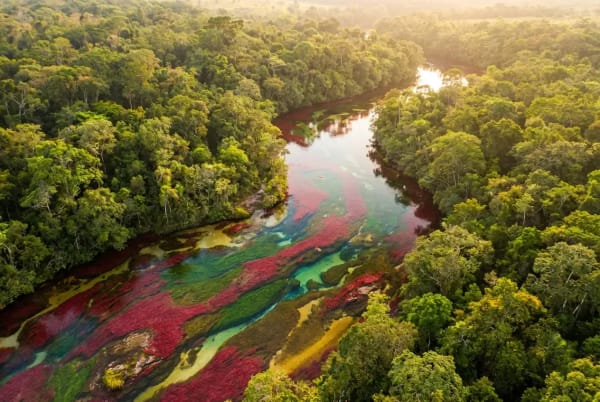
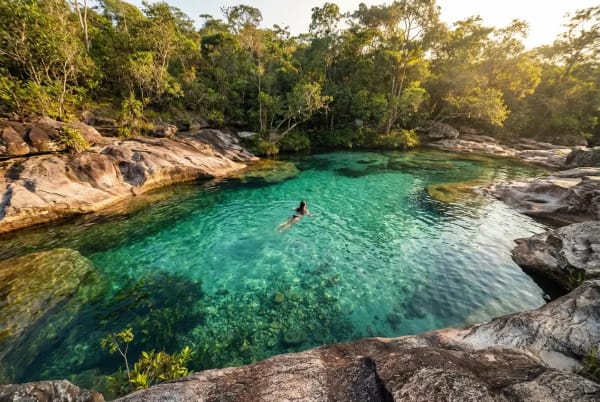
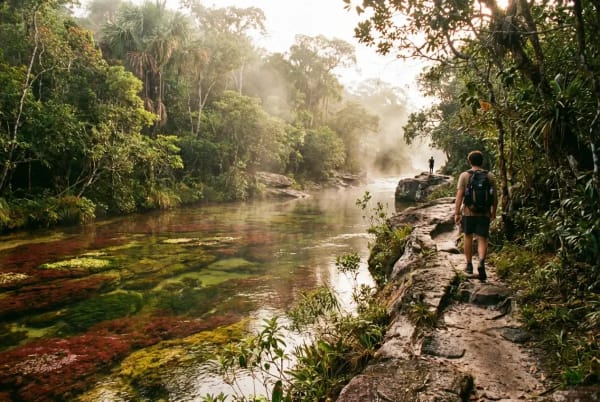
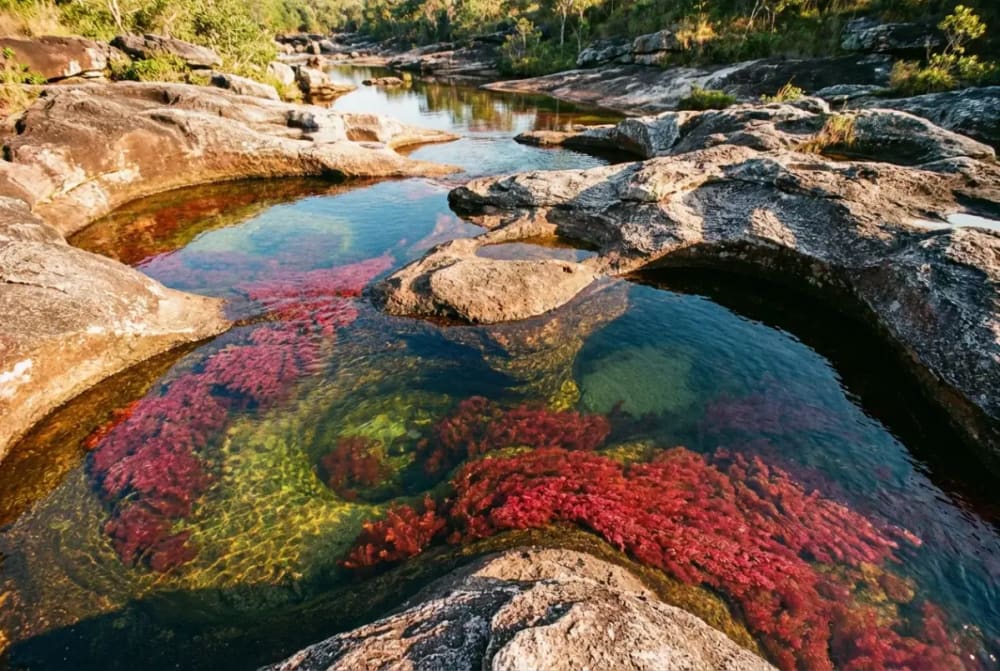
The riverbed glows in bright red, deep pink, rich yellow, and vibrant green — interspersed with crystal-clear water that flows over rocks older than any living being on this planet. Caño Cristales is hidden in the Serranía de la Macarena in the heart of Colombia. A natural phenomenon that exists only a few months a year, is only accessible by small plane, and can be experienced by a maximum of 200 people per day.
Colombians call it The River that Escaped from Paradise — the river that fled Paradise. Internationally, it is considered the most beautiful river in the world. After our own visit, we can say: That's an understatement. Those planning a Colombia round trip and searching for the truly extraordinary will find one of the surreal natural wonders of our Earth in Caño Cristales, Colombia.
What makes Caño Cristales so unique
The Liquid Rainbow — Why the river shines in five colors
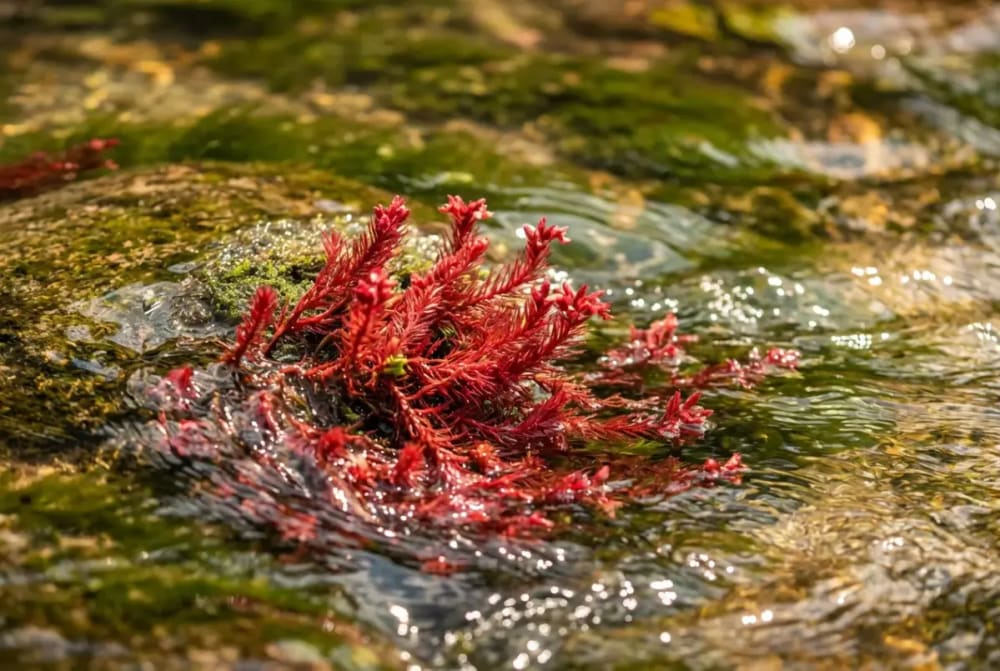
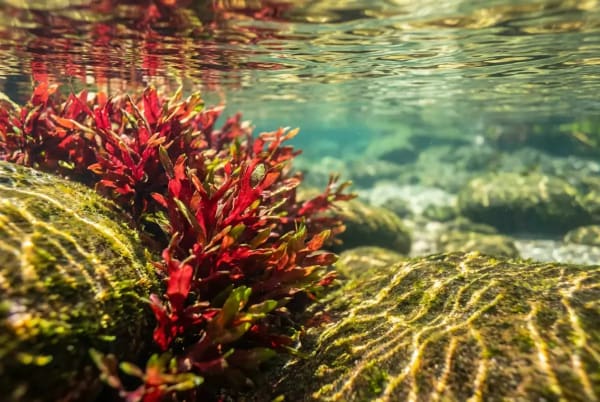
Five colors, one river — and behind it a fascinating interplay of biology, geology, and light. The main role is played by Macarenia clavigera, an endemic flowering plant of the family Podostemaceae that only occurs in the Serranía de la Macarena. Contrary to many sources that refer to it as algae, Macarenia clavigera is a true flowering plant, firmly rooted in the riverbed.
Under ideal conditions — moderate water level, direct sunlight, the right temperature — the plant produces an intense red pigment. It bathes the riverbed in bright red and deep pink. The other colors arise from the interplay of various elements: blue and turquoise from the crystal-clear water and the reflection of the sky in deep pools. Yellow and orange from other algae and mosses. Green from water plants at the edges. White from the foam at rapids and waterfalls.
The Serranía de la Macarena — a mountain range older than life
The mountain range itself, with an estimated age of 1.2 to 1.8 billion years, is among the oldest in the world. It forms a biogeographical island at the intersection of four ecosystems: Andes, Orinoquia, Amazonia, and Llanos. This location explains the extraordinary biodiversity of the region — over 420 species of birds, jaguars, manatees, and countless endemic plant species on 630,000 hectares of national park. Learn more about biodiversity in our article on Colombia's birdlife — 1,950 species await .
Insider Tip
The colors are most intense in bright, sunny weather between 9 and 12 o'clock. On cloudy days, the Liquid Rainbow appears significantly paler — plan for at least 3–4 days to catch sunny conditions.
We organize your Caño Cristales expedition — from flight booking to a certified guide on-site. Request advice .
Caño Cristales travel time — the seasonal window
The National Park Serranía de la Macarena is open only from July to November. In the remaining months, access is restricted for environmental protection reasons — and the colors would not be visible anyway.
This is due to a fascinating paradox: Macarenia clavigera needs neither too much nor too little water. In the main rainy season (December to May), the water covers the plants, light cannot reach the riverbed, and pigmentation is absent. In the extreme dry season, the plants dry up. Only in the perfect transition — when the rainy season subsides, the water level is moderate, and the sun penetrates — does the Liquid Rainbow unfold.
Month by month:
- July / August: The park opens. First colors appear, but not yet at full intensity. The advantage: fewer visitors and often sunny days. Ideal if you prefer tranquility.
- September / October: Peak season. Macarenia clavigera reaches its maximum color intensity — rich red and deep pink. However, it also comes with the highest visitor density. Flights to La Macarena are often booked weeks in advance.
- November: Last month of visitation. The colors are still visible but may lose intensity with the onset of rain. Many tour providers close at the end of November.
Those traveling during the best travel time for Colombia should plan for the Caño Cristales window. There are only a few natural phenomena worldwide that truly exist only a few months a year.
Plan early
The 200-person daily quota fills up quickly in the peak season (September/October) — plan at least 2–3 months in advance, especially for weekends. Those arriving without reservations risk not being allowed to enter the park.
Getting to Caño Cristales — step by step
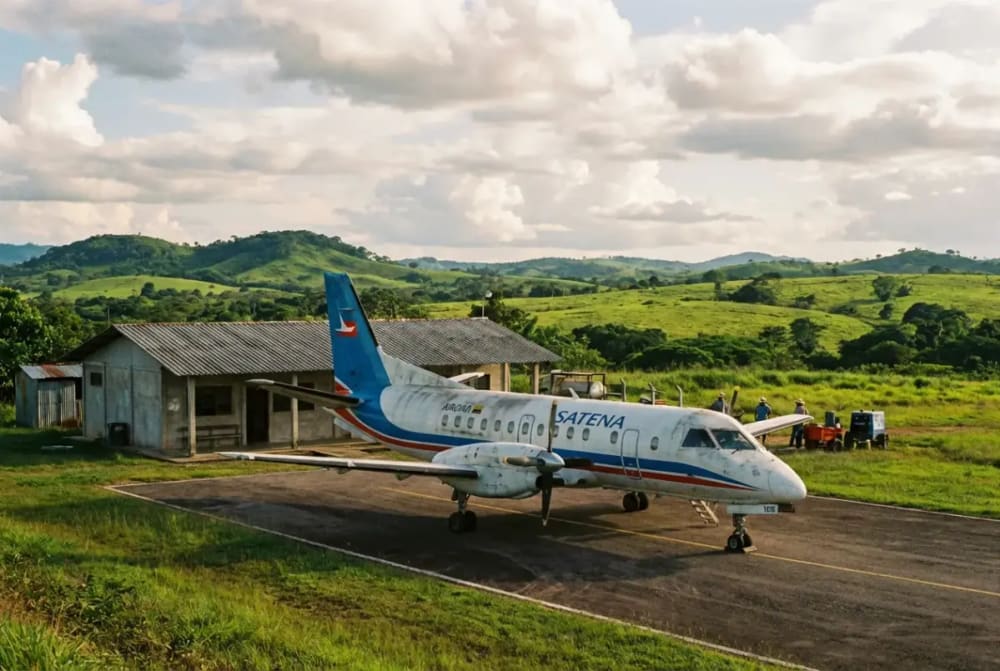
The remoteness of Caño Cristales is part of its fascination. There are no practical road connections to La Macarena — the land route takes several days through difficult terrain. The only realistic way is by small plane.
Bogotá → La Macarena by small plane
Satena Airlines, Colombia's state regional airline, regularly flies from Bogotá (El Dorado, BOG) directly to La Macarena (LMC). The flight takes 1.5 to 2 hours in a propeller plane — and offers a spectacular view over the endless Llanos plains. Alternatively, there are flights from Villavicencio (VVC), about 1.5 hours south of Bogotá by bus.
From La Macarena airport to the town is just a few minutes. From the town to the entrance of the national park is about 8–15 km by jeep or mototaxi in 30–60 minutes. All transfers are done through certified local guide agencies — individual transport into the park is not possible.
Getting to Bogotá → Caño Cristales Bogotá (El Dorado, BOG) → Caño Cristales / National Park
Bogotá is the ideal starting point. Spending one to two days in the capital before or after the flight naturally combines culture and nature. More information about flights to Colombia .
Note
Satena occasionally has delays or cancellations due to bad weather — always plan a buffer day, so your connecting flight is not at risk. Package bookings through tour operators often include the flight and offer rebooking flexibility.
Let us handle the complete logistics — we know the processes and the most reliable local partners on-site. Submit inquiry .
Visiting rules and permits — what you need to know
Caño Cristales is one of Colombia's most strictly regulated natural parks. That is exactly what makes the visit so special: The rules protect a unique ecosystem and guarantee an exclusive experience away from mass tourism.
- Maximum 200 visitors per day — the daily quota protects the sensitive ecosystem and ensures you experience the river in peace.
- Certified guide is mandatory — unaccompanied visits are not allowed. Your guide knows the best spots and times of day.
- No chemical sunscreen — chemical UV filters harm Macarenia clavigera. Biodegradable sunscreen is allowed but must be completely absorbed before swimming.
- No plastic in the park — only reusable bottles and containers.
- Do not leave marked paths — to protect the sensitive riverbanks.
- No drones without special permission from the national park authority.
There is no official online booking channel for individual tourists. Reservations are made through licensed tour operators in La Macarena, who offer guides, permits, transportation, and meals as a package. This makes individual planning difficult — and professional assistance particularly valuable.
Note
The 200-person limit may seem restrictive, but it is a quality promise: You experience one of the most exclusive natural spectacles in the world in a manageable group, accompanied by a guide who knows every inch of the river.
What to expect on-site — activities and swimming areas
A typical day tour lasts 4 to 6 hours and covers 3–4 main spots. In the morning, you start with your guide from the town of La Macarena, reach the park by jeep, and explore the river on foot and in the water. The hikes are moderate, but water sandals are mandatory — you regularly wade through shallow river areas.
Los Ochos
- Feature — Natural rock pools shaped like the number eight — the most photogenic spot in the park
- Duration — about 45–60 min.
- Swimming — Allowed in designated pools
- Photo tip — In the morning with sunlight for the most intense colors
Piscinas Naturales
- Feature — Deep, crystal-clear natural pools — ideal for swimming
- Duration — about 30–45 min.
- Water temperature — Cool and refreshing (approx. 20–22°C)
- Tip — Bring a waterproof case for your smartphone
Cascada (Caño Cristalitos)
- Special feature — Waterfall in the park area with a natural catchment pool
- Duration — approx. 30 min.
- Access — Part of the standard day tour
- Tip — Caño Cristalitos — a smaller tributary with a similar play of colors, ideal for the second day of the visit
Insider tip
Waterproof sandals or water shoes are a must — closed shoes will get wet and impractical. Also, bring a waterproof camera bag: The water is clear and shallow, perfect for underwater photos of the Macarenia clavigera.
We put together your Caño Cristales program and ensure that you experience the best spots at the best times of day. Request advice .
Good to know — Practical information
Safety in Caño Cristales
The region around La Macarena was controlled by the FARC until the 2000s — a visit was impossible. Only the Colombian government's security offensives and the peace agreement of 2016 made controlled ecotourism possible. Today, Caño Cristales is considered safe for international visitors. The permit system, mandatory guides, and manageable visitor numbers create a well-controlled infrastructure.
The story of this transformation — from restricted area to natural wonder that welcomes visitors from all over the world — is itself part of the fascination. More detailed information on Safety in Colombia and in our article The Truth about Safety in Colombia .
Note
Check the current Travel and Safety Advisories from the German Foreign Office for Colombia before your trip. The security situation is stable but can change.
Accommodation in La Macarena
La Macarena offers only simple to mid-range accommodations — family-run Posadas (guesthouses), eco-lodges, and simple hotels. There are no luxury hotels or resorts. Electricity and water can occasionally be unreliable, Wi-Fi is available but slow, air conditioning is not available everywhere, fans are standard.
Most tour packages include accommodation and meals as all-inclusive — the recommended way to book.
Insider tip
Expectation management is important: La Macarena is a small village on the edge of civilization. Those expecting comfort at European levels will be disappointed. Those who embrace it — simple food, genuine hospitality, one of the surreal natural wonders of the world at your doorstep — will be delighted.
Culinary — Cuisine of the Llanos
The cuisine in La Macarena is characterized by the Llaneros culture — the horsemen and cattle herders of the Colombian lowlands. Mamona (Llanera Veal) is the traditional dish: young veal cooked on a spit over an open fire for hours. This dish is hard to find outside the Llanos region. Additionally, there is Cachama, a large river fish, fried or grilled with Yuca and Patacones.
In La Macarena, there are only a few restaurants — mainly simple Comedores and the kitchens of local Posadas. The offer is manageable, the quality honest, and the prices low (approx. 2–5 EUR per meal).
Health and Packing List
For Caño Cristales, we recommend: discuss malaria prophylaxis with a travel doctor (the region is in a risk area), high-quality mosquito repellent, sufficient drinking water, biodegradable sunscreen (no chemical), water sandals, light long clothing, and a rain jacket. Detailed recommendations in our Colombia Packing List and about Vaccinations and Health .
Costs at a glance
Prices as of 2025/2026 — figures are for orientation, current prices may vary. 1 EUR ≈ 4,500 COP.
Discover Colombia further
Caño Cristales can be ideally integrated into a comprehensive Colombia round trip . From Bogotá — the departure point for the flight to La Macarena — you can reach the most diverse regions of the country by domestic flight. Nature lovers combine it with the Tayrona National Park on the Caribbean coast, culture enthusiasts with the Coffee region Salento .
Bogotá — starting point for Caño Cristales
Tayrona National Park — Caribbean meets rainforest
Salento & Coffee region — Wax palms and coffee plantations
Our Colombia Intensive — 3 Weeks Nature & Culture connects the most fascinating natural experiences of the country in a carefully planned route. Or discover our Colombia Nature Round Trip with Tayrona and Amazonas.
More information about Entry and Visa , Colombia's National Parks and Birdwatching in Colombia .
To book a trip or for more information, contact us. We'll help you plan and guide you through your upcoming adventure!
Frequently Asked Questions
The Serranía de la Macarena National Park is only open from July to November. The most intense colors are shown by the Liquid Rainbow in September and October when Macarenia clavigera reaches its maximum red pigmentation at moderate water levels. July and August see fewer visitors, November is the last month before closure.
Getting to Caño Cristales is done by small plane: Satena Airlines flies directly from Bogotá (El Dorado) to La Macarena in about 1.5 to 2 hours. Alternatively, there are flights from Villavicencio. From the town of La Macarena, it's by jeep or mototaxi to the national park (30–60 minutes). There is no road connection for tourists.
Yes — swimming is allowed in the designated Piscinas Naturales (natural pools) and is even part of the experience. The water is crystal clear and pleasantly cool. Important: do not use chemical sunscreen, as it damages Macarenia clavigera. Only biodegradable sunscreen is allowed.
The five colors of the Liquid Rainbow are mainly due to the endemic flowering plant Macarenia clavigera, which turns the riverbed a bright red to pink. Blue and turquoise come from the crystal clear water, yellow from other algae, green from aquatic plants, and white from the foam at rapids. Macarenia clavigera produces its red pigment only at ideal water levels and direct sunlight — hence the narrow seasonal window from July to November.
Maximum of 200 people per day. The visitor limit protects the delicate ecosystem and ensures an exclusive experience. All visitors must be accompanied by certified local guides. Book at least 2–3 months in advance during the peak season (September/October).
The total cost for 3–4 days from/to Bogotá is approximately 400–700 EUR per person. The largest cost factor is the domestic flight (110–220 EUR round trip with Satena). In addition, there are tour packages (20–45 EUR/day including guide and permits), accommodation (10–35 EUR/night), and meals (6–15 EUR/day). Package bookings through tour operators are the easiest option.
Yes — Caño Cristales is considered safe for international visitors today. The region was controlled by the FARC until the 2000s, but since the peace agreement in 2016, it has been a controlled ecotourism destination with a permit system and mandatory guides. Check the current advice from the Foreign Office before traveling.
Yes, a certified local guide is required — unaccompanied visits are not allowed. This is part of the conservation system and at the same time ensures that you get to know the best spots and times of day. Guides are booked through licensed tour operators in La Macarena.