

This image was generated with AI.
Santa Marta
Gateway to Tayrona — Colombia's oldest city
Gateway to Tayrona — Colombia's oldest city
Santa Marta, Colombia — Discover the oldest city in Colombia: Gateway to Tayrona National Park, Ciudad Perdida, colonial old town, and Caribbean beaches

Best time to visit
December to April
Why Santa Marta? — More than just a transit station
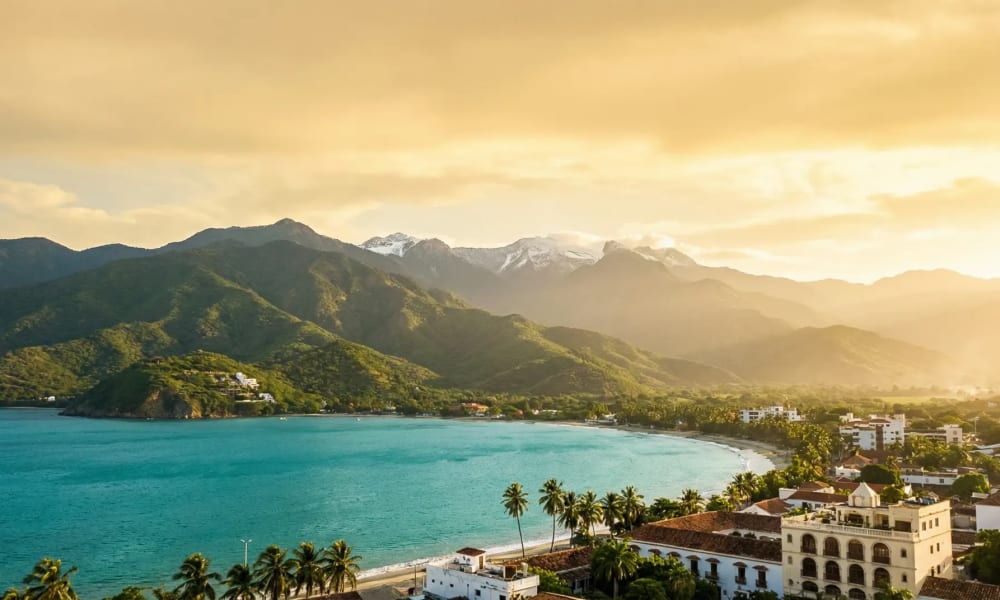
The wind carries the scent of saltwater and freshly roasted coffee through the streets of the Centro Histórico. Behind the colonial facades rises a view — over the turquoise bay, past the green foothills, to the snow-capped peaks of the Sierra Nevada at 5,775 meters. Nowhere else in the world do Caribbean beaches and eternal snow lie so close together.
Santa Marta, Colombia is the oldest continuously inhabited Spanish settlement in the country, founded in 1525 by Rodrigo de Bastidas — older than Bogotá, older than Cartagena, older than Lima. From here, Jiménez de Quesada set out in 1536 and founded today’s capital two years later. Santa Marta was the springboard for the exploration of the entire country — and it still is in other ways today.
For the city is the natural starting point for the Tayrona National Park , the Ciudad Perdida trek through dense jungle, and the mountain village of Minca with its coffee plantations and hummingbirds. Anyone planning a Colombia round trip can hardly avoid Santa Marta. In 2024, over 60,000 international travelers visited the city from 124 countries — an increase of 13 percent compared to the previous year. In 2025, Santa Marta celebrated its 500th birthday with citywide festivities.
Caribbean coast, misty forest, coffee plantations, and the sacred sites of the Kogi and Arhuaco peoples — Santa Marta brings together what makes Colombia unique in a small space.

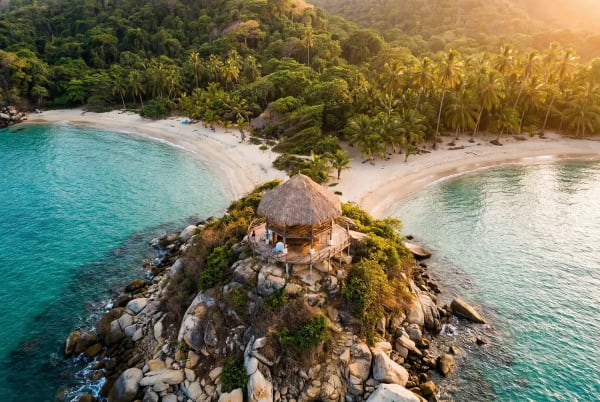
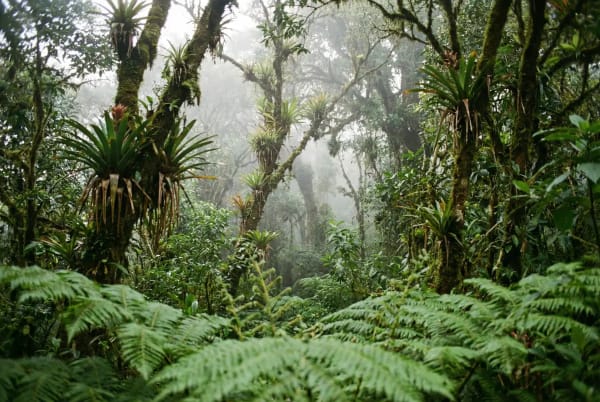
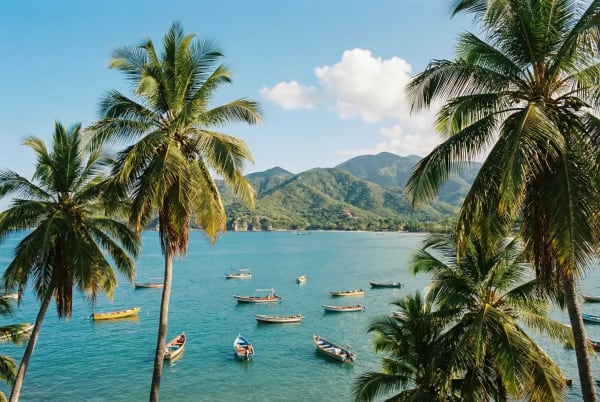
Santa Marta as a starting point — Tayrona, Ciudad Perdida, and Minca
Parque Tayrona — Logistics and planning
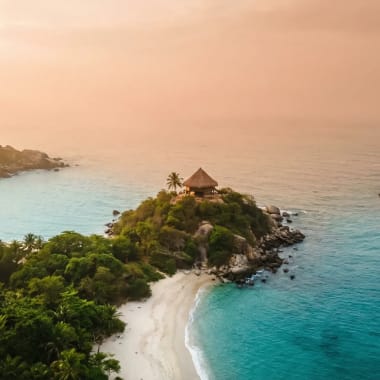
The Tayrona National Park is only 45 minutes from Santa Marta and is one of the most impressive national parks in Colombia . 34 beaches, 7 of which are open for swimming, nestled in dense tropical rainforest — where the roots of ancient trees reach into the turquoise water. The most famous Santa Marta beach in Tayrona Park, Cabo San Juan de Guía, can be reached after a 2.5-hour jungle hike from the main entrance El Zaino.
Online reservation has been mandatory since 2021 and can only be made through reservas.parquesnacionales.gov.co. No entry without prior booking — cash payments on site are not possible. Payment must be completed within 48 hours of booking.
Note Tayrona closing times
The park closes three times a year for spiritual ceremonies of the indigenous Kogi, Arhuaco, Wiwa, and Kankuamo peoples: February 1–15, June 1–15, and October 19 – November 2. Additionally, extraordinary closures may occur — always check the status in advance at parquesnacionales.gov.co.
From Santa Marta to Tayrona National Park Santa Marta → Entrance El Zaino (Tayrona)
Tayrona National Park
- Entrance Foreigners — 87,000 COP (approx. 19 EUR)
- Opening hours — Daily from 8:00 AM (except closing times)
- Swimming — Only allowed at 7 of 34 beaches — strong currents!
- Booking — Mandatory via reservas.parquesnacionales.gov.co
Insider tip
Early arrival is worthwhile: Those who are first at the El Zaino entrance (opening 8:00 AM) avoid long waiting lines and have the beaches almost to themselves in the morning. Staying in the park (hammock or cabin at Cabo San Juan) is even better — after day tourists leave at 5 PM, the atmosphere is magical.
Ciudad Perdida — The Lost City in the Jungle
Four to five days through dense jungle, over steep paths and through riverbeds, past the settlements of the Kogi, Wiwa, Arhuaco, and Kankuamo peoples — and then you suddenly stand before 1,200 stone terraces that are 650 years older than Machu Picchu. The Ciudad Perdida trek is one of the most intense nature experiences that Santa Marta, Colombia, has to offer.
A licensed guide is legally required — individual treks are not possible. All approved agencies charge the same government-set price. Accommodations are in simple jungle lodges with beds, mosquito nets, and shared bathrooms. No luxury, but authentic and reliable.
Ciudad Perdida Trek
- 4-day trek — 1,860,000 COP (approx. 413 EUR) including everything
- 5-day trek — 2,150,000 COP (approx. 478 EUR) including everything
- Duration — 4–5 days, approx. 50–75 km, 6 hrs hiking/day
- Agencies — Magic Tour, Expotur, Wiwa Tours, eConnection
Insider tip
Wiwa Tours is the only provider that employs indigenous guides from the Wiwa tribe. Those who want the money to go directly to indigenous communities should choose Wiwa Tours or Expotur. Booking possible with a 10 percent deposit — reserve early in high season (December–April).
Minca — Coffee, Hummingbirds, and Misty Forest
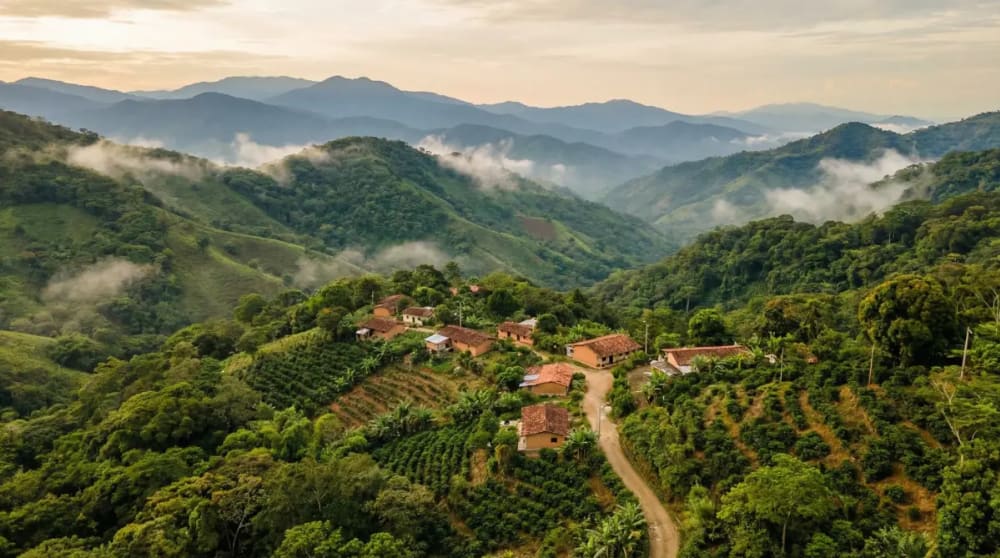
20 kilometers from the heat of the Caribbean coast, the temperature noticeably drops. Minca lies at an elevation of 650 meters in the Sierra Nevada — a mountain village with 800 inhabitants, surrounded by misty forest, coffee plantations, and over 400 bird species. One of the best birdwatching spots in Colombia and one of the attractions in Santa Marta that surprises many travelers the most.
A day trip combines a coffee farm tour with freshly roasted Sierra Nevada beans, lunch at the finca, and a hike to the Marinka waterfall. By colectivo from the Mercado Público, the journey takes 45 minutes and costs 10,000 COP (approx. 2.20 EUR).
Minca
- Colectivo — 10,000 COP (approx. 2.20 EUR) from Mercado Público
- Taxi — 79,000–94,000 COP (17–21 EUR)
- Travel time — approx. 45 min.
- Tip — Full-day trip: Coffee farm in the morning, waterfall in the afternoon
We know these places from personal experience and plan your Santa Marta route individually — Tayrona, Ciudad Perdida, and Minca from one source. Book a consultation now .
Is Santa Marta dangerous? Current safety situation
The question of whether Santa Marta is dangerous arises for many travelers before their trip to Colombia. The answer: Santa Marta is considered one of the safer destinations among Colombian Caribbean cities. In national surveys, the city ranks third in the safest cities in Colombia for walking alone — day and night. Compared to Cartagena , there is less tourist fraud and aggressive street vendors, resulting in a more relaxed, unpretentious atmosphere.
The main risk for travelers is petty crime: pickpocketing and mobile phone theft. Physical violence against tourists is rare.
Safety tips for Santa Marta
Do not use your smartphone openly on the street — highest risk of theft. Use ride-hailing apps (Uber, DiDi, Cabify) instead of street taxis. Use ATMs within banks. In the restaurant, keep your backpack on your lap or foot through the strap. Leave valuables in the hotel safe.
Safe neighborhoods: Centro Histórico (especially around Parque de Los Novios), El Rodadero, Pozos Colorados. The tourist areas have a regular police presence.
To avoid: Outskirts like La Lucha, Los Trupillos, María Eugenia, and northern outer districts — these are far from tourist areas and easy to avoid.
Detailed information on safety in Colombia and our article Travel safely in Colombia — the truth .
Weather Santa Marta — best time to travel and climate overview
The weather in Santa Marta follows a clear rhythm: dry season from December to April, rainy season from May to November. The tropical semi-arid climate ensures warm temperatures year-round between 26 °C in January and 30 °C in April. The Caribbean Sea is warm enough for swimming all year round.
The driest month is February with only 2–3 mm of precipitation, the rainiest October with an average of 307 mm. The sweet spot for your trip: March and April — dry season, but quieter after the high season peak in January, cheaper hotels, Tayrona open, and fewer tourists.
Note
The Tayrona closing times (February 1–15, June 1–15, October 19 – November 2) have spiritual backgrounds: The indigenous Kogi communities conduct sacred ceremonies during these periods such as KUGKUI SHIKASA (earth renewal) and NABBATASHI (earth rituals). Santa Marta itself is less crowded during these closing times — a good time for the old town and Minca.
More details on the best travel time for Colombia .
Attractions in Santa Marta
The old town — Colonial heritage by the Caribbean
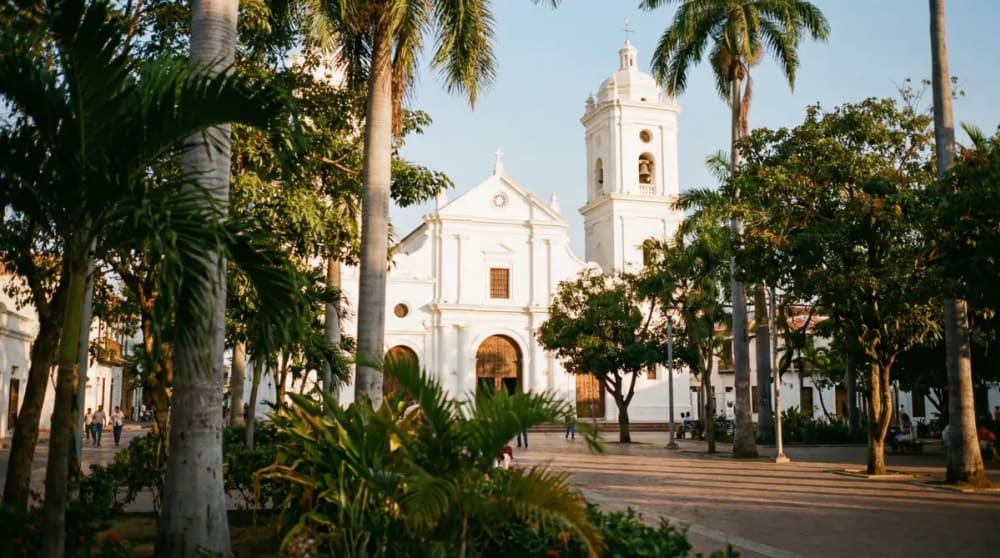
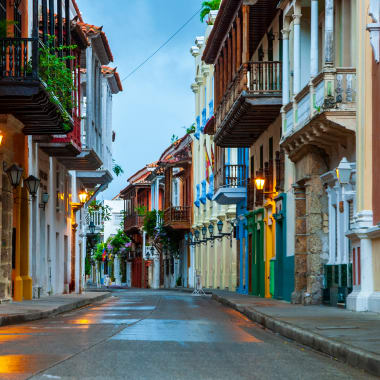
The Centro Histórico is the heart of the city — and its safest, liveliest neighborhood. Around Parque de Los Novios, life pulses in the evenings: Restaurants serve Cayeye and fresh fish, and Vallenato music spills out of the bars onto the street. A walk leads through Parque Bolívar with the Catedral Basílica Menor — the oldest cathedral in Colombia — to the Malecón de Bastidas, the waterfront promenade with its Tayrona statues and the view of the bay.
Among the sights in Santa Marta is the Museo del Oro Tairona a must: Housed in the restored customs house from the 16th century, it displays over 500 prehistoric artifacts of the Tayrona culture — gold, stone, ceramics. Admission is free.
Museo del Oro Tairona
- Admission — Free of charge
- Opening hours — Mon–Fri 8:30–12:00 & 14:00–18:00, Sat 9:00–13:00
- Location — Centro Histórico, right at Parque Bolívar
- Tip — Guided tours on Tuesday & Wednesday afternoons (approx. 1 hour)
Quinta de San Pedro Alejandrino — Bolívar's final resting place
Five kilometers from the center lies the estate where Simón Bolívar — the liberator of six South American nations — died on December 17, 1830. He intended to go into European exile, had already booked the passage, but never made it to the ship. The Quinta preserves original furniture and the death chapel under ancient trees. The attached Bolivarian Museum showcases contemporary art in an expansive garden — a place where history and tropical silence converge.
Quinta de San Pedro Alejandrino
- Opening hours — Daily 9:00–17:30 (high season), 9:00–16:30 (low season)
- Directions — Taxi from the Centro, approx. 10–15 min., 10,000–15,000 COP
- Tip — Open 365 days (except January 1)
Beaches around Santa Marta
The beaches right in the city (Centro area) are not suitable for swimming due to the nearby container port. Those looking for a Santa Marta beach will find one just a few minutes outside:
Playa Blanca — Blue-Flag certified, accessible only by motorboat from El Rodadero (10 min., return trip 12,000 COP / 2.65 EUR). White sand, clear water, excellent for snorkeling. Daily visitor limit of 300 people — depart early in the morning.
Bahía Concha — Curved bay on the edge of Tayrona Park, accessible by taxi or boat from Taganga. Popular with Colombian families, less touristy and correspondingly quieter.
Taganga — Former fishing village, 4 km north. The beach itself is not the prettiest, but the affordable diving schools and the boats to Playa Grande and Playa Cristal make it a worthwhile stop.
Insider Tip
Playa Inca Inca — a small, rarely visited beach between Playa Blanca and El Rodadero, reachable only via a 45-minute hiking trail. Almost deserted even on Saturdays and exactly what many imagine a Caribbean beach to be.
Your perfect stay — three days in Santa Marta
Three days are enough to experience the main facets of Santa Marta, Colombia: history and culture in the old town, nature in Tayrona National Park, and the green tranquility of the Sierra Nevada in Minca.
Day 1 — Old Town and Culture
Day 2 — Tayrona National Park
Day 3 — Minca — Sierra Nevada
Note: For those with more time: a 4th day for Playa Blanca (snorkeling) or the insider tip Nueva Venecia — a stilt village on the Ciénaga Grande not mentioned in any travel guide. By boat from Trojas de Cataca, a 200-year-old 'amphibious culture' on the water.
Boutique Hotels in Santa Marta — Stay in Style
We recommend two houses in the Centro Histórico that we personally know and that reflect the character of the city:
Casa Verde Hotel
Colonial gem with pool
From 42 EUR / night
- Pool & courtyard
- 6 rooms
- Centro Histórico
- Breakfast included.
Hotel Boutique Casa Carolina
Rooftop bar with Sierra Nevada view
From 96 EUR / night
- 3 pools & spa
- 25 rooms
- Rooftop bar
- Egyptian cotton
Insider Tip
Luxury Tip: The Perla Roca Hotel Boutique is located on a private beach away from El Rodadero — restored historical ruins, 26 rooms with private pool access. Santa Marta's first true luxury boutique hotel. Discounts for stays of 3 nights or more.
Let us help you findthe accommodation that suits your ideas — we know these houses and their special features from personal experience. Submit inquiry .
Good to know — Arrival and Logistics
Getting to Santa Marta
Simón Bolívar Airport (SMR) is located 14 km south of the center. International direct flights are only available to Panama — European travelers fly via Bogotá (BOG), from where there are more than 24 direct flights daily to Santa Marta with Avianca, LATAM, Wingo, and JetSMART. The flight time is about one hour, and cheap tickets start from about 30 EUR one way. More details on flights to Colombia .
Transfer Airport SMR → City Center Simón Bolívar Airport → Centro Histórico / El Rodadero
From Cartagena : Bus in about 5 hours (67,000–70,000 COP / 15 EUR, about 34 connections daily). A more comfortable alternative: shuttle van with Cochetur — often faster and more comfortable than the large buses.
On site: City buses cost 2,700 COP (0.60 EUR), taxis in the city center 6,000–15,000 COP (1.30–3.30 EUR). Ride-hailing apps (Uber, DiDi, Cabify) are available and recommended.
Information on Entry and Visa and Vaccinations and Health .
Costs and Budget at a glance
Prices as of March 2026. 1 EUR ≈ 4,500 COP. Cash recommended in smaller restaurants and for street food.
And before you pack: Our Colombia Packing List reveals what you really need for Tayrona and the Sierra Nevada — sturdy footwear and good insect repellent are at the top.
Discover more of Santa Marta, Colombia
Santa Marta can be easily connected with other stops on a Colombia round trip . The most common route leads by bus to Cartagena (5 hours along the Caribbean coast) or by domestic flight back to Bogotá. Our round trip Colombia Nature: Tayrona & Amazonas connects Santa Marta with the most impressive natural experiences in the country.
Tayrona National Park — Caribbean beaches in the jungle
Cartagena — Colonial jewel of the Caribbean
Medellín — City of eternal spring
Or discover our round trip Colombia Coffee & Caribbean, which connects Santa Marta with the coffee region and Cartagena, or the Colombia Intensive Tour (3 weeks) for everyone who wants to experience the country in its full depth.
To book a trip or for more information, contact us. We'll help you plan and guide you through your upcoming adventure!
Frequently Asked Questions
Santa Marta is considered one of the safer travel cities in Colombia. The historic center around Parque de Los Novios, El Rodadero, and Pozos Colorados are safe neighborhoods with regular police presence. The main risk is petty crime like pickpocketing. With normal caution — not carrying your smartphone openly, using ride-hailing apps instead of street taxis, leaving valuables in the hotel safe — Santa Marta is well navigable. Detailed information in our safety guide for Colombia.
We recommend at least three to five days: one day for the old town and museums, one day for Tayrona National Park (preferably two days with an overnight stay in the park), one day for Minca. If planning the Ciudad Perdida trek, an additional four to five days are needed.
The dry season from December to April is ideal, with temperatures between 26–30 °C and little rain. The sweet spot is March/April — after the peak season, calmer and cheaper. Note the Tayrona closure dates (February 1–15, June 1–15, October 19 – November 2). More information on the best travel time for Colombia.
By bus (COTRAORIENTE from Mercado Público, every 15 minutes, about 1 hour, 1.80 EUR) or taxi (about 25 EUR, 45 minutes) to the main entrance El Zaino. Important: Online reservations through reservas.parquesnacionales.gov.co are mandatory — no entry without prior booking.
Santa Marta is worthwhile on its own — and not just as a stopover. Colombia's oldest city has its own attractions, including the Museo del Oro Tairona (free admission), the Quinta de San Pedro Alejandrino, and the vibrant historic center. Additionally, there are day trips to Minca (coffee, hummingbirds, cloud forest) and the beaches Playa Blanca and Bahía Concha. As a starting point for Tayrona and Ciudad Perdida, the city is furthermore the best choice on the Caribbean coast.
Santa Marta offers excellent value for money: boutique hotels from 42 EUR/night, a full lunch menu from 3.30 EUR, the bus to Tayrona costs 1.80 EUR. A mid-range traveler can manage well with 100–150 EUR per day. More in our Colombia cost overview.
The historic center around Parque de Los Novios offers the best combination of safety, restaurants, nightlife, and proximity to bus departures (Tayrona, Minca). For beach proximity and family vacations, El Rodadero is an alternative — although less authentic. Taganga is suitable for backpackers and divers.
No — a licensed guide is legally required, as the trek passes through the tribal lands of the Kogi, Wiwa, Arhuaco, and Kankuamo. All licensed agencies charge the same government fixed price: 1,860,000 COP (about 413 EUR) for 4 days, including meals, accommodation, transport, and guide.