

Coffee region Salento
Wax palms, coffee plantations, and Colombia's most beautiful mountain landscape
Wax palms, coffee plantations, and Colombia's most beautiful mountain landscape
Salento Colombia — wax palms in the Valle de Cocora, coffee finca visit, and overnight stays in the Eje Cafetero: highlights, travel time, and finca hotel recommendations

Best travel time
December to March
Why Salento is Colombia's most beautiful region
Early morning in the Valle de Cocora. Fog drifts through a valley where wax palms rise like silent guardians into the sky — up to 60 meters high, the tallest palms in the world. At the foot of these giants, cows graze on lush green pastures, and somewhere further down in the valley, someone is roasting coffee, the aroma mixing with the damp earth of the fog forest. Welcome to the Colombian coffee region — the Eje Cafetero, a UNESCO World Heritage Site since 2011 and home to some of the best Arabica beans in the world.
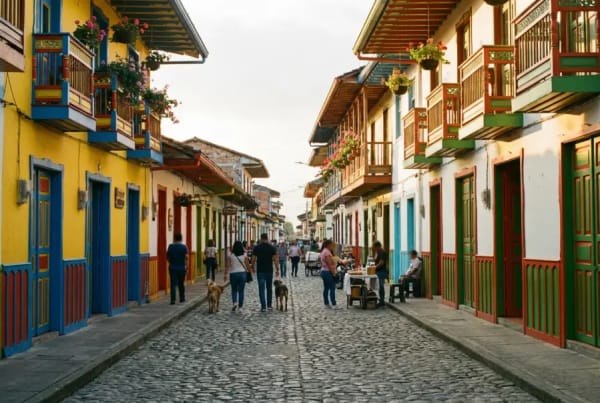
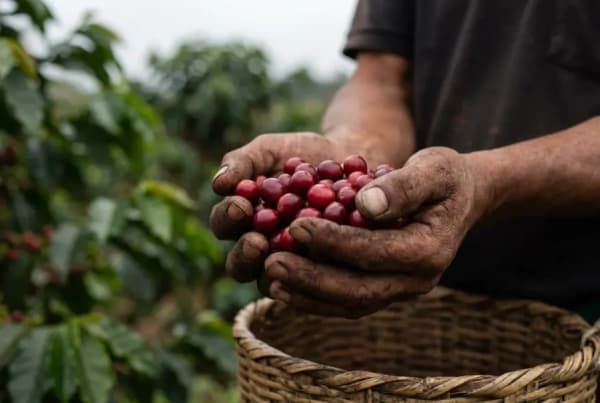
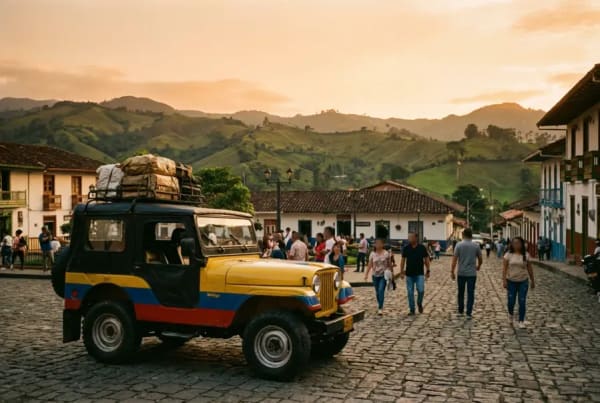
Salento Colombia — this means a small mountain village at an altitude of 1,895 meters, founded in 1842 and thus the oldest settlement in the Departamento Quindío. The town has preserved its colonial charm: Colorful Bahareque facades made of bamboo, wood, and earth line the Calle Real, children play between Willys jeeps in the main square, and from the terrace of one of the many cafes, one looks out over endless coffee plantations up to the Andes. If you are planning a Colombia round trip you will experience perhaps the most intense moment of the entire journey in Salento — where nature, culture, and coffee come together in a way that cannot be found anywhere else in the world.

Salento attractions — the most beautiful places in the coffee region
Valle de Cocora — hike to the tallest palms in the world
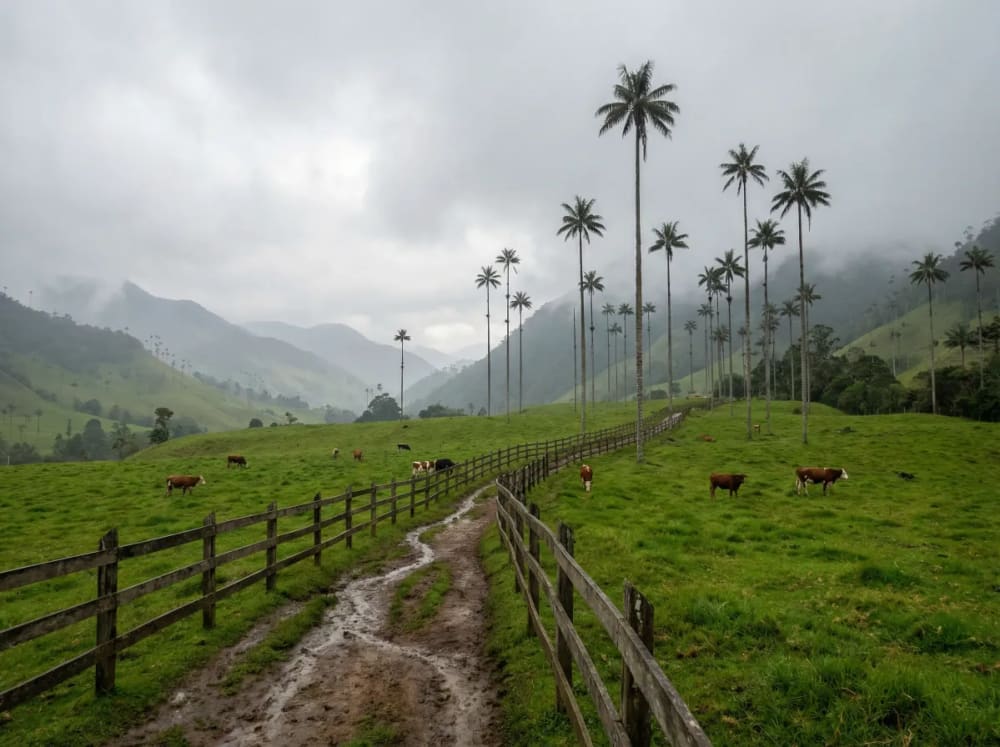
The Quindío wax palm (Ceroxylon quindiuense) is not only Colombia's national tree, but also the tallest type of palm in the world. Its complete life cycle can last up to 200 years — the young palms you see today in the Valle de Cocora will still be standing in the year 2225. Since 1985, it has been legally protected, and its IUCN status in Colombia is "Endangered". The valley, just 25 kilometers from Salento, is its most famous refuge — and one of the places that make a trip to the coffee region of Colombia unforgettable.
There are two hiking routes through this valley of the wax palms: The short loop (under 4 km, about 1.5–2 hours, 170 elevation meters) goes through the open palm valley and is suitable for all fitness levels. The long loop (8.5 km, 5–6 hours, 580 elevation meters) additionally takes you through dense mountain fog forest to the Reserva Natural Acaime — the “House of the Hummingbirds,” where dozens of hummingbird species can be observed up close while you let the fog forest affect you with hot cocoa in hand.
Insider tip
Take the long loop counterclockwise — this way, the most dramatic view (the open wax palm valley) is saved for last. Start early: Jeeps leave from the main square at 5:30 AM. If you arrive in the valley at 7–8 AM, you will have the palms almost to yourself — day trips from Armenia and Pereira only come around noon. Sturdy hiking shoes and a rain jacket are a must, even in the dry season.
Valle de Cocora
- Admission — 30,000 COP (about 7 EUR) + Acaime 20,000 COP
- Hiking time — Short loop 1.5–2 hours / Long loop 5–6 hours.
- Access — Willys jeep from the main square, 25 minutes, 5,000 COP
- Tip — Last jeep back around 6:00–6:30 PM
Visit a coffee finca — this is how a real coffee tour in Colombia goes
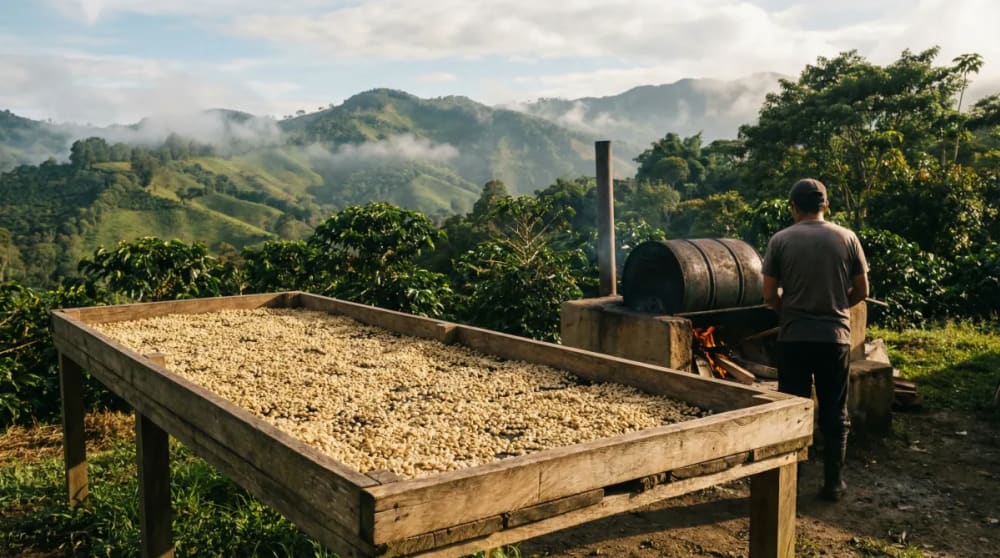
A good coffee tour in Colombia includes the complete process: cultivation and flowering, harvesting ripe red coffee cherries, depulping, fermentation, washing, drying, roasting, and tasting. The best tours let you pick cherries yourself — a moment when you literally hold the work behind each cup of coffee in your hands. In Salento, you have the choice between three excellent fincas:
Finca Don Eduardo is only an 8-minute walk from the main square — ideal for a spontaneous visit. The 3-hour tour of the organically managed finca costs 80,000 COP (about 18 EUR) and is offered in English (Mon–Sat, 9:30 and 14:30).
Finca El Ocaso is accessible by Willys jeep and offers a traditional tour (about 50,000 COP) as well as a premium variant. Highly rated for its authentic atmosphere and knowledgeable guides.
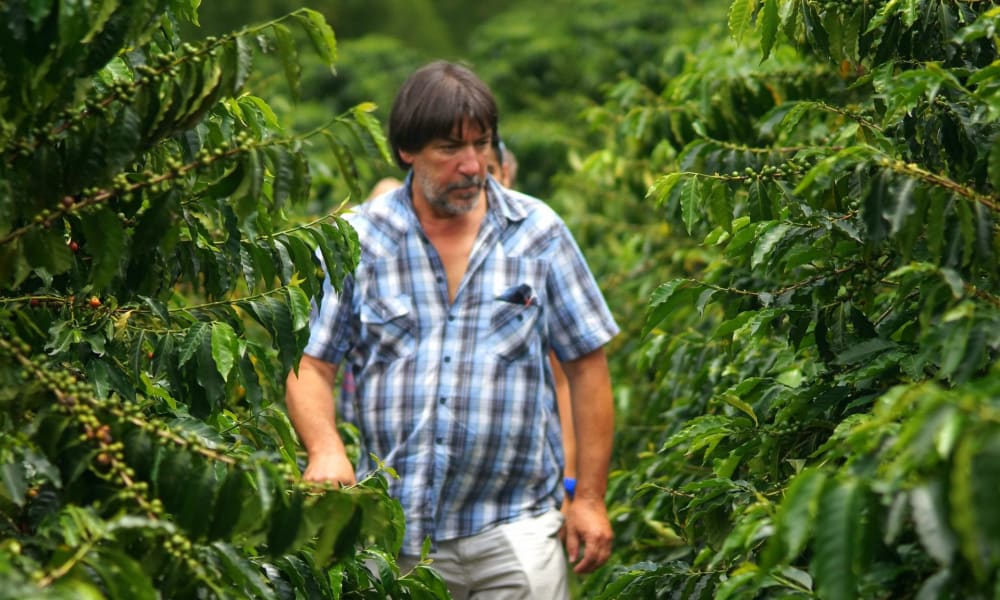
Finca Buenos Aires is a hidden gem: Opened to visitors only in 2019, owner Don Luiz personally welcomes his guests and shows them the entire process in a family atmosphere — visiting a coffee finca in Colombia doesn’t get more personal than this.
Important for Hacienda Venecia
The famous Hacienda Venecia is about 1 hour from Salento (closer to Manizales). On Saturdays, Sundays, and public holidays, the coffee processing facility is closed — the tour then loses its most important part. Book on weekdays, preferably in the morning: The wet processing is most active in the morning.
Coffee finca tours
- Price range — 50,000–80,000 COP (12–18 EUR)
- Duration — 2.5–3 hours
- Access — Don Eduardo: 8 min. on foot / El Ocaso: jeep from main square
- Tip — Harvest season October to February — most intense experience
Exploring Salento — the colorful village
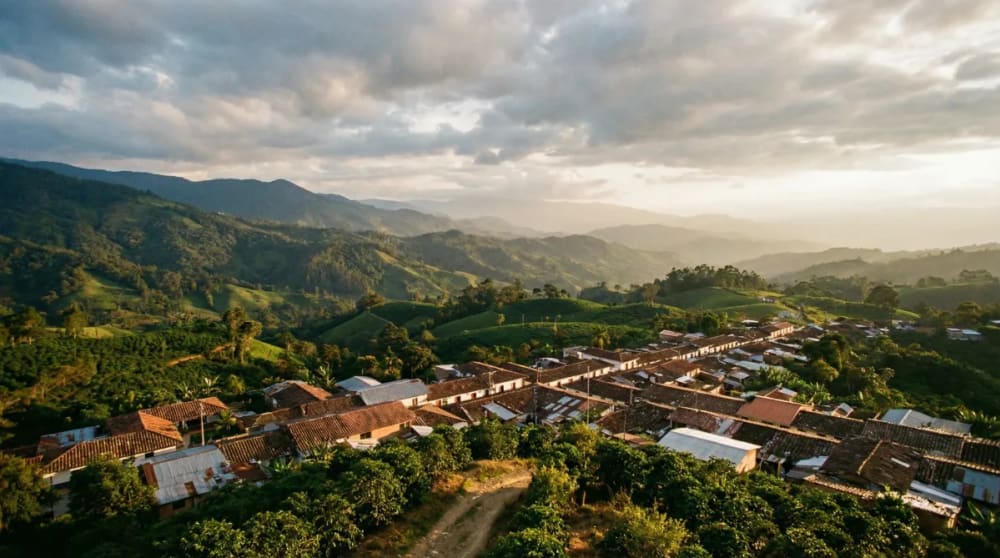
Salento itself can be crossed in half an hour on foot — but it’s worth spending a whole day here. The Calle Real (officially Carrera 6) is the busy main street: Colorful Bahareque houses, craft shops with handwoven Mochilas and ponchos, artisanal cafes and restaurants line up. The aroma of freshly roasted coffee mixes with the smoke of grilled arepas. At the end of the street, 250 steps — marked with the 14 Stations of the Cross — lead up to the Mirador Alto de la Cruz. From above, a panoramic view opens over Salento, the surrounding coffee plantations, and, in clear weather, far into the Andes range.
Insider tip
Explore the side streets away from the Calle Real — here you will find less touristy shops and cheaper prices for handmade goods. Friday evening has a special atmosphere: Locals dance salsa in the main square, street musicians play into the night. During the week, Salento is significantly quieter — on weekends, Colombians from Medellín, Bogotá, and Pereira flock to the town.
Salento village center & mirador
- Admission — Free
- Duration — 2–4 hours for the village
- Mirador — 250 steps from the end of the Calle Real
- Tip — Come during the week — weekends are significantly busier
Excursions from Salento — Filandia and thermal baths
Filandia is Salento's quieter sister: a picturesque colonial town 25 km away, also part of the UNESCO World Heritage in the Eje Cafetero, but with a fraction of the tourists. If you want to experience the coffee region of Colombia off the beaten track, you will find the answer here. The Mirador Colina Iluminada — a 27.5 meter high observation tower with 9 floors — offers a view of almost all municipalities of the Departamento Quindío in clear weather. Filandia is also known for its traditional basket-weaving craft from Bejuco forest twigs, which you can experience up close in the Bejuco interpretation center.
The thermal baths of Santa Rosa de Cabal are located about 40 km north of Salento. Several outdoor pools with hot thermal water and a natural waterfall, under which you can sit while steam rises into the mountain forest. The perfect conclusion after a hiking day in the Valle de Cocora.
Filandia & thermal baths
- Filandia mirador — 12,000 COP (about 3 EUR)
- Thermal baths (weekdays) — 38,000–45,000 COP (9–11 EUR)
- Access Filandia — jeep from Salento, about 25 min.
- Tip — Thermal baths on weekdays: half as expensive, significantly quieter
Horseback riding through the coffee zone
If you do not want to hike or are looking for an alternative: Cabalgatas San Pablo offers daily horseback tours (9:00 and 14:00, about 3 hours, 90,000 COP / about 22 EUR). The route leads through coffee plantations with a 360-degree panorama over the Cocora Valley — also suitable for beginners and a welcome option for travelers with knee problems.
Let us plan your coffee region trip — we know this region from personal experience and will put together your tailored program. Schedule a consultation now .
Insider tips — off the beaten tourist track
Kasaguadua Nature Reserve
The 14-hectare private tropical forest reserve on the outskirts of Salento is a favorite among nature lovers: Guided hiking trails through bamboo ecosystems, rare birds, and butterflies in a density that is remarkable even in the biodiversity-rich Colombia. Whoever has seen nature from above in the Valle de Cocora experiences it here from within — among tree ferns, vines, and the songs of over 300 bird species that are native to the Eje Cafetero. The coffee region is a premier hotspot for bird watching .
Acaime — the moment most miss
The Reserva Natural Acaime is 1.5–2 hours of hiking from the entrance of the Valle de Cocora — only those who take the long loop reach it. Dozens of hummingbird species swarm around the feeders at a speed that the eye can scarcely grasp while you observe the fog forest with hot cocoa in hand. A moment of absolute peace amid pulsating nature. This moment alone justifies the longer hike.
Your perfect stay — three days in the coffee region
Day 1 — Arrival and exploring Salento
Day 2 — Valle de Cocora & coffee finca
Day 3 — Filandia or thermal baths
Note: For a fourth day: Visit Finca El Ocaso in the morning and explore the Kasaguadua Nature Reserve in the afternoon. Or book a horseback tour through the coffee plantations with Cabalgatas San Pablo — especially for travelers looking for a calmer alternative after hiking.
Overnight in Salento — finca hotels and boutique accommodations
Staying in the coffee region means more than just a bed for the night — it means waking up to the call of birds in the morning, drinking the first coffee with a view of the fog forest, and feeling why UNESCO has declared this cultural landscape a World Heritage Site. We recommend two houses that we know personally and that make the difference between a good and a special journey:
Hotel Kawa Mountain Retreat
Panorama and yoga on the outskirts
From 84 USD / night
- Mountain panorama
- Hot tub
- Yoga classes
- Restaurant & bar
Ecohotel Pinohermoso
Authentic finca feeling
From 50 USD / night
- Old coffee finca
- 7 rooms
- Riding tours
- Breakfast buffet
Let us help you find the accommodation that best suits your ideas — we know these houses and their special features from personal experience. Make an inquiry .
Experience coffee culture — from harvest to cup
The Eje Cafetero was designated a UNESCO World Heritage Site in 2011 — based on two criteria: as an outstanding example of sustainable land use by generations of coffee growers under extreme geographic conditions and as the most representative symbol of Colombian national culture. 47 municipalities and 411 veredas (rural villages) are part of this heritage, spread over four departments. What grows here is considered one of the best Arabica coffees in the world.
In Salento, you will experience the difference between industrial coffee and hand-picked specialty coffee. In the village itself, there are numerous artisanal cafes that offer filter coffee from local roasting — specifically ask for black filter coffee, as traditionally, coffee in Colombia is served with a lot of milk and sugar. The traditional tinto — small black coffee — costs only 0.50–1 USD everywhere and is part of daily life like breathing.
The culinary specialty of the coffee region is the trout (trucha) — fresh from the Quindío river, served as trucha al ajillo with garlic cream sauce. At El Rincón de Lucy you get a complete menu (main course, arepa, corn fritter, fried banana, soup, and fruit juice) for about 3–5 EUR — authentically Colombian and filling. For an upscale dinner, we recommend Bernabé Café & Bistro on the Calle Real, known for grilled trout and artisanal beer.
Insider tip
In the morning, buy fresh empanadas and pastries from the street vendors in the main square — fresh, cheap, and typically Colombian. If you want to take locally roasted specialty coffee as a souvenir, buy it directly from one of the artisanal cafes or at the finca you visited — fresher and cheaper than in the souvenir shop.
Good to know — Weather, arrival, and safety in Salento
Weather in Salento and best travel time for the coffee region
Salento has a temperate highland climate with temperatures between 13 °C (at night) and 23 °C (during the day) — year-round, without a real summer or winter. Pack a jacket: At an altitude of 1,895 meters, the evenings are significantly cooler than in the lowlands. The driest months are December to February and a second phase from July to August. The main rainy season is in April and May, with rain usually falling in the afternoon as a short intense shower — mornings are often sunny. More about this in our guide to the best travel time for Colombia .
Note
The Yipao Festival in June/July is a special experience: Willys Jeeps are artfully loaded and driven through the streets — a Guinness World Record with 370 Jeeps. And: Semana Santa (Holy Week) must be booked in advance — all accommodations in the coffee region are then fully booked.
Arrival in Salento
The nearest airport is El Edén (AXM) in Armenia, only 30 km away. Alternatively: Matecaña Airport (PEI) in Pereira, about 45 km. Domestic flights from Bogotá to Armenia only take 50 minutes. More information on flights to Colombia .
Arrival in Salento Bogotá / Medellín → Salento
Insider tip
Recommended round trip route: Bogotá → flight to Armenia → Salento (3–4 days) → bus to Medellín . This is the classic "Coffee & Cities" combination and saves a domestic flight.
Safety in Salento
Salento is considered one of the safest travel destinations in Colombia. The Quindío Department is not subject to any travel warning from the Foreign Office. The town is small, walkable, and lively even at night — the atmosphere is relaxed and friendly. Colombia recorded a tourism record in 2024 with 6.7 million international visitors. More information on Safety in Colombia and on the topic of traveling safely in Colombia .
Basic caution
Like everywhere in Colombia: do not carry valuables openly, use Willys Jeeps instead of hitchhiking, and clarify a yellow fever vaccination in advance. In Salento itself, there are no neighborhoods to avoid.
Getting around locally
Everything in the village is reachable on foot — the entire historical town center can be crossed in 20–30 minutes. For excursions to the surrounding area, Willys Jeeps are the mode of transport: they depart from the main square according to the "full loading principle" (buy tickets at the counter, 5,000–10,000 COP). In the morning, the jeeps fill up the fastest.
Admission prices and costs at a glance
Prices as of March 2026. 1 EUR ≈ 4,400 COP. Details on costs and budget in our Colombia cost overview.
Discover Colombia further
Salento connects excellently with other stations of a Colombia round trip . From here, Medellín is reachable by direct bus in 6–8 hours, Bogotá by short flight from Armenia. And those who want to go from the coffee region to the Caribbean can fly to Cartagena in 90 minutes.
Medellín — City of Eternal Spring
Bogotá — Colombia's vibrant capital
Cartagena — Colonial jewel on the Caribbean
Our round trip Colombia Coffee & Caribbean connects the coffee region with Cartagena and the Caribbean coast. For three weeks, we recommend the Colombia Intensive Round Trip, which combines Salento with nature and culture. Or discover our City Round Trip Bogotá, Medellín & Cartagena.
More information on entry and visa , packing list and vaccinations can be found in our Colombia travel guides. Nature lovers might also be interested in our article about Colombia's birdlife with 1,950 species .
To book a trip or for more information, contact us. We'll help you plan and guide you through your upcoming adventure!
Frequently Asked Questions
We recommend 3–4 days: one day for the village and the mirador, one day for the Valle de Cocora hike and a coffee farm tour, and one day for Filandia or the thermal baths at Santa Rosa de Cabal. A fourth day is worth it for the Kasaguadua Nature Reserve or a horseback ride through the coffee plantations.
The driest months are December to February and July to August. The climate is mild throughout the year (15–23 °C at 1,895 meters altitude). Even in the rainy season (March–May, September–November), rain usually falls in the afternoon — mornings are often sunny. Book Semana Santa (Holy Week) in advance.
In Salento, there are several farms that offer daily coffee tours: Finca Don Eduardo (8 min. on foot, 80,000 COP), Finca El Ocaso (by jeep, about 50,000 COP), and Finca Buenos Aires (insider tip). The tours last 2.5–3 hours and show the entire process from harvest to cup — the best ones allow you to pick coffee cherries yourself.
The total cost for the long loop is about 60,000 COP (about 14 EUR): admission 30,000 COP, Acaime hummingbird reserve 20,000 COP, private property 10,000 COP. In addition, 5,000 COP for the Willys jeep per direction. The short loop is cheaper (only the main admission).
Salento is considered one of the safest travel destinations in Colombia. The Quindío Department is not subject to any travel warning from the Foreign Office. The town is small, walkable, and lively at night. With the usual precautions (do not carry valuables openly), Salento is very well accessible.
Fastest route: domestic flight from Bogotá to Armenia (50 min., from 30 USD), then bus to Salento (45 min., 1.10 EUR). From Medellín: direct bus Flota Occidental (6–8 hrs, about 15 USD). For individual travelers, we also organize private transfers.
Yes — the Ecohotel Pinohermoso is an old coffee farm on the outskirts of Salento with 7 rooms (from 50 USD/night). The Hacienda Venecia near Manizales offers three types of accommodation from the historic main house to the converted hostel with included breakfast and coffee tours.
The Eje Cafetero (Coffee Axis) includes the departments of Caldas, Quindío, Risaralda, and Valle del Cauca — Colombia's coffee region. Since 2011, the Paisaje Cultural Cafetero has been a UNESCO World Heritage site with 47 municipalities. The region produces a large part of the world-renowned Colombian Arabica coffee.
Salento is located at an altitude of 1,895 meters and has mild temperatures year-round between 13 °C (at night) and 23 °C (during the day). There is no European summer or winter. The driest months are December to February and July to August. A jacket for the cool evenings is always part of the luggage.