

This image was generated with AI.
Diving & Snorkeling in Colombia
Two oceans, one dive site: San Andres, Providencia, Malpelo & Caribbean
Two oceans, one dive site: San Andres, Providencia, Malpelo & Caribbean
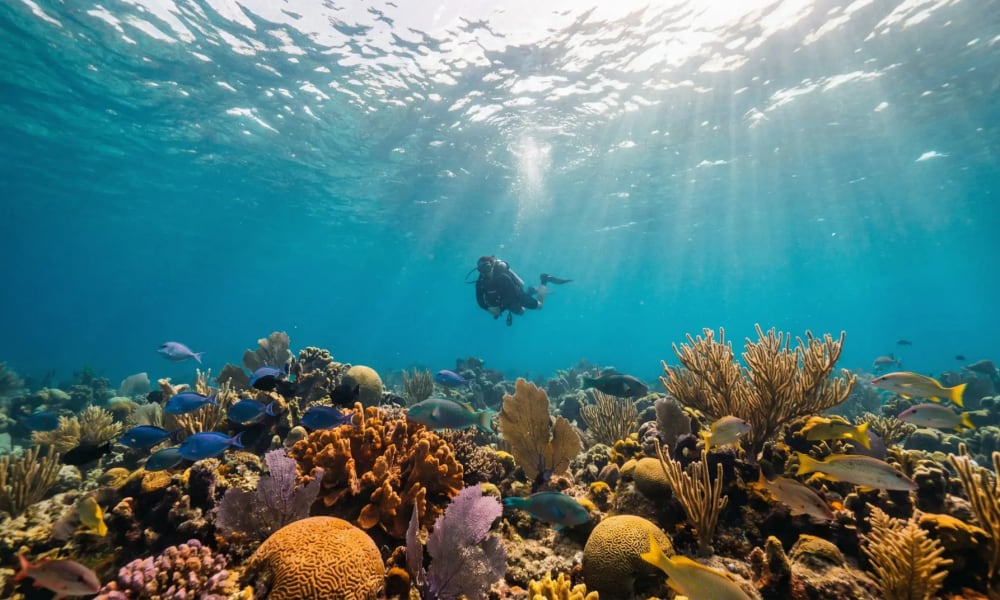
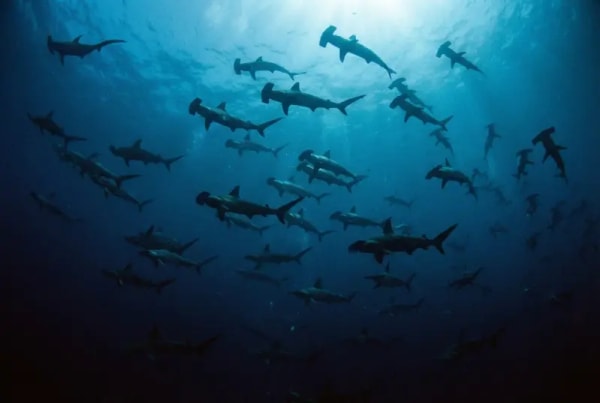
Two oceans, two underwater worlds — and in between a country that divers are just slowly getting on their radar. Colombia is the only country in South America with coastlines on the Caribbean and Pacific. What this means for you: On one side turquoise coral reefs, where sea turtles and nurse sharks glide through warm, clear water. On the other side, the lonely Pacific rocks of Malpelo, where hammerhead shark schools with up to 500 animals roam the deep blue.
The numbers surprise even experienced divers: Off Providencia lies the third largest coral barrier reef in the world — after the Great Barrier Reef and the Mesoamerican Reef. In the Pacific, the UNESCO World Natural Heritage site Malpelo protects one of the largest no-fishing zones in the tropical Pacific at 857,150 hectares. And between Cartagena and the Tayrona National Park are several dive and snorkel areas waiting, which can be integrated into a Colombia round trip without turning the travel plan upside down.
In this guide, you will find all dive areas of Colombia — with specific prices, seasonal recommendations, and dive schools that we know from first-hand experience. Whether you want to get your first diving certificate in warm Caribbean water, look for large fish in the Pacific as an experienced diver, or explore the underwater world of Tayrona Park with a snorkel mask: Here you will find the right option.

San Andres & Providencia — the third largest coral reef in the world
Diving in San Andres
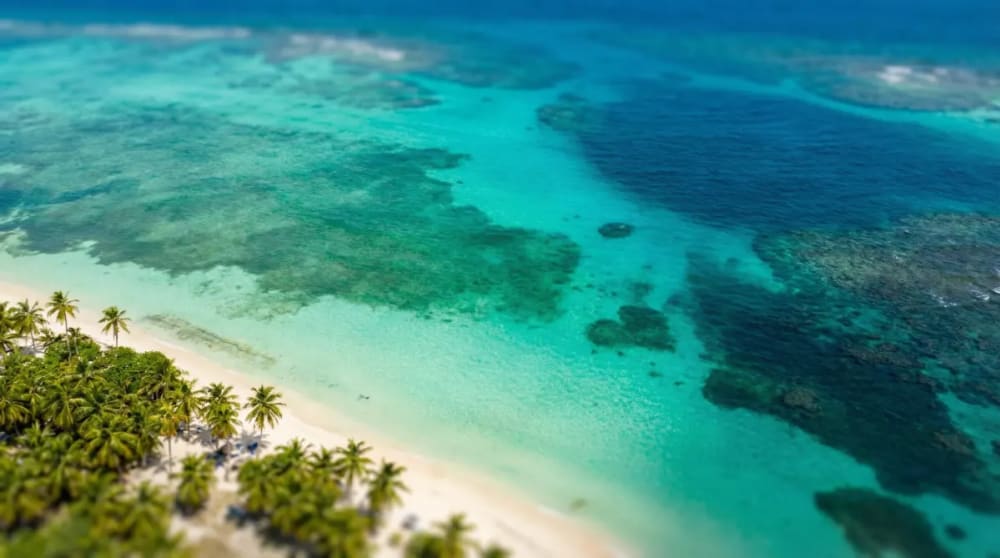
750 kilometers northwest of the Colombian Caribbean coast, closer to Nicaragua than to the mainland, lies San Andres in a sea that Colombians call Sea of Seven Colors — the sea of the seven colors. From the air, you immediately understand why: The water changes from turquoise to aquamarine to deep blue, depending on depth and sand conditions.
Under the surface, over 30 cataloged dive sites are spread over a consistently warm water temperature of 29 degrees. Visibility reaches up to 27 meters during the dry season. What makes San Andres the ideal starting point for diving in Colombia: Most spots are only 10 to 12 meters deep and are practically current-free. Perfect for anyone who wants to take their first dive or return after a longer break.
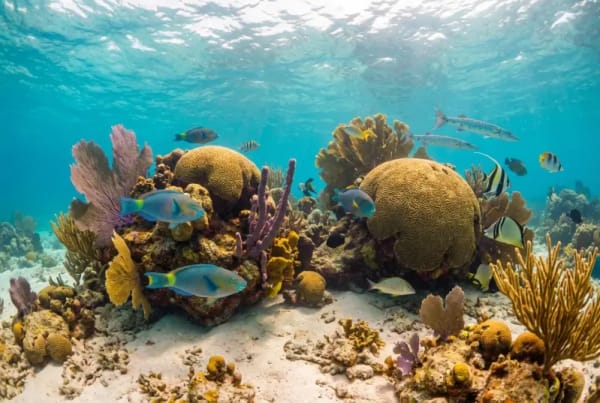
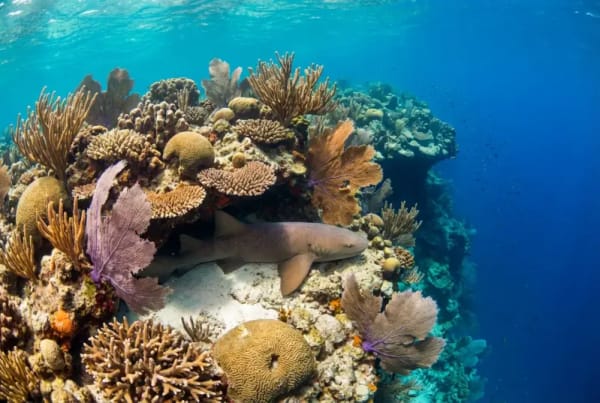
The Blue Wall is considered the most iconic dive site of the island — a steep wall densely covered with corals, where barracudas, parrotfish, and nurse sharks swim by. Other rewarding spots are The Pyramid and The Little Mountain. Underwater you will also encounter sea turtles, rays, grouper, and lobsters — the typical Caribbean biodiversity, colorful and surprising on every dive.
Banda Dive Shop — San Andres
- Location — San Andres Island
- Fun Dive (2 dives) — From approx. 65 USD including equipment
- Certification — PADI 5-Star Resort, over 25 years of experience
- Website — bandadive.com
Don't forget the Tourism Card
All travelers need a Tourism Card (Tourismuskarte) for San Andres. Cost: 137,000 COP (about 34 USD). It is best to acquire it at the departure airport in Bogota to avoid queues on the island. Children under 7 years are exempt. Detailed information can be found in our Entry Guide .
Providencia — Old Providence Barrier Reef
90 kilometers northeast of San Andres lies an island that feels like a different century. Providencia can be reached by short flight (20 minutes) or catamaran (about 2 hours), considerably quieter than the larger sister island — and among connoisseurs, a clearly better diving destination.
The reason: The Old Providence Barrier Reef is the third largest coral barrier reef in the world. At about 15 meters deep, a densely covered coral garden of hard and soft corals extends in extraordinarily good condition — much less known than its two larger siblings, but in a health that even experienced divers find astonishing. The dive sites Spiral, Turtle Rock, Crab Key, Mantas City and Maracaibo offer depths of 9 to 40 meters.
The special feature of diving in Providencia: Sharks are standard. Almost all dives see reef sharks, often also nurse sharks. It is considered unusual to not see a shark. At the spot Mantas City, manta rays regularly join — a name this dive site certainly deserves.
ANDA DI WATA — Dive School Providencia
- Location — South West Bay, Providencia
- Fun Dive (2 dives) — 400,000 COP (~99 USD)
- PADI AOWD — 1,700,000 COP (~421 USD)
- Special Feature — German-speaking, Swiss-Colombian, max. 8 divers
- Contact — andadiwata.com / +57 316 273 84 70
Our Tip: Providencia for discerning divers
ANDA DI WATA is the only German-speaking dive school in the entire Colombian Caribbean. Small groups (maximum 8 divers, divided into two groups of four), daily morning double dives at spots that you hardly share with any other boat. Those who want to experience this quiet diving area away from mass tourism should plan to stay in Providencia for at least four to five nights.
Insider Tip
Do you want to incorporate San Andres and Providencia into your Colombia round trip? Our Coffee & Caribbean Round Trip connects the coffee region with the Colombian Caribbean — an ideal base for a diving extension. Inquire now without obligation .
Rosario Islands — Day tours from Cartagena
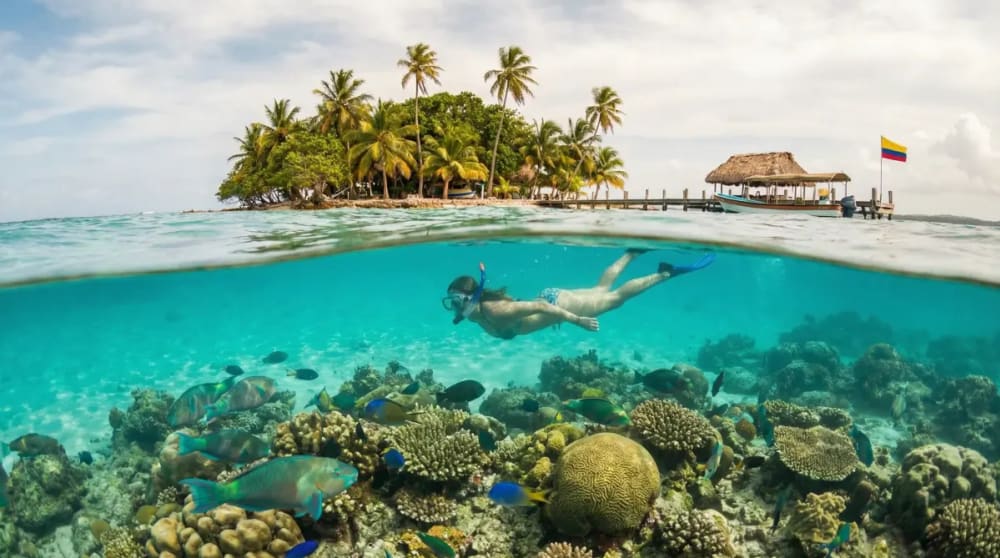
Those wishing to experience the underwater world from Cartagena without traveling far should head to the Islas del Rosario. The archipelago includes around 30 islands in the Corales del Rosario y San Bernardo National Park, about 35 kilometers southwest of the city walls. Coral formations, tropical fish schools, sea turtles, and occasionally dolphins make the islands an ideal snorkeling destination for travelers without a diving certificate and for beginner divers.
Experienced divers looking for more demanding spots should plan to use the Rosario Islands as a relaxed snorkeling stop and fly on to San Andres or Providencia for actual diving — that's where a different league awaits.
The transfer starts at the Muelle de la Bodeguita in Cartagena, five minutes from the historic center. Travel time by speedboat: about 60 minutes. Departure is usually around 8 a.m. A port surcharge is to be paid separately on site.
Group tour or private tour?
The common group tours often stop in the party area around Cholon — loud, crowded, little underwater experience. For genuine snorkeling in Colombia: specifically ask for smaller providers who visit quieter parts of the archipelago. Or stay overnight on Isla Grande — a completely different experience than the day trip. Detailed tips on Cartagena can be found on our destination page.
Malpelo — Colombia's expedition diving destination
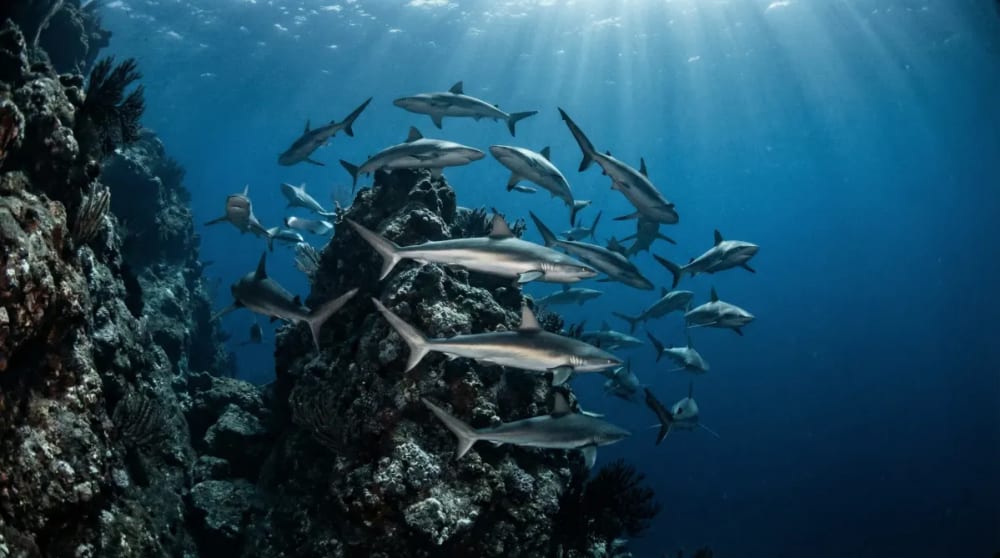
500 kilometers west of the Colombian Pacific coast rises a lonely rocky island from the ocean — a place that is mentioned in the same breath as Cocos Island and Galapagos among experienced divers. Malpelo has been a UNESCO World Heritage site since 2006 and protects with 857,150 hectares the largest no-fishing zone in the eastern tropical Pacific. For big fish divers, Malpelo is among the best dive sites in the world.
The numbers speak for themselves: Up to 500 hammerhead sharks in a single school, silk sharks in groups over 1,000 animals, plus Galapagos sharks, white tip sharks and — seasonally — whale sharks. The most famous dive sites are called The Cathedral, The Twins, The Freezer and La Gringa: Steep walls and underwater caves in deep, pelagic water, where the feeling of vastness and wilderness becomes tangible.
Malpelo diving is not a holiday dive — it’s an expedition. The currents can be strong and unpredictable, influenced by the Humboldt Current, Panama Countercurrent, and Colombia Current. The Colombian government requires a AOWD certification and at least 50 logged dives (of which 35 are sea dives). Access is exclusively by liveaboard from Buenaventura — typically as a 9-day tour with 6 dive days and a maximum of 12 divers on board.
Malpelo Liveaboard — Ferox (Prices 2024/25) All prices include accommodation, full board, nitrox, dive guidance, and zodiac excursions. Max. 12 divers per expedition.
Plan early — limited spots
The liveaboards to Malpelo have a maximum of 12 dive spots per expedition — booking 12 to 18 months in advance is recommended. Best visibility: July to December (up to 30 meters). Whale sharks appear more often during the plankton season from January to June — visibility then drops to around 10 meters, but the big fish come closer. We assist you with the organization — Get in touch .
Taganga — affordable diving on the Caribbean coast
Five kilometers northeast of Santa Marta , nestled between barren hills and a calm bay, lies the fishing village of Taganga. It is the cheapest diving destination in Colombia — and one of the most affordable places worldwide for a PADI diving license. The dive sites are directly in the bay and in the adjacent marine protected area of the Tayrona National Park , just a few minutes away by boat.
Water temperatures of 24 to 28 degrees Celsius and visibility up to 30 meters provide solid conditions. Taganga is the ideal place for your first diving certification: The PADI Open Water Course costs here 370 to 400 USD — significantly cheaper than in Europe or on San Andres. The smart strategy: Get your diving license in Taganga, then fly with your fresh license to San Andres or Providencia and enjoy the coral reefs there.
Ocean Lovers — Taganga
- Location — Taganga, 5 km from Santa Marta
- PADI Open Water — 1,495,000–1,615,000 COP (~370–400 USD)
- Discover Scuba — 320,000–350,000 COP (~80–87 USD)
- Fun Dive — From 180,000 COP (~45 USD)
- Website — oceanloverstaganga.com
VAT exemption for foreign tourists
Foreign tourists do not pay 19 percent VAT on diving courses and tours in Colombia — an advantage that significantly reduces the effective price compared to the domestic rate. Just book directly at the dive school and indicate your foreign status.
Snorkeling in Colombia — even without a diving license
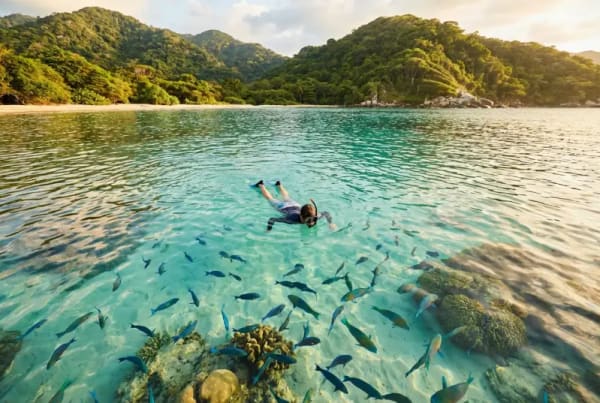
No diving license? Colombia’s Caribbean coast offers several excellent snorkeling spots that are accessible without certification — and where the underwater world will still surprise you.
Playa Cristal in Tayrona National Park
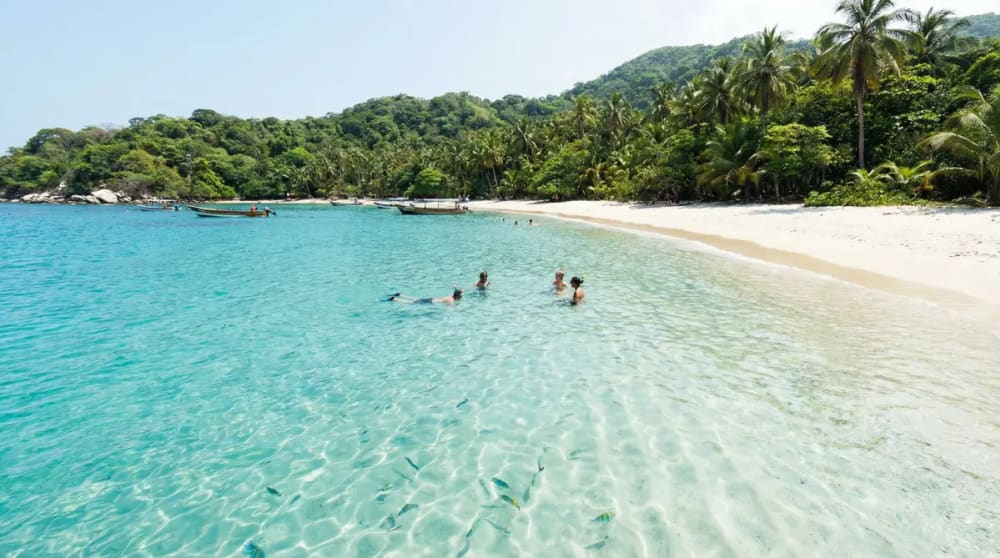
Playa Cristal (also Playa del Muerto) is the snorkeling spot known to experienced travelers to Colombia: crystal-clear water over white coral sand in the Tayrona National Park , a rich underwater world just below the surface. Access is by boat from the Neguanje sector — a 10 to 15-minute ride is enough. A maximum of 300 visitors per day are allowed on the beach; advance booking is strongly recommended.
Entrance to Tayrona for foreign visitors: 87,000 COP (approx. 22 USD). Boat ride from Neguanje: 20,000 to 30,000 COP (5 to 7 USD).
Snorkeling at the Rosario Islands
Daily snorkeling tours to the Rosario Islands depart from Cartagena . The standard tours include speedboat transfer, two snorkeling sessions, lunch, and equipment. Prices: from 100,000 COP (26 USD) for the base variant to about 230 USD for all-inclusive tours with a small group and targeted trips to the best snorkeling spots away from the crowds.
Tayrona Park: Check for seasonal closures
The Tayrona National Park regularly closes for indigenous ceremonies of the Kogi community: February 1 to 15, June 1 to 15, and October 19 to November 2. Additionally, extraordinary closures may occur. Swimming is strictly prohibited at certain beaches — especially Arrecifes — due to dangerous rip currents. Check the current dates before planning your trip at parquesnacionales.gov.co. More about the best travel times for Colombia .
Caribbean or Pacific — which dive area suits you?
|
| Caribbean (San Andres, Providencia, Taganga) | Pacific (Malpelo, Gorgona) |
|---|---|---|
| Level | Beginner to Advanced | Only Advanced (AOWD + 50 logs) |
| Water temperature | 26–29 °C | 22–26 °C |
| Visibility | 20–40 m | 10–30 m (variable) |
| Highlights | Coral reefs, turtles, reef sharks, rays | Hammerhead schools, whale sharks, manta rays |
| Best season | December–April | July–December |
| Getting there | Direct flight from Bogota (2 hours) | Liveaboard from Buenaventura (30 hours) |
| Price Fun Dive | From approximately 45 USD | From approximately 4,900 USD (liveaboard package) |
| For whom? | Families, beginners, recreational divers | Expedition divers, shark enthusiasts |
Best travel time for diving in Colombia
| Region | Jan | Feb | Mar | Apr | May | Jun | Jul | Aug | Sep | Oct | Nov | Dec |
|---|---|---|---|---|---|---|---|---|---|---|---|---|
| San Andres | ++ | ++ | ++ | + | + | o | ++ | ++ | + | + | + | ++ |
| Providencia | ++ | ++ | ++ | + | + | o | ++ | ++ | + | + | + | ++ |
| Taganga | ++ | ++ | ++ | + | + | o | + | ++ | ++ | + | + | ++ |
| Rosario Islands | ++ | ++ | ++ | ++ | + | + | + | + | + | + | + | ++ |
| Malpelo | + | + | + | + | + | + | ++ | ++ | ++ | ++ | ++ | ++ |
| Gorgona | o | o | o | o | + | ++ | ++ | ++ | ++ | ++ | + | o |
Legend: ++ Ideal conditions | + Good for diving | o Limited
The Caribbean offers the best visibility during the dry seasons from December to April and July to August. One detail that many do not know: San Andres is south of the hurricane zone — storm risk is not an issue here.
The Pacific (Malpelo, Gorgona) offers the best visibility from July to December. Those wishing to see whale sharks must come in the plankton season (January to June) — visibility is reduced then, but the chances of encounters with the largest fish in the world increase significantly.
The ideal period for a combined trip with Bogota, coffee region, and Caribbean diving: December to March. In these months, both the diving conditions and the weather in the Andean highlands are favorable. More about this in our Travel Time Guide for Colombia .
Diving Colombia prices and dive schools
Diving in Colombia — Prices overview All prices as of 2024/25. Foreign tourists do not pay 19% Colombian VAT on diving courses. Exchange rate reference: 1 EUR ~ 4,400–4,600 COP.
Recommended dive schools
Banda Dive Shop — San Andres
- Location — San Andres Island
- Profile — PADI 5-Star Resort, over 25 years of experience, multilingual
- Website — bandadive.com
ANDA DI WATA — Providencia
- Location — South West Bay, Providencia
- Profile — German-speaking, Swiss-Colombian, small groups (max. 8)
- Contact — andadiwata.com / +57 316 273 84 70
Ocean Lovers — Taganga
- Location — Taganga, 5 km from Santa Marta
- Profile — PADI certified, cheapest diving courses in Colombia
- Website — oceanloverstaganga.com
Private dive tour with your own guide?
We plan a tailored Caribbean extension of your Colombia round trip for you — from selecting the dive school to accommodation in San Andres or Providencia to the optimal flight route. Submit request .
Diving as part of your Colombia round trip
Diving and snorkeling can be perfectly integrated into a trip to Colombia. The typical route: explore Bogota and the Coffee region on the mainland, then fly to Cartagena for the Rosario Islands or further to San Andres and Providencia for the best dive spots in the country.
Our round trips that can be particularly well combined with a diving stop:
- Coffee & Caribbean Round Trip — Coffee region, Cartagena, and Caribbean. Ideal for an extension to San Andres with a diving program.
- Colombia Intensive 3 Weeks — The comprehensive route through all regions, with enough time for a diving extension on the Caribbean coast.
- Nature Round Trip Tayrona & Amazon — Snorkeling in Tayrona included, expandable to San Andres and Providencia.
To learn more about the various regions, visit our Colombia overview page . For preparation, we recommend our guides to Packing list , Safety and Travel & Flights .
Insider Tip
Still unsure whether Colombia is the right destination for you? Our article Latin America — where to travel? helps with the decision. And in Colombia: Traveling Safely we dispel the most common prejudices.
More travel information
- Best travel time for Colombia — When and where?
- Vaccinations & Health — What you need to know
- Safety in Colombia — Current situation and practical tips
- Packing list Colombia — What belongs in your luggage?
- National Parks Colombia — Tayrona, Cano Cristales, and the best nature destinations
- Birdwatching in Colombia — 1,950 species and the best spots
Frequently asked questions about diving in Colombia
Providencia offers the Old Providence Barrier Reef, the third largest coral reef in the world — ideal for ambitious divers seeking intact reefs and regular shark sightings. For beginners, San Andres is suitable with shallow, current-free spots in water temperatures of 29 degrees. The most spectacular big fish experience can be found by experienced divers at Malpelo in the Pacific — hammerhead shark schools with up to 500 individuals.
Yes. San Andres and Taganga are ideal entry-level areas: shallow dive sites (10–12 m), hardly any current, warm water (26–29 °C). In Taganga, the PADI Open Water course costs 370–400 USD — significantly cheaper than in Europe. Discover-Scuba courses (try diving without a certification) start from about 80 USD.
Fun Dives (2 dives including equipment) cost from about 45 USD in Taganga, from 65 USD in San Andres, and around 99 USD in Providencia. Malpelo as a liveaboard expedition ranges from 4,900–5,650 USD for 6–7 diving days including full board and nitrox. Foreign tourists do not pay the 19% Colombian VAT on diving courses.
Caribbean (San Andres, Providencia, Taganga): December to April and July to August offer the best visibility up to 40 meters. Pacific (Malpelo): July to December for clear water, January to June for whale shark sightings. Diving is possible year-round — San Andres is south of the hurricane zone.
The Colombian government requires at least an AOWD certification (Advanced Open Water Diver) and 50 logged dives, of which 35 must be ocean dives. Liveaboard operators sometimes require at least 30 logged dives. Malpelo is not a beginner destination — the currents are strong and unpredictable.
Yes. The best snorkeling areas are Playa Cristal in Tayrona National Park (crystal clear water, max. 300 visitors per day, access by boat from Neguanje) and the Rosario Islands near Cartagena (day tours from 26 USD). Both spots offer a rich underwater world without the need for a diving license.
By direct flight from Bogota (about 1 hour 50 minutes), Medellin, or Cartagena. Several airlines (Avianca, Wingo, LatAm) service the route. Important: You need a Tarjeta de Turismo (137,000 COP, about 34 USD), which can be purchased at the departure airport in Bogota.
Your dream holiday, tailor-made by true connoisseurs.
From the first spark of inspiration to the moment you return home full of stories, we’re by your side – whether by phone, email or WhatsApp, whenever you need us. Every journey we design is as unique as you are: individually crafted with exclusive privileges and exceptional arrangements that make your experience truly unforgettable.
Experts for your trip

You might also like this
This image was generated with AI.
This image was generated with AI.

This image was generated with AI.