

Bogota
Cultural surprise at 2,640 meters
Cultural surprise at 2,640 meters
Bogotá sightseeing — Gold Museum, La Candelaria Street Art, boutique hotels & fine dining. Plan your Bogotá program with Latin Memories.

Best travel time
December to March
Why Bogotá will surprise you
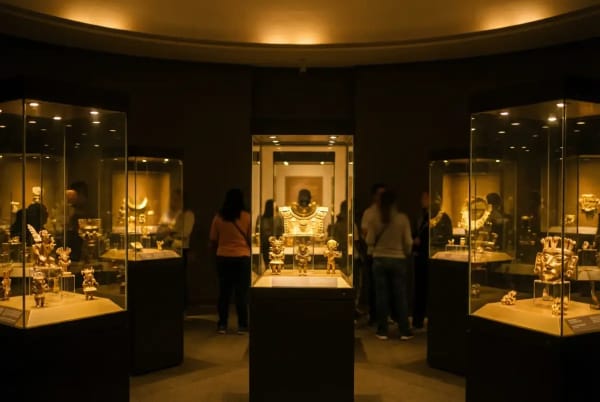
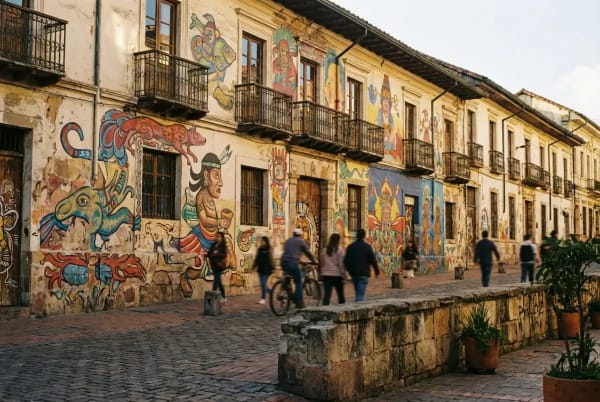
In the darkened hall of the Gold Museum, hundreds of pre-Columbian gold figures begin to glow in time with the rising lights — a moment that takes your breath away. Outside, in the cobblestone streets of La Candelaria, color-explosive murals tell the story of a city that has fundamentally reinvented itself since the 1990s. And on Cerro Monserrate, 500 meters above the eight-million metropolis, a panorama opens up that stretches from the Andean plateau to the horizon.
Bogotá is not a city that you fall in love with at first sight — it is one that you discover step by step. Colombia's capital surprises with over 50 museums, a restaurant scene that occupies several spots in the 'Latin America's 50 Best Restaurants', and a cultural offering that earned it the UNESCO title 'Creative City of Music' in 2022. Those who plan a Colombia round trip start here — at the international hub from where Cartagena, Medellín, and the coffee region are just a short flight away.
Bogotá sightseeing — the most significant attractions
Gold Museum — Latin America's most important gold collection
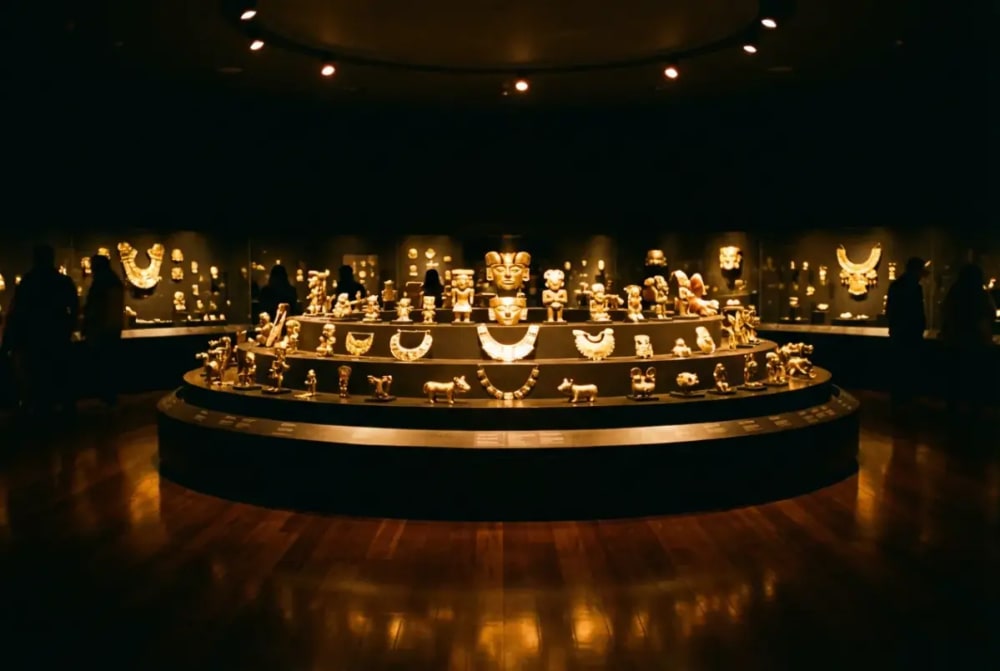
The Museo del Oro houses over 55,000 gold objects and 6,000 other items from Colombia's indigenous cultures — the largest collection of pre-Columbian gold art in the world. The Muisca, who settled the plateau around Bogotá before the Spanish conquest, created a goldsmithing art of such finesse that it led to the legend of El Dorado.
The emotional highlight awaits on the top floor: the Sala de la Ofrenda. A completely dark room where hundreds of gold figures appear in slowly rising light — one of the most impressive museum experiences in South America. Allow at least two hours and don’t be overwhelmed by the abundance: We recommend starting on the third floor and working your way down. Those who visit on Sundays enjoy free entrance.
Museo del Oro (Gold Museum)
- Entrance — 45,000 COP (approximately 10 EUR), free on Sundays
- Opening hours — Tue–Sat 09:00–18:00, Sun 10:00–17:00, closed on Mon
- Access — TransMilenio Station Museo del Oro
- Tip — Free on Sundays — come early due to crowds
La Candelaria — Colonial heart and street art gallery

La Candelaria is the historical heart of Bogotá: narrow cobblestone streets, colonial architecture from the 16th to 18th century, the smell of freshly roasted coffee from small corner cafes. Since 2011, when President Santos legalized graffiti in Bogotá, the neighborhood has transformed into one of the largest open-air galleries in Latin America. The Guardian and Lonely Planet recommend the graffiti tour as one of the best in the world — and after our own visit, we can confirm that.
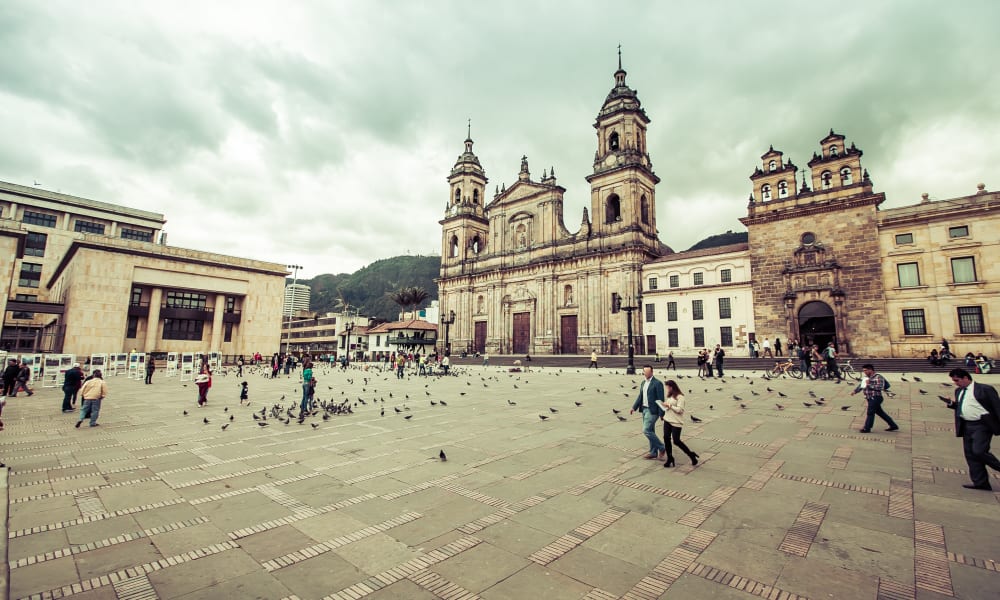
Here lie also Plaza de Bolívar — the political heart of the country with the Capitol and Primatial Cathedral — as well as the Gold Museum and Museo Botero. During the day, La Candelaria is lively and safe; in the evenings, we recommend switching to Uber or registered taxis.
Insider tip
The Bogotá Graffiti Tour starts daily at 10:00 and 14:00 at Parque de los Periodistas — on a tips basis (approximately 20,000–30,000 COP / 4–7 EUR recommended). Reservation through the website recommended, max. 15 people per guide.
Botero Museum and Plaza de Bolívar
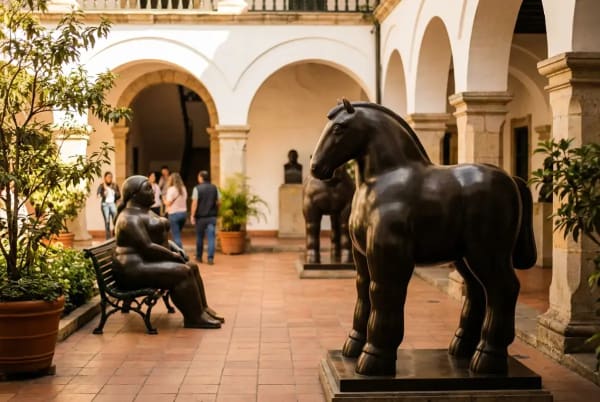
The Museo Botero houses 123 works by Fernando Botero as well as international masterpieces by Picasso, Dalí, and Monet — a generous gift from the artist to the Colombian nation. The fact that entrance is free makes this museum one of the most accessible cultural experiences in the city. Open Tuesday to Saturday from 09:00 to 19:00, Sunday to 17:00.
Just a few minutes' walk away opens Plaza de Bolívar — the political heart of Colombia, surrounded by the Primatial Cathedral, the Capitol, and the Palacio de Justicia. On weekdays, you'll experience the bustling energy of a capital, on weekends the square belongs to families and street performers.
Museo Botero
- Entrance — Free
- Opening hours — Tue–Sat 09:00–19:00, Sun 10:00–17:00, closed on Mon
- Location — Calle 11 Nr. 4-41, La Candelaria
- Tip — Wednesday and Thursday are the quietest days
Cerro Monserrate — Bogotá's panoramic point
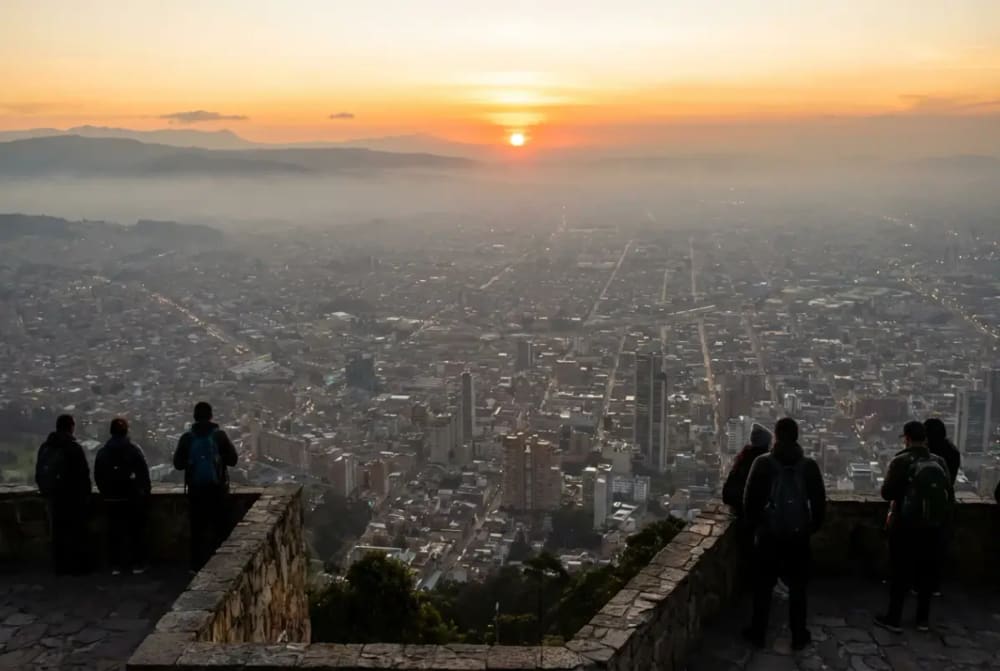
Cerro Monserrate towers over Bogotá at 3,152 meters — and when you stand at the top, the entire eight-million city lies beneath you. On clear days, the view extends over the plateau to the distant Andean peaks. At the summit stands a pilgrimage church from the 17th century with the revered statue of Christ El Señor Caído. Accessible by cable car, funicular, or on foot — the hiking trail is only open Mondays to Saturdays between 05:00 and 12:00 and takes about 45 to 60 minutes. Consider the altitude: at 3,152 meters, you can get out of breath quickly.
At the top, two restaurants with panoramic views await you: Casa Santa Clara and Casa San Isidro, one of the most romantic restaurants in Bogotá. We recommend visiting in the afternoon when the clouds have cleared and the light casts warm colors over the city.
Cerro Monserrate
- Cable car — approximately 28,000 COP (around 6 EUR) round trip
- Funicular — Mon–Sat from 07:30, cable car from 12:00, Sun from 06:00
- Footpath — 45–60 min, only Mon–Sat until 12:00
- Tip — Come in the afternoon for a clear panorama
Let us put together your Bogotá program — we know each of these places personally and know which order and times make the difference. Schedule a consultation .
Cuisine in Bogotá — more than you expect
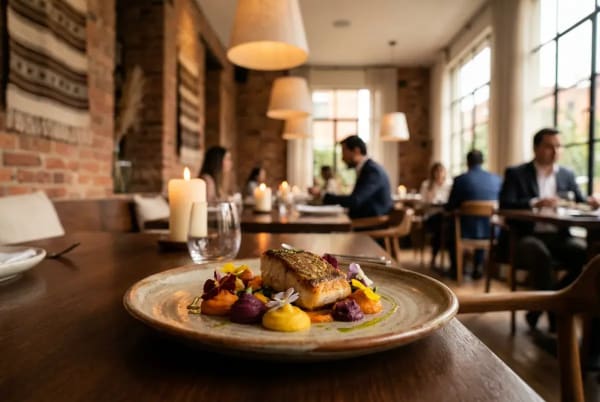
Bogotá is the gastronomic epicenter of Colombia — and increasingly of all of Latin America. Several restaurants in the city rank in 'Latin America's 50 Best Restaurants', including LEO by Leonor Espinosa, who was awarded 'World's Best Female Chef' in 2022. Additionally, there is El Chato with its creative seasonal cuisine and Criterión, which serves French-Colombian fusion cuisine at the highest level. No other Colombian city has more internationally acclaimed restaurants.
But Bogotá's culinary soul is not only shown in fine dining. The Ajiaco Bogotano is the national dish of the capital: a creamy soup made from three types of potatoes, chicken, corn, and Guasca herbs, served with cream, capers, and avocado. The most authentic experience is to try it at La Puerta Falsa — the oldest restaurant in Bogotá, continuously open since 1816 (Calle 11 Nr. 6-50, La Candelaria, from about 4 EUR).
For a special culinary experience, plan an evening at LEO (tasting menu about 120–180 EUR per person) or at El Chato (about 80–120 EUR). If you prefer something more accessible: Salvo Patria in Chapinero serves creative Colombian cuisine in a converted colonial villa — popular with Bogotá residents too, from 30–60 EUR per person.
Insider tip
The Changua is a Bogotá breakfast classic: a milk soup with egg and breadcrumbs. It sounds unusual, but it's beloved soul food at 2,640 meters — especially on cool mornings.
Insider tip
Mercado de Paloquemao — Bogotá's largest food market: tropical fruits, fresh juices, flowers, and cooking stands. Daily from 04:00 to 13:00, best on Saturdays from 07:00. Free entrance, Lulo juice is a must.
Bogotá's neighborhoods — Where to stay?
La Candelaria — Historical and atmospheric
The historic center of Bogotá is the ideal location for culture travelers who want to step out the door in the morning and be right in the action. Museums, universities, and street art are right at your doorstep. During the day, the neighborhood pulses with life, in the evenings it quiets down. Accommodations range from charming colonial houses to the stylish Hotel de la Opera.
Chapinero and Zona Rosa
Chapinero is the bohemian heart of Bogotá: independent restaurants, specialty coffee bars, bookstores, and the vibrant LGBT scene of the city. Zona Rosa — also known as 'Zona T' — forms the upscale part of the neighborhood with designer shops, gourmet restaurants, and the best nightlife in Bogotá. Safe and lively late into the night, with the best selection of boutique hotels.
Usaquén — Villa neighborhood with weekend market
Once a standalone village at the city's gates, Usaquén is now the most elegant neighborhood in Bogotá. Colonial buildings, well-kept streets, upscale restaurants — and the famous Sunday flea market (Mercado de las Pulgas, 10:00–18:00), where you can find crafts, antiques, and Colombian souvenirs. Arriving at 10:00 gives you the best selection amid pleasant crowds.
Insider tip
Teusaquillo is the insider tip among Bogotá residents: a stable residential area with beautiful Art Deco architecture from the 1930s, few tourists, quiet parks, and good restaurants. One of the safest neighborhoods in the city.
Your Bogotá program — two to three days
Day 1 — Museums and La Candelaria
Day 2 — Monserrate and gastronomy
Day 3 — Usaquén or day trip to Zipaquirá
Note: If you have more time: The Chingaza National Park (50 km east) offers unique Páramo ecosystems at 4,000 m — condors, spectacled bears, and cloud forests. Only accessible with an organized tour (from 50–80 EUR/person).
Boutique hotels in Bogotá — handpicked recommendations
Bogotá has developed a remarkable boutique hotel scene in recent years. We recommend two places that we know personally and that make the difference between a good and a special trip:
Hotel Casa Medina
Bogotá's most elegant address
From 180 EUR / night
- Colonial courtyard
- 53 rooms
- Chapinero/Zona Rosa
- Excellent breakfast
Hotel de la Opera
Colonial charm in La Candelaria
From 90 EUR / night
- Next to Teatro Colón
- 83 rooms
- La Candelaria
- Rooftop pool
Let us find the accommodation that best fits your expectations — we know these places and their special features from personal experience. Make a request .
Good to know
Altitude and acclimatization
Bogotá is located at 2,640 meters above sea level — and the altitude is noticeable. In the first one to two days, shortness of breath, mild headaches, and fatigue can occur. Our advice: Take it easy on the first day, drink plenty of water, and avoid alcohol on the night of arrival. The UV radiation is significantly more intense at this altitude than you are used to — sunscreen belongs in every bag, even on cloudy days.
Note
Clothing recommendation: Layers are essential. Cool in the mornings (7–10°C), pleasantly warm at noon (17–19°C), and cool again in the evenings. Always have a rain jacket — afternoon showers are common.
Best travel time for Bogotá
Bogotá surprises with a spring-like climate year-round — the temperatures fluctuate between 7°C at night and a pleasant 19°C during the day. The dry seasons from December to March and July to August provide the most reliable travel weather. However, a visit during the rainy season (April–May, October–November) is also worthwhile: Rain usually falls as a short, heavy afternoon shower, and the mornings are often clear. Those traveling during the best travel time for Colombia will also find Bogotá to be suitable.
Note
The Ibero-American Theatre Festival (every two years in even years, March/April) is one of the largest theater festivals in the world — 500+ events from 50+ countries.Rock al Parque in November is Latin America's largest rock festival (free entry).
Arrival — El Dorado Airport
El Dorado Airport (BOG) is Colombia's largest airport and is located just 12 km west of the city center. Lufthansa flies non-stop from Frankfurt to Bogotá (approx. 11–12 hours flight time). Upon entry, you should bring a bit of patience — the immigration control can take 30 to 60 minutes. More information about flights to Colombia .
Transfer El Dorado Airport → City Center El Dorado Airport (BOG) → La Candelaria / Chapinero
Bogotá as a starting point for Colombia
Bogotá is Colombia's international hub — and the ideal starting point for a tour through the country. By domestic flight, you can reach Cartagena — the colonial jewel of the Caribbean in one hour, Medellín — the city of eternal spring in 45 minutes, and Santa Marta in 1:20 hours. Also, Caño Cristales — the most colorful river in the world is only accessible by domestic flight from Bogotá.
Our city tour Bogotá–Medellín–Cartagena connects the three most fascinating cities in Colombia in a carefully planned route.
Safety in Bogotá
Bogotá has fundamentally changed in recent decades: The murder rate has dropped from about 80 per 100,000 inhabitants in the 1990s to 15–17 per 100,000 — a decline that reflects the transformation of the city. In the tourist districts Chapinero, Usaquén, Zona Rosa, and La Candelaria (during the day), pickpocketing is the main risk. With normal caution and the right habits, Bogotá is very safe to travel today. Detailed information on safety in Colombia and in our article The truth about safety in Colombia .
Basic caution
Only use Uber, Cabify, or pre-booked taxis — never hail unregistered taxis on the street. Do not accept drinks from strangers (risk of scopolamine). Do not hold your smartphone openly in your hand; prefer ATMs in shopping malls.
Getting around locally
For travelers, Uber is the safest and most convenient option — a ride within the city costs between 1 and 3 EUR. The TransMilenio bus system is an efficient alternative (0.65 EUR per ride), but can get very crowded during peak hours. Bogotá also has over 400 kilometers of bike lanes — remarkable for an eight-million-inhabitant city.
Note
The Ciclovía is Bogotá's iconic Sunday ritual: Every Sunday from 07:00–14:00, over 120 km of city streets are closed to car traffic. Around two million Bogotá residents are then out on bikes, walking, or jogging. Rental bikes are available along the route (approx. 10,000–15,000 COP / 2–3 EUR for 2 hours).
Costs at a glance
Prices as of March 2026. 1 EUR ≈ 4,500 COP.
Discover more of Colombia
After two to three days of sightseeing in Bogotá, the capital connects excellently with further stops on a Colombia tour . By domestic flight, you can reach the colonial Cartagena or the vibrant metropolis Medellín in one hour. The coffee region and Salento are accessible by short flight or bus.
Cartagena — Colonial jewel by the Caribbean
Medellín — The city of eternal spring
Salento & coffee region — Wax palms and coffee plantations
Our city tour Bogotá–Medellín–Cartagena connects the three richest cities in the country in a thoughtful route. Or discover our Colombia Intensive — 3 weeks of nature & culture for a comprehensive Colombia experience.
For more information on entry and visa as well as vaccinations and health you can find in our Colombia travel guides.
To book a trip or for more information, contact us. We'll help you plan and guide you through your upcoming adventure!
Frequently asked questions
Bogotá has fundamentally changed — the murder rate has decreased by over 80 percent since the 1990s. Chapinero, Usaquén, and the Zona Rosa are considered safe neighborhoods with good infrastructure. As in any big city, the rule applies: do not carry valuables openly, only use Uber or registered taxis, do not accept drinks from strangers. With normal caution, Bogotá is well navigable today.
Two to three days are ideal: one day for Bogotá's museums and La Candelaria (Gold Museum, Botero, graffiti tour), one day for Cerro Monserrate and the gastronomy scene, and an optional third day for a day trip to the Salt Cathedral in Zipaquirá or the Usaquén Sunday flea market with the Ciclovía.
Bogotá has a spring-like climate year-round, between 7 and 19°C. The driest months are December to March and July to August — ideal for Bogotá sightseeing. Even during the rainy season, a visit is worthwhile, as the rain usually falls as a short afternoon shower. A cultural highlight: the Ibero-American Theater Festival (every two years in even years, March/April).
Admission to the Gold Museum costs 45,000 COP (about 10 EUR) for international visitors. On Sundays, admission is free for everyone — but come early, as there is a larger crowd. Open Tuesday to Saturday from 09:00 to 18:00, Sunday from 10:00 to 17:00. Closed on Mondays.
El Dorado Airport is only 12 km west of downtown. By Uber or registered taxi, the ride takes 30–45 minutes and costs 3–5 EUR. Uber is the safest and most convenient option. The TransMilenio bus is cheaper (0.65 EUR), but impractical with luggage.
For most travelers, we recommend Chapinero or the Zona Rosa — here the combination of gastronomy, safety, and boutique hotels is right. Usaquén is quieter and more elegant, ideal if you want the Sunday flea market at your doorstep. La Candelaria is atmospheric and central for cultural programs, but quieter in the evenings.
Yes — the Catedral de Sal is one of Colombia's most impressive attractions: a real cathedral carved deep into an active salt mine, with 14 chapels and space for 8,000 people. Only 48 km north of Bogotá (1–1.5 hours), admission around 20 EUR. It can be well combined with the Laguna de Guatavita.
Bogotá offers good value for money: A TransMilenio ride costs under 1 EUR, ajiaco at La Puerta Falsa from 4 EUR, boutique hotels start from 90 EUR/night. Fine dining is considered cheap internationally, at 80–180 EUR per tasting menu (LEO, El Chato). Detailed budget information can be found in our Colombia cost overview.