


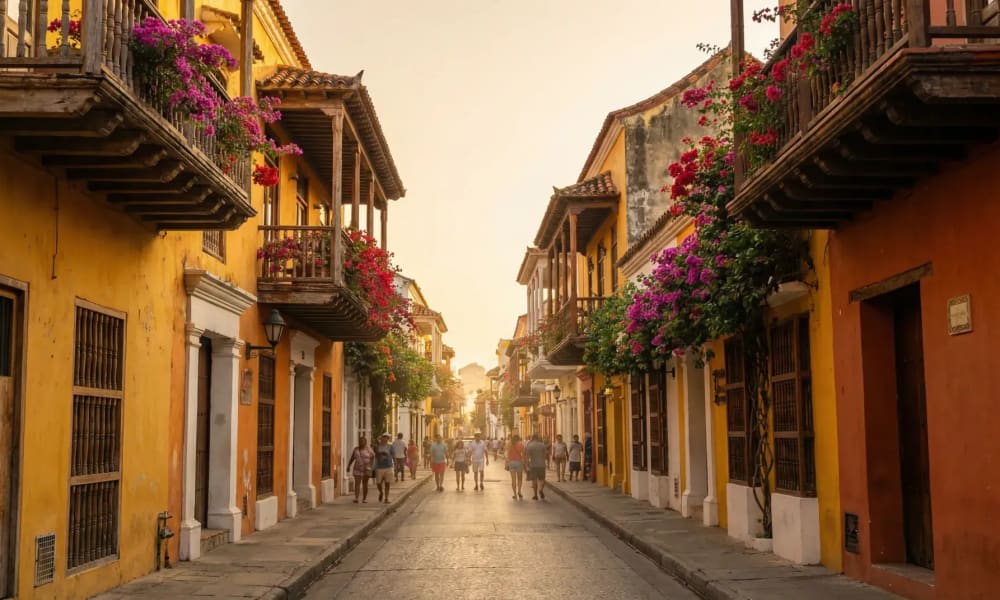
This image was generated with AI.
Safety in Colombia
Current situation, risks & specific behavior tips
Current situation, risks & specific behavior tips
Is Colombia dangerous? The brief answer: significantly less on the usual travel routes than its reputation suggests. In 2024, 6.7 million international travelers visited the country—a record that reflects a reality that has little to do with the images of the 1990s. The Foreign Office does not issue a general travel warning; existing partial travel warnings affect regions far away from tourist routes. This guide summarizes the current situation objectively, identifies specific risks, and provides you with the behavioral rules to safely explore Bogota, Medellin, Cartagena, the coffee region, and Tayrona.

Is Colombia dangerous? The honest assessment
The question of safety in Colombia is at the forefront of every travel planning. Understandably—the country carries an image from the 1990s. The reality looks different: 6.7 million international travelers visited Colombia in 2024, a new record and an increase of 8.5 percent compared to the previous year. In 2025, international arrivals rose to over 10.2 million. Colombia is thus the third most popular travel destination in Latin America—after Mexico and the Dominican Republic.
So is Colombia safe for tourists? Yes, on the usual travel routes, if basic precautions are observed. The Foreign Office does not issue a general travel warning. Existing partial travel warnings affect regions that are far away from tourist routes—no reputable travel agency operates there. Bogota , Medellin , Cartagena , the coffee region around Salento and the Tayrona National Park are considered easily accessible.
For context: In the 1990s, Medellin had the highest murder rate in the world with over 380 murders per 100,000 inhabitants. Today it stands at around 14 per 100,000—a reduction of 96 percent. This transformation is unprecedented in modern criminology history.
This guide summarizes the current situation objectively, identifies specific risks, and provides you with the behavioral rules to travel safely through Colombia. If you prefer a personal experience report, find our assessment in the blog post Is Colombia safe? The truth about traveling in Colombia .
Current update
Last updated: March 2026. The security situation can change quickly regionally. Please check the current travel advice from the Foreign Office shortly before your departure. The information provided here does not replace individual travel advice.
What the Foreign Office really says
The Foreign Office urgently advises against travel to the following areas: Norte de Santander (Catatumbo region on the border with Venezuela), Arauca, Vichada, Guainia, Guaviare, Caqueta, eastern and southern parts of Meta, Putumayo, Narino, Cauca, western Valle del Cauca, Chocó, northern Antioquia, South Córdoba, and South Bolívar. In January 2025, fighting between guerrilla groups broke out in the Catatumbo region—a state of emergency was declared on January 24, 2025.
None of these areas are on usual tourist routes. Bogota, Medellin, Cartagena, Santa Marta , the coffee region, and the Tayrona National Park are not affected by the partial travel warnings. The Swiss EDA confirms this assessment and warns of the same regions (as of March 7, 2026).
Check before traveling
Check the current travel advice from the Foreign Office shortly before your departure. The security situation can change quickly regionally—especially in border areas. In case of emergency, you can reach the German embassy in Bogota at +57 601 423 26 00.
Colombia in comparison—numbers and context
Colombia is large—about 3.2 times the size of Germany. The overall picture of a country statistic says little about the safety of Colombia on tourist routes. A comparison with other travel destinations helps to provide context:
| Country | Murder rate 2024 (per 100,000) | Tourists 2024 |
|---|---|---|
| Jamaica | 40.1 | 4.3 million. |
| Venezuela | 26.2 | — |
| Colombia | 25.4 | 6.7 million. |
| Mexico | about 24 | 40+ million. |
| Brazil | 21.1 | 6.6 million. |
| USA | 5.5 | 77 million. |
| Germany | 0.8 | — |
Colombia ranks in the upper-middle range of Latin America—not at the top. The main tourist cities tell a different story: Bogota and Medellin have a significantly lower rate of about 14 murders per 100,000 inhabitants than the national average. For comparison: Ecuador experienced a murder rate explosion in 2023/2024 to over 40 per 100,000—higher than Colombia, although the country was long considered a safer alternative.
Security by region: Where you can travel safely
The standard routes through Colombia run through areas that are considered safe for travelers. The following table provides an overview—it does not replace individual assessment on-site but offers solid guidance for your travel planning:
| Destination | Assessment | Safe areas | Special notes |
|---|---|---|---|
| Easily accessible | Chapinero, Zona Rosa, Usaquén, Teusaquillo | La Candelaria only during the day; avoid Transmilenio during rush hours | |
| Easily accessible | El Poblado, Laureles, Estadio | Lowest crime rate in 40 years; avoid hillside neighborhoods | |
| Very safe | Old Town, Getsemaní, Bocagrande | Safest large city for tourists; avoid beach area at night | |
| Easily accessible | Historic Center, beach area | Use a taxi at night away from the tourist zone | |
| Very safe | Salento, Filandia, Cocora Valley | One of the safest travel regions in Colombia | |
| Easily accessible | Established paths and beaches | Check opening status before visiting; only marked paths | |
| Cali | With caution | San Antonio, Granada | Higher violence rate; only with good local knowledge |
| Amazon (Leticia) | With guide | Downtown Leticia | Only organized tours; border region |
| La Guajira | With guide | Organized tours | Remote desert; no tourist infrastructure |
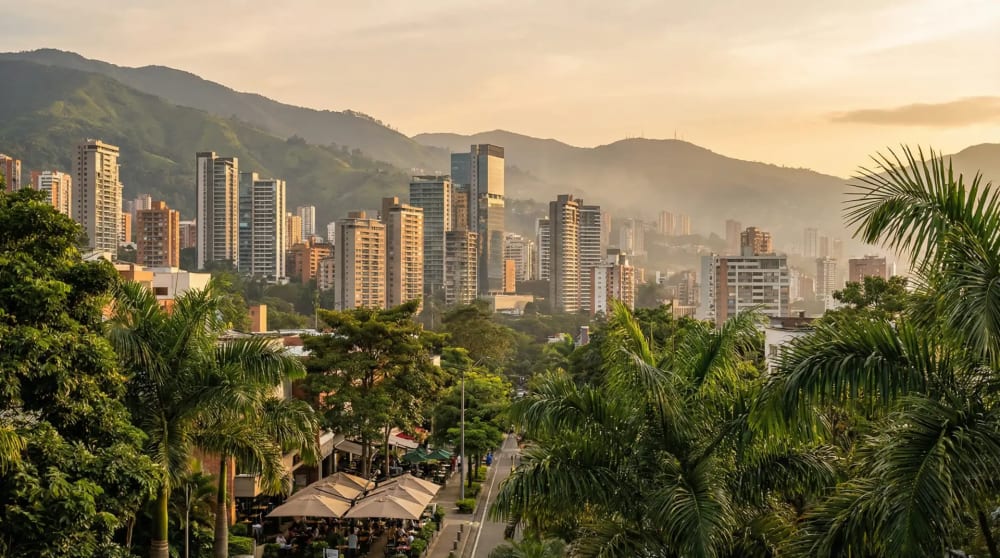
Bogota — Safety by neighborhoods
Bogota is a megacity with over 8 million inhabitants — safety varies greatly by neighborhood. The area between Calle 67 and Calle 140 in the north of the city is considered very safe for tourists. This includes Chapinero, the Zona Rosa (Zona T), Usaquen, and Teusaquillo — here you operate at a safety level comparable to European metropolises.
The historic old town of La Candelaria is safe during the day, with regular police presence and many tourists. At night, you should switch to taxi or Uber. The Transmilenio (Bogota's bus system) is usable during the day, but is considered a hotspot for pickpockets during rush hour. Only use ATMs during the day in banks or shopping centers — never at freestanding machines on the street.
Medellin — Transformation and current situation
Medellin has the lowest murder rate in over 40 years. Street robbery dropped by over 40 percent in certain categories in 2025. El Poblado is the safest and most international neighborhood in the city — with over a million international visitors in 2024. Laureles offers a quieter, more authentic alternative and is also safe. Both neighborhoods are easily walkable during the day and in busy night hours.
Comuna 13 is considered safe during the day as a tourist attraction — organized graffiti tours are regularly offered and have become part of the standard program. Off the tourist route, the neighborhood is not recommended at night. Avoid hillside neighborhoods and outskirts.
Cartagena — Old town vs. outskirts
Cartagena is considered the safest major city in Colombia for tourists — with over 855,000 international visitors in 2024. The old town (Ciudad Amurallada) and Getsemani are very safe during the day and in the early evening, with a strong police presence for tourists. Bocagrande (the modern high-rise district by the sea) is also safe. Avoid the beach after dark, as there is insufficient lighting.
Coffee region and Salento — relaxed on your own
The coffee region around Salento is among the safest travel destinations in Colombia. The towns depend on tourism and invest accordingly in safety. If you are wondering whether Salento is dangerous in Colombia: pickpocketing is the most common crime, larger violent crimes against tourists are almost non-existent. The Cocora Valley with its wax palms and coffee farm hikes are safe and well accessible — here you can move around at your leisure.
Santa Marta and Tayrona National Park
Is Santa Marta dangerous in Colombia? Short answer: no. Santa Marta has developed into a tourist hub on the Caribbean coast. During the day, the Centro Historico is easily explored on foot, and at night, it is generally safe in the tourist areas. Minca, the mountain village in the Sierra Nevada, is described by all sources as particularly safe and relaxing — ideal for a day trip or a quiet overnight stay.
The Tayrona National Park is safe along established paths. Tayrona National Park safety includes: pay attention to the regular closing times (February, June, October/November) and possible security closures. Always check the current status on the National Parks website before visiting and use only marked paths.
The general rule for Colombia
The more touristy the neighborhood, the safer it is — and the better the police presence. In El Poblado (Medellin), the old town of Cartagena, or the Zona Rosa (Bogota), the safety level is explicitly optimized for tourists. Stick to the neighborhoods marked as safe in the regional table.
Which regions to avoid
Current travel warnings (as of March 2026)
The Foreign Office strongly advises against traveling to the following departments: Norte de Santander, Arauca, Vichada, Guainia, Guaviare, Caqueta, eastern parts of Meta, Putumayo, Narino, Cauca, western Valle del Cauca, Choco, northern Antioquia, southern Cordoba, and southern Bolivar. This affects about 35 to 40 percent of the country's area — but less than 10 percent of tourist routes.
Border regions — why this rarely affects tourists
Evaluating Colombia as a whole is like evaluating Europe as a whole. The conflicts in Norte de Santander are as far from Medellin as hotspots in Ukraine are from a vacation in Vienna. The border regions with Venezuela, Ecuador, and Panama are affected by armed groups and drug trade — no reputable tour operator takes you there. There is no tourist reason to visit these areas, and that is the crucial message behind the travel warnings.
The most common risks and how to protect yourself
The real risks for tourists in Colombia differ significantly from the headlines. The biggest danger is not violence — but petty crime. And this can be greatly reduced with simple, concrete rules.
The 5 most important safety rules
- No taxi on the street — only use Uber, InDriver, Cabify, or pre-booked taxis
- Smartphone not visible — do not openly talk or navigate on the street
- No drinks from strangers — do not accept drinks or cigarettes, keep your own glass in view
- No flashy jewelry — leave expensive watches and chains at home or keep them in a hotel safe
- Carry only copies — passport in hotel, carry certified copy or photo with you
There is a saying in Colombia that every traveler should know: "No dar papaya" — don’t make yourself an easy target. If you internalize these five rules, you minimize the risk for most incidents.
Pickpocketing and petty crime
Pickpocketing is by far the most common crime against tourists — especially in large cities and at bus terminals. Smartphones are the most commonly stolen item. The typical method: a motorcyclist snatches your phone while you are talking or navigating. In seconds, the device is gone.
A common distraction trick in Bogota is the so-called "bird droppings trick": a white paste is sprayed on your clothing, and a "helpful" person immediately offers assistance while an accomplice strikes. If you receive unexpected "help" on the street: politely decline and continue on your way.
Fake police are another risk, especially in Bogota and Medellin. Scammers in police uniforms demand document or cash checks. Important to know: real police in Colombia do not demand cash checks on the street. If you suspect, calmly ask for accompaniment to the nearest police station.
Scopolamine (Burundanga) — facts instead of panic
Scopolamine is an odorless, tasteless drug that causes amnesia and loss of will. In Colombia, about 50,000 cases are registered annually — in 2023, the number of reported poisonings increased by 16 percent. The risk is real, and the threat is documented.
At the same time, scopolamine is often dramatized on the internet. The facts: the drug must be administered — typically in a drink or through direct skin contact. Contrary to some reports, mere inhalation is usually not sufficient. By not accepting drinks from strangers, keeping an eye on your drink, and using dating apps carefully, you significantly reduce the risk.
Dating apps in Colombia — US Embassy warns
The US Consulate warned in January 2024 of a drastic increase in fatalities associated with dating apps in Medellin. Between November and December 2023, at least 8 US citizens died after dates via Tinder and Grindr — typically from scopolamine overdose. Tinder subsequently implemented in-app warnings for Colombia. If you use dating apps: first meetings only in busy public places, never alone in private spaces.
Taxis and transport — the most important single rule
Using street taxis is the biggest avoidable safety risk in Colombia. Spontaneously hailed taxis are a main entry point for so-called express kidnappings — short-term kidnappings where victims are forced to ATMs.
How to travel safely through Colombia:
- Uber is legal and available in Bogota, Medellin, Cali, and Cartagena — the most reliable option
- InDriver works in Bogota, Medellin, Cartagena, and other cities
- Cabify is explicitly recommended by the Foreign Office — available in Bogota, Medellin, Barranquilla
- Regular taxis only pre-booked via hotel or restaurant — verify license plates beforehand
- At night no street taxis nationwide — exclusively app services or pre-booked vehicles
| App | Available in | Feature |
|---|---|---|
| Uber | Bogota, Medellin, Cali, Cartagena | Most reliable option, implicitly recommended by the Foreign Office |
| InDriver | Bogota, Medellin, Cartagena and more | Price negotiable |
| Cabify | Bogota, Medellin, Barranquilla | Explicitly recommended by the Foreign Office |
| DiDi | Several cities | Alternative to Uber |
Uber in Colombia — good to know
Uber works a bit differently in Colombia than in Europe: the driver often asks to enter in the back and not to take out the phone visibly. This is to not draw attention to the Uber service and is completely normal — no cause for concern. Always verify the license plate before getting in with the app.
Nightlife — when to be cautious
Since 2023, Colombia has seen a drastic increase in robbery incidents involving drugging — especially in Bogota, Cartagena, and Medellin. The Foreign Office explicitly warns against this.
Five rules for safe going out in Colombia:
- Never take your eyes off your drink — not even for a moment
- Do not accept drinks from strangers, not even cigarettes
- Use Uber or app taxi for the way home, never street taxis
- Do not go alone into unknown bars or clubs
- For dating app meetings: exclusively in busy public places
Safe going out neighborhoods by city: In Bogota the Zona Rosa (Zona T) and the area around Parque 93 — well-lit and with strong police presence. In Medellin El Poblado (around Parque Lleras) and Laureles. In Cartagena the old town and lively areas of Getsemani.
Drug tourism — significant risks
Anyone buying or consuming drugs faces greatly increased security risks in Colombia: extortion by dealers, police corruption, adulterated substances. Drug possession is illegal and can lead to arrest. The romanticized portrayal of Medellin as a "party destination" attracts tourists every year, putting them in life-threatening situations.
Smartphone security on the go
Smartphones are the most frequently stolen item in Colombia. Five specific Colombia safety tips for your phone:
- When making calls, hold your phone to the house wall — not on the street side
- Never leave your smartphone on the cafe table
- Load navigation in advance and use offline (Google Maps offline or Maps.me)
- Do not walk through crowded streets with a visible smartphone
- Take photos only in safe surroundings — do not stand in the middle of the street
Two-phone strategy
Experienced Colombia travelers take an older model for everyday use (navigation, Uber, communication) and use the good smartphone only for photos in safe environments. If the everyday phone is lost, the damage is manageable — a simple measure with a great effect.
Insider tip
Are you planning a trip to Colombia and want to be safe on the road? Our City tour Bogota, Medellin, and Cartagena takes you through the most popular destinations — with thoughtful route planning and local expertise. Inquire now without obligation .
Solo female travelers in Colombia
Colombia is well-traveled by solo female travelers with the necessary caution. The classic route Bogota — Medellin — Salento — Cartagena — Santa Marta offers good infrastructure, a vibrant international traveler community, and hostels with female dormitories in all major cities.
The main challenge is a cultural one: verbal harassment (catcalling) is more common in Colombia than in many other South American countries. It can be annoying, but it rarely escalates into physical harassment in tourist areas. Confident demeanor and calm ignoring are the best reactions — in most cases, it remains harmless comments.
Concrete tips for solo female travelers:
- Choose accommodations with female dormitories — well available in all tourist cities
- Adapt clothing to the local style — those who are not immediately recognizable as tourists receive less unwanted attention
- In public transportsit with families or other solo female travelers
- Nightlifeenjoy in groups with other travelers from the hostel — never go out alone
- Offline mapsload in advance to avoid having to navigate with your smartphone on the street
- Drinkskeep a close eye on in nightlife — the danger of scopolamine affects all travelers
Before departure — checklist and emergency preparedness
Travel insurance
A comprehensive foreign health insurance with medical transport is indispensable for Colombia. The German statutory health insurance does not cover costs in South America. A transport back can cost between 30,000 to 100,000 euros — good annual policies start at around 50 euros (Stiftung Warentest recommends, among others, HanseMerkur and ADAC).
Medical care in Bogota, Medellin, and Cartagena is good to very good — large private clinics like Fundacion Santa Fe offer international standards. However, in rural areas, care is significantly limited. Detailed information on health precautions and Vaccinations for Colombia can be found in our health guide.
ELEFAND registration
The crisis prevention list of the Foreign Office (ELEFAND) is a free, voluntary online registration. In case of crisis, German foreign representations can contact you and consider you for evacuation. The registration takes about 10 minutes and is available at krisenvorsorgeliste.diplo.de — also as an app for iOS and Android with an integrated consulate finder function.
German embassy and emergency numbers
Important emergency contacts
- General emergency number — 123 (police and all emergencies)
- Police — 112
- Ambulance — 125
- Fire department — 119
- Red Cross — 132
- German embassy Bogota — +57 601 423 26 00 (Mon-Thu 7:15-16:30, Fri 7:30-13:30)
- Emergency phone embassy — +57 320 865 37 17 (outside office hours)
- AA emergency hotline — +49 30 18 17 0
The German embassy is located in Bogota: Calle 110 No. 9-25, Piso 11, Torre Empresarial Edificio Pacific P.H.
Note down the most important numbers on a piece of paper in your wallet — in case your phone gets stolen. Sounds old-fashioned, but could be crucial in an emergency.
Checklist before departure
- Take out foreign health insurance with medical transport
- Carry out ELEFAND registration Check current travel advice from the
- Foreign Office Check digital (Cloud/E-Mail) and paper copy of passport — keep separate from the original Install and set up Uber, InDriver or Cabify before the trip
- Download Google Maps offline maps for Colombia
- Inform the bank about the trip (avoid card blocking)
- Note down and print emergency numbers
- Check vaccinations and health precautions
- Go through the packing list — do not pack conspicuous jewelry and no camouflage clothing
- Check entry requirements and visa Book flights and travel
- Insider tip Uncertain whether Colombia is the right travel destination for you? Talk to us — we know the security situation from our own experience and advise you honestly and without obligation.
- Inquire now for an initial consultation .
- Colombia tours — safely and thoughtfully planned All our tours only take you through safe, proven regions — with local expertise and a route planning that considers safety aspects from the very beginning:
Coffee & Caribbean tour
— coffee region and Caribbean coast Colombia Intensive — 3 weeks nature & culture — All regions in one trip
Nature tour Tayrona & Amazon
— For nature lovers
- City tour Bogota, Medellin & Cartagena — The compact classic route
- Additional travel information ColombiaBest travel time Colombia
- — Climate and recommendations by monthVaccinations and health
- — Yellow fever, malaria, and travel pharmacyEntry and visa
— Entry regulations for DACH citizens
- Packing list Colombia — What you should pack
- Arrival and flights — Flight connections and booking tips
- National parks Colombia — Tayrona, Los Nevados, and more
- Diving and snorkeling — The best spots
- Bird watching — 1,950 species
- Or start directly with the Colombia overview
- — our entry into all destinations, tours, and experiences. Worth reading: Is Colombia safe? The truth about traveling in Colombia
- and Decision aid: Where to go in Latin America?
. Frequently asked questions about safety in Colombia Is Colombia dangerous for tourists? On the common tourist routes, Colombia is significantly safer than its reputation. 6.7 million international travelers visited the country in 2024 — a new record. Bogota, Medellin, Cartagena, the coffee region, and Tayrona are considered safe when basic precautions are taken: no taxi on the street, don't carry a smartphone visibly, don't accept drinks from strangers. Which regions in Colombia should be avoided?The Foreign Office warns against traveling to the departments of Norte de Santander (Catatumbo), Arauca, Vichada, Guainia, Guaviare, Caqueta, and parts of Cauca and Narino. These areas are off the common tourist routes — no tour operator goes there. Bogota, Medellin, Cartagena, the coffee region, and Santa Marta are not affected.Is Santa Marta in Colombia dangerous?
Frequently asked questions about Colombia safety
Salento and the coffee region are considered one of the safest travel destinations in all of Colombia. The places thrive on tourism and invest accordingly in safety. Pickpocketing is the most common crime — serious violent crimes against tourists are extremely rare. The Cocora Valley and coffee farm hikes are safe and well developed.
Tayrona is safe for tourists on established paths and beaches. The park has regular closing times (February, June, October/November) and can be closed at short notice due to security incidents. Always check the current status before visiting. Only use marked paths and do not stray from the trails.
The best prevention: Never hail a taxi on the street. Use Uber, InDriver, or Cabify — there, drivers are registered and the price is set in advance. If you must take a regular taxi, have it ordered through your hotel or restaurant. Always check the license plate against the app before getting in.
Yes, foreign health insurance with repatriation is essential for Colombia. The statutory health insurance does not cover costs in South America. Repatriation can cost between 30,000 and 100,000 euros. Good annual policies start at around 50 euros — recommendations include HanseMerkur and ADAC.
Colombia is well accessible for solo female travelers with due caution. The classic route Bogota — Medellin — Salento — Cartagena — Santa Marta provides good infrastructure and an international traveler community. Verbal harassment (catcalling) does occur, but it rarely escalates. Hostels with female dormitories are available in all tourist cities.
Is Colombia dangerous? Current partial travel warnings, safe regions & behavior rules for Bogota, Medellin, Cartagena, and Tayrona. Honest and current.
Ja, eine Auslandskrankenversicherung mit Ruecktransport ist fuer Kolumbien unverzichtbar. Die gesetzliche Krankenversicherung uebernimmt keine Kosten in Suedamerika. Ein Ruecktransport kann 30.000 bis 100.000 Euro kosten. Gute Jahrespolicen gibt es ab ca. 50 Euro — empfohlen werden unter anderem HanseMerkur und ADAC.
Kolumbien ist fuer alleinreisende Frauen mit der gebotenen Vorsicht gut bereisbar. Die klassische Route Bogota — Medellin — Salento — Cartagena — Santa Marta bietet gute Infrastruktur und eine internationale Reisenden-Community. Verbale Anmache (Catcalling) kommt vor, eskaliert aber selten. Hostels mit weiblichen Schlafsaelen sind in allen Touristenstaedten verfuegbar.
Your dream holiday, tailor-made by true connoisseurs.
From the first spark of inspiration to the moment you return home full of stories, we’re by your side – whether by phone, email or WhatsApp, whenever you need us. Every journey we design is as unique as you are: individually crafted with exclusive privileges and exceptional arrangements that make your experience truly unforgettable.
Experts for your trip

You might also like this
This image was generated with AI.

This image was generated with AI.
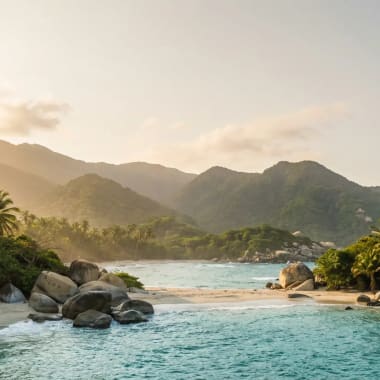
This image was generated with AI.