



Colca Canyon
Andean condors, pre-Inca terraces, and the sixth deepest canyon in the world
Andean condors, pre-Inca terraces, and the sixth deepest canyon in the world
The Colca Canyon is more than a natural wonder. Since 2019 a UNESCO Global Geopark, 3,270 m deep, home to the Andean condor and a terraced landscape that has been in operation for 1,400 years — a stopover between Arequipa and Lake Titicaca, which stands on its own.

Best travel time
May to September — dry season with clear skies, stable thermals for condor sightings, and dry trekking paths.
Why Colca Canyon?
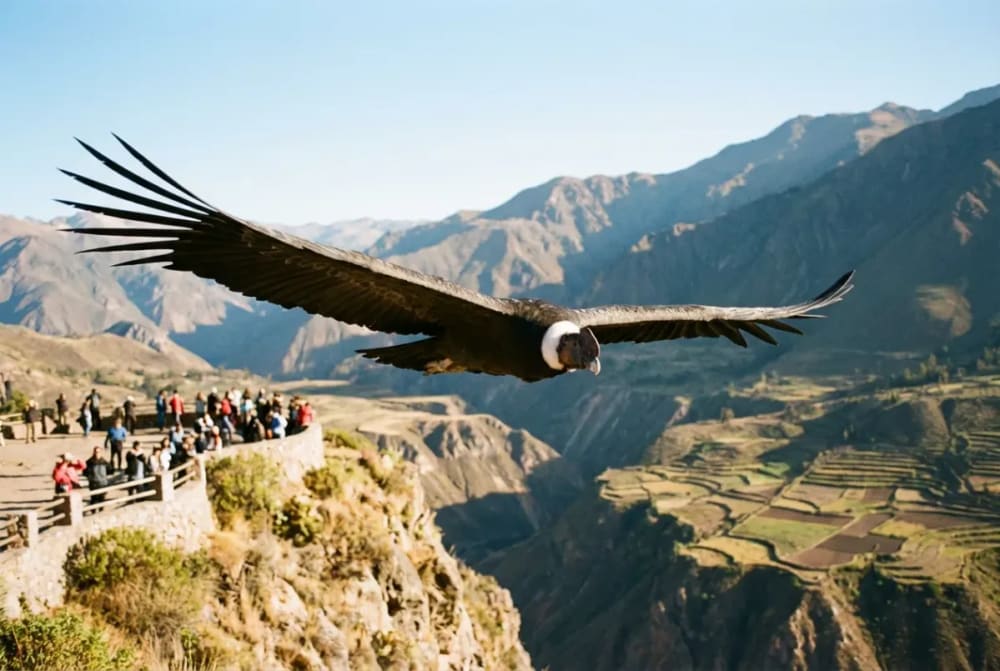
Above the Cruz del Cóndor, the morning mist still lingers as the first thermal currents begin to build between the canyon walls. Then, without warning, the first condor rises from the depths — three meters wingspan, not a single wingbeat, just the dry hiss of the wind on its feathers. It glides by at eye level, hardly ten meters away. In such moments, one understands why the Incas saw the Andean condor as the bird of the heavens.
The Colca Canyon is located 160 kilometers north of Arequipa, stretching about 70 kilometers along the Río Colca and reaching its deepest point 3,270 meters deep — more than twice as deep as the Grand Canyon in Arizona. It is considered the sixth deepest canyon in the world, surpassed only by four Asian canyons and the neighboring Cotahuasi Canyon in the same region of Arequipa. In 2019, it was recognized by UNESCO as a Global Geopark along with the volcanoes of Andagua — the first and only one in Peru to date.
What distinguishes the canyon from other South American nature experiences is the density in a small space. Within two to three days, one encounters the largest flying bird in the world, a pre-Columbian terraced landscape irrigated continuously for 1,400 years, 15 colonial churches in Andean Baroque style, thermal baths directly on the river, and a green oasis at the canyon floor that is only accessible on foot. This is why the Colca Canyon occupies a natural place in almost every Peru round trip — as a stopover between Arequipa and Lake Titicaca, which stands on its own.
Cruz del Cóndor — Condors within reach
The Cruz del Cóndor (3,270 m) is the most famous viewpoint of the canyon, located about 15 kilometers east of the village of Cabanaconde. From here, one does not look at a canyon rim but deep into the gorge — at a height where the thermals are particularly reliable. The condors use these updrafts to spiral up from the rock niches along the riverbank. Those who arrive at the right time can see five to ten birds at the same time. On good days, guides report up to 50 condors above the canyon.
The time window is narrow and predictable: Between 07:30 and 09:00 the first thermals build up, with the peak usually around eight o'clock. After that, the birds rise to cruising altitude and are barely visible at Mirador level. Most day tour buses from Arequipa only arrive around seven-thirty — those who stay overnight in Cabanaconde arrive at the viewpoint ahead of the bus fleet and experience the scene in a much calmer atmosphere.
The Andean condor (Vultur gryphus) is one of the largest flying birds in the world with an average wingspan of 2.80 to 3.20 meters and a weight of 10 to 14 kilograms. It can live to be up to 70 years old and has been classified as "vulnerable" on the IUCN Red List since 2020 — endangered. The global population is estimated to be only around 6,700 adult individuals, with a declining trend. In Venezuela, it has become regionally extinct, and in Colombia and Ecuador, it is critically endangered. The most stable populations are found in Chile, Argentina, Bolivia, and right here in the Colca Valley.
Insider tip: Spend the night instead of going on a day tour:Those arriving in the afternoon from Arequipa and staying in Cabanaconde are at Cruz del Cóndor by seven o'clock the next morning — ahead of the buses, well-dressed for the cold. Day tours from Arequipa start at three or four in the morning, reach the viewpoint in a crowd, and return the same evening. While this is logistically efficient, it is the clearly weaker choice for a genuine condor encounter.
How high the probability of sightings really is depends on the month and the weather. In the dry season between May and September, visitors report success rates around 70 percent — almost every morning. In the rainy season, dense clouds can delay the thermals. From centuries of condor observation, local guides know what each wind means — a certified Peruvian guide is an asset, not just a formality.
One last practical tip: Early in the morning, temperatures at Cruz del Cóndor are often between five and eight degrees, and the wind makes it feel noticeably colder. Fleece jacket, hat, and gloves are essential in the day pack — many day tourists underestimate this and freeze during their own highlight.
The Colca Valley — Villages, Terraces, Thermal Baths
Those who only go to Cruz del Cóndor and back miss the true wealth of the region. The Colca Valley itself is one of the most culturally dense landscapes of the Andes — inhabited for over two millennia, shaped by two pre-Columbian cultures and one of the most unobtrusive Spanish colonial architectures in South America.
The terraces that sustain the slopes on both sides of the valley to over 4,000 meters height were built between 600 and 800 AD — by the Collaguas (Aymara-speaking, from the Lake Titicaca area, related to the Tiahuanaco culture) and the Cabanas (Quechua-speaking, likely descendants of the Wari civilization). The Incas only arrived in the valley in the 15th century and expanded the existing system but did not rebuild it. Today, the same terraces are cultivated with the same pre-Columbian irrigation channels: corn, quinoa, potatoes, kiwicha. An uninterrupted agricultural practice for 1,400 years — there is no equivalent to this in Europe.
The most culturally fascinating fact about both peoples relates to their heads. In the pre-Columbian era, both groups deformed the skulls of their infants as a group-specific identity feature: the Collaguas elongated their heads conically, while the Cabanas flattened them mesoformly. The Spanish colonial administration banned this practice in the 16th century. What remains as a feature of identity is the hat: Collagua women wear flat white straw hats with colorful decorative bands, Cabana women wear round, densely embroidered cloths with turned-up edges — embroidered inside and out. Those traveling in the valley immediately recognize whose territory they are in by the head coverings.
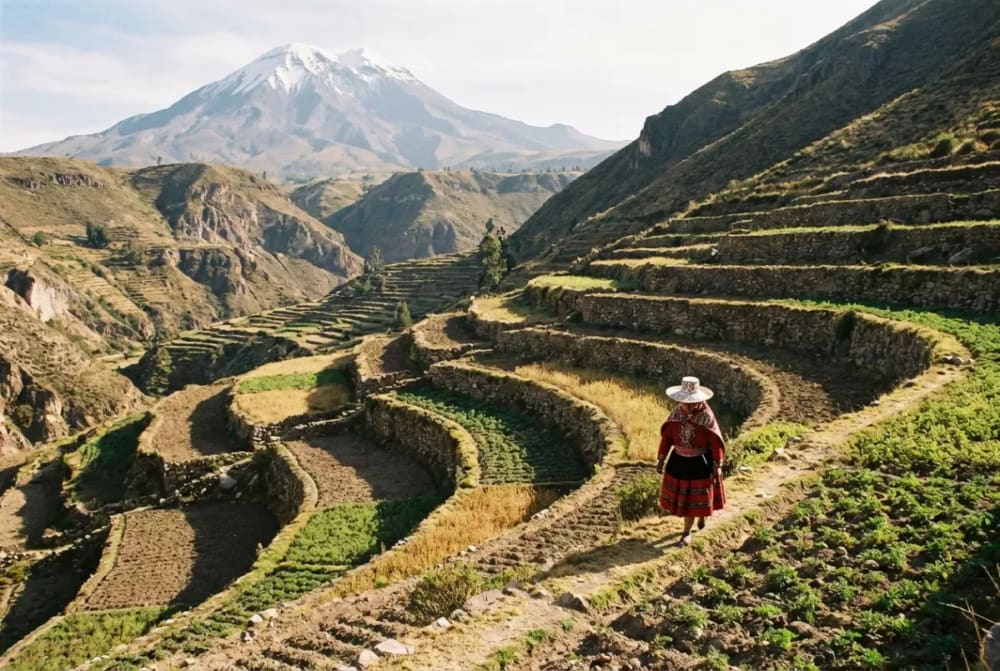
Besides the terraces, 15 colonial churches characterize the valley — from Callalli in the east to Cabanaconde in the west. Built from the 16th century onwards from Sillar, the light volcanic stone that also makes Arequipa's old town the "White City," they are stylistically unique: Andean Baroque, a mixture of Spanish colonial and indigenous elements, often with painted wooden ceilings and gilded altarpieces from the Cusco school. The church in Yanque is the most famous, while those in Lari and Coporaque have the strongest atmosphere. Few travel guides highlight these churches — that is one of the reasons why they are worth targeting specifically.
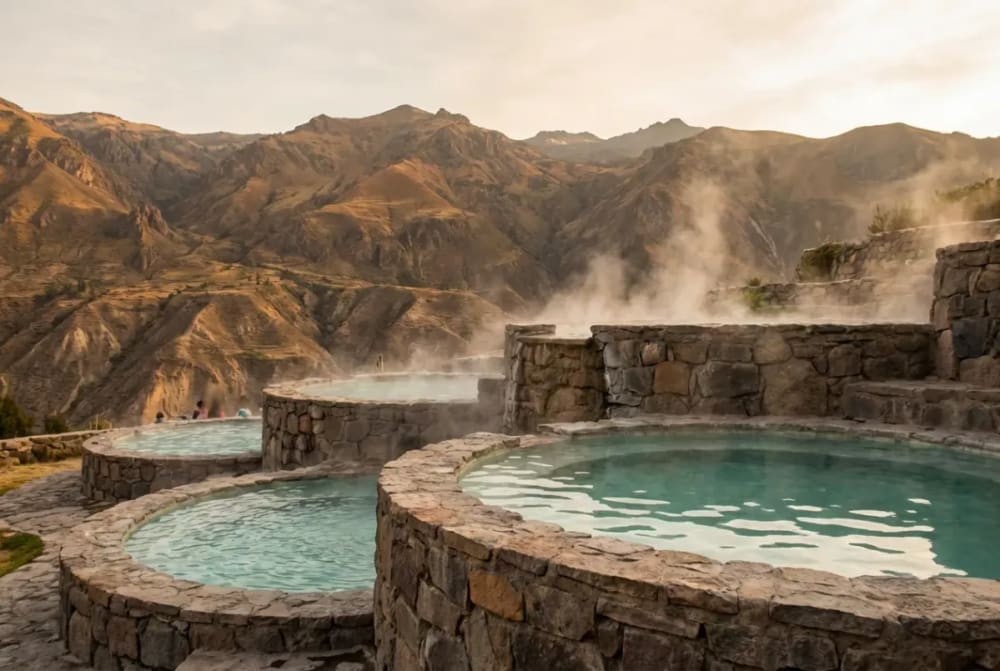
Three kilometers east of Chivay, right by the riverbank, lies the thermal bath La Calera. The water comes from the Cotallumi volcano and flows out of the mountain at around 80 °C — in the five bathing pools, the temperature stabilizes at a pleasant 38 °C. The entrance fee is S/15 (around four euros) and is not included in the Boleto Turístico. Opening hours: daily from four in the morning until 7 PM. Those who can, come in the late afternoon between 5 and 7 PM: the day tours are gone, the sun sets behind the mountains, and the water is a reward after a long day in the canyon. On weekdays, La Calera is often surprisingly empty.
Trekking — from one night to three days
The Colca Canyon is not just a viewpoint destination. Those with time and stamina descend — at 1,200 meters altitude in two and a half hours through cactus, rock debris, and fig trees down to the river. Three trekking options have been established, depending on the available time.
The classic two-day route leads from Cabanaconde (3,287 m) to the oasis Sangalle (2,100 m) at the canyon floor. The descent takes two and a half to three hours, and the ascent the next morning takes three to three and a half — those who wish can rent a mule for the return trip (around 20 USD). Sangalle is a green oasis amidst the dry canyon slopes: fig, peach, and apple trees, pacay bushes, a few simple adobe bungalows with a shared bathroom and cold natural pools. Important: The pools in Sangalle are not thermal baths — the water comes from a cool river source. Those expecting thermal waters here will be disappointed.
The three-day route via Llahuar is the insider tip for experienced trekkers: Cabanaconde → Llahuar (2,080 m, with real thermal springs right by the riverbank) → Sangalle → Cabanaconde. About 26 kilometers total distance, 1,890 meters of ascent, significantly less frequented than the classic route. Those looking for thermal water at the canyon floor should head to Llahuar.
The shortest option is a day trek without an overnight stay: descent to one of the middle viewpoints, break with a picnic, return trip. Good for travelers with little time but without the actual reward of a night at the canyon floor.
Two practical tips for all routes: The path is well marked, a guide is not absolutely necessary — the app Maps.me works reliably offline. For the ascent, one should start no later than six in the morning before the sun heats the canyon; by noon, temperatures can rise to 35 °C. Two to three liters of water, high sun protection, and a headlamp are mandatory.
Altitude profile and altitude sickness
The route from Arequipa to the Colca Canyon is an altitude roller coaster that takes place over three hours. From Arequipa (2,335 m), it goes over the Abra Patapampa — at 4,910 meters the highest point of the route, between the volcanoes Ampato, Sabancaya, and Hualca Hualca — down to Chivay (3,631 m) and further to Cabanaconde (3,287 m). This rapid ascent and descent is the main reason why acute mountain sickness (AMS) occurs more frequently in the Colca Valley than in Cusco — despite the formally lower final altitude.
At the Patapampa pass itself, a stop of ten to fifteen minutes is worth it. Along the road, traditional Apachetas — stone pyramids that travelers have been building as offerings to Pachamama for centuries. Vicuñas often graze right by the roadside. Those who feel unwell after fifteen minutes at 4,910 meters should shorten the stop — this is not a sign of weakness but body physiology.
Meaningful prevention begins before the journey: At least one to two nights in Arequipa (2,335 m) before visiting Colca is mandatory. Those who travel directly from Lima or Cusco and ascend to Patapampa on the same day risk headaches, nausea, and sleepless nights on the second day. The same rules apply in the Colca Valley as in any other highland region: three liters of water per day, no alcohol in the first 24 hours, little heavy food, no major physical exertion.
Cultural accompaniment includes the Mate de Coca, the coca tea that practically every hotel in the valley offers at check-in. However, a measurable effect against acute mountain sickness is not proven — a 2021 PubMed study on AMS risk in Cusco shows that coca tea does not statistically reduce the likelihood. Evidence-based is Acetazolamide (Diamox): 125 to 250 milligrams every twelve hours, starting 24 hours before ascent. Those who have pre-existing conditions should discuss this with their family doctor before traveling. Sorojchi pills from the pharmacy in Arequipa or Chivay are a gentler alternative and available without prescription.
Best travel time and time of day
The most reliable travel period is the Dry season from May to September: clear sky, stable thermals (important for spotting condors), dry trekking paths. Daytime temperatures in Chivay range from 17 to 19 °C, nights cool down to minus two to plus three degrees — at Cruz del Cóndor it can be even frostier in the mornings. July and August are the peak season with the highest prices and fullest viewpoints.
Two months have established themselves as the best travel time: May and September. May still sees the landscape green after the rainy season, the air is crystal clear, and tourist streams are moderate. September offers the same advantages with slightly more dust. Those who like surprises travel in April — the insider tip month: the slopes shine green, the high season has not yet begun, and the condor weather is usually already stable.
The rainy season from December to March brings afternoon thunderstorms (rarely all-day rain), lush landscapes, and empty trails. February is the rainiest month with 200 to 230 mm of precipitation; paths to the oasis Sangalle can then become muddy and slippery in places. Sightings at Cruz del Cóndor are also possible during the rainy season — the birds live here year-round — but become more unpredictable due to clouds and irregular thermals.
The time of day is almost more important than the month. For condors: 07:30 to 09:00, peak around eight. For trekking: ascent from six o'clock in the morning at the latest. For thermal baths: 17:00 to 19:00, when the bus groups are gone and the sun is behind the mountains.
Arrival from Arequipa
Arequipa is the natural gateway to the Colca Canyon. Rodríguez Ballón Airport is reachable from Lima several times a day in about 1.5 hours flying time, and there are also direct connections from Cusco. There are three options from Arequipa to the canyon — with different degrees of comfort and flexibility.
The cheapest option is the public bus from the Terrestrial Terminal: around 10 to 12 USD per person, travel time is three hours to Chivay. The earliest departure around three o'clock in the morning is intended for day travelers to Cruz del Cóndor; more comfortable are the connections around six, eight, and eleven o'clock. Shuttle buses specially for travelers cost 20 to 30 USD, stop at the Patapampa Pass, and deliver directly to the hotel door in Chivay or Cabanaconde. The third option is the guided tour — two or three-day packages from 35 to 170 USD, pickup from the hotel, certified guide, all entries except Boleto Turístico included. Private tours range from 120 to 200 USD for one to two people.
Mandatory for all visitors: the Boleto Turístico Colca. S/70 (around 19 USD, as of 2026), to be paid separately at the checkpoints, covers all viewpoints, churches, and museums in the valley — not including La Calera. Entries for day tours are usually borne by the travelers, even if the tour description suggests otherwise. Always ask.
One of the most logistically elegant routes is the combination Arequipa → Colca → Puno: Shuttle providers go directly to Lake Titicaca after two nights in Colca, instead of returning to Arequipa. This saves an entire travel day and fits classic Peru tours that traverse the country from south to north or vice versa. Ask us specifically about it — we regularly combine this route with Cusco and the Sacred Valley or with a continuation to Bolivia.
Planning Colca Canyon individually
The Colca Canyon is not a stand-alone destination — it unfolds its full strength as part of a larger Peru itinerary. Traditionally serving as a stopover between Arequipa and Lake Titicaca, as a contrast to the Sacred Valley and Machu Picchu, or as the southern highlight of a combined journey to Bolivia. Key are the correct sequence of altitudes, robust acclimatization in Arequipa, and the choice between day tours, overnight stays, and trekking.
We plan your Colca days with the strategy that fits your overall route — including transfers from Arequipa, accommodations ranging from the Colca Lodge Spa in Yanque to simple posadas in Cabanaconde, certified local guides, and meaningful combinations with Lake Titicaca, Cusco, or the Bolivian Altiplano.
We particularly recommend two routes:
- Peru intense: Inca, Amazon & Rainbow Mountain — the great Peru round with Colca as a southern mandatory station
- Peru & Bolivia: Lake Titicaca & Uyuni — for travelers who want to combine the canyon with the salt flats
For a personal conversation and a tailored offer contact our Peru team — we usually respond within 24 hours.
To book a trip or for more information, contact us. We'll help you plan and guide you through your upcoming adventure!
Frequently asked questions
The **minimum is two days** — one day for arrival with an overnight stay in Chivay or Cabanaconde, half a day at Cruz del Cóndor with valley sightseeing and return trip. We really recommend **three days**: one day for arrival with Patapampa and thermal baths, one day at Cruz del Cóndor and villages, one day for trekking or continued travel to Puno. Those who want to trek should plan four days (Cabanaconde — Sangalle — Cabanaconde with one night at the canyon floor).
Between **07:30 and 09:00**, peak around eight. This is when the first thermals form, which the condors use to take off from the gorge. The most reliable season is the dry season from May to September — clear skies, stable winds. Sightings are possible in the rainy season, but are irregular. On a good morning, five to ten condors can be seen at the same time, with guides reporting up to 50 birds on exceptional days.
The most common statement is **3,270 meters** — measured from the peak of Nevado Bomboya on the northern edge down to the bed of the Colca River. Other measurement points reach 3,350 m (WorldAtlas) or up to 4,160 m (deepest measurement at Huambo edge). In the worldwide ranking, Colca stands at **sixth place**: Yarlung Tsangpo in China (6,009 m), Kali Gandaki in Nepal (5,571 m), the Indus in Pakistan (5,200 m), Tiger Leaping Gorge in China (3,790 m), and the neighboring Peruvian Cotahuasi Canyon (around 3,500 m) are deeper. That Colca was ever considered the "deepest canyon in the world" was a temporary marketing claim — the reality is more modest yet still impressive: more than twice as deep as the Grand Canyon.
The day tour starts at night in Arequipa, reaches the viewpoint in bus rhythm, and returns in the evening — logistically economical, but weak in terms of experience. The **two-day tour with overnight stay** in Chivay or Cabanaconde is the recommended minimum standard: You arrive before the buses at Cruz del Cóndor, have time for villages and thermal baths, and sleep at high altitude in the Andes. The **two or three-day trek** to Sangalle or Llahuar is the deepest form of experiencing the canyon — physically demanding, but rewarded with an experience of a night at the canyon floor.
Yes — daily from four in the morning until 19:00, entrance S/15 (about four Euros). Five pools, 38 °C water temperature, three kilometers outside of Chivay. Entrance is **not** included in the Boleto Turístico. The best time is between 17:00 and 19:00 in the late afternoon when the daytime groups are gone and the sun sets behind the mountains. An alternative is the quieter **Baños Termales de Chacapi** near Yanque, also 38 °C, directly at the Colca River. Those staying in the **oasis Sangalle** at the canyon floor should know: The pools there are cool natural springs, not thermal baths. Real hot springs at the canyon floor are only found in **Llahuar**.
For Cruz del Cóndor and the villages of the valley, you technically do not need a guide — public buses and shuttles go to all relevant points. For the **trekking** to Sangalle or Llahuar, a guide is not strictly required, as the paths are well marked and the app Maps.me works reliably offline. However, we recommend having a local companion in two cases: for **cultural depth** (traditional clothing, churches, pre-Columbian agriculture) and for **condor spotting** in the rainy season, as local weather knowledge can make the difference between spotting and an empty sky.
You might also like this
This image was generated with AI.
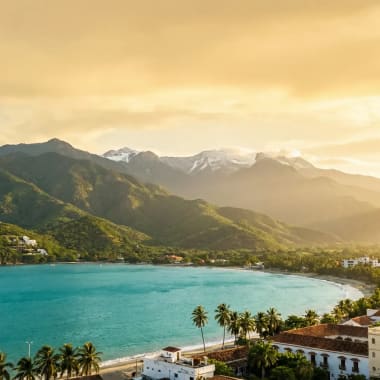
This image was generated with AI.
This image was generated with AI.