

This image was generated with AI.
Corcovado Osa Peninsula
The most biologically intense place on Earth — honestly planned
The most biologically intense place on Earth — honestly planned
"The most biologically intense place on Earth" — that's how National Geographic described the Osa Peninsula. 2.5 percent of the world's biodiversity on a thousandth of a percent of the planet's surface, all four of Costa Rica's monkey species in a single park, one of the last stable jaguar populations in Central America: Corcovado is wildlife in its most concentrated form — and, with the mandatory-guide rule in place since 2014, also a place where conservation works.

Best Time to Visit
December to April
Why Corcovado & Osa?
There are rainforests you visit because they're famous. And then there's Corcovado. When Andrew Evans wrote about the Osa Peninsula for National Geographic, he found a phrase everyone has quoted ever since: "the most biologically intense place on Earth." It's not a marketing superlative — it's the best possible shorthand for a number that needs a moment to sink in.
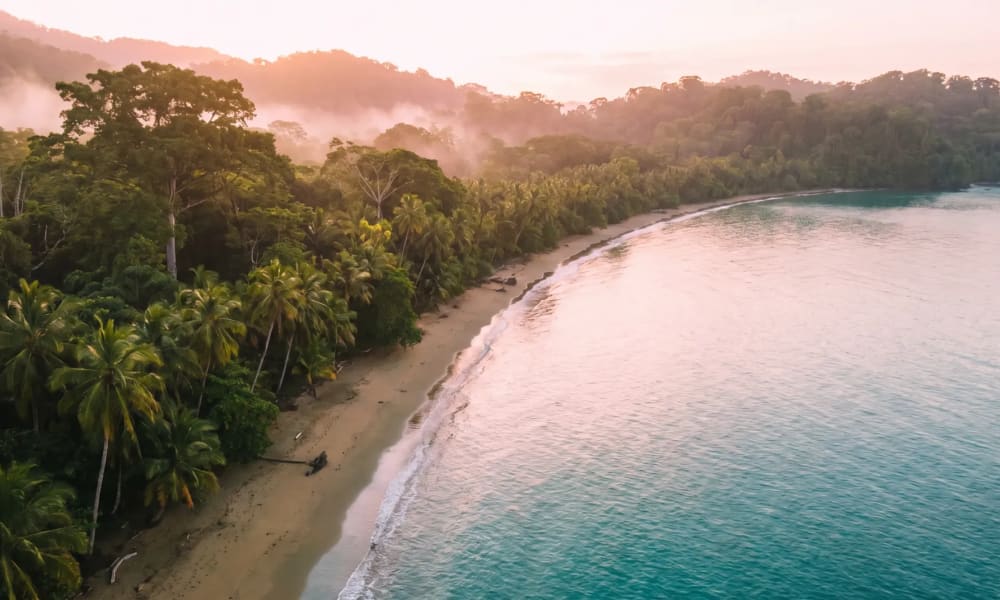
On the Osa Peninsula, 2.5 percent of the world's biodiversity is concentrated. On an area that makes up less than 0.001 percent of the planet's surface. Within that peninsula sits Corcovado National Park: 424 square kilometers, about a third of the Osa, declared a protected area in 1975. Today it's considered the last sufficiently large piece of primary Pacific lowland rainforest in Central America.
The numbers are striking, but they tell only half the story. 140 mammal species live here — 10 percent of all the mammals on the American continent on 0.004 percent of its surface. Add 370 to 375 bird species, 117 reptiles and amphibians, 40 freshwater fish, around 500 tree species, and more than 6,000 insect species, some of them not yet classified. Standing on Sirena's airstrip before sunrise feels like an acoustic gesamtkunstwerk: howler monkeys high in the canopy, macaws on their way to the coast, tapirs stepping out of the mist.
That this park exists at all is a small story in itself. In 1975, an international logging operation was about to start on the Osa Peninsula. Conservation pioneer Álvaro Ugalde and a group of researchers convinced President Daniel Oduber to turn the planned logging zone into a national park instead. About 1,000 gold prospectors and settlers had to be relocated. To this day, SINAC, Costa Rica's park authority, works against illegal gold mining — in the first quarter of 2025 alone, there were 95 protection operations in Corcovado, with illegally extracted resources worth around $42,674 confiscated. The park isn't a historical artifact. It's an actively defended piece of wilderness.
Corcovado National Park — the four ranger stations
Corcovado has no single "main entrance." The park is accessed through four official ranger stations, each with its own character, its own approach, and its own logic for your trip.
Sirena lies in the heart of the park — and isn't reachable by road. Either by boat (one to one-and-a-half hours from Drake Bay, two hours from Puerto Jiménez), on foot (six to seven hours from La Leona, eight to nine from Los Patos), or by small plane onto the historic airstrip. Overnight stays happen in simple shared dormitories: bunk beds with mattress and mosquito net, three cold showers, solar power from 5:30 am to 8:30 pm, no cell signal, maximum 30 to 40 guests at a time. On Tuesdays and Wednesdays, the station often closes; in October, it closes entirely — deliberate decisions in favor of the wildlife.
La Leona is the southern entrance, near the village of Carate. The simplest station from Puerto Jiménez: collective taxi to Carate, then a 45-minute walk along the beach. Little infrastructure, but the classic starting point for the coastal hike to Sirena — 16.5 kilometers along beaches, river mouths, and primary forest.
Los Patos is the northern inland entrance, reachable only by 4WD taxi from La Palma. The toughest standard route starts here: 20 kilometers through primary forest to Sirena, with multiple river crossings, eight to nine hours of walking time, and at times tricky in the rainy season. For experienced trekkers, Los Patos is the king's road — wildlife density in the inland forest runs higher than along the coast.
San Pedrillo is the northwest coast station, just 20 minutes by boat from Drake Bay. A waterfall trail leads to a natural pool for swimming; a coastal path opens up views over the Pacific bays. For day trips out of Drake Bay, San Pedrillo is the clear recommendation: less crowded than Sirena, family-friendly, with snorkeling options along the coast.
A fifth station, El Tigre, sits outside the core park in the buffer zone and is sometimes offered by guides as an alternative — but it isn't a substitute for the actual park routes.
Insider tip: Sirena's airstrip is the most productive spot for tapir sightings. Get up before 5:30 am and wait on the grass strip — the animals graze regularly along its edges at dawn. The first 90 minutes after sunrise are the golden window, before the boat tours from Drake Bay arrive. Only overnight guests get this advantage.
Wildlife — what you'll actually see
Corcovado is a place where sighting promises slip easily into marketing prose. We prefer to be specific. The figures below are based on data from experienced lodge guides and published wildlife data — they're orientation, not guarantee.
| Animal | Realistic sighting probability |
|---|---|
| Scarlet macaw | ~100% (multiple times daily, in pairs) |
| All four monkey species (with overnight stay) | 80–90% |
| Baird's tapir | 60–70% (Sirena, with experienced guide) |
| Humpback whale (August–October, off Drake Bay) | 60–80% seasonally |
| Sea turtles (August–October) | high on night beaches |
| Jaguar | ~5% (tracks, by contrast, almost certain) |
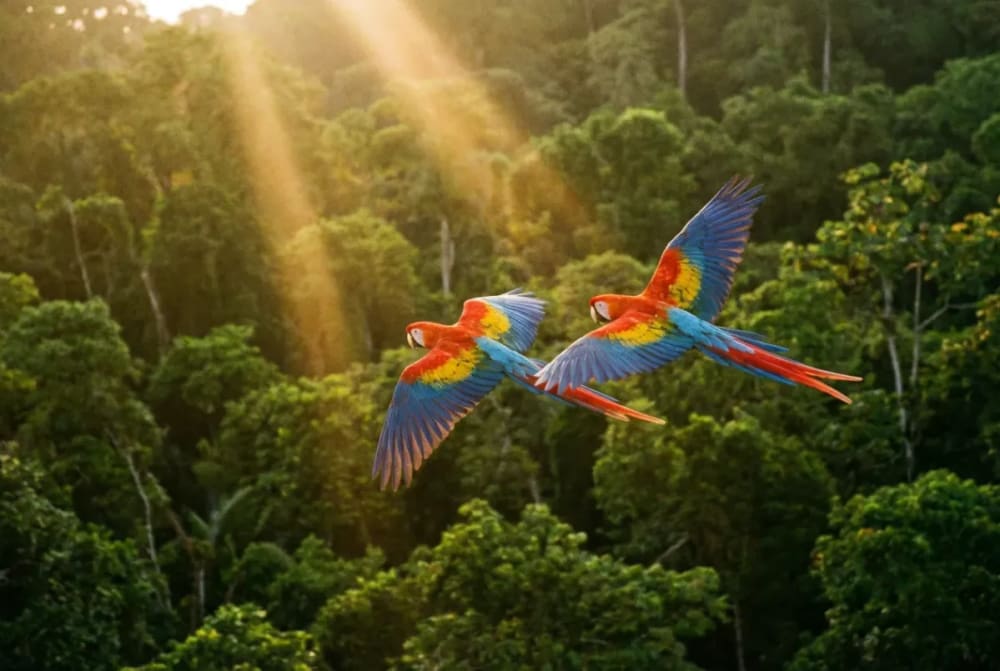
The Osa Peninsula is home to Costa Rica's largest scarlet macaw population — around 800 to 1,200 birds. In the dry season they fly in pairs over the coastal stretches of La Leona and Sirena; if you spend two days there and don't see a macaw, you've had real bad luck.
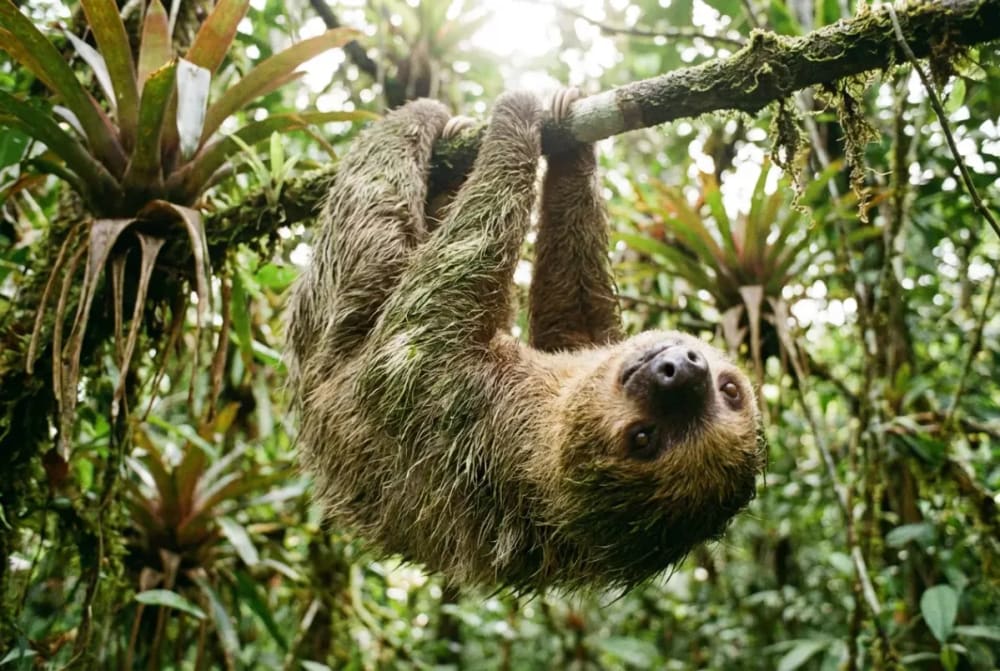
Corcovado is also the only park in the country where all four of Costa Rica's monkey species are present: the white-faced capuchin (curious, often in groups around lodges), the mantled howler monkey (heard before seen — its call carries for kilometers), the Geoffroy's spider monkey (endangered, dependent on intact primary forest), and the Central American squirrel monkey, whose entire global range covers only the southern Pacific coast of Costa Rica and adjacent parts of Panama. For monkey lovers, Corcovado is essentially without competition.
The Baird's tapir is Costa Rica's largest land mammal, weighing up to 300 kilograms, and evolutionarily nearly unchanged for 35 million years. Corcovado has the country's highest tapir density. If you stay a night at Sirena and walk the airstrip or the Río Sirena trail at dawn or dusk, you have a realistic 60 to 70 percent chance of an encounter.
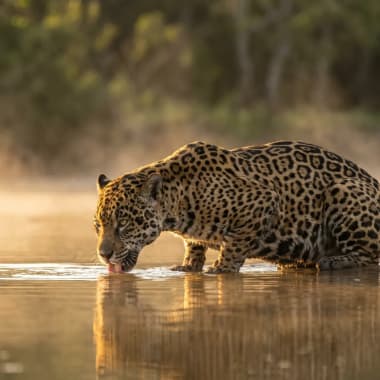
And the jaguar? Honestly: if you're traveling to Costa Rica to see a jaguar, go to the Pantanal. Corcovado does have the country's highest jaguar density and probably Central America's — camera-trap studies between 2015 and 2021 show a stable to growing population of 125 to 180 animals — but the cats are mostly nocturnal and very shy. Realistic sighting odds: 5 percent. What you will almost certainly see: fresh paw prints along the riverbank and in the wet sand. That, too, is Corcovado.
Add to that white-lipped peccaries (which, as guides like to say, you smell before you see — herds of 50 to 300 move through the understory), pumas (somewhat more common than jaguars), king vultures, toucans, more than 20 hummingbird species, crocodiles and bull sharks at the mouth of the Río Sirena, and — from August to October — Southern Hemisphere humpback whales off the coast of Drake Bay.
Drake Bay vs. Puerto Jiménez
The first strategic decision of your trip is the choice of base. Both places give access to Corcovado, but the experiences differ noticeably.
Drake Bay (Bahía Drake) is reachable only by boat from Sierpe (an hour and a half through mangroves) or by small plane. There's no road connection. The mood follows: secluded, premium-oriented, noticeably quieter. Accommodations range from eco-luxury lodges to houses like La Paloma, Aguila de Osa, or Copa de Arbol — prices typically between $150 and over $1,000 per night. Boat access to Sirena (one hour) and San Pedrillo (20 minutes) is part of the standard program, and the offshore Caño Island is one of the best snorkeling spots on the Pacific coast. For couples, honeymoons, and travelers who value quiet, Drake Bay is the first choice.
Puerto Jiménez (PJM) is the largest town on the peninsula, reachable by road (six to eight hours from San José) and by air. Banks, supermarkets, a wide price range from around $47 to eco-luxury. Three walk-in entrances to the park — via La Leona, Los Patos, and by boat directly to Sirena. The Golfo Dulce in front of town offers kayaking, dolphin watching, and mangrove tours. For multi-day treks, families, solo travelers, and anyone who values flexibility, Puerto Jiménez is the better base.
Our recommendation: if you have three to four days and want Corcovado as a concentrated wildlife experience, head to Drake Bay. If you're planning five to seven days and want to attempt a multi-day trek into the heart of the park, start in Puerto Jiménez. And if you can do both, combine — arrive via Sierpe to Drake Bay, trek through the park, and depart from Puerto Jiménez.
Day tour vs. multi-day trek
The second important decision: how deep into the park do you want to go? There are three realistic formats, and each produces a different trip.
The day tour starts in the morning by boat, takes you to Sirena or San Pedrillo for about six hours, and has you back at the lodge by evening. Prices from $110 to $160 per person, including guide, park fee, transfer, and meals. The catch: the boat groups typically arrive around 9:00 or 10:00 am — exactly when many animals have already retreated into the shade. For a first impression it works well; for serious wildlife watching, less so.
The overnight option (one or two nights at Sirena) is our standard for wildlife-focused guests. Prices from about $375 per person for one night, around $582 to $800 for three days. The difference is dramatic: you get the most productive hour just after sunrise, the night walk (the only realistic chance for nocturnal species), and the late-afternoon hours when day tourists are already back on the boat.
The multi-day trek (three to five days, La Leona → Sirena → Los Patos or in reverse) is the maximum. Physically demanding — several guides compare the load to a half marathon a day in the jungle — but the experience has no equal. River crossings, coastal stretches at low tide, primary-forest passages on narrow trails. Recommended from age 8 with good fitness.
Insider tip: the "boat in — hike out" variant is considered the best balance among experienced guides. Boat in to Sirena (no exhausting approach, maximum time in the park), two nights at the station, then the spectacular coastal hike back to La Leona on foot. You see the park from both water and land sides without committing to two long trek days.
Best time to visit
The dry season from December to April is the classic recommendation: stable trails, low river crossings, ten to eleven hours of sunshine a day, excellent conditions for hiking and observation. North American migratory birds are present, many species show breeding plumage. At the same time, it's high season: prices 20 to 40 percent above the annual average, Sirena beds often need to be reserved eight to twelve weeks in advance.
The green season from May to November isn't the worse time — it's the other time. The forest stands in deep green, prices are noticeably lower, tourist density is reduced. In July comes the Veranillo de San Juan, about two weeks of sunny weather in the middle of the rainy season. August and September are the best months for humpback whales off Drake Bay and for sea turtles on the park's beaches. September and October are statistically also the best jaguar months.
October is the exception: the rainiest month of the year. Sirena and San Pedrillo are often closed entirely. If you want flexibility, avoid this month.
May and November are quiet favorites among many guides: shoulder season with moderate prices, few visitors, rain that tends to fall in the afternoon rather than all day. For travelers who appreciate quiet and can live with slightly less predictable weather, this is the best compromise.
Getting there & logistics
By plane: the two domestic airlines SANSA (flysansa.com) and Skyway (skywaycr.com) connect San José (SJO) daily with Drake Bay (DRK) and Puerto Jiménez (PJM). Flight time is around 50 minutes — versus six to eight hours by road, an easy call. Current prices (2025/2026): SANSA SJO–DRK one-way approx. $162–253, SJO–PJM approx. $128–200. Skyway is the second option with smaller Cessnas; Carate is also served directly.
By boat: the classic route to Drake Bay runs via Sierpe. Bus or shuttle from San José to Sierpe (five to six hours), then an hour and a half through the mangroves — the last 30 minutes on open sea. The mangrove ride is itself a wildlife experience: crocodiles, monkeys, seabirds. Around $40 to $60 per person.
By car: from San José along the Carretera Interamericana Sur to San Isidro de El General, then on to Puerto Jiménez. Around six to eight hours, the last stretch on dirt road. In the rainy season, a 4WD is mandatory, including for the road to Carate.
Golfito–Puerto Jiménez ferry: about $3, an hour and a half, relevant for travelers coming from Panama via Golfito.
Insider tip: SANSA and Skyway fly small planes with strict luggage limits: 10 to 12 kilograms checked, 5 kilograms carry-on. Excess fees can double the ticket price. We recommend leaving a suitcase at the hotel in San José and flying to the Osa with only a daypack or trekking pack. And: Drake Bay has no ATM. Withdraw cash in San José or Puerto Jiménez.
Traveling sustainably
Corcovado is one of the few national parks in the world where conservation visibly works — and where every visitor becomes part of the system. Since 2014, guides are mandatory: no one enters any of the ranger stations without an ICT-certified, SINAC-registered guide. What sounds like a restriction is a gain on two counts. First: a good guide reads a snapped twig or a rustle in the undergrowth in ways you'd miss alone. Second: the rule caps visitor numbers and channels movement in the park — without it, Sirena would have been overrun long ago.
Capacity limits are strict: a maximum of 30 to 40 overnight guests at Sirena, often closed Mondays and Tuesdays. Bookings run exclusively through the SINAC online system (reservaciones.sinac.go.cr) and through ADI Corcovado for accommodation — a serious operator handles both.
Costa Rica's globally known CST certificate (Certificación de Sostenibilidad Turística) has existed for lodges and tour operators since 1997 and is GSTC-recognized. We work exclusively with CST-certified partners on the Osa Peninsula. Add to that measurable conservation activity: in the first quarter of 2025 alone, SINAC carried out 95 protection operations in Corcovado, with illegally extracted resources worth around $42,674 confiscated. The pressure on the park — poaching, illegal gold mining, logging at the edges — is real. But there's an active response, and tourism is part of how it's funded.
What that means for you in practice: please no plastic bottles in the park (water refill stations are available), no outside food brought into the stations, no provoking direct encounters with wildlife — especially do not feed the very tame coatis around Sirena. Leave No Trace is the rule here.
Plan Corcovado individually
An Osa trip lives in the details: which lodge, which guide, which station, which week of the season, how it fits into the wider Costa Rica route. We know the peninsula firsthand, work with CST-certified partners in Drake Bay and Puerto Jiménez, handle reliable park reservations through SINAC and ADI Corcovado, and combine Corcovado sensibly with other regions — for example the Arenal Volcano in the north, the Monteverde cloud forest , or the Caribbean coast in the east.
Particularly popular are these routes:
- Costa Rica Nature Highlights — Arenal, Monteverde, and Corcovado in two weeks
- Costa Rica Family Trip — kid-friendly version with shorter legs
For personal advice and a tailor-made proposal, contact our Costa Rica team — we usually respond within 24 hours.
To book a trip or for more information, contact us. We'll help you plan and guide you through your upcoming adventure!
Frequently Asked Questions
Yes — if you're passionate about nature. Corcovado isn't cheap: flight, guide, park fee, and accommodation add up quickly to $300 to $500 per day per person. In return, you get an experience you won't find at this density anywhere else in Central America: practically guaranteed scarlet macaw sightings, a realistic chance at a tapir, all four monkey species in one park, undisturbed primary forest without roads. If you're looking at Costa Rica only as a mix of zip line and volcano, this isn't your park. If you want wildlife in real depth, the Osa Peninsula is your place.
Minimum three days: one travel day, one Corcovado day tour, one return day. That's the absolute compromise. Our honest recommendation: five to seven days — two nights in Drake Bay or Puerto Jiménez to settle in, one to two nights at Sirena itself, the rest for add-ons like Caño Island snorkeling, mangrove tours in the Golfo Dulce, or a coastal hike out via La Leona. If you have three weeks in Costa Rica, give the Osa at least five of them.
Sirena is the wildlife decision: central in the park, all four monkey species likely, tapirs, the river mouth with crocodiles and bull sharks, overnight stays possible. More demanding logistically, more impressive in experience. San Pedrillo is the day-trip decision: only 20 minutes by boat from Drake Bay, waterfall trail with a swimming pool, coastal snorkeling, less crowded. For families with kids under ten or for a softer first taste, San Pedrillo is the better choice. If you want the full Corcovado experience, you have to go to Sirena.
Probably not — and that's the honest answer. Realistic odds of a jaguar sighting are 5 percent, even with an experienced guide and several nights at Sirena. Corcovado has one of the highest jaguar densities in Central America (an estimated 125 to 180 animals in the park area), but the cats are nocturnal and shy. What you'll very likely see: fresh jaguar paw prints along the riverbanks and in the sand. If you're seriously planning jaguar photography, head to the Brazilian Pantanal — sighting rates there run 90 to 99 percent. Corcovado remains the park of biodiversity, not of any single big cat.
Yes, since 2014, without exception. Every visitor must enter the park with an ICT-certified guide who's registered with SINAC for the specific station. Unaccompanied entry isn't possible and is consistently enforced. Guide fees run $150 to $200 per person per day and are already included in nearly all packages. The rule serves two functions: safety (after several incidents in the early 2010s) and visitor management. From experience: a good guide doubles your wildlife sightings — you'd hire one anyway.
For a Corcovado-only trip, we clearly recommend flying. Six to eight hours of driving versus a 50-minute flight is hard to justify on a four-day trip. SANSA and Skyway offer daily connections to Drake Bay and Puerto Jiménez, prices from around $128 one-way. A rental car only makes sense if the Osa is part of a longer Costa Rica route and you're already in a 4WD anyway — in that case you can drive to Puerto Jiménez, leave the car at the lodge, and continue by boat to Sirena. For Drake Bay, a car is pointless: the road ends in Rincón, and the rest is by boat or plane only.