

Lima
Gastronomy World Capital on the Pacific
Gastronomy World Capital on the Pacific
Lima — Gastronomy World Capital of Latin America, UNESCO World Heritage since 1988 and the perfect start to any trip to Peru. At 154 meters above sea level without acclimatization stress.

Best time to travel
December to April
Why Lima is more than just a stopover
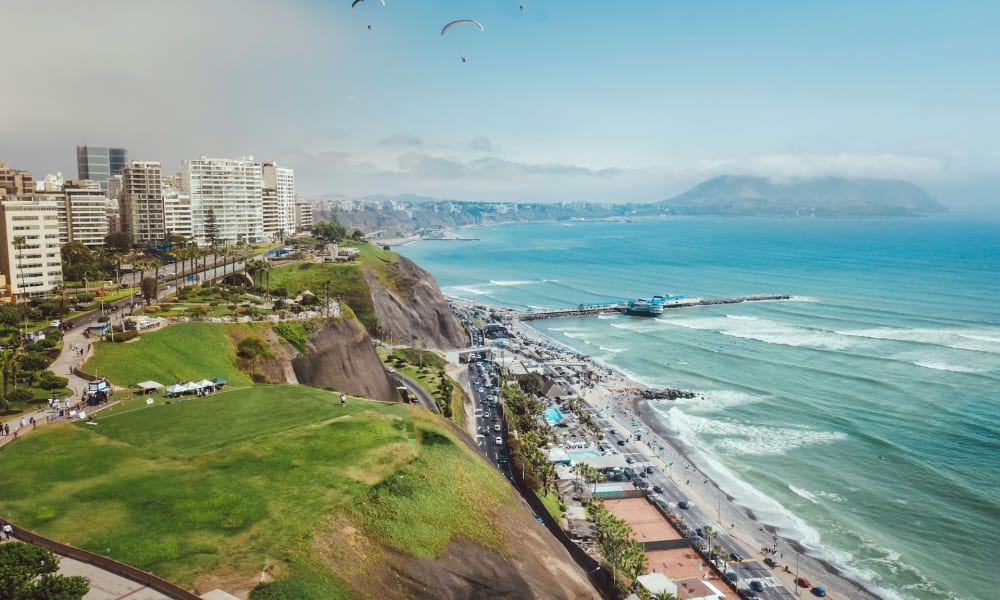
Over the cliffs of Miraflores, paragliders glide silently through golden evening light. 80 meters below them, the Pacific breaks foamily on the coast, while joggers and lovers catch the last rays of sunshine on the promenade. A few kilometers south, in the artist district of Barranco, Mitsuharu Tsumura serves Nikkei cuisine at Maido — named the best in the world in 2025 — which combines Japanese precision with Peruvian soul. And in the Centro Histórico, over a thousand colonial buildings tell the story of a city that was the political center of an entire continent for almost 300 years.
Most travelers to Peru treat Lima as a transit station — arrive, transfer, continue to Cusco. What they miss out on is remarkable: the gastronomy world capital of Latin America, honored at the World Culinary Awards 2025. A UNESCO World Heritage site dating back to the 16th century. A metropole of ten million that has developed an identity between desert and ocean, unlike anywhere else. Lonely Planet named Peru the number one travel destination for 2026 — with Lima as the gastronomic centerpiece of the argument.
Lima, Peru is located at just 154 meters above sea level — no altitude sickness , no acclimatization stress. Just arrive and let the city wash over you. Anyone planning two to three days before heading further into the Andes starts their Peru round trip with perhaps the most surprising chapter of the entire journey. More on this in ourpersonal experience report on altitude sickness in Peru.
Lima's neighborhoods — Miraflores, Barranco, and Centro Histórico
Lima is a city with many faces. The three districts that matter to travelers could hardly be more different: Miraflores with its Pacific cliffs and well-kept parks, the creative Barranco with its colorful facades and bars, and the historic Centro with colonial splendor and hidden catacombs. Each district deserves time — and each tells a different story of this fascinating city.
Miraflores — Cliffs, parks, and upscale city life
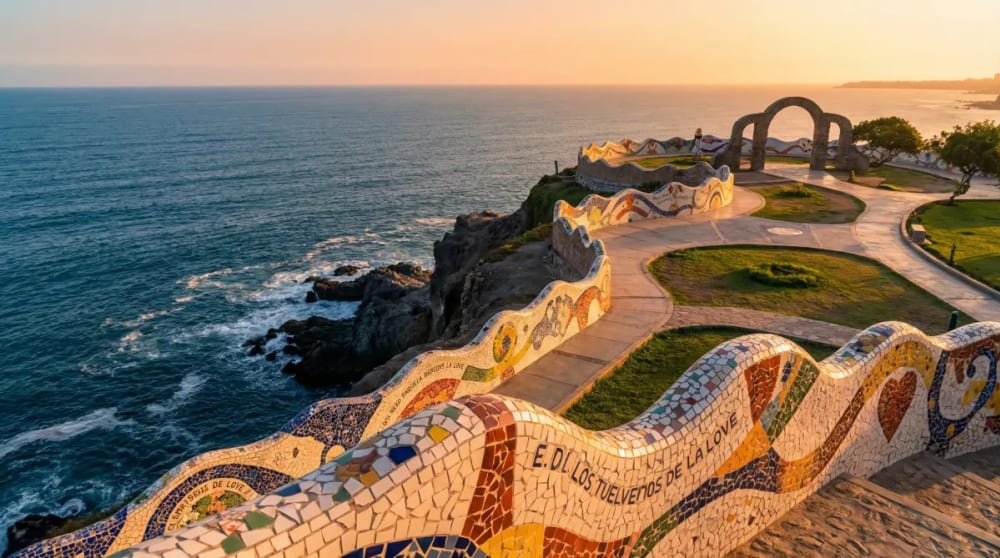
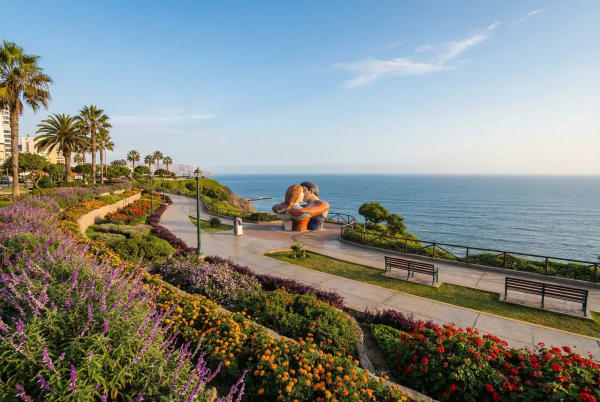
When you stand at the Malecón in Lima Miraflores, you immediately understand why most travelers choose to stay in this neighborhood. Four kilometers of coastal promenade on 80-meter-high cliffs above the Pacific, lined with well-kept parks, joggers, and paragliding launch sites — plus a light that bathes the entire coastline in warm gold in the evening. At Parque del Amor, the oversized kissing sculptureEl Beso by Victor Delfín, with its Gaudí-inspired mosaics, forms the most romantic viewpoint in the city.
In the heart of the neighborhood lies Parque Kennedy, famous for its dozens of semi-wild cats, surrounded by cafés and art dealers. And right amidst modern apartment blocks rises a surprise: Huaca Pucllana, a pre-Incan adobe brick pyramid from the Lima culture (approx. 200–700 A.D.). In the evening, the pyramid is illuminated — a surreal sight, this 1,800-year-old structure in the middle of the modern metropolis. The attached gourmet restaurant overlooking the illuminated ruins is one of the most atmospheric dining spots in Lima. 43 archaeological monuments exist within the city — Huaca Pucllana is the most accessible and impressive.
For adrenaline seekers, Lima Peru offers paragliding from the Malecón: a 10- to 15-minute tandem flight over the cliffs, where you can experience Miraflores and the endless Pacific from a bird's-eye view. 60–85 USD, best conditions from December to April, ideal start time in the early afternoon when the updraft is strongest.
Huaca Pucllana
- Admission — 12 PEN per day (3.50 USD), 15 PEN at night (4.50 USD)
- Opening hours — Wed–Mon 09:00–17:00, Night tours Wed–Sun 19:00–22:00
- Location — Calle General Borgoño, Miraflores
- Tip — Come in the evening: illuminated pyramid + restaurant with a view
Barranco — Artists' district, nightlife, and bohemia
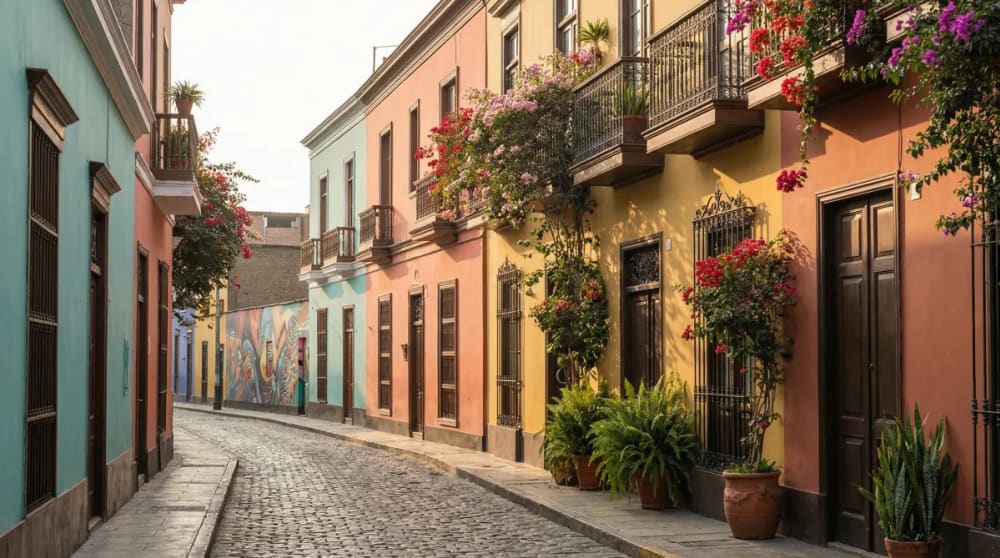
Five kilometers south of Miraflores begins another world. Barranco Lima was the spa resort of theLimeño upper class in the late 19th century — today it is the creative epicenter of the ten-million metropolis. Colorful colonial villas host galleries and studios, while the bars around the Plaza Municipal showcase the best nightlife in the city. And above it all wafts the scent of salty air, freshly brewed coffee, and the sweet smoke of anticucho grills drifting through the streets.
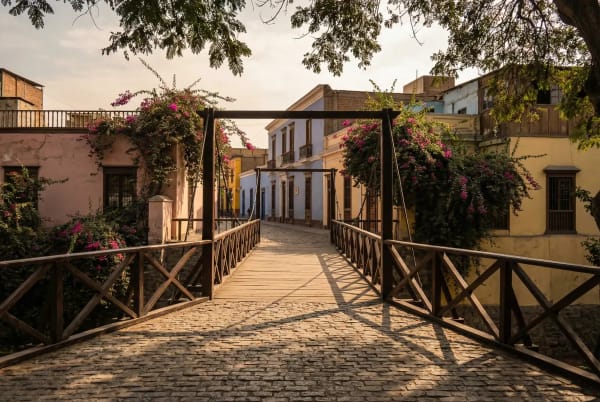
The romantic landmark is the Puente de los Suspiros — the Bridge of Sighs. A wooden pedestrian bridge over the Quebrada, surrounded by a beautiful legend: Whoever crosses it with closed eyes and makes a wish has a chance at love. Whether it's true, you will have to find out for yourself.
The Ayahuasca Bar (Av. 28 de Julio 310) is one of the most spectacular places in Lima — not for ayahuasca, but an eclectic experience over several floors of a mansion from 1875, with art installations and changing bar concepts.Lady Bee, Peru's best bar (ranked 13th in the World's 50 Best Bars 2025 and awarded the Michter's Hospitality Award), creates cocktails from Amazonian fruits, Andean potatoes, and Pisco — served by bartenders Alonso Palomino and Gabriela León, who work with local farmers and fishermen. For a more authentic experience: La Noche de Barranco brings live jazz, salsa, and traditionalCriolla music under one roof.
The MATE Museum (Museo Mario Testino, admission 10 Sol) showcases the works of the world-renowned Peruvian fashion photographer in a restored colonial villa. In Dedalo Arte y Artesanía, you will find curated Peruvian handicrafts that stand out clearly from the mass-produced goods of tourist markets.
And last but not least, the culinary epicenter of Lima is located in Barranco: Central and Kjolle — the two world-famous restaurants by Virgilio Martínez and Pía León — reside at Calle Pedro de Osma 301. A neighborhood where art, gastronomy, and nightlife merge in close quarters.
Insider Tip
Sunday morning in Barranco is a secret tip: hardly any tourists, locals having breakfast, the Parque Municipal slowly awakens to life. The Bon Vivant bakery or Café Bisetti are excellent starting points — order a coffee, watch the hustle and bustle, and let yourself be swept away by Barranco's rhythm.
Centro Histórico — UNESCO World Heritage and colonial architecture
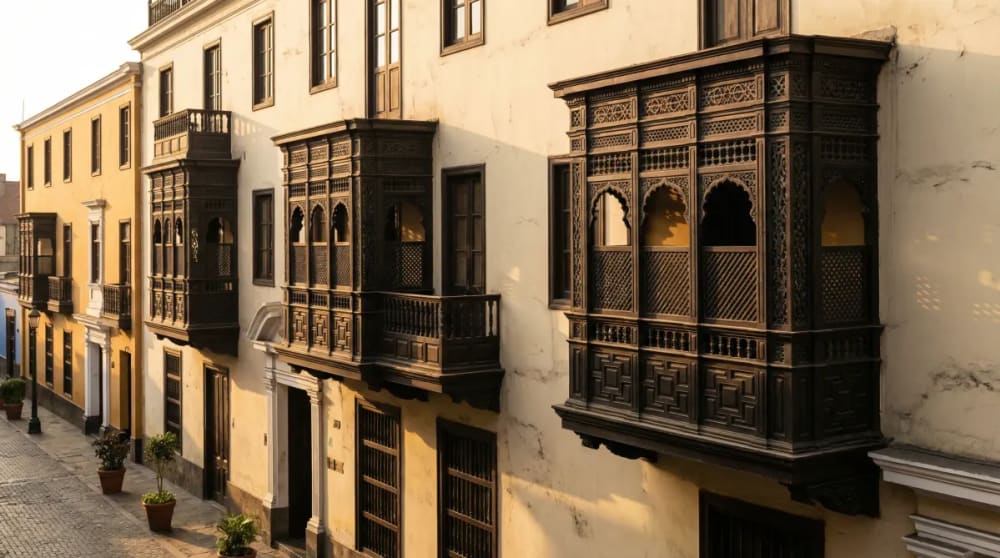
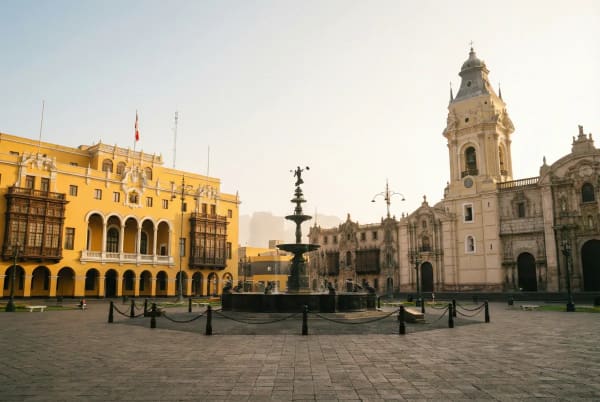
The Centro Histórico is the heart of old Lima — declared a World Heritage site by UNESCO in 1988, with over 1,022 historical buildings in close proximity. When the Spanish conquistador Francisco Pizarro founded theCiudad de los Reyes (City of Kings) on January 18, 1535, he laid the foundation for the most powerful center of Spanish colonial rule in South America. For almost 300 years, from 1535 to 1821, Lima was the seat of the Viceroyalty of Peru — the political, economic, and cultural capital of an entire continent.
You can still feel this wealth today as you walk across the Plaza Mayor: the cathedral with Pizarro's tomb, the archbishop's palace with its famous Mudéjar wooden balconies, the government palace with the daily changing of the guard at noon. It is a splendor that tells of power — and of a history that reaches far beyond Peru.
However, the real highlight lies beneath the ground. Under the San Francisco Monastery lie catacombs where the remains of up to 70,000 colonial-era individuals are artistically arranged — skulls and bones geometrically organized in underground vaults. The monastery's library with over 25,000 volumes is one of the oldest in South America. In the nearby Santo Domingo Monastery rest the graves of the first two saints of the Americas — San Martín de Porres and Santa Rosa de Lima.
San Francisco Monastery and Catacombs
- Admission — 15 PEN (approx. 4.50 USD), children 3 PEN
- Opening hours — Daily 09:00–20:00, tours every 30 minutes.
- Location — Jirón Lampa, Plaza San Francisco, Centro Histórico
- Tip — Come in the morning from 9 to 11 a.m. — fewer crowds, best light
Safety Notice Centro Histórico
The Centro Histórico is safe and lively during the day. After dark, we recommend taking Uber directly to the sights and not walking alone through the side streets. Guided tours offer a safe and informative alternative — and reveal details that are easy to overlook on your own.
Let us put together your Lima program — we know each of these districts personally and understand which order and times of day make the difference. Schedule a consultation .
Lima — the gastronomy world capital
No other place on earth combines this density of top restaurants with such vibrant street food. Four restaurants from Lima are listed in the World's 50 Best 2025; the World Culinary Awards 2025 crowned Lima as the best culinary city in Latin America, and Peru won the World Travel Award for the world's best culinary travel destination — for the twelfth consecutive time. The foundation of this culinary revolution? 3,000 varieties of potatoes, over 650 types of chili, and 90 different varieties of corn — a biodiversity unmatched worldwide.
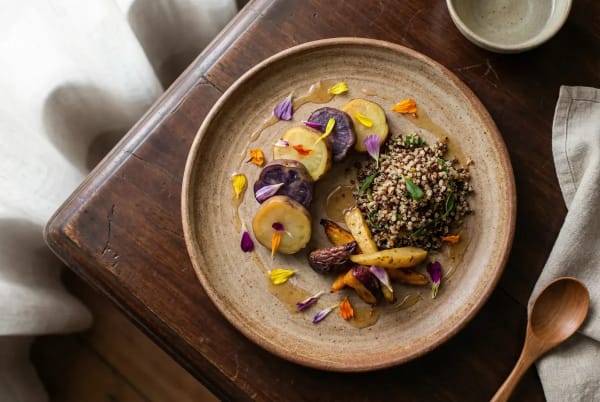
Three fusion cuisines have shaped Lima and given thePeruvian cuisine its distinctive character: Novo-Andina (the creative reinterpretation of Andean ingredients), Nikkei (Japanese-Peruvian fusion, arising from the Japanese immigration wave starting in 1889), and Chifa (Chinese-Peruvian, since the mid-19th century). More on this in our article Lima — the underestimated gastronomy world capital.
Maido, Central, Astrid & Gastón — world-class in Lima
Maido (Miraflores, chef Mitsuharu “Micha" Tsumura) was voted the best restaurant in the world in 2025 — Nikkei cuisine at the highest level. Tsumura's family immigrated from Japan to Peru in 1889; his tasting menu is a journey through two cultures where Japanese precision meets Peruvian flavors. About 300 USD per person without drinks.
Central (Barranco, chef Virgilio Martínez) was number one in the world in 2023 and is today on the “Best of the Best" Honor Roll. The concept Altitudes is unique: Each of the 16 to 17 courses represents a Peruvian ecosystem — from minus 10 meters below sea level to 4,200 meters in the high Andes. Exclusively Peruvian ingredients, many sourced from remote communities. Tasting menu around 250–280 USD per person.
Astrid & Gastón (Miraflores, Gastón Acurio and Astrid Gutsche) is the restaurant where it all began — founded in 1994, it is considered the birthplace of the Novo-Andina cuisine and a pioneer of Lima's rise to the gastronomy world capital. The house — the Casa Hacienda Moreyra, an 18th-century colonial palace — is worth a visit in its own right. Evening menu around 120–150 USD, cheaper lunch menu starting from about 80 USD.
Kjolle (Barranco, Pía León — world's best chef 2021) in the same building as Central offers a more accessible experience with its own distinctive style and is often easier to book. Tasting menu around 100–130 USD.
Insider Tip
Reservations for Maido and Central should be made 3–6 months in advance through the official websites — both are often fully booked weeks ahead. Kjolle tends to have more availability and offers a similarly high-quality experience. If you're planning last minute: Contact us — as a tour operator, we sometimes have access to exclusive reservations.
Ceviche — Peru's national dish in its hometown
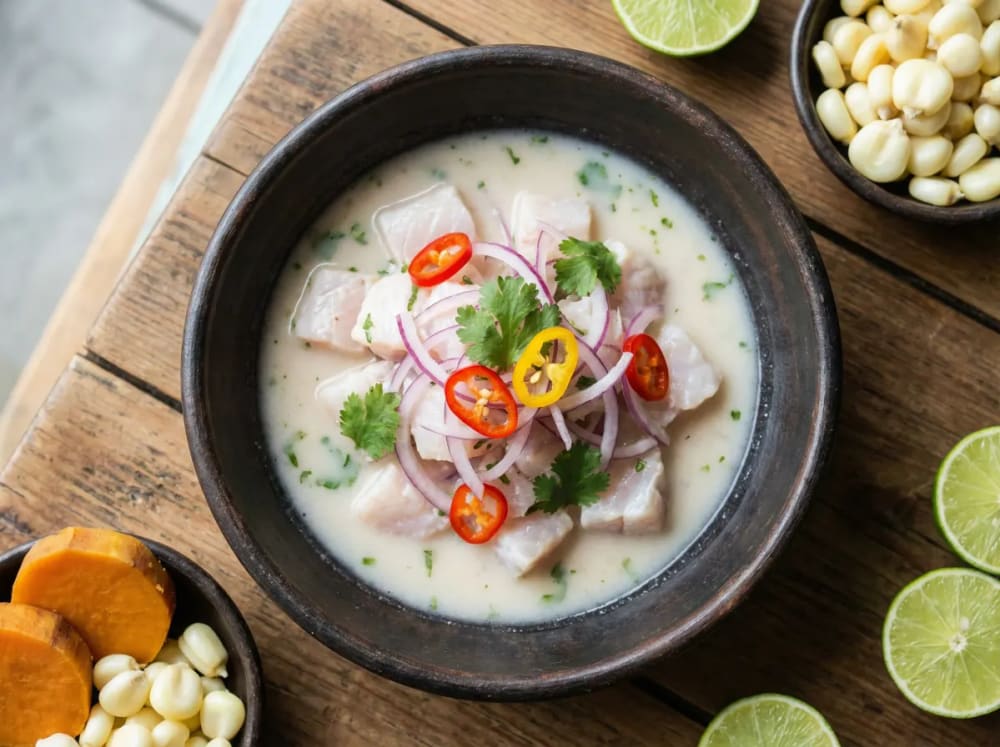
Lima Peru Ceviche is much more than just a dish — it is cultural heritage, officially recognized as such since 2004. In Lima, ceviche reaches its highest form: fresh fish marinated in lime juice (the famous Leche de Tigre — tiger milk), refined with ají amarillo, red onions, and coriander. One bite, and you understand why Peruvians speak of their national dish with almost religious devotion.
The most important rule that distinguishes connoisseurs from tourists: Ceviche is eaten in Lima at lunchtime, never in the evening. Fresh fish is delivered in the morning, the best cevicherías have lunchtime opening hours only — and you should be there by 1 PM at the latest.
La Mar Cebichería (Miraflores, Gastón Acurio) is considered one of the best cevicherías in the world — no reservations possible, wait time 20–45 minutes during lunchtime, but it is worth it. Approximately 30–50 USD per person.El Mercado (Rafael Osterling, Miraflores) is the slightly quieter alternative with similarly high quality. For true connoisseurs: Chez Wong in La Victoria — no sign, no website, reservations only by phone. Javier Wong is regarded by Lima's chefs as the undisputed master of ceviche.
Pisco Sour — History and Best Bars
The Pisco Sour is Peru's national cocktail — and it was invented here in Lima. Pisco (grape brandy), lime juice, sugar syrup, egg white, and a few drops of Angostura bitters, shaken to a creamy, foamy cocktail that can be addictive. In the 1920s, bartender Mario Bruiget refined the recipe at Morris' Bar, which is now replicated worldwide.
The most atmospheric Pisco Sour in the city can be enjoyed at the bar of the Gran Hotel Bolívar at Plaza San Martín — there, in the historical rotunda, the cocktail is said to have originated in its modern form. For innovative Pisco creations, we recommend Lady Bee in Barranco (ranked 13th in the World's 50 Best Bars 2025) — cocktails made from Amazonian fruits and Andean products, served in one of the best bars in the world.
Street Food and Local Markets
Insider Tip
Mercado de Surquillo — the most authentic market visit in Lima, away from the tourist crowds. Here, Lima's top chefs buy their ingredients — including the teams from Central and Maido. Exotic fruits (Camu Camu, Lucuma, Aguaymanto), dozens of chili pepper varieties, fresh fish, quinoa in all colors. Ceviche stands starting at 3–5 USD. Open daily from 6:00 AM, it's best to arrive before 10 AM.
Anticuchos de la Tía Grimanesa (Huancavelica 147, Miraflores) has been a Lima institution for decades: grilled beef heart skewers, seasoned with Ají Panca and cumin, for 3–5 USD. The smell alone draws you across the street. Affordable Menu del día (three-course menu) is available at almost every restaurant at lunchtime for 15–35 PEN (4–9 USD) — even in upscale neighborhoods like Miraflores.
Two more dishes you should try in Lima: Lomo Saltado — stir-fried beef with fries, onions, and Ají Amarillo, a dish that fuses 19th-century Chinese immigration with Peruvian ingredients. And Causa — a cold potato cake with avocado and seafood that showcases the sheer variety of Peruvian potato culture on the plate.
Your Lima itinerary — two days
Day 1 — Miraflores and Centro Histórico
Day 2 — Barranco, Gastronomy, and Culture
Note: If you have a third day: day trip to Pachacamac (oldest archaeological site near Lima, 45 min drive, from 28 USD) or boat tour to the Islas Palomino for snorkeling with sea lions (50–60 USD from Callao, best time Dec-Feb). Alternatively: Callao Monumental — the street art project in the former port district with a guided tour through the historical Ronald Building.
Hotels in Lima — handpicked recommendations
Miraflores is the right choice for first-time visitors: safe, central, the Malecón at your doorstep, most restaurants and cafes within walking distance. Barranco is recommended for travelers seeking style and character — the area is rougher, more creative, and lies right next to Central and Kjolle. We know both neighborhoods and their hotels in Lima Peru from personal experience and are happy to advise you on which location best suits your travel style.
Atemporal Hotel
Tudor mansion with a design focus in Miraflores
From 180 USD / night
- Only 6 rooms
- Contemporary art
- Walking distance to the Malecón
- Miraflores
Hotel B
Lima's only Relais & Châteaux in Barranco
From 387 USD / night
- Relais & Châteaux
- 300+ artworks
- 20 suites
- Next to Central & Kjolle
Let's find the accommodation that suits your preferences together — we know these houses personally and can advise you on which rooms have the best views and which extras are worth it. Make an inquiry .
Good to know
Best travel time for Lima
Lima surprises with its climate: only 13 mm of precipitation per year makes the Peruvian capital one of the driest major cities in the world. December to April is summer — sunny, 25–28°C, five to seven hours of sunshine daily, perfect for the Malecón, paragliding, and evenings on Barranco's rooftops.
From May to November, the city is enveloped in the Garúa — a fine coastal mist that the cold Humboldt Current pushes to the coast. The sky is then permanently overcast, temperatures drop to 14–18°C, but it hardly rains. The good news: hotels are up to 40 percent cheaper in the Garúa season, the gastronomy remains top-notch year-round, and the museums and catacombs are weather-independent anyway.
Important for overall planning in Peru: Lima's summer coincides with the rainy season in Cusco and at Machu Picchu . If you want to experience both optimally, you have to make compromises. Our overview of the best travel time for Peru helps with planning.
Arrival and Airport Lima
Jorge Chávez Airport (LIM) is located 15 km north of the city center in the district of Callao. Since June 2025, the new terminal is in operation — three times larger than the old one, with 46 passenger bridges and a capacity of 40 million passengers per year. A visible sign that Peru is investing in its tourism infrastructure.
There are no direct connections from Frankfurt — typical layover points are Madrid (Iberia), Amsterdam (KLM), or Bogotá (LATAM), total travel time 14–17 hours. For more information on flights to Peru .
Transfer Airport Jorge Chávez → Miraflores Airport Jorge Chávez (LIM) → Miraflores / Barranco
Taxis at the airport
Only use the official taxi service at the counter in the arrivals area or order Uber/Cabify via the app. Never go with drivers who approach you in the terminal. Since the new terminal (June 2025), access is via Avenida Morales Duárez — plan for 15–30 minutes more travel time than indicated in older travel reports.
Safety in Lima
Miraflores, San Isidro, and Barranco are the safest neighborhoods in Lima — with their own security services, well-lit streets, and a strong police presence. Here, you can walk around during the day and in the evening without concern. The Foreign Office recommends heightened caution in the Centro Histórico (especially after dark) and parts of Callao.
The main risk for travelers is pickpocketing: do not carry valuables visibly, do not use smartphones openly, book taxis exclusively via app. Prefer ATMs in shopping centers like Larcomar in Miraflores — they are safer than street ATMs. Detailed information on safety in Peru.
Getting around in Lima
Uber and Cabify are the most comfortable and safest options for travelers — transparent, reliable, a ride within Miraflores and Barranco costs 3–4 USD. The Metropolitano (BRT express bus) connects Miraflores with the Centro Histórico in 25–35 minutes for about 1 USD — a rechargeable Tarjeta card is available at the stations. However, it can get crowded during rush hours. InDriver is a cheaper alternative where you negotiate the fare with the driver beforehand.
Costs at a glance
Prices as of March 2026. 1 EUR ≈ 3.9–4.1 PEN. 1 USD ≈ 3.7–3.9 PEN.
Lima as a starting point — discover more of Peru
After two to three days in Lima, the next chapter of your Peru journey begins. Lima is the central domestic flight hub of the country: you can reach Cusco and the Sacred Valley in 1.5 hours by short flight — from there, it's just a hop to Machu Picchu or to the Inca Trail and Salkantay Trek . Also, Arequipa (1.5 hours flight) as a gateway to the Colca Canyon and Lake Titicaca are easily accessible. If you are looking for the desert, you will find South America's only oasis in Huacachina — and Rainbow Mountain is one of the most spectacular day trips from Cusco.
Cusco & Sacred Valley — Inca capital at 3,400 m
Machu Picchu — The lost Inca city
Arequipa — White City at the Foot of Misti
Lake Titicaca — Highest navigable lake in the world
Our Peru Highlights — Lima, Cusco, Machu Picchu connects the three most important stations in a well-thought-out route. The Peru Culinary & Culture — Lima, Cusco is designed for connoisseurs who want to combine Lima's gastronomy with the cultural history of the Andes. More information on Travel costs and budget, Entry and visa as well as the Packing list for Latin America can be found in our Peru travel guides.
Still unsure which country in Latin America is right for you? Our Decision aid: Latin America — where to travel? helps with the choice. And for a personal insight into the country, read our Peru travel report: Inca & Rainbow Mountain.
To book a trip or for more information, contact us. We'll help you plan and guide you through your upcoming adventure!
Frequently asked questions
Two to three days are ideal: one day for Miraflores and the Historic Center (Malecón, Huaca Pucllana, Plaza Mayor, Catacombs), one day for Barranco, the Larco Museum, and the gastronomy scene. An optional third day is worth it for Pachacamac, the Palomino Islands, or an intense food day with a ceviche tour and market visit at Mercado de Surquillo.
In the tourist districts Miraflores, San Isidro, and Barranco, Lima is well navigable — these districts have their own security services, well-lit streets, and good infrastructure. The Historic Center is safe during the day, in the evening we recommend Uber instead of walking paths. General rule: do not carry valuables visibly, book taxis only via app, prefer ATMs in shopping centers.
Boutique hotels in Miraflores (e.g., Atemporal) start at around 180 USD per night. The renowned Hotel B in Barranco (Relais & Châteaux) ranges from 387 to 660 USD. Good mid-range hotels are available from 80 to 150 USD, budget accommodations in Miraflores start at 30 to 50 USD. Important: Foreign tourists are exempt from the 18% hotel tax (IVA) — present a passport and entry card.
Maido (ranked 1 on the World's 50 Best 2025, Nikkei cuisine by Mitsuharu Tsumura) is currently the best restaurant in the world. Central (Virgilio Martínez, number 1 in 2023) is on the Best of the Best Honour Roll. Astrid & Gastón is the birthplace of modern Peruvian cuisine. Kjolle (Pía León) offers a more accessible experience. Maido and Central should be reserved at least 3 to 6 months in advance.
Jorge Chávez Airport has a new terminal since June 2025. By Uber or Cabify, the ride to Miraflores takes 45 to 70 minutes and costs 15 to 18 USD — the safest option. Official taxis at the counter cost 22 to 39 USD. The Airport Express Bus runs hourly to Miraflores for 4 to 6 USD (07:00 AM to 10:00 PM). Important: Never go with drivers who approach you inside the terminal.
Lima is much more than a stopover. The city hosts the best restaurant in the world (Maido, 2025), a UNESCO World Heritage Site from the 16th century, spectacular Pacific cliffs, and the creative district of Barranco. Lonely Planet has chosen Peru as the number 1 travel destination for 2026 — with Lima's gastronomy as the main argument. At 154 meters above sea level, there are no acclimatization problems. Two to three days as an entry point into any Peru journey are well invested.
Miraflores is the tourist center: safe, upscale, with the Malecón right on the Pacific — ideal for first-time visitors and families. Barranco is the artist district: rougher, more creative, with the best nightlife and the most famous restaurants (Central, Kjolle, Lady Bee). In short: Miraflores for comfort and safety, Barranco for character and culinary closeness.
December to April: sunny, 25-28°C, ideal for outdoor activities, paragliding, and beach visits. May to November: the Garúa fog envelops the city (14-18°C), but it rarely rains — hotels are up to 40 percent cheaper. The gastronomy is top-notch year-round. Important: Lima's summer coincides with the rainy season in Cusco — this affects overall Peru planning.