


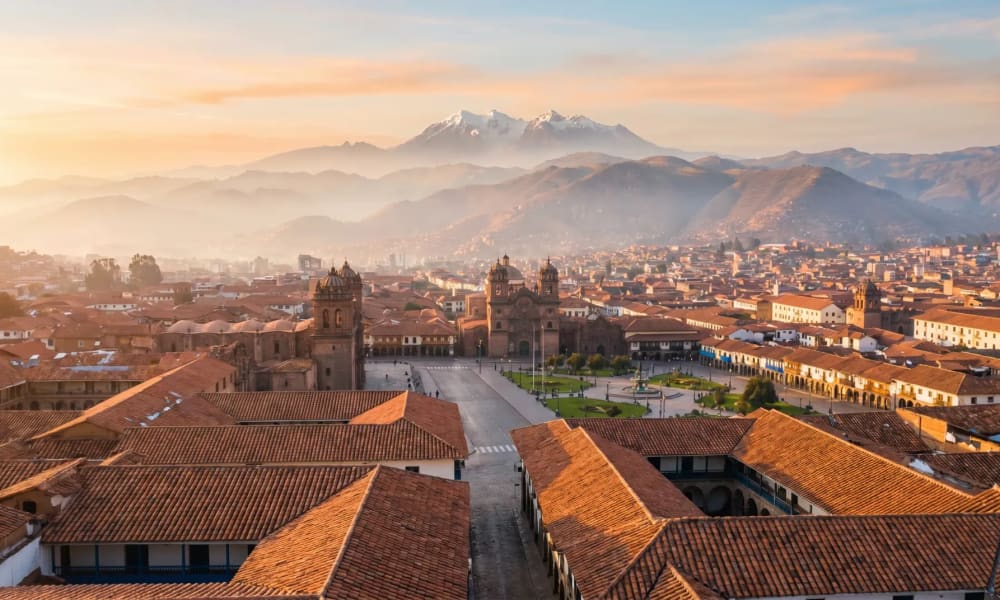
This image was generated with AI.
Altitude sickness in Peru: acclimatization, symptoms & emergency signs
AMS, Diamox & acclimatization plan for Cusco, Puno & Rainbow Mountain
AMS, Diamox & acclimatization plan for Cusco, Puno & Rainbow Mountain
Cusco is at 3,399 meters. Puno at 3,827. Rainbow Mountain at 5,036. Anyone planning a trip to Peru must deal with altitude — and not just on the arrival day in Cusco. Altitude sickness can be well managed if you know the mechanisms: acclimatization, the Lake Louise score for self-assessment, acetazolamide (Diamox) as a prophylaxis option, and the rare but life-threatening complications HAPE and HACE. This guide summarizes what the Wilderness Medical Society (WMS, 2024) and the CDC Yellow Book recommend — translated to the specific altitudes of your Peru route.

Not a substitute for medical advice
This page provides information based on published medical guidelines (WMS, CDC, peer-reviewed journals) — it does not replace a conversation with your family doctor or a travel medicine center. Especially with pre-existing conditions (heart, lung, sickle cell anemia), during pregnancy or when traveling with children, seek travel medical advice before your trip. You can find counseling services through the German Society for Tropical Medicine: dtg.org.
Peru and altitude — what you need to know
Altitude sickness can occur from about 2,500 m sleeping altitude — and about every second person experiences mild symptoms at rapid ascent above 2,500 m. The probability increases linearly with altitude and ascent speed. Peru is therefore particularly relevant: Lima is at sea level, Cusco at 3,399 m — the flight overcomes these 3,245 meters in 90 minutes. The body had no time to adapt.
| Location | Altitude (sleeping altitude) | AMS risk | Note |
|---|---|---|---|
| Lima | 154 m | none | ideal acclimatization starting point |
| Aguas Calientes / Machu Picchu Pueblo | 2,040 m | very low | starting point to the site |
| Machu Picchu | 2,430 m | low | during the day, no sleeping at the top |
| Sacred Valley (Urubamba, Ollantaytambo) | 2,792–2,860 m | medium | ideal acclimatization buffer |
| Cusco | 3,399 m | high | most travelers encounter altitude here |
| Colca Canyon (Chivay) | 3,633 m | high | location for Mirador day trip |
| Puno (Lake Titicaca) | 3,827 m | very high | never as the first highland destination |
| Patapampa Pass (on the way to Colca) | 4,910 m | extreme | only transit, max. 30 min. |
| Salkantay Pass (Trek) | 4,630 m | extreme | only during daytime, sleeping down below |
| Rainbow Mountain Vinicunca (viewpoint) | 5,036–5,200 m | extreme | day trip, acclimatize in Cusco beforehand |
Mirador Cruz del Condor in Colca Canyon is located, contrary to popular belief, only at 3,270 m — the infamous Patapampa Pass at 4,910 m is located on the way from Arequipa to Chivay and is often confused with the Mirador.
At what altitude does altitude sickness become dangerous?
The WMS distinguishes three risk thresholds:
- High altitude (1,500–3,500 m): Acute mountain sickness (AMS) possible, but usually mild and well manageable. Cusco falls into this category.
- Very high altitude (3,500–5,500 m): AMS frequent, HAPE and HACE are rare but real risks. Puno, Salkantay Pass, and Colca approach are in this range.
- Extreme altitude (over 5,500 m): without oxygen bottle no permanent adaptation possible. Traditionally in Peru only mountaineering destinations such as Huascarán (6,768 m).
Acute mountain sickness (AMS) — recognizing symptoms
AMS typically begins 6–12 hours after reaching altitude — rarely immediately, often in the middle of the first night. The most common symptoms:
- Headache (leading symptom, often frontal)
- Nausea, occasional vomiting, loss of appetite
- Fatigue, weakness, concentration problems
- Dizziness, lightheadedness
- Sleep disturbances (often restless sleep, frequent awakenings)
Important: A mild headache alone in the first 12 hours after arriving in Cusco is normal and not a cause for concern — it usually improves after a night of rest and sufficient fluids.
The Lake Louise score — self-assessment
The Lake Louise score (consensus 2018) is the internationally established self-test tool. Four criteria, each 0–3 points:
| Symptom | 0 | 1 | 2 | 3 |
|---|---|---|---|---|
| Headache | none | mild | moderate | severe, disabling |
| Gastrointestinal | no complaints | little appetite / nausea | moderate nausea or vomiting | severe vomiting, disabling |
| Fatigue / weakness | normal | mild | moderate | severe, disabling |
| Dizziness | none | light | medium | strong, disabling |
AMS is present, when the total score ≥ 3 and the headache reaches at least 1 point. Score 3–5 = mild AMS, 6–9 = moderate, ≥ 10 = severe AMS. Sleep disturbances were removed from the score in 2018 because they did not reliably differentiate as a sole criterion.
HAPE & HACE — when it becomes an emergency
In rare cases, AMS can develop into a life-threatening complication. Both typically occur above 3,500 m — thus specifically at the heights of Puno, Salkantay Pass, and Rainbow Mountain.
HAPE (High Altitude Pulmonary Edema) — Incidence at 4,500 m in 1–2 days approx. 6 %, with a history of HAPE up to 60 %. Symptoms:
- severe shortness of breath at rest (not just with exertion)
- foamy or pink-bloody cough
- bluish lips or fingernails
- severe tightness in the chest
- Mortality without treatment up to 50 %
HACE (High Altitude Cerebral Edema) — rarer than HAPE, but a rapid course and mortality without treatment up to 50 %. Symptoms:
- Confusion, disorientation, personality changes
- Ataxia (staggering gait, "like being drunk")
- severe, disabling headache that does not respond to painkillers
- Vomiting, vision disturbances
- up to unconsciousness
Descend immediately — these symptoms are an emergency
In case of suspicion of HAPE or HACE, there is one rule: immediate descent (at least 500–1,000 m in altitude), no discussion, no "sleeping over it". Administer oxygen if available, seek medical attention as soon as possible. Emergency numbers Peru: SAMU 106 (medical emergency), police 105. Hotels in Cusco and larger lodges often have a doctor on call — ask at the reception. Travel insurance with evacuation for mountain emergencies is not a luxury in Peru.
Acclimatization — the only reliable protection
There is no trick, no tea, no medication that replaces acclimatization. The body needs time to adjust hemoglobin and respiration regulation — about 24–72 hours for the first steps, several weeks for complete adaptation. The most important rules:
Climb high, sleep low — the basic rule
Above 2,500 m it applies: During the day you can ascend higher, but the sleeping altitude should increase by a maximum of 300–500 meters per night. Those who stay overnight in Cusco (3,399 m) and visit Maras/Moray (3,500 m) during the day acclimatize better than those who sleep directly at 4,000 m+. That is why an overnight stay in the Sacred Valley (2,860 m) before Cusco makes so much sense.
Step-by-step acclimatization plan
An ideal sequence for a classic Peru trip:
| Day | Location | Altitude | Activity | Note |
|---|---|---|---|---|
| 1 | Lima | 154 m | Arrival, rest, restaurant | no altitude, reset of the body |
| 2 | Sacred Valley (Urubamba) | 2,860 m | Flight Lima→Cusco, immediate transfer to the valley | visit Cusco later |
| 3 | Sacred Valley | 2,860 m | easy hike Pisac/Ollantaytambo | lots of water, no alcohol |
| 4 | Sacred Valley → MaPi | 2,040 m | Train to Aguas Calientes | altitude decreases — very good |
| 5 | Machu Picchu | 2,430 m → 2,040 m | site, return | day at moderate altitude |
| 6 | Cusco | 3,399 m | Transfer from valley, slow city tour | now the body is ready |
| 7 | Cusco | 3,399 m | Sacsayhuamán (3,700 m briefly), market | "Climb high, sleep low" |
| 8+ | Trek / Rainbow Mountain / Puno | up to 5,200 m | high altitude program | never as the first destination after Lima |
Those who want to hike the classic Inca Trail incorporate days 6–7 for acclimatization in Cusco — the trek typically starts at 2,600 m, but crosses the Warmiwañusqa Pass at 4,215 m on the second day.
What helps, what harms
Helps:
- drink a lot (3–4 liters of water per day at high altitude)
- light meals, rich in carbohydrates
- slow pace on the first day — no sports, no sightseeing marathon
- early nights (the body regenerates in deep sleep)
- fresh air, walks at a moderate pace
Harms:
- alcohol in the first 24–48 hours (significantly increases AMS symptoms)
- sleeping pills (benzodiazepines suppress nighttime respiratory regulation)
- direct heavy physical exertion on the day of arrival
- heavy tobacco use (worsens oxygen transport)
- altitude increases > 500 m sleeping altitude per night over 3,000 m
Insider tip: The underestimated first day in Cusco
If you land in Cusco in the morning, don't overdo it with the clarity of the Andean sky. No city tour, no Pisco Sour, no stair climbing at Sacsayhuamán. Instead: hotel check-in, coca tea or mate de muña, an hour of lying down, a light lunch, a quiet walk around the Plaza de Armas, early dinner, early sleep. The second day rewards this restraint with full energy.
Diamox (Acetazolamide) — Facts without exaggeration
Acetazolamide (Brand name Diamox) is the only medication with well-documented prophylactic effect against AMS. It significantly reduces the incidence and severity of mild AMS — it does not prevent it 100%. It is prescription-only, has real side effects, and does not replace acclimatization.
Diamox only by prescription
Acetazolamide is prescription-only in Germany, Austria, and Switzerland. Ideally, obtain the prescription 4–6 weeks before departure from your general practitioner or a travel medicine clinic. A trial run of 2–3 days at home before the trip is recommended to test personal tolerance — typical side effects like tingling in fingertips or change in taste with carbonated drinks are harmless but surprising. Please do not use leftovers from friends or online pharmacies without a prescription.
How Acetazolamide works
Acetazolamide inhibits the enzyme carbonic anhydrase and leads to a slight metabolic acidosis. This stimulates breathing — the body "breathes faster than it would adapt". This accelerates acclimatization. Hence, it is not a painkiller but a metabolic modulator.
Dosage and Timing of Administration
The WMS 2024 and the CDC recommend for adults:
- Prophylaxis: 125 mg twice a day, starting 24 hours before ascending above 2,500 m, continued for 2 days at maximum sleeping altitude.
- Treatment of mild AMS: 250 mg twice a day.
Higher doses provide no additional benefit, only increase the rate of side effects. Acetazolamide is taken with water, preferably with meals.
Side Effects and Contraindications
Common, harmless side effects:
- Paresthesia (tingling in fingers, toes, lips)
- increased urination, slight dehydration as a result — so drink more
- altered taste, especially with carbonated drinks (typical "beer tastes flat" phenomenon)
- occasionally fatigue or sleep disturbances
Contraindications: Severe sulfonamide allergy (especially with a history of Stevens-Johnson syndrome) is a strict contraindication. Pregnancy Trimester 1 (FDA Category C) — evaluate benefits and risks with a doctor. Severe renal insufficiency, liver diseases, and some electrolyte disorders are further reasons against acetazolamide. Before a prescription, the doctor must clarify these points with you.
Coca tea, oxygen & home remedies — what science says
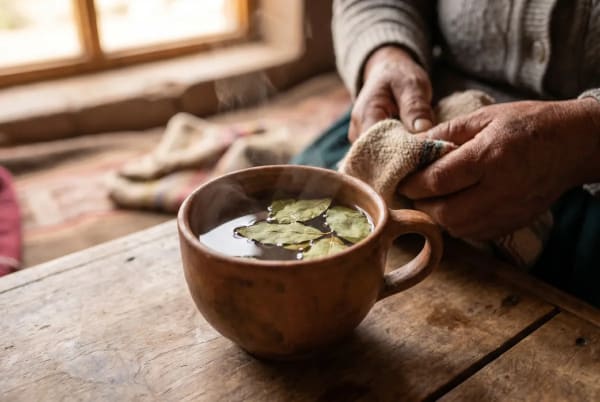
In every hotel in Cusco, there is a thermos with Mate de Coca available. It tastes mildly grassy, warms, and is part of Peruvian hospitality. But does it work?
Coca tea — folk medicine with limits
Three independent peer-reviewed studies have investigated coca tea against AMS — all three reached the same conclusion: no significant effect against altitude sickness. The coca alkaloids contained do not have the potency necessary for measurable AMS prophylaxis. What coca tea offers: light stimulation, mild improvement in subjective alertness, a pleasant ritual that emotionally accompanies the first hours in Cusco. Drink it if you like — do not rely on it.
The WMS recommends ibuprofen (400 mg) or paracetamol for alleviating mild AMS headaches — both are better documented than herbal alternatives.
Oxygen devices and hotels with O₂ service
Several premium hotels in Cusco offer oxygen service in rooms — either through cannulas with small concentrators or via pressure canisters. We especially recommend this comfort detail for travelers with cardio-pulmonary preconditions or those over 70 years:
- Belmond Hotel Monasterio — enriched oxygen atmosphere in the rooms (one of the few hotels worldwide)
- JW Marriott El Convento Cusco — rooms with increased oxygen content
- Casa Andina Premium Cusco — oxygen on request
- Aranwa Cusco Boutique Hotel — oxygen on request
- Inkaterra La Casona — oxygen on request
Portable oxygen sprays from pharmacies (commonly available in Cusco) deliver few puffs and are not sufficient for AMS emergencies — in cases of true HAPE/HACE symptoms, medical oxygen is the only bridge until descent.
Ibuprofen yes, sleeping pills no
| Means | Effect | Recommendation |
|---|---|---|
| Ibuprofen 400 mg | Headache relief, mildly anti-inflammatory | safe, often helpful |
| Paracetamol 500 mg | Headache relief | safe |
| Acetazolamide (Diamox) | accelerates acclimatization | only by prescription, before ascent |
| Dexamethasone | for moderate/severe AMS, HACE | only by doctor’s order |
| Nifedipine | Prophylaxis/treatment of HAPE | only by doctor’s order |
| Sleeping pills (benzodiazepines) | suppress nighttime breathing regulation | avoid above 2,500 m |
| Alcohol | increases AMS symptoms | avoid in the first 48 hours |
Your Peru route and altitude — specifically
Cusco (3,399 m) — organize the first 24 hours correctly
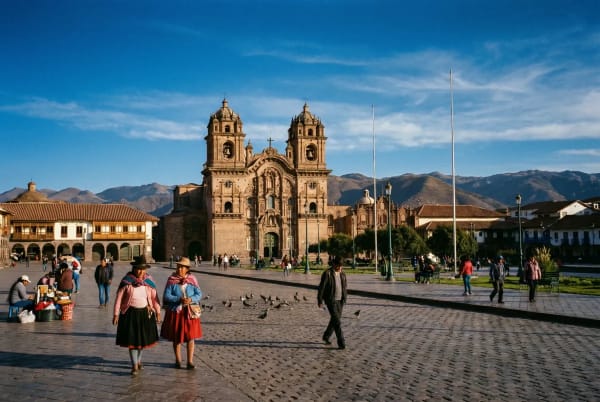
Cusco is the first real altitude contact for most travelers. Arrive, take it slow, drink plenty, go to bed early. Ignoring this and climbing to the Sacsayhuamán Complex at 3,700 m on the day of arrival risks the worst night of the trip. An alternative is to head directly to the Sacred Valley after landing in Cusco — the 500-meter difference in altitude (Urubamba 2,860 m) makes a big difference.
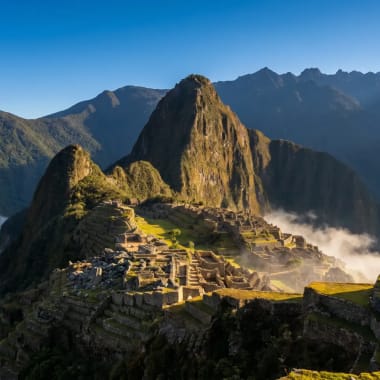
Machu Picchu (2,430 m) — the exception going down
Those traveling from Cusco to the site take an altitude pause: Machu Picchu is nearly 1,000 m lower than Cusco. This is a natural descent window in the middle of the trip and one of the reasons why the classic route flow Cusco → Sacred Valley → Machu Picchu → Cusco works well.
Rainbow Mountain (5,036 m) — when to refrain?
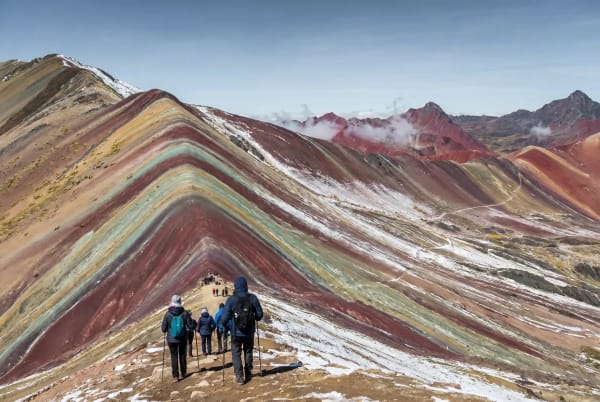
Rainbow Mountain is a day tour from Cusco — climbing up to 5,200 m at the viewpoint. Travelers with AMS symptoms from the previous days, persons with cardio-pulmonary preconditions, pregnant women in the 2nd/3rd trimester, and children under 8 years should refrain.Those who are fit and have fully acclimatized in Cusco (at least 2 days) can consider Rainbow Mountain — the tour typically starts at 4 AM and is more strenuous than it looks in photos.
Salkantay Trek — altitude profile & critical days
The 5-day Salkantay Trek crosses the Salkantay Pass at 4,630 m. Day 2 is the critical day — ascent from the Soraypampa camp (3,900 m) over the pass and descent into the Chaullay camp (2,900 m). Therefore, the sleeping altitude drops significantly after the pass, facilitating acclimatization. For the trek, we recommend at least 3 days of preparation in Cusco. More in the Inca Trail & Salkantay Region Guide .
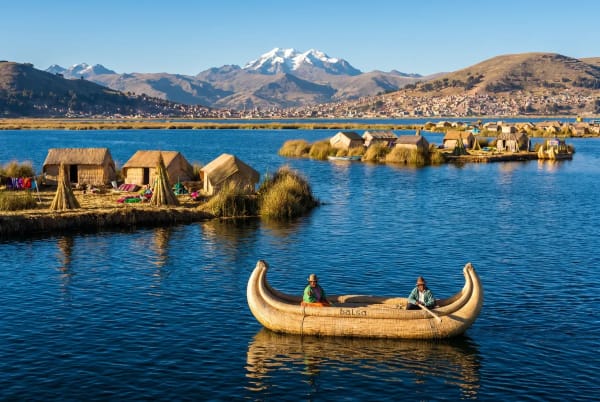
Puno and Lake Titicaca (3,827 m)
Puno has the highest AMS risk of all classic Peru stops because it is higher than Cusco and the order Lima → Puno (via direct flight to Juliaca) overwhelms the body. Never as the first highland destination — always precede with Cusco or Sacred Valley. A proven order: Cusco (3 days) → train or bus across La Raya Pass (4,335 m, just transit) → Puno.
Insider Tip: Order matters — Lima → Cusco → MaPi → Puno
Anyone flying directly from Lima to Puno (Juliaca Airport) risks stronger symptoms than arriving via Cusco. We consciously plan Peru trips this way: Lima (acclimatization reset) → Cusco or Sacred Valley (2–3 days) → Machu Picchu (2,430 m as active descent window) → back to Cusco → from there to Puno (3,827 m). This order is medically much safer and also provides a more logical travel flow than the direct route.
Risk groups — for whom special caution applies
- Children under 6 years communicate AMS symptoms unreliably — with irritability, loss of appetite, and restless sleep at altitude, always think of altitude sickness.
- Pregnant women should not sleep above 3,000 m in the 1st trimester, in the 2nd/3rd trimester 2,500 m is considered a safe upper limit (CDC recommendation).
- Pre-existing conditions Heart, lung, severe asthma, sickle cell anemia: seek travel medicine advice before any high-altitude journey.
- Over 65 years: no severe contraindication, but acclimatization takes longer - plan at least an extra day in the Sacred Valley.
- Previous HAPE episode: with a previous HAPE episode, the risk of recurrence is 60% - only with medical supervision and nifedipine prophylaxis.
Other Peru guides
- Best travel time for Peru - three climate zones, Inca Trail season & wildlife calendar
- Flight to Peru - routes from DACH and domestic flights
- Packing list for Peru - high-altitude clothing, travel pharmacy & UV protection at 3,500 m+
- Region: Cusco & Sacred Valley · Machu Picchu · Inca Trail & Salkantay · Rainbow Mountain · Colca Canyon · Lake Titicaca
Request a personal travel consultation - we plan your Peru trip with targeted acclimatization days and appropriate order.
Your dream holiday, tailor-made by true connoisseurs.
From the first spark of inspiration to the moment you return home full of stories, we’re by your side – whether by phone, email or WhatsApp, whenever you need us. Every journey we design is as unique as you are: individually crafted with exclusive privileges and exceptional arrangements that make your experience truly unforgettable.
Experts for your trip

You might also like this
This image was generated with AI.
This image was generated with AI.
This image was generated with AI.