


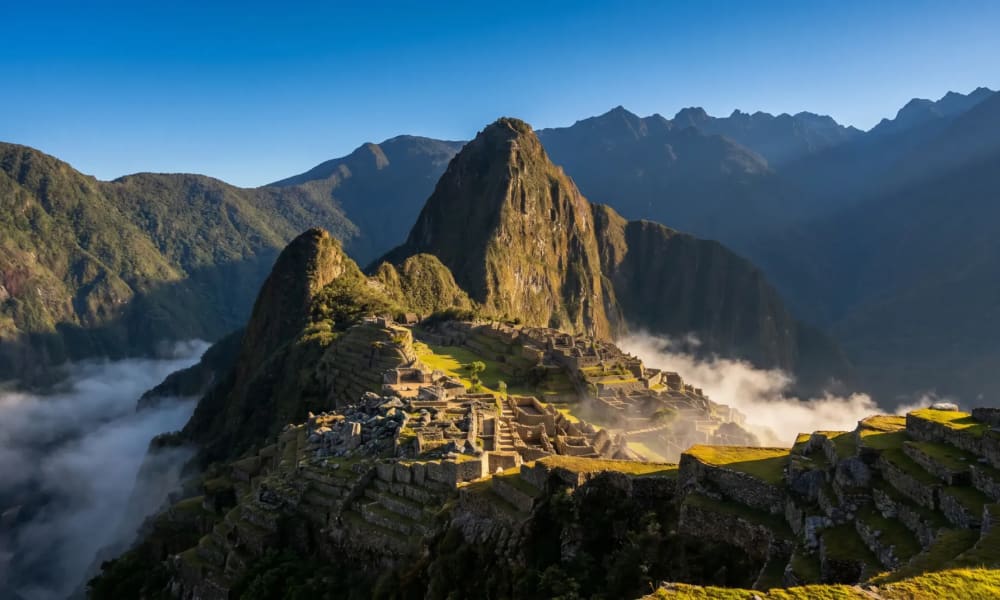
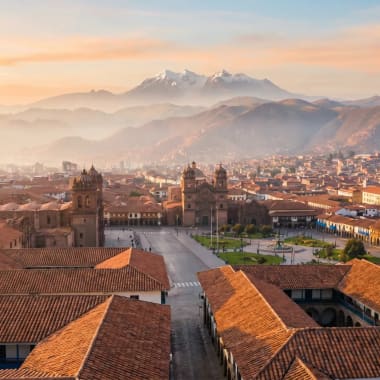
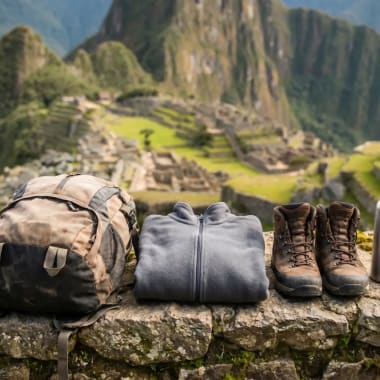
This image was generated with AI.
Best travel time for Peru: Highlands, Amazon & Coast Month by Month
Three climate zones, wildlife calendar & seasonality month by month
Three climate zones, wildlife calendar & seasonality month by month
Peru does not have a uniform travel time - and those who ignore this miss out on a whole trip. Three fundamentally different climate zones lie in close proximity: the Andes with a clear dry season (May–October), the Amazon basin being humid year-round, and the Pacific coast with the famous Garúa fog (May–October). What is the peak season on one side of the mountains is the rainy season on the other. Peru trip planners will find the honest answer here as to which month fits which travel profile - including Inca Trail booking window, wildlife calendar, and altitude acclimatization.

The three climate zones of Peru - why there is no uniform travel time
Peru is nine times the size of Germany and lies between 0 and 6,768 meters above sea level. SENAMHI, the Peruvian weather service, distinguishes three climatic regions: theSierra (Andes), theSelva (Amazon), and theCosta (Pacific coast). Those who combine a round trip with Lima, Cusco, Machu Picchu, and a detour to the Amazon traverse four climate systems in 14 days - the peak season varies by region.
Andean Highlands (Sierra) - Dry season May to October
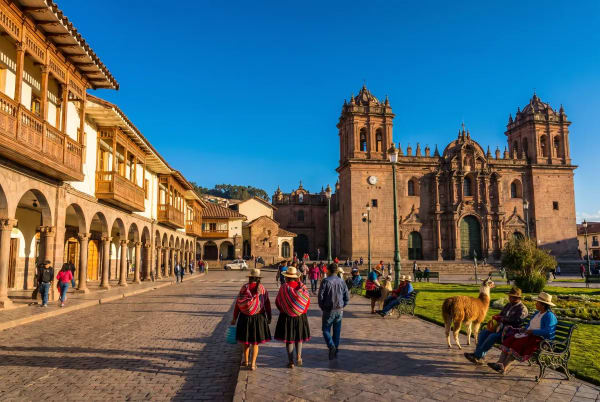
Cusco (3,399 m), the Sacred Valley, the Inca Trail, Puno and Rainbow Mountain are all located in the Sierra. The dry season lasts from May to October: daytime temperatures of 18–22 °C under a clear blue sky, at night in Cusco often only 0–6 °C, in Puno down to -10 °C. Rainfall drops from 130 mm in January to only 7 mm in July. It is the classic trekking, photo, and round trip season - and thus the high season.
The rainy season (November–April) is not unsuitable, but different: warmer (Cusco in January 6–19 °C instead of 1–19 °C), greener, emptier. The Inca Trail remains open except in February (see below). Afternoon showers are the rule, all-day rain is the exception. A compromise: combine April and October as shoulder seasons; stable weather with significantly fewer visitors.
Amazon Basin (Selva) - humid year-round, but with differences
Iquitos, Puerto Maldonado (Tambopata) and Manu are located in the Peruvian Selva. It rains year-round here, with annual rainfall between 2,500 and 3,500 mm. The logic turns upside down: when the highlands are dry (May–October), the Amazon experiences its relative dry season - rivers drop, animals concentrate at water spots, hiking trails become passable.August to October is the best time for wildlife in the Manu National Park and on the Tambopata River - paradoxically the same time as for trekking in the Andes.
In the flood season (December–April), the Amazon level at Iquitos fluctuates by 10–12 meters. Boat tours become interesting because you paddle through flooded forests - but wildlife is harder to spot.
Pacific Coast (Costa) - summer December–March, Garúa fog May–October
Lima is one of the foggiest capitals in the world. From May to October, the city is under theGarúa - a stratus fog made of droplets of 1–40 microns, caused by the cold Humboldt current and an upwelling effect. Lima receives only 7–14 mm of rainfall annually but often sees no sun for weeks at a time between May and October. Temperatures then range from 14–18 °C - cool and gray. Those who want to experience Lima's culinary scene (Miraflores, Barranco, Pueblo Libre) should chooseDecember to March: 24–28 °C, lively beach promenade, sun.
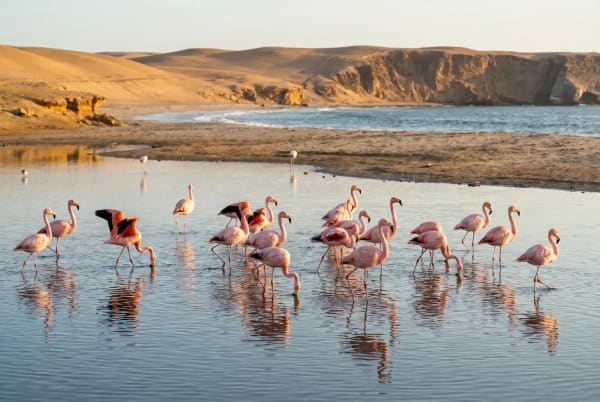
Paracas, Nazca, and the northern coast (Máncora) also benefit from December to March - this is the peak season here.
Good to know: The order matters
A classic Peru round trip connects all three zones. The simplest solution: travel from May to September, then the highlands and Amazon are optimal, and Lima is just gray - but you rarely spend more than 1–2 days there anyway. Those who want to experience Lima should plan from December to March and accept a slightly softer dry season in the highlands (afternoon showers possible).
Machu Picchu & Cusco - the best months
Machu Picchu lies at 2,430 m, significantly lower than Cusco - and is a climatic special case. The site experiences a subtropical mountain forest, with higher humidity and more rainfall than Cusco. The dry season here is also from May to October, with the clearest conditions in June and July. The site itself is open year-round (except for the Inca Trail, see next section).
| Month | Weather Machu Picchu | Visitors | Recommendation |
|---|---|---|---|
| Jan | warm, very wet | high (school holidays South) | avoid except for bargains |
| Feb | very wet, Inca Trail closed | medium | train connection only |
| Mar | wet, decreasing | medium | transition, acceptable |
| Apr | becoming dry, green | medium | shoulder season insider tip |
| May | dry, sunny | high | very good, sweet spot |
| Jun | dry, clear, cold at night | very high | top conditions, full |
| Jul | dry, clear, high season | very high | top, permits 9 months in advance |
| Aug | dry, clear | very high | top, full, Inti-Raymi aftermath |
| Sep | dry, mild | high | very good, slightly decreasing |
| Oct | dry, mild | medium | shoulder season insider tip |
| Nov | first showers | medium | good, noticeably emptier |
| Dec | becoming wet | high (holidays) | mixed |
Ticket system from 2024: Machu Picchu currently has four circuits with fixed routes. The standard ticket "Llaqta de Machupicchu" costs 152 Sol (36 €), the combination ticket with Huayna Picchu or Machu Picchu Mountain 200 Sol (47 €). Daily quota: 4,500 in the off-season, 5,600 in the high season (July–August, school holidays). Booking via tuboleto.cultura.pe or through tour operators - in high season 2–3 months in advance.
Inca Trail: Season, booking window & February closure
The classic Inca Trail (4 days, 42 km) is limited to 500 permits per day - of which only about 200 are for trekkers, the rest is allocated to guides, cooks, and porters. These permits are distributed by the DDC Cusco and are fully booked in the high season6–12 months in advance. For May to September 2026, permits were released on November 17, 2025 - April, May, and June were taken within days.
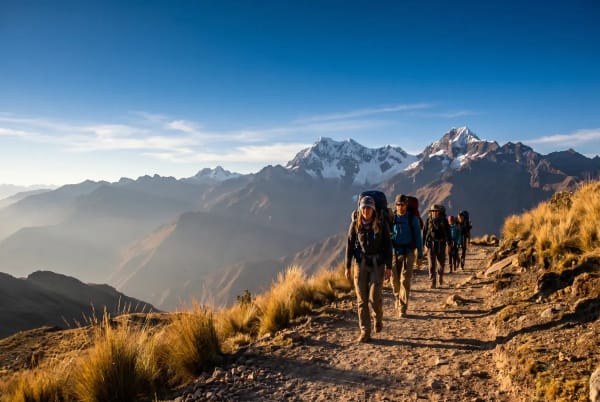
February is when the Inca Trail is completely closed - from January 31 to February 28. During this time, 60 specialists and archaeologists carry out cleaning and conservation work at the 15 archaeological sites along the way. Those traveling in February have two alternatives: thetrain connection Cusco → Aguas Calientes (PeruRail, Inca Rail) to the site itself, or the Salkantay Trek as an alternative trekking route — it remains open year-round and is considered by many to be more impressive in terms of landscape.
Important: Inca Trail permits are released annually on November 17 for the following year.
If you want to hike the classic Inca Trail during peak season (May–September) in 2027, you should speak to your tour operator by early November 2026 at the latest. April and May are often fully booked within 48 hours after the permit release. Those who can remain flexible can choose the shoulder season (late March, October) — permits are easier to book then, and the weather is usually still stable.
Wildlife Calendar Peru — what you can see when and where
Peru is home to macaws, Andean condors, spectacled bears, vicuñas, jaguars, humpback whales, and Humboldt penguins. When which animal can be best observed often determines the travel route.
| Month | Wildlife Highlights | Region | Recommended for |
|---|---|---|---|
| Jan | Leatherback turtles North Coast | Tumbes, Máncora | Families |
| Feb | Yellow-naped macaws breeding season Tambopata | Madre de Dios | Birdwatchers |
| Mar | Manu wet, whale season ends | Manu, Pacific South | Transition |
| Apr | Andean condors begin to be active | Colca Canyon | Birdwatchers |
| May | Start of dry season, wildlife becomes active | nationwide | All-round sweet spot |
| Jun | Andean condors peak activity, vicuñas visible | Colca, highlands | Wildlife, photographers |
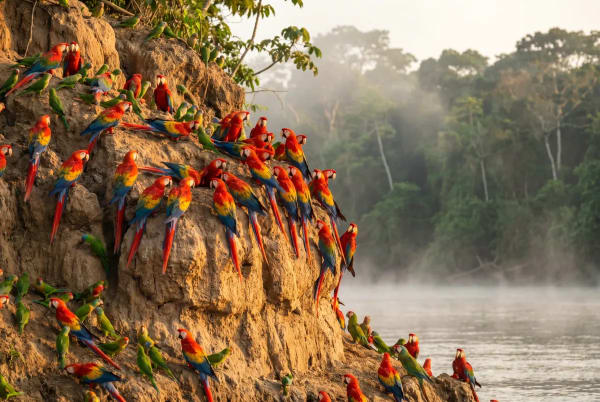
| Jul | Humpback whale season North Coast starts, macaws Colpa Colorado peak | Máncora, Tambopata | Whales, macaws |
| Aug | Wildlife peak Manu, humpback whales mid | Manu, Tumbes/Máncora | Nature travelers |
| Sep | Manu wildlife peak comes to an end, flamingos Paracas | Manu, Paracas | Wildlife, birdwatchers |
| Oct | Humpback whale season ends, condors remain active | Máncora, Colca | Shoulder season |
| Nov | Turtle advance Tumbes | North Coast | Beginning of high water |
| Dec | Leatherback turtles nesting North Coast | Tumbes | Families |
Best travel time according to travel profile
There is no the best travel time for Peru — but the right time for your travel profile. Five typical profiles, five different recommendations:
First-time visitors (Lima, Cusco, Machu Picchu)
Best months: May, June, September, October. Stable dry-season weather in the highlands, clear views of Machu Picchu, acceptable temperatures in Lima at the beginning/end of the Garúa season. July and August are the absolute peak season: full, more expensive, permits harder to obtain — those who must travel during school holidays should plan 6+ months in advance.
Trekker (Inca Trail, Salkantay, Choquequirao)
Best months: May, June, September. The dry season provides walkable paths without days of rain, clear views from the passes (Salkantay Pass at 4,630 m), but cold nights (-5 to -10 °C in high camps). Permits for the classic Inca Trail must be booked in good time. The Inca Trail is closed in February — the Salkantay Trek is the year-round alternative.
Nature travelers and wildlife photographers
Best months: August to October. The dry season in the highlands coincides with the relative dry season in the Amazon. Macaws at Colpa Colorado in Tambopata are most reliable during this time, Manu shows its best side, Andean condors at Colca Canyon have the highest sighting rates. Humpback whales on the North Coast (Máncora) are present in full numbers from mid-July to October — a Peru tour with a wildlife focus should take place during these months.
Families with children
Best months: July and August (summer vacations in DE/AT/CH), or April and May for families with preschool children. The dry season in the highlands significantly eases daily life with children (no rainy days), acclimatization in Cusco can be done comfortably, and Machu Picchu is accessible without extreme altitude (2,430 m). The main topic with children is altitude acclimatization — see our Altitude sickness guide .
Honeymooners and comfort travelers
Best months: May, June, September. Eco-lodges in Tambopata (Inkaterra Reserva, Refugio Amazonas) and premium hotels in Cusco (Belmond Monasterio, JW Marriott) present themselves at their best. Sunsets in the Sacred Valley are dramatic during the dry season. Lower risk of rain for outdoor activities.
Altitude acclimatization — the factor that climate tables ignore
Cusco is located at 3,399 m, Puno at 3,827 m, the Salkantay Pass at 4,630 m, Rainbow Mountain at 5,036 m (viewpoint ~5,200 m).The best travel time is of no help if acclimatization fails. Acclimatization does not follow the weather — it follows altitude and daily schedule.
Rule of thumb: At least 2 full days in Cusco or in the lower Sacred Valley (Urubamba 2,860 m) before Inca Trail, Rainbow Mountain, or onward travel to Puno. An ideal sequence is Lima (154 m) → Cusco or Sacred Valley (2 acclimatization days) → Machu Picchu (2,430 m as a natural descent window) → trekking or Puno. Those who fly directly from Lima to Puno (3,827 m without buffer time) have the highest AMS risk of all classic Peru routes. More on this in the Altitude sickness guide .
Insider tip: Sacred Valley before Cusco
A little-known fact: Those who spend the first night not in Cusco (3,399 m), but in the Sacred Valley (Urubamba 2,860 m), acclimatize significantly more comfortably. 500 meters lower makes the difference between mild symptoms and a sleepless night. Cusco itself can be explored over several shorter visits in the following days — the city rewards that with quiet plaza hours in the morning sun.
Peak season, prices & booking lead time
Peru has three seasons, and the price increase is significant:
| Season | Months | Price level | Availability |
|---|---|---|---|
| High season | June – August, Christmas/New Year | +40–60 % | Inca Trail permits 6–12 months in advance; lodges 4 months |
| Shoulder | April, May, September, October | +20–30 % | 2–3 months in advance in tourist hotspots |
| Low season | November – March (except holidays) | Standard | usually sufficient 4–8 weeks in advance |
A two-week Peru round trip (Lima – Sacred Valley – Cusco – Machu Picchu – Puno – Tambopata) costs in high season 4,500–7,500 € per person (comfort class, excluding flight), often 30% less in low season. Hotels like Belmond Monasterio in Cusco or Inkaterra Reserva Amazonica in Tambopata raise their rates by up to 60% between June and August.
Hidden crowd drivers: July 28/29 is Fiestas Patrias (National Holiday) — Lima empties, Cusco fills. Inti Raymi on June 24 is the most important highland festival with a long booking lead time requirement.
Request advice for an individual Peru trip
Climate table Peru — Cusco, Lima, Iquitos over the year
Three cities, three completely different climate profiles. Daily temperature and precipitation per month:
| Month | Cusco (3,399 m) | Lima (154 m) | Iquitos (104 m, Amazon) |
|---|---|---|---|
| Jan | 6–19 °C, 130 mm | 19–26 °C, 1 mm | 23–31 °C, 290 mm |
| Feb | 7–19 °C, 117 mm | 20–27 °C, 1 mm | 23–31 °C, 280 mm |
| Mar | 7–19 °C, 100 mm | 19–27 °C, 1 mm | 23–31 °C, 320 mm |
| Apr | 4–20 °C, 39 mm | 17–24 °C, 0 mm | 23–31 °C, 280 mm |
| May | 2–20 °C, 9 mm | 16–22 °C, 1 mm | 22–30 °C, 230 mm |
| Jun | 1–19 °C, 5 mm | 15–19 °C, 2 mm | 22–30 °C, 170 mm |
| Jul | 1–19 °C, 7 mm | 14–18 °C, 2 mm | 22–30 °C, 180 mm |
| Aug | 2–20 °C, 8 mm | 14–18 °C, 3 mm | 22–31 °C, 170 mm |
| Sep | 4–21 °C, 22 mm | 14–19 °C, 3 mm | 22–32 °C, 220 mm |
| Oct | 5–21 °C, 35 mm | 15–20 °C, 2 mm | 23–32 °C, 250 mm |
| Nov | 6–21 °C, 70 mm | 16–22 °C, 1 mm | 23–32 °C, 280 mm |
| Dec | 6–20 °C, 110 mm | 18–24 °C, 1 mm | 23–31 °C, 310 mm |
Data source: SENAMHI, Climates to Travel, multi-year averages.
Combine Peru: Bolivia, Galapagos, Brazil
Many Latin America travelers combine Peru with a neighboring country. Three classic combinations with the best travel time for each:
- Peru + Bolivia (La Paz, Salar de Uyuni, Lake Titicaca): Best time May–October, as Bolivia follows the Peruvian highland season calendar. The Salar de Uyuni is partially underwater in April/May (mirror effect), fully dry and passable from June onwards.
- Peru + Galapagos: Best time May–November (cooler season, cold currents, more active wildlife) — coincides with the Peruvian dry season. A Galapagos trip can be seamlessly connected before or after Peru.
- Peru + Brazil (Iguazu, Rio): Best time April–October. Iguazu is richest in water in the southern late autumn (April/May), Rio is pleasantly dry from May–September.
Frequently asked questions
Frequently asked questions about the best travel time for Peru
For a classic Peru round trip covering Lima, Cusco, and Machu Picchu, the best travel time is between May and October — the dry season in the Andean highlands. The most stable conditions occur in the corridor of May/June and September/October (shoulder season), the absolute high season of July/August is crowded and more expensive. For pure Amazon trips, August to October is optimal, for the Pacific coast (Lima, Paracas) December to March.
May, June, September, and October. June and July offer the clearest visibility (highest daylight yield, often clear skies), but are high season with significantly more visitors. The insider tip is mid-April and mid-October: weather is usually still stable, permits for Machu Picchu Mountain and Huayna Picchu are easier to get, 30% fewer visitors. November brings the first showers but is often photographically interesting due to fog over the terraces.
The classic Inca Trail is closed every February (from January 31 to February 28). During this time, 60 specialists and archaeologists carry out cleaning and conservation work on the 15 archaeological sites along the route. Machu Picchu itself remains open — access in February is only via train (PeruRail or Inca Rail) from Cusco to Aguas Calientes. Those wishing to trek in February may choose the year-round open Salkantay Trek.
For May to September 2026, the permits were released on November 17, 2025 — May, June, and July were booked out within days. Permits for the high season should be secured 6–12 months before the trip, ideally right after permit release in November of the previous year. There are only 500 permits per day, about 200 of which are for trekkers (the rest for guides and porters). Shoulder season (April and October) is significantly easier to book.
Yes — the rainy season is not unsuitable, but different. The highlands appear greener and emptier, hotel prices are 20–40% lower than in high season, classic sights are often almost solitary. Typical weather: sunny morning, showers in the late afternoon, clearing in the evening. The exceptions: Inca Trail closed in February, highland treks are wetter, the Amazon basin is in flood season (boats are more practical than hikes). Honestly weigh: Those who appreciate dramatic photographic moods benefit; those who need weather stability should choose the dry season.
Garúa is a dense high fog over Lima and the central Pacific coast, caused by the cold Humboldt Current and a meteorological upwelling effect. Droplet size 1–40 microns — no rain, but Lima is gray, cool (14–18 °C), and humid for weeks from May to October. Those wanting to experience Lima culinary and sunny (Miraflores, Barranco, boardwalk) should travel from December to March. Those using Lima only as a transit stop hardly notice the phenomenon.
At least 2 full days before physical exertion (Inca Trail, Rainbow Mountain) or before continuing to Puno (3,827 m). Those who do not stay in Cusco (3,399 m) on the first day but overnight in the lower Sacred Valley (Urubamba 2,860 m) acclimatize significantly more comfortably — 500 meters of elevation difference is a significant difference. A direct flight Lima → Puno (3,827 m without buffer time) has the highest AMS risk of all classic Peru routes and should be avoided.
August to October — paradoxically the dry season in the highlands. During this time, the Amazon levels drop by several meters, animals gather at watering holes, hiking trails become passable. Macaws at the Colpa Colorado in Tambopata are then the most reliable, Manu appears at its best. In the flood season (December–April), boat tours through flooded forests are particularly beautiful, but wildlife is harder to spot. Best choice for wildlife photographers: mid-August to mid-October.
More Peru guides
- Altitude sickness Peru — Acclimatization, Diamox & emergency signs
- Flight to Peru — Routes, direct flight Madrid–Lima & domestic flights
- Packing list Peru — 4 climate zones, Inca Trail gear & travel pharmacy
- Region: Cusco & Sacred Valley · Machu Picchu · Inca Trail & Salkantay · Colca Canyon · Lake Titicaca · Lima · Rainbow Mountain
Your dream holiday, tailor-made by true connoisseurs.
From the first spark of inspiration to the moment you return home full of stories, we’re by your side – whether by phone, email or WhatsApp, whenever you need us. Every journey we design is as unique as you are: individually crafted with exclusive privileges and exceptional arrangements that make your experience truly unforgettable.
Experts for your trip

You might also like this
This image was generated with AI.
This image was generated with AI.
This image was generated with AI.