



This image was generated with AI.
Packing list Peru: What really belongs in your luggage
For 4 climate zones: Highlands, Amazon, Coast & Dry Savanna
For 4 climate zones: Highlands, Amazon, Coast & Dry Savanna
Those who only pack summer clothes for Peru will freeze in Cusco at night temperatures of 4 °C — and will get burned without SPF 50+ at 3,500 m in 40 minutes. Peru has no seasons in the European sense, but four completely different climate zones: the Andean highlands (3,000 m+, warm during the day, icy at night, extreme UV index), the Amazon (24–34 °C, humid year-round), the Pacific coast with Garúa fog (cool-gray May–Oct), and the dry savanna in the south. This packing list is based on a clear principle: layers instead of heavy clothing, targeted UV protection for the Andes, Diamox from home, and a main suitcase-in-hotel system for domestic flights. More about the best travel time .

The 4 climate zones of Peru — what this means for your luggage
Peru is nine times larger than Germany and lies between 0 and 6,768 m. A round trip through Lima, Cusco, Machu Picchu, and Tambopata crosses four climate systems in 14 days — so you're not packing for "Peru", but for four trips in one suitcase.
| Zone | Altitude | Day / Night | Recommended clothing | Special feature |
|---|---|---|---|---|
| Andean highlands (Cusco, Sacred Valley) | 2,860–3,400 m | 18–22 °C / 0–8 °C | Layers, fleece, down vest, rain jacket | UV index year-round 11–14+ |
| High plateau (Puno, Lake Titicaca) | 3,800 m | 14–18 °C / -3 to -10 °C | like highlands + down jacket, thick hat | very dry, night frost |
| Pacific coast (Lima, Paracas) | 0–500 m | 14–18 °C (Garúa May–Oct) to 24–28 °C (summer Dec–Mar) | Spring clothing, cardigan, pants | Garúa fog without real rain |
| Amazon (Iquitos, Puerto Maldonado) | 100–300 m | 24–34 °C, 80–90% RH | light long-sleeved synthetic, rain poncho | mosquitoes, high water Dec–April |
| Dry savanna (Nazca, Ica) | 400–700 m | 25–32 °C / 12–18 °C | lightweight, breathable, sun cap | extremely dry, very strong sun |
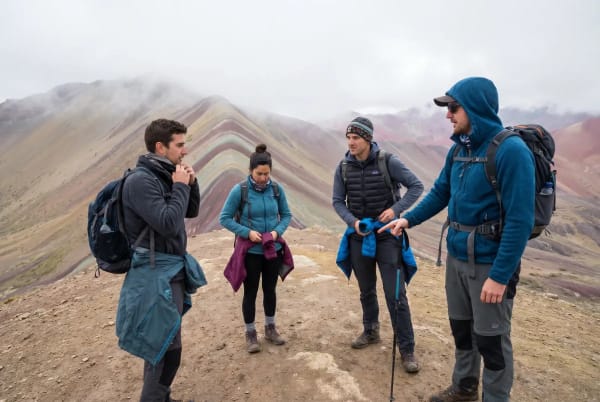
Andean highlands (Cusco, Sacred Valley, Rainbow Mountain)
The main destination for most Peru trips — and climatically the most challenging. Day and night often have a 20 °C difference. In Cusco, it can reach 22 °C in clear sunshine at noon, and drop below zero at night. You need the full layering principle: merino base layer, fleece (strength 200), warm down vest or thin down jacket, plus a breathable rain jacket (mandatory in the rainy season Nov–April).
High plateau (Puno, Lake Titicaca)
Puno is 400 m higher than Cusco — and that makes a difference. Floating reed islands on Lake Titicaca at 4 °C and wind in the boat is a different world than a sunny plaza day in Cusco. Those heading to Puno should pack a proper down jacket (comfort -10 °C), thick hat, scarf, and warm gloves — even in midsummer (July/August), when Puno experiences the coldest nights.
Pacific coast (Lima, Paracas, Nazca)
Lima is climatically divided: In summer (Dec–Mar) it's mild and sunny (24–28 °C), in Garúa winter (May–Oct) gray and cool (14–18 °C). Those traveling in Garúa winter need a cardigan or thin sweater and a light wind jacket for Lima — for most travelers this is just a 1–2 day stop, not a travel climate focus.
Amazon (Iquitos, Puerto Maldonado, Manu)
Constant 24–34 °C at 80–90% humidity. Here the logic changes: cotton is a nightmare (24+ hours drying time on the line), functional fibers or merino are essential. Long lightweight pants and long-sleeved light functional shirts are better than short ones — they protect against mosquitoes and tropical sun.
Clothing & layering principle — from Lima to Cusco
Three layers are sufficient for every Peru climate zone. The materials decide:
Base layer — merino or functional synthetic
Three merino t-shirts (160–200 g/m²) replace seven cotton shirts. Merino dries quickly, hardly smells after three days, keeps warm in cold and breathable in heat. Alternative: polyester functional shirts (cheaper, slightly more prone to odor). At least 2 long-sleeved shirts for highlands and Amazon — they protect against sun and mosquitoes.
Mid layer — fleece or down vest
A fleece jacket (strength 200) is mandatory in the highland program. Those visiting Puno or trekking should add a thin down jacket or down vest. Fleece has the advantage over down of being able to warm when wet — relevant in the rainy season or during humid fog forest days.
Outer layer — rain jacket and wind
A breathable rain jacket (at least 10,000 mm water column, ideally with adjustable hood) belongs in every Peru luggage — even in the dry season because highland weather can change. In the rainy season (Nov–April), also include a rain poncho as emergency protection for backpack and shoulders.
Insider tip: Buy alpaca sweaters in Cusco instead of bringing them
If you need a warm sweater for highland nights, it's best to buy one directly in Cusco or Pisac. Real alpaca sweaters (not "mixed fabric") cost around 80–150 Sol (approx. 20–35 €) at the market, 200–300 Sol in boutiques — cheaper than any outdoor brand sweater, more authentic, and a memorable souvenir. For the first cold nights (e.g., first Sacred Valley hotel), a thin down vest from the home flight is sufficient; the main sweater can be purchased on day 3 in Cusco.
Shoes for Peru
Three pairs are sufficient for every Peru trip:
| Shoe type | Field of use | Recommendation |
|---|---|---|
| Trekking or trail mid | Inca Trail, Salkantay, Rainbow Mountain | Salomon X Ultra 4 Mid GTX, Lowa Renegade GTX Mid |
| Trail runners | Day trips, Machu Picchu, light hikes | Salomon Speedcross, Altra Lone Peak |
| Comfortable city sneakers | Lima, Cusco city strolls, restaurants | Allbirds, lightweight sneakers |
Those walking the Inca Trail or Salkantay need broken-in trekking shoes — definitely not brand new shoes from day one (blister guarantee). Sturdy trekking sandals (Teva/Chaco) are practical for Iquitos boat tours or Tambopata lodge daily life, but not a must.
UV protection at 3,500 m+ — underestimated risk
In Cusco, the UV index reaches values up to 22 in summer (Dec–February) according to SENAMHI, even in the dry season (June/July) still 11–14. The WHO classifies UV values starting at 11 as "extreme". At Rainbow Mountain (5,036 m) and at the Salkantay Pass (4,630 m), UV exposure is even higher — unprotected skin can burn in midday sun in 15–20 minutes.
| Location | Altitude | UV index June | UV index Dec/Jan |
|---|---|---|---|
| Lima | 154 m | 6 (medium) | 12 (extreme) |
| Cusco | 3,399 m | 11 (extreme) | 18–22 (extreme) |
| Lake Titicaca | 3,812 m | 12 (extreme) | 19+ (extreme) |
| Rainbow Mountain | 5,036 m | 14+ (extreme) | 20+ (extreme) |
Required equipment for the Andes:
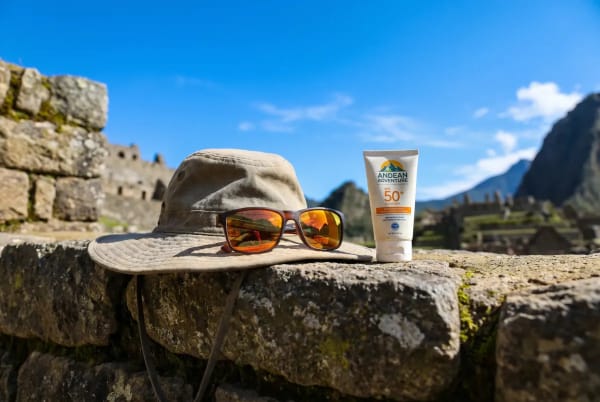
- Sunscreen SPF 50+ (at least 100 ml for a 2-week trip)
- Wide-brimmed sun hat or trekking cap with neck protection
- UV sunglasses class 3 or 4 — sunglasses from the drugstore are often class 2 and do not adequately protect the eyes at 4,000 m+
- Lip balm with SPF (lips burn particularly quickly at high altitude)
- Long lightweight pants and long-sleeved shirts — the best UV strategy overall
Inca Trail vs. standard Peru tour — equipment comparison
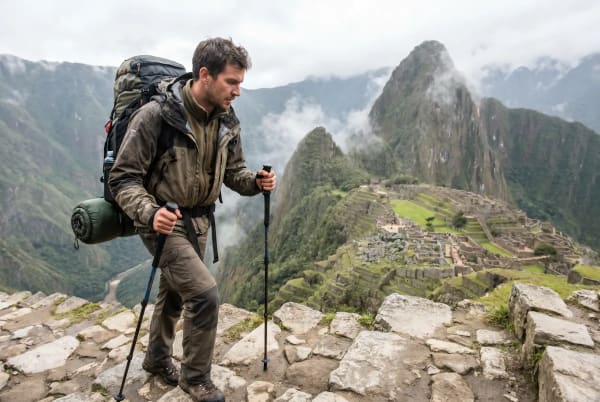
Anyone who hikes the classic Inca Trail (4 days, 42 km) or the Salkantay Trek needs specific equipment. Those who "only" take the train to Aguas Calientes and visit Machu Picchu as a day trip can get by with the standard tour packing list.
| Item | Standard tour | Inca Trail / Salkantay | Justification |
|---|---|---|---|
| Sleeping bag | – | Comfort -5 to -10 °C | Highland nights at 4,000 m+ |
| Trekking poles (foldable) | optional | mandatory with rubber tips | SERNANP regulation, joint relief |
| Rain poncho | practical | mandatory | Weather changes, backpack protection |
| Headlamp | nice-to-have | mandatory | Camp routine, early ascents |
| Water bladder 2–3 L | optional | mandatory | high hydration at altitude |
| Down jacket | nice-to-have | mandatory | Camp at 0 °C or less |
| Day backpack | 25 L | 30–40 L (what you carry yourself) | Trail gear, water, snacks |
| Trekking pants zip-off | nice-to-have | highly recommended | Day warm/pass cold, easily adjustable |
Important: Inca Trail luggage — Porter 7 kg, PeruRail 8 kg, Citadel backpack 40×35×20 cm
Porter limit Inca Trail: tour operators limit the luggage carried by the porter per trekker to 7 kg (sleeping bag, change of clothes, toiletries) — the day backpack with water, snacks, rain jacket, and camera is additional. This is an operational self-commitment by the operators to protect the porters (Peru legally regulates the maximum porter load through Law 31624).PeruRail hand luggage on the train to Aguas Calientes: currently 8 kg / 62 linear inches (62×42×62 cm) per person — larger suitcases remain at the Cusco hotel.Machu Picchu Citadel: Backpacks only up to 40×35×20 cm are allowed, larger luggage is stored at the entrance.
Altitude medicine and travel pharmacy
Specific to Peru are three medical issues: altitude sickness (any highland traveler), mosquitoes in the Amazon (yellow fever region), and travel diarrhea.
| Medication / Item | Purpose |
|---|---|
| Acetazolamide (Diamox) | Altitude sickness prophylaxis — prescription from home |
| Paracetamol | Altitude headache, fever |
| Ibuprofen | Pain, inflammation (outside dengue risk) |
| Loperamide | Acute travel diarrhea |
| ORS salts (rehydration) | Electrolytes for diarrhea, altitude exertion |
| Antihistamine | Mosquito bites, allergic reactions |
| DEET 30–50% or Icaridin 20% | Amazon mosquitoes (yellow fever, dengue, malaria) |
| Hydrocortisone cream 1% | Insect bites, skin irritations |
| Lip balm with SPF | UV protection lips highland |
| Wound ointment / plaster / gauze | Wound care Inca Trail |
| Travel sickness remedy | Domestic flights in the Andes, boat tours |
| Water disinfection (Micropur Forte / Sawyer Mini) | Backup, as tap water is not drinkable |
Important: Bring Diamox from Germany, do not buy it in Peru
Acetazolamide (Diamox / Sorojchipills) is available in German, Austrian, and Swiss pharmaciesprescription-required. Obtain the prescription 4–6 weeks before departure from your family doctor or a travel medicine practice. In Cusco, the tablet is often available over-the-counter — however, prophylaxis must begin at least 24 hours before ascending to higher altitudes, starting from Lima or your home flight. Plus: You do not know your tolerance; it is advisable to do a test run of 2–3 days before the trip at home. More on dosage, side effects, and acclimatization plan in the Altitude Sickness Guide .
Sockets and electronics in Peru
Peru uses 220 V / 60 Hz with sockets of type Type A (US flat plug) and Type C (Euro flat plug, "Europlug"). Most modern hotels have hybrid sockets that fit both plugs. Consequences for German, Austrian, and Swiss travelers:
- Euro plugs (Type C) often fit directly — no adapter needed
- Schuko plugs (Type F, with grounding clip) mostly do NOT fit — a light travel adapter is advisable
- Voltage 220 V ≈ 230 V — no voltage converter needed for devices with "100–240 V" on the power supply (all modern smartphones, laptops, cameras)
- Devices only for 230 V (old hair dryers, straighteners) — will generally work, if in doubt, use the hotel hairdryer
Other useful electronics:
- Universal travel adapter (world adapter with USB ports) — cheaper than individual adapters
- Power bank 10,000+ mAh — for long day trips, domestic flights, lodge power outages in the Amazon
- Headlamp (USB rechargeable) — Inca Trail, Tambopata boat tours, camp daily life
- Dry bag for electronics on boat tours in Tambopata or Iquitos
Water disinfection and drinking water
Tap water is not drinkable in Peru — not even in Lima or Cusco. Hotels usually provide drinking water carafes. For on the go, two strategies:
- Water filter bottle (Sawyer Mini, LifeStraw Go) — lightweight, reusable, filters bacteria and protozoa
- Chlorine dioxide tablets (Micropur Forte) — chemical disinfection, safe against viruses
On the Inca Trail or Salkantay, organizers typically provide filtered drinking water — ask before the trek. In tourist centers, bottled water is available everywhere (3–5 Sol for 1.5 L). Reusable water bottles (Klean Kanteen, Hydroflask) significantly reduce plastic waste.
Amazon mosquitoes and yellow fever region
Peru recommends a yellow fever vaccination for travel to the Amazon (Loreto, Madre de Dios, Ucayali, San Martín, Junín) — upon entry on domestic flights to Puerto Maldonado, travelers are sporadically checked for yellow fever vaccination certificates. Those arriving from Germany should have the vaccination done at least 10 days before departure — only then is it considered effective. The vaccination is a lifelong one-time vaccination (WHO consensus 2014).
Mosquito protection Amazon:
- DEET 30–50 % or Icaridin (Picaridin) 20 % — both provide 6–8 hours of protection
- Permethrin spray for pre-impregnating trekking pants and long-sleeve shirts before the trip (in DE via outdoor specialty stores or pharmacies)
- Light, long functional clothing — dark colors attract mosquitoes more
- Mosquito net is standard in eco-lodges, your own is only necessary when camping/backpacking
Good to know: pre-impregnate Permethrin in Germany
Permethrin is not widely known in Germany, but it is standard for tropical travel in the USA. A spray treatment of trekking pants and long-sleeve shirts before the trip (effect lasts for 6 washes) is very effective against mosquitoes and ticks — and a sensible complement to DEET on the skin. Providers in Germany: nobite-shop.de, Globetrotter assortment, individual pharmacies. Attention: Permethrin is toxic to cats — apply treatment outdoors and with respiratory protection.

What to leave at home
- Heavy hard-shell anorak — excessive for Peruvian tropical showers, breathes poorly
- Camo camouflage clothing — appears strange, regulated in some reserves
- Flat iron or hair dryer without dual voltage — works on 220 V but is unnecessarily heavy
- Noticeable jewelry, expensive watches — not advisable especially in downtown Lima
- Original passport on every day trip — a copy or passport photo on the phone is sufficient, original in the hotel safe
- Plastic water bottles for on the go — many lodges are plastic-free, bring your own reusable bottle
- Drones — strictly prohibited in Machu Picchu, Cusco city center, national parks, and on the Inca Trail, heavy fines
- Original Inca Trail permits printed — are distributed by the organizer on-site, you only need your passport and booking confirmation
Backpack size and luggage tips
For 2–3 weeks in Peru, a main backpack 50–65 L plus a day backpack 25–30 L. Brand recommendations:
- Osprey Farpoint 55+25 (classic, 2 main compartments + detachable day backpack)
- Deuter Aircontact 55+10 (trekking classic, very robust)
- Patagonia Black Hole Duffel 55 L + 25 L backpack (casual variant)
Hard-shell suitcase works on the main route (hotel hopping by car/train) but is unwieldy for trekking routes or lodge arrivals. Those planning a pure comfort tour (Lima – Cusco – MaPi – Lima) can get along well with it.
Luggage strategy for domestic flights: Those flying from Lima to Iquitos or Tambopata and returning after 3–5 days should leave their main suitcase in the hotel in Lima or Cusco and take only a smaller backpack. Saves on excess baggage fees with SKY and JetSMART. More in the arrival and flight guide .
Your Peru packing list — tailored to your route
A packing list is always a compromise between completeness and overview. We tailor our recommendations for our travelers to the specific route — a pure Cusco-Machu-Picchu tour requires different items than a 5-day Salkantay trek or a honeymoon trip focused on lodges. Inquire about non-binding advice for your individual Peru trip .
Frequently asked questions about the Peru packing list
Peru uses 220 volts / 60 Hz with sockets of type A (US flat) and type C (Euro flat, "Europlug"). Most hotels have hybrid sockets that fit both plugs. Euro plugs (type C) often fit directly — no adapter needed. Schuko plugs with grounding clips mostly do not fit — a light travel adapter is advisable. Voltage converters: not needed for modern devices with the imprint "100–240 V" on the power supply (smartphones, laptops, cameras).
Cusco has a 20 °C temperature fluctuation between day and night: 18–22 °C during the day in clear sunshine, 0–8 °C at night. You need three layers: Merino base layer, fleece jacket (strength 200), and a breathable rain or wind jacket. A warm down vest is also pleasant during the dry season (May–October) during the day in shady places or in the evening. Hat, scarf, and thin gloves for outdoor dinners or sunrise tours. Important: warm socks — hotel rooms are often not heated.
Sleeping bag with a comfort range of -5 to -10 °C (highland nights at 4,000 m+), trekking poles with rubber caps (SERNANP regulation), headlamp, water bladder 2–3 L, down jacket, rain poncho, worn-in mid trekking shoes with tread, zip-off trekking pants, several merino shirts, fleece jacket, warm hat, sun hat, sunglasses Class 3+. Important: The porter limit is 7 kg per trekker (operational organizer limit to protect the porters), the personal daypack with water and daily gear comes extra. Main suitcase stays in the Cusco hotel.
SPF 50+ is mandatory at 3,000 m+ — not 'recommended'. In Cusco, the UV index reaches up to 22 in summer (Dec–Feb) according to SENAMHI, even in the dry season high winter (June/July) still 11–14 (WHO classification: 'extreme'). On Rainbow Mountain (5,036 m) and Salkantay Pass (4,630 m) the UV load is even higher. Recommended: SPF 50+ with zinc oxide (physical filter), 100 ml is sufficient for 2 weeks. Lip care with SPF, sun hat with wide brim and UV sunglasses Class 3 or 4 are equally important as the cream itself.
Three layers: (1) DEET 30–50% or Icaridin (Picaridin) 20% on the skin — both protect for 6–8 hours. (2) Long lightweight functional clothing in light colors — mosquitoes are attracted to dark colors. (3) Permethrin pre-treatment of the trekking pants and long-sleeve shirts before the trip (available in DE from outdoor mail order, standard in the USA). Additionally: Eco-lodges in Tambopata and Manu have mosquito nets over the beds. Yellow fever vaccination (10 days before the trip) is recommended for the Amazon region (Loreto, Madre de Dios, Ucayali).
Yes — we explicitly recommend that. Acetazolamide (Diamox) is prescription-only in DACH; prescription should be obtained 4–6 weeks before departure from a general practitioner or a travel medicine practice. In Cusco, the tablet may often be available without a prescription, but: The prophylaxis must already begin 24 hours before ascent to 2,500 m+ — so already in Lima or at the home airport. Additionally, a trial run of 2–3 days at home makes sense to test personal tolerance. More on dosage and contraindications in the altitude sickness guide.
For 2–3 weeks in Peru, a 50–65 L main backpack plus a 25–30 L daypack is ideal. Brand recommendations: Osprey Farpoint 55+25, Deuter Aircontact 55+10, Patagonia Black Hole Duffel 55 L. Those using only comfort hotels (Lima – Cusco – MaPi – Lima) can also take a lightweight hard-shell suitcase plus a daypack. Important for domestic flights: SKY and JetSMART do not include checked baggage in the basic fare (costs an extra 30–60 USD), LATAM usually includes it.
Tap water is not drinkable in Peru — not even in Lima or Cusco. Hotels provide drinking water, bottled water is available everywhere (3–5 Sol per 1.5 L). A water filter bottle (Sawyer Mini, LifeStraw Go) or chlorine dioxide tablets (Micropur Forte) are sensible as a backup, especially for the Inca Trail or Tambopata lodges. Reusable water bottles (Klean Kanteen, Hydroflask) significantly reduce plastic waste — many lodges in Peru take this seriously and provide refill stations.
Rainy season: Rain jacket and waterproof backpack cover are mandatory (only recommended in the dry season), rain poncho as an emergency backup, quick-drying shoes (no Gore-Tex on long hikes), two pairs of hiking socks. Dry season (highland): warmer sleeping bag and down jacket are more important (clear nights = strongest cooling), sun protection even more crucial (dry season = more sunny days). In the Amazon: in the flood season (Dec–April) boat tours instead of hikes — different shoe choice (sandals with tread or lightweight trekking shoes instead of heavy mountain mids).
Other Peru guides
- Best travel time for Peru — three climate zones & wildlife calendar
- Altitude sickness in Peru — Diamox, acclimatization & emergency signs
- Flight to Peru — routes, direct flights & domestic flights
- Region: Cusco & Sacred Valley · Machu Picchu · Inca Trail & Salkantay · Rainbow Mountain · Colca Canyon · Lake Titicaca · Lima
Your dream holiday, tailor-made by true connoisseurs.
From the first spark of inspiration to the moment you return home full of stories, we’re by your side – whether by phone, email or WhatsApp, whenever you need us. Every journey we design is as unique as you are: individually crafted with exclusive privileges and exceptional arrangements that make your experience truly unforgettable.
Experts for your trip

You might also like this
This image was generated with AI.
This image was generated with AI.
This image was generated with AI.