


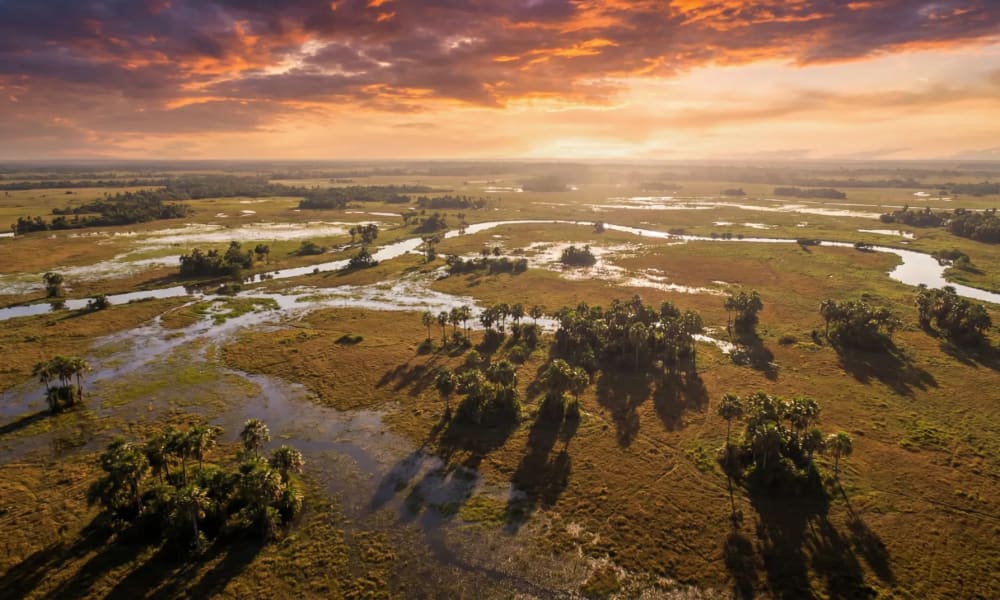
This image was generated with AI.
Best Travel Time Brazil
Regions, Climate & Month by Month
Regions, Climate & Month by Month
At six in the morning, the fog still hovers over the Rio Cuiaba while a jaguar glides silently to the shore. Two thousand kilometers away, the sun paints Copacabana in warm gold. And deep in the Amazon, a canoe paddles through flooded rainforest, past treetops that reflect in the black water. Three scenes, three climate zones, one country — and therein lies the answer to the question of the best travel time for Brazil.
The best travel time for Brazil is from April to September when the dry season prevails in the Southeast and Pantanal region. However, Brazil encompasses five different climate zones across 8.5 million square kilometers — larger than the continental USA. Thus, the optimal travel time varies greatly by region: For the Pantanal , July to October is recommended, for the Amazon by Manaus , July to November for trekking and wildlife observation, for Rio de Janeiro , April to September. Those planning a Brazil tour will find all the information for the right date selection in this guide — region by region, month by month.

Brazil's climate at a glance — rainy season and dry season
Forget spring, summer, autumn, and winter — at least as you know them. Brazil is located in the Southern Hemisphere, and the seasons are reversed compared to Europe: December to March is the southern Brazilian summer with heat and rain, June to August is the Brazilian winter with milder temperatures and dryness. In the north near the equator, none of this matters — there are hardly any temperature differences between the months. What determines the rhythm is solely the question: rainy season or dry season?
Brazil combines five climate zones in its territory: tropical-equatorial in the Amazon basin, tropical-semiarid in the Northeast interior, tropical-humid on the Northeast coast, subtropical-humid in the south, and tropical with savanna characteristics in the Pantanal and Central Brazil. For travelers, this means: The rainy season hits different regions at completely different times.
- Amazon and North: December to May
- Pantanal and Central Brazil: October to March
- Northeast Coast: March to July
- Rio and Southeast: November to March
- Fernando de Noronha: April to July
From our experience, this means good news: There is always a region in Brazil that is currently in the dry season. Brazil is accessible year-round — the question is not "if", but "where to".
Note
A common misunderstanding: Rainy season in Brazil almost never means continuous rain. Typical are afternoon thunderstorms lasting from one to three hours — intense, warm, and mostly predictable. The mornings remain sunny and dry. Therefore, the rainy season is not a real barrier for city tours and most outdoor activities. On the contrary: Some of Brazil's most spectacular experiences — such as Igapo canoeing through flooded Amazon rainforest — are only possible during the rainy season.
Best travel time by region — at a glance
| Region | Best Time | Avoid | Why | Temperature |
|---|---|---|---|---|
| Rio / Southeast Coast | Apr–Sep | Jan–Mar (rainy season) | Dry, 22–26°C, little rain | 22–26°C |
| Pantanal | Jul–Oct | Jan–Apr (flooding) | Dry season, jaguars at waterholes | 30–32°C |
| Amazon (trekking) | Jul–Nov | — | Low water, sandy beaches, boto dolphins | 30–33°C |
| Amazon (Igapo) | Jan–May | — | High water, canoe trips through rainforest | 30–33°C |
| Fernando de Noronha | Aug–Oct (diving) | — | Up to 50 m visibility, calm sea | 27–29°C |
| Lencois Maranhenses | May–Sep | Nov–Jan (lagoons dry) | Lagoons fully filled | 31–33°C |
| Salvador / Northeast | Oct–Feb | Apr–Jun (rainy season) | Dry season, beach weather | 27–31°C |
| Chapada Diamantina | May–Sep (hiking) | — | Dry paths, clear visibility | 24–27°C |
Rio de Janeiro and the Southeast Coast — best travel time
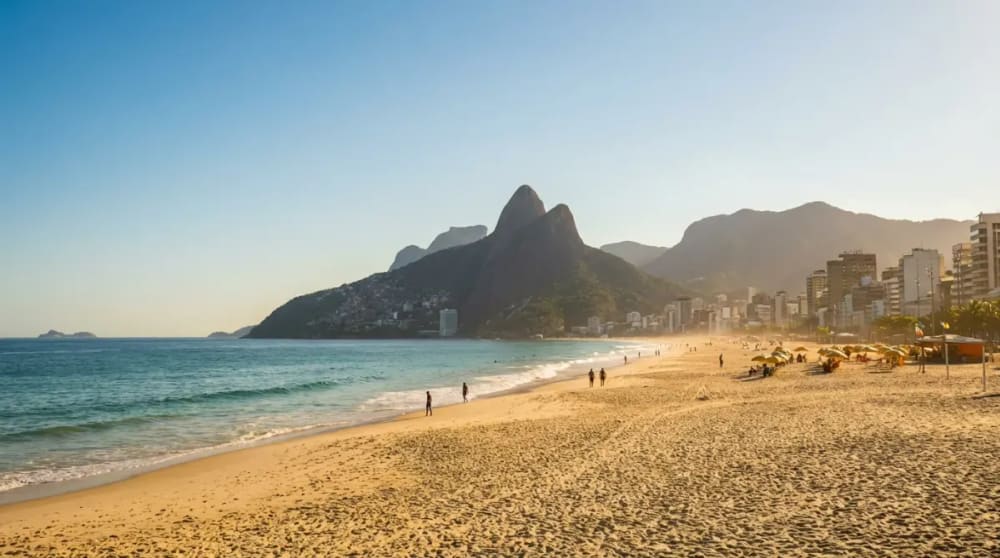
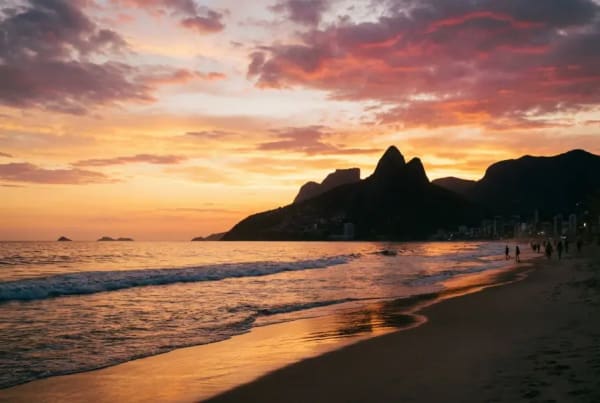
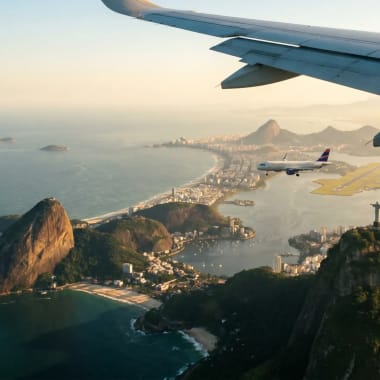
The best travel time for Rio de Janeiro is in the months of April to September. Brazilian autumn and winter prevail then — and that doesn't mean cold, but pleasant 22 to 26 degrees, clear skies, only six to eight rainy days per month, and many sunny hours. Beach at Copacabana, hikes through Tijuca National Park, and an afternoon in the Santa Teresa artists' district can be easily combined in one day. Water temperatures remain pleasant for swimming all year round at 22 to 24 degrees — also comfortable in the Brazilian winter.
The summer in Rio (December to March) tells a different story: Temperatures climb to 31 degrees and above, humidity presses down, and 150 to 180 millimeters of rainfall per month lead to regular afternoon thunderstorms. Nevertheless, now is peak season — as Carnival and Brazilian summer holidays attract millions of visitors to the city.
Carnival Travel Time: Peak Season with Pros and Cons
Those who want to experience Carnival in Rio need planning: In 2026, it falls on February 13 to 17, the Sambodrome parades take place from February 13 to 15, and the winners' parade on February 21. Hotels charge two to three times the normal price during Carnival week, and Sambodrome tickets range from 50 to 500 euros depending on the section and samba school. At least six months' advance booking is recommended — last-minute arrangements become both expensive and difficult, making it challenging to find any accommodation.
Insider Tip
Those who want to experience Rio without crowds and at normal prices should travel in May or October — dry season or transition period, pleasant 24 to 26 degrees, uncrowded beaches, all attractions open. Hikes in Rio to Sugarloaf Mountain or through Tijuca National Park are also significantly more enjoyable during the dry season: better visibility, dry paths, no risk of muddy slips.
April to September: The more relaxed alternative
In the months of April to September, Rio shows its most pleasant side: Rainfall decreases to 40 to 60 millimeters per month, temperatures remain pleasantly warm without the oppressive humidity of summer. Imagine standing on Sugarloaf Mountain with crystal-clear visibility to the horizon — without the haze that summer heat casts over the city. That's exactly what Rio is like in the dry season.
Florianopolis in southern Brazil follows an inverse rhythm: The high summer from December to February is the best beach time with 28 degrees and over 40 beaches to choose from. In contrast, winter brings mild 10 to 20 degrees — calm, affordable, and ideal for travelers who prefer to experience the vibrant Brazil without peak season hustle.
Pantanal — when to see jaguars?
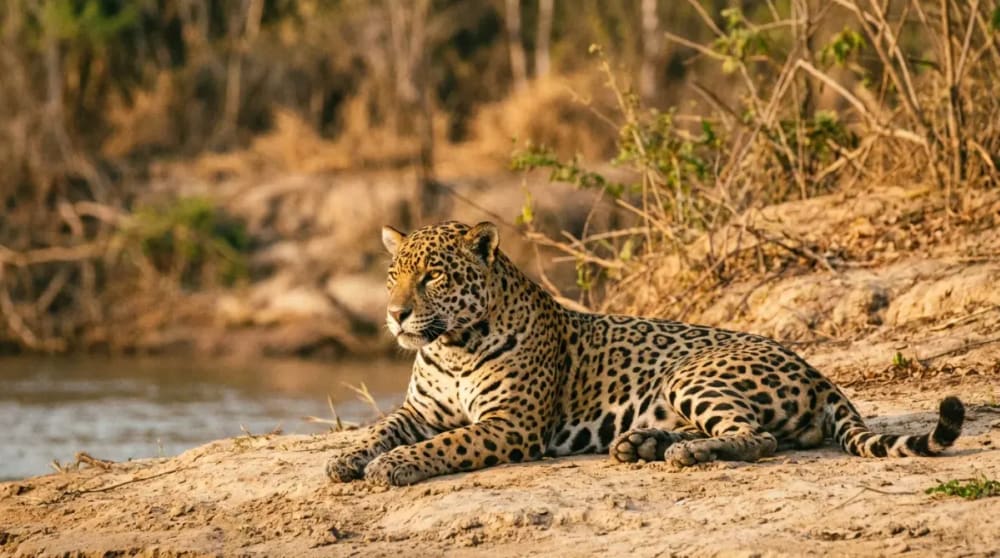
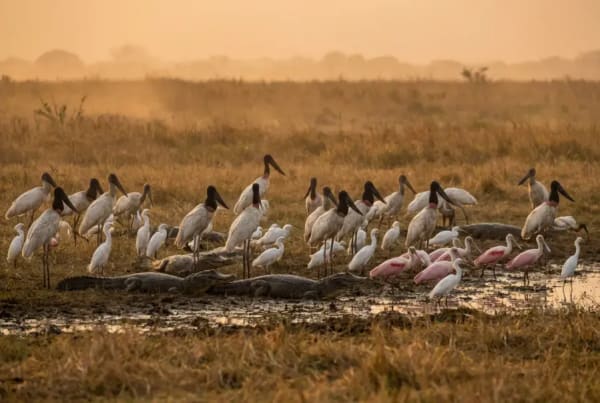
The dry season in the Pantanal lasts from May to October — transforming the largest wetland on earth into a natural stage for wildlife observation. Dropping water levels concentrate jaguars, caimans, capybaras, and over 650 bird species at the remaining waterholes and river courses. What otherwise lives spread over an area larger than Germany now congregates in just a few square kilometers. Porto Jofre on the Rio Cuiaba is the only place in the world where jaguars can be observed in this density and frequency in the wild.
The best months for jaguar sightings are July to October, with the absolute peak in September and October. During these weeks, sightings on full-day boat tours on the Rio Cuiaba are possible almost daily — often several times a day. Specialized providers even offer money-back guarantees in case of no sightings. This shows how reliable encounters have become in the dry season.
Dry Season: Wildlife Observation at Waterholes
From May to September, daily maximum temperatures of 30 to 32 degrees occur with pleasantly cool nights between 16 and 21 degrees. Almost no mosquitoes, dry access paths on the Transpantaneira, and excellent conditions for hours of wildlife observation from a boat. October still offers good sightings, but it can get intensely hot with up to 38 degrees — early morning safaris at sunrise are the clear recommendation then.
Rainy Season: Bird Paradises and Green Expanses
The rainy season in the Pantanal (October to April) is not a consolation prize — it has its own irreplaceable qualities. The landscape literally explodes in lush green, migratory birds return in vast flocks, and canoe excursions lead through flooded forest areas that would be walkable during the dry season. Jaguars are less frequently seen, but you will experience a Pantanal that only a few travelers know: quiet, water-rich, and imbued with a lush vitality that starkly contrasts with the barren beauty of the dry season. April is the ideal transitional month — the water starts to recede, the landscape still glows green, and first animals concentrate at the shrinking waterways.
Insider Tip
June and July offer the best compromise in the Pantanal: most pleasant temperatures (20 to 26 degrees at night), few tourists, excellent jaguar sighting opportunities, and the highest bird concentration of the year. Also read our blog article Pantanal vs. Galapagos — where to observe the better wildlife?
Amazon by Manaus — Dry Season or Rainy Season?
The Amazon by Manaus is accessible all year round — but the experience that awaits you differs so fundamentally depending on the season that it feels like visiting two different worlds. The water level of the Rio Negro fluctuates by up to 15 meters between high and low water. 15 meters — that corresponds to a five-story house. Trees that tower high above you in the dry season stand submerged to the crown in the rainy season.
The temperatures in Manaus remain constant year-round at 26 to 33 degrees — European seasons do not exist here, only the transition between rain and relative dryness. Even in the drier months, about 2,300 millimeters of precipitation fall annually. For comparison: Berlin sees about 570 millimeters. True tropical climate indeed, without a truly dry phase.
Dry season (July to November): Trekking, sandy beaches, and Boto sightings
During the dry season, receding water levels expose white sandy beaches along the Rio Negro, trekking through the jungle becomes possible on solid paths, and animals concentrate along the remaining waterways. The pink Boto river dolphins appear more frequently near the river and are easily visible to visitors. Mosquitoes are significantly less common than in the rainy months. However, expect around six to ten rainy days per month — absolute dryness does not exist in the Amazon.
Rainy season (December to May): Igapo canoe trips through flooded rainforest
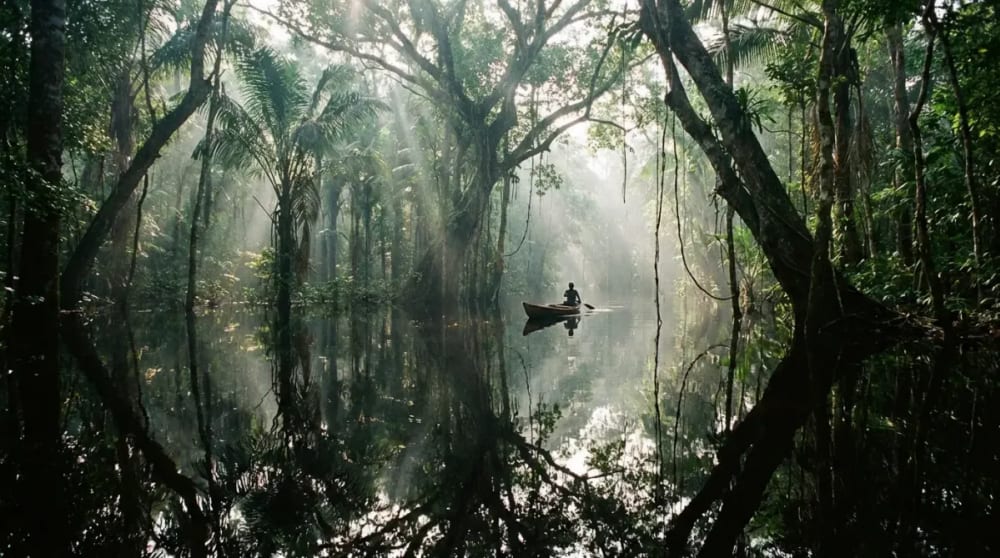
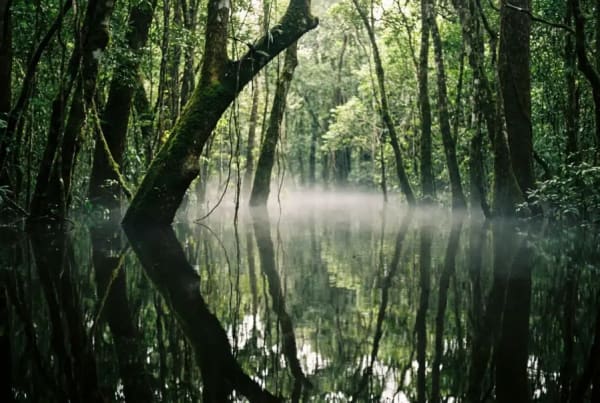
When the water level of the Rio Negro rises by up to 15 meters, the rainforest transforms into a flooded cathedral. Igapo — that’s what the flooded jungle is called — becomes accessible by canoe. You glide silently between tree trunks, above you the closed canopy, below you the crystal clear black water of the Rio Negro, in which the jungle reflects like in an endless mirror. These canoe trips through the flooded rainforest are among the most extraordinary nature experiences Brazil has to offer. Additionally, river cruises on tributaries, which are simply not navigable during the dry season.
Note
The sweet spot for Amazon trips is May to June: water levels still high enough for Igapo canoe trips and boat trips on tributaries, but the heaviest rainfall has already passed. Fewer mosquitoes than in the main rainy season, and the first sandy beaches appear from July. More about Jungle tours from Manaus .
Attention
Climate change note: In 2024, the Rio Negro reached a water level of 12.66 meters in Manaus — the lowest in 122 years of measurement. At the same time, Rio Grande do Sul in the south faced a historic flooding disaster. Extremes are increasing. Check current water levels and travel advisories before booking — specialized providers know the current conditions.
Fernando de Noronha — when is the visibility best?
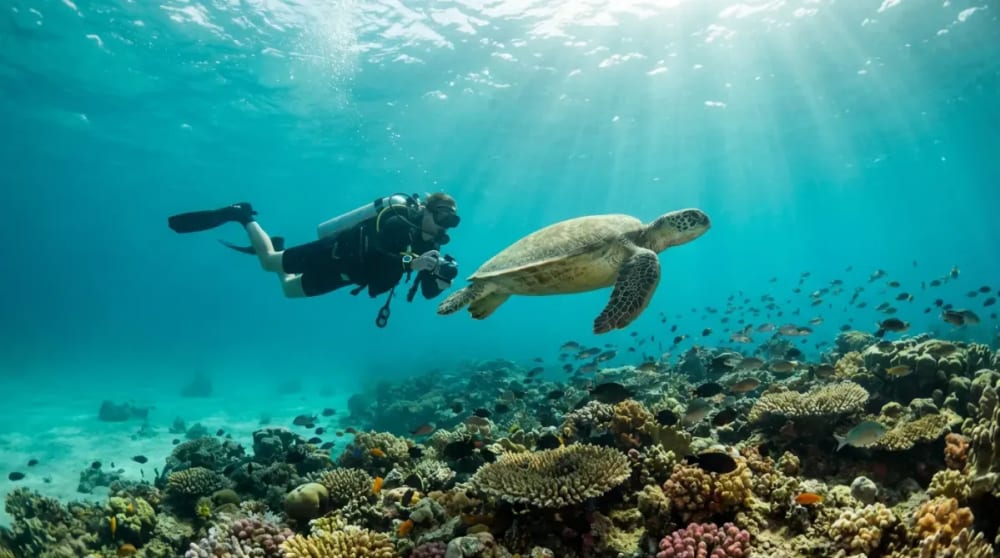
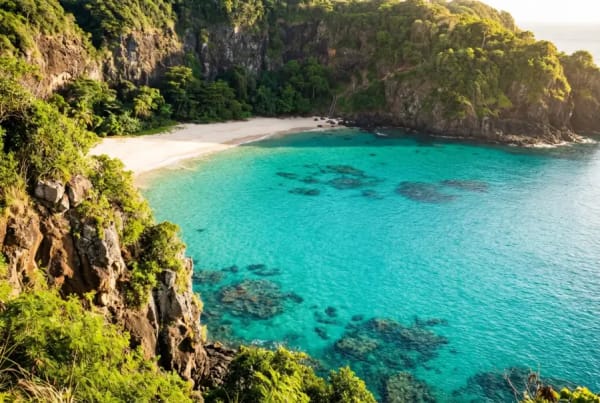
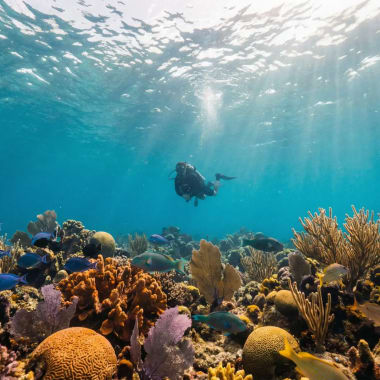
Fernando de Noronha surprises connoisseurs with a paradox: the best diving visibility — up to 50 meters of crystal-clear underwater visibility — falls in the months of August to October. This is precisely not the tourist high season. December to February lures with the highest prices and full accommodations, but offers significantly worse diving conditions: swells from the open Atlantic, and visibility drops to 25 to 30 meters.
The water temperature remains constant at 27 degrees year-round — every month is bathing time. Over 2,000 spinner dolphins live year-round in the waters of the archipelago and are visible throughout the year, particularly impressive during early morning observations in the Baia dos Golfinhos, when hundreds of animals simultaneously display their acrobatic jumps. Sea turtle nesting occurs from December to April, with young turtles hatching mainly between February and April — a moving sight that the TAMAR protection project carefully makes accessible to visitors.
Diving visibility August to October vs. High season December to February
For divers and snorkelers, our recommendation from experience is clear: visit from August to October. The advantages at a glance — up to 50 meters of underwater visibility instead of 25 to 30, calmer sea, significantly cheaper accommodations, and considerably fewer tourists on the island. September is especially ideal for a combination with the Pantanal — Jaguar season on land and the best diving visibility underwater on a single trip. More about Diving and snorkeling in Brazil.
Attention
Fernando de Noronha has strict visitor restrictions: a maximum of 460 visitors per day. The environmental tax TPA amounts to R$ 105.79 per day starting in 2026 (about 18 to 20 Euros) — for seven days around 130 Euros. Additionally: National park ticket R$ 384 for foreigners (from November 2025). TPA must be paid online before arrival. In high season, plan three to six months in advance. Also read Fernando de Noronha — Brazil's hidden paradise.
Lencoeis Maranhenses — when the lagoons are filled
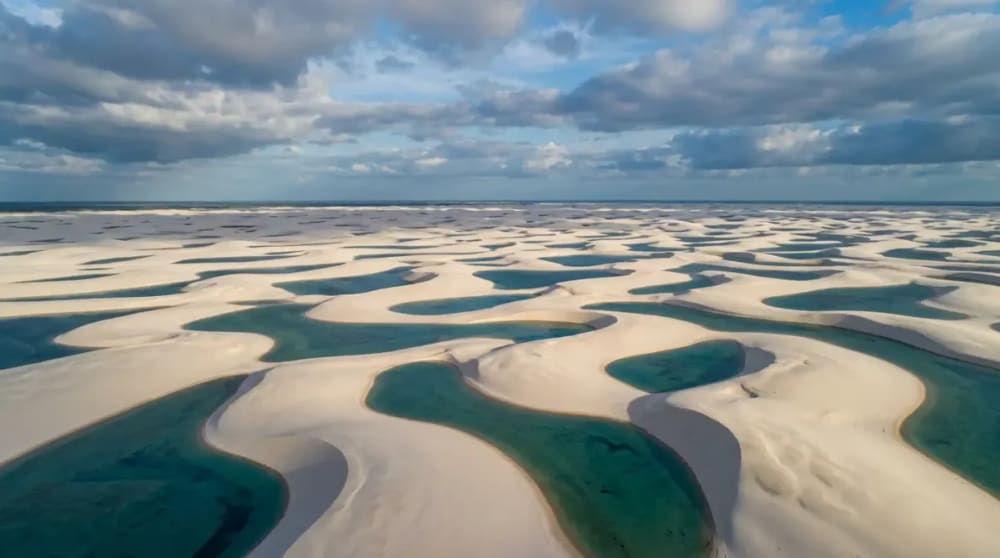
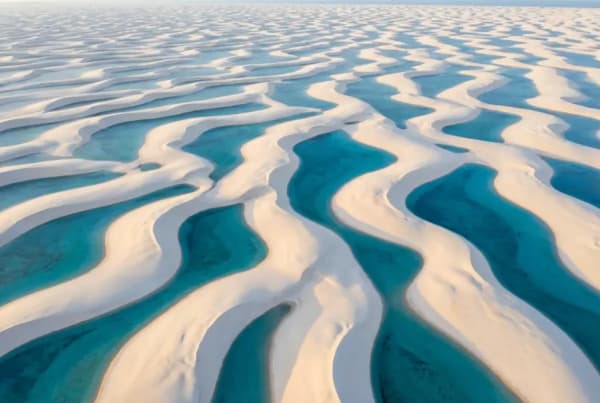
Imagine a desert that floats. The Lencoeis Maranhenses are among the most extraordinary natural spectacles we know in Brazil: white sand dunes up to 40 meters high, interspersed with hundreds of turquoise freshwater lagoons, where you can bathe at 27 degrees water temperature. This natural wonder is created by an impermeable clay layer beneath the sand — the rainy season (February to April) fills the depressions between the dunes with crystal clear water, which slowly evaporates during the dry season.
The best travel time for Lencoeis Maranhenses is from May to September, when the lagoons are maximally filled after the rainy season. From November to January, many lagoons are dry — the dune landscape remains impressive, but the unique interplay of dazzling white sand and turquoise water that has made Lencoeis famous worldwide is missing.
Insider tip
August is the true sweet spot for Lencoeis: lagoons still full, heat bearable (32 degrees), significantly fewer tourists than in July (Brazilian school holidays) and cheaper accommodations. May visitors often have the lagoons almost to themselves — freshly filled, few tourists, lowest prices. Hikes should always start early in the morning: at six to seven o'clock, the heat is bearable and the light perfect for photography. More in the Travel report: From the Chapada to Lencoeis.
Salvador de Bahia and the Northeast
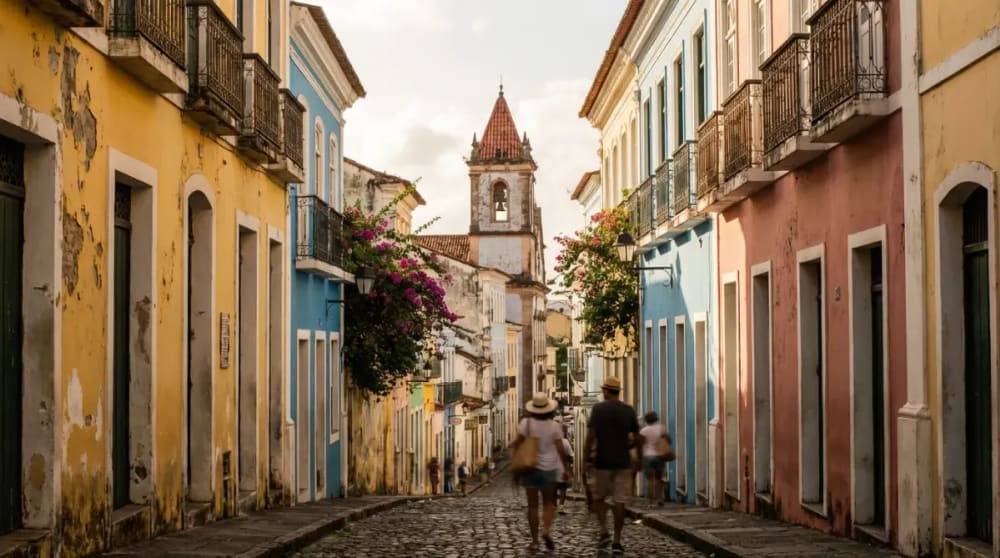
Salvador de Bahia and the Brazilian Northeast welcome you year-round with bathing temperatures between 27 and 31 degrees. The best travel time for Salvador is from October to February — little rain, plenty of sun, and the most colorful colonial streets of the Pelourinho district in the best light. The rainy season (March to August) brings up to 16 rainy days in May, but it is not a real travel obstacle: the showers are short, warm, and usually pass by early afternoon.
The Carnival in Salvador (2026: February 13 to 17) deserves special mention, because for many Brazilians it is the more authentic carnival: Axe music, Trios Eletricos — mobile stages on trucks that sound all the streets — and free street dancing instead of Sambadrome tribune. Cheaper than Rio, more immediate, and without the strict choreography of the large samba schools. Those who want to feel the raw, unfiltered Brazil are right in Salvador.
The Chapada Diamantina in the hinterland of Bahia offers a completely different dynamic: hikes through table mountains and gorges are best done from May to September during the dry season — dry paths, 24 to 27 degrees, clear visibility. However, to experience the spectacular waterfalls of the region, especially the 380-meter-high Cachoeira da Fumaca, one must come between November and April, when they are fed by the rains and stand in full force.
Month by month — Brazil from January to December
January
Brazilian high summer and the most expensive month of the year. Rio, Salvador, and Florianopolis are overcrowded during the summer holidays, hotel prices peak. The Amazon and Pantanal are in the midst of the rainy season. Those traveling now should aim for the Northeast Coast or Fernando de Noronha, where the sea turtle nesting season begins.
February
Carnival dictates the rhythm — in 2026 it falls on February 13 to 17 in Rio and Salvador. The energy is contagious, but so are the prices: hotels charge double to triple. The Amazon and Pantanal remain in the rainy season. For carnival lovers, February is an unforgettable experience. For everyone else: enjoy the Northeast away from the carnival cities or choose a quieter month.
March
The post-carnival calm sets in and with it, prices decrease significantly. Rio becomes more pleasant, the tourist crowds thin out. In the Lencoeis Maranhenses, the rainy season now fills the lagoons. In the Pantanal, many roads are impassable, but the Iguazu waterfalls are in full force — the highest water flow occurs between March and May. A good month for price-conscious travelers who are flexible.
April
The underestimated transition month. Rio becomes quieter and significantly cheaper, the dry season begins. In the Pantanal, the water level drops, and the first animals concentrate along the rivers. In the Chapada Diamantina, the waterfalls are still. Few tourists, attractive prices, and Brazil showing a relaxed side. From our experience, one of the most underestimated travel months.
May
The Lencoeis Maranhenses present their freshly filled lagoons — hardly any tourists, lowest prices. Rio enjoys the dry season. In the Amazon, the sweet spot is reached: water levels still high enough for Igapo canoe trips, but the heaviest rainfalls are over. In the Pantanal, the dry season begins. Flight and hotel prices are at their annual low. One of the best all-round months for a trip to Brazil.
June
Brazilian winter — and it sounds better than it is for Europeans: Rio welcomes you with pleasantly dry temperatures of 22 to 24 degrees. In the Pantanal, the jaguar season begins, and bird concentrations reach their annual peak. The Lencoeis lagoons are full to the brim. In the Amazon, the first sandy beaches appear. Prices remain low, the only exception: in the Northeast, the Festas Juninas temporarily drive local prices up.
July
The Brazilian school holidays lead to increased domestic tourism and higher prices. However, July offers excellent jaguar opportunities in the Pantanal with the most pleasant temperatures of the year — comfortably cool at night at 16 to 21 degrees. The Lencoeis experience their high season with full lagoons and more visitors. Fernando de Noronha starts into the dry season, and Rio remains dry and clear. A strong all-round month, but pricier than June or August.
August
A month where almost everything comes together: Pantanal in the jaguar high season, Fernando de Noronha with excellent diving visibility up to 50 meters, Lencoeis with still full lagoons but significantly fewer tourists than in July. Rio and Salvador are dry and sunny, the Amazon presents itself during the dry season. One of the most versatile travel months for Brazil — with good conditions in almost every region.
September
Our tip as the best single month for a Brazil round trip. In the Pantanal, the jaguar sighting density reaches its peak. Fernando de Noronha offers the best diving visibility of the year. The Lencoeis lagoons are still swimmable. Rio enjoys the dry season, and Salvador enters the dry phase. The Amazon is well navigable. Moderate prices and few international tourists make September a clear recommendation. Our Brazil highlights round trip unfolds its full effect this month.
October
The Pantanal transitions to the rainy season but still offers good conditions — albeit at temperatures up to 38 degrees. Fernando de Noronha remains a good diving choice with few tourists. The Lencoeis lagoons are slowly diminishing. Rio and Salvador present themselves optimally. The cheapest month still offering good conditions in almost all regions — a true insider tip for price-conscious travelers.
November
Transition period with mixed signals. Rio glides into the rainy season, but the pre-Christmas mood makes the city attractive. Florianopolis and the south coast become popular. Fernando de Noronha enters the high season with the first sea turtles. The Pantanal is in the rainy season. In the Chapada Diamantina, the waterfalls awaken. Prices slowly rise.
December
From mid-December, the high season begins — prices rise sharply. Rio, Salvador, and Florianopolis welcome the Brazilian summer with temperatures above 30 degrees. Fernando de Noronha reaches peak prices. New Year's Eve on the beaches of Copacabana or in Florianopolis is among the most intense New Year's experiences worldwide — those who want to be there should plan months in advance.
Do you already have a travel period in mind but are not sure which regions are best suited? We know Brazil's climate zones from personal experience and are happy to check which route fits your time frame — free and without obligation. Request advice now .
What type of traveler travels when?
| Type of traveler | Best months | Region | Recommended round trip |
|---|---|---|---|
| Wildlife & Jaguars | Jul–Oct | Pantanal (Porto Jofre) | Nature round trip Pantanal & Fernando de Noronha |
| Diving & Snorkeling | Aug–Oct | Fernando de Noronha | Nature round trip |
| Beach & Swimming | Dec–Feb (South), May–Sep (Rio) | Florianopolis, Rio, Northeast | Brazil Intensive 3 weeks |
| Nature & Trekking | May–Sep | Chapada, Amazon, Lencoeis | Brazil Highlights |
| Culture & Carnival | Feb (Carnival), year-round | Rio, Salvador | Northeast round trip |
| Birdwatching | Jun–Jul, Nov–Dec | Pantanal | Nature round trip |
| Budget travelers | May–Jun, Oct | All regions | Brazil Highlights |
| Round trip (all-round) | Sep | All regions simultaneously optimal | Brazil Intensive 3 weeks |
Rainy season in Brazil — is the trip still worth it?
Yes, absolutely — and for certain types of travelers, it can be particularly advantageous. Those who are flexible and not exclusively planning a beach holiday can benefit from the Brazilian rainy season in multiple ways:
- 20 to 50 percent cheaper hotels and significantly fewer tourists at all major attractions
- Lush green landscapes, richer vegetation, and more abundant waterfalls
- Igapo canoe trips in the Amazon (January to June) — an experience that is only possible during the rainy season
- Green Pantanal with boat excursions through flooded areas (January to March)
- Chapada Diamantina waterfalls in full force (November to April)
- Cities like Rio, Salvador, and Sao Paulo function independent of the weather — brief afternoon showers hardly affect the city visit
But we want to be honest: The rainy season also has real limitations. Many roads in the Pantanal are impassable from November to April, in the Amazon, the mosquito population increases significantly, and heavy rainfall can occasionally lead to landslides in the southeast. With proper preparation, it can be managed well — a season-dependent packing list for Brazil is essential.
Insider tip
Flights to Brazil are cheapest from May to September — often several hundred euros below high season levels. Combined with lower hotel prices on site, the low season is clearly recommended for budget-conscious travelers. In Rio, the low season (May to September) is also the dry season — so the best weather at the lowest price. More on overall costs in our costs and budget guide. Tips for finding flights can be found in our guide to traveling to Brazil .
Unsure whether your desired timeframe suits the right region? We are happy to check this for you and suggest the optimal route — free of charge and without obligation. Talk to our Brazil consultants .
Suitable round trips for any travel time
Depending on when you can travel, we recommend different routes through Brazil. All our round trips are individually customizable — the following suggestions show which combinations work best in which season:
- Brazil highlights: Amazon, Pantanal & Northeast — The great round trip through three climate zones, ideal from July to October when all regions offer good conditions simultaneously.
- Nature pure: Pantanal & Fernando de Noronha — Wildlife both on land and underwater combined. Ideal from August to October, when jaguar season and the best diving visibility coincide.
- Northeast: Lençóis Maranhenses & Salvador — Dune landscapes, colonial architecture, and Afro-Brazilian culture. Ideal from May to September, when the lagoons are full and Salvador is dry.
- Brazil Intensive: 3 weeks — For those who want to experience Brazil in its full depth. This route unfolds its full impact in September.
More Brazil travel information
The best travel time is just one component of your planning. Our additional guides will help you with the next steps:
- Travel and flights — Direct flights, domestic flight strategy, and affordable flight times
- Entry and visa — Entry requirements for German-speaking travelers
- Vaccinations and health — Recommended vaccinations and health tips
- Safety in Brazil — Current situation and practical tips
- Costs and budget — Daily budgets, prices, and saving tips by season
- Packing list Brazil — What you should pack
- Diving and snorkeling — Fernando de Noronha and the best dive spots
Or start directly with our Brazil overview — the entry point to all destinations, round trips, and experiences.
Discover Brazil — our travel destinations
Each region of Brazil has its own climate, character, and best travel time. Here you will find our detailed regional guides:
- Rio de Janeiro — Sugarloaf and Copacabana (best time: Apr–Sep)
- Pantanal — Jaguars and wildlife (best time: Jul–Oct)
- Amazon on the Manaus — Rainforest and river dolphins (Trekking: Jul–Nov, Igapo: Jan–May)
- Fernando de Noronha — Diving and dream beaches (best visibility: Aug–Oct)
- Lençóis Maranhenses — Dunes and lagoons (best time: May–Sep)
- Salvador de Bahia — Culture and Carnival (best time: Oct–Feb)
- Chapada Diamantina — Hiking and waterfalls (Hiking: May–Sep)
- Florianópolis — The most beautiful beaches in southern Brazil (best time: Dec–Feb)
Planning a trip to multiple countries? Our overview of the best travel time in Latin America helps with planning. And for personal impressions, we recommend our Brazil travel report: From Chapada to Lençóis.
Your dream holiday, tailor-made by true connoisseurs.
From the first spark of inspiration to the moment you return home full of stories, we’re by your side – whether by phone, email or WhatsApp, whenever you need us. Every journey we design is as unique as you are: individually crafted with exclusive privileges and exceptional arrangements that make your experience truly unforgettable.
Experts for your trip

You might also like this
This image was generated with AI.
This image was generated with AI.
This image was generated with AI.