


This image was generated with AI.
Best Time to Visit Galápagos: Month by Month
Climate, wildlife calendar, and seasonality month by month
Climate, wildlife calendar, and seasonality month by month
Galápagos is a year-round destination — but not every month suits every traveler. December to May brings warm, calm seas, ideal for families and snorkelers. June to November is cooler and more nutrient-rich — the season of hammerhead sharks, whale sharks, and breeding colonies. May and November are the underrated transition months when both worlds overlap — and cruise lines often grant discounts. If you're planning a Galápagos trip , you'll find an honest answer here for which month fits which kind of journey.

The two seasons on Galápagos
Unlike mainland Ecuador, Galápagos doesn't have four seasons. The Humboldt Current — a cold Pacific stream — and the prevailing weather divide the year into two seasons, each with its own character:
Warm season (December to May) — snorkeling, families, tortoise hatching
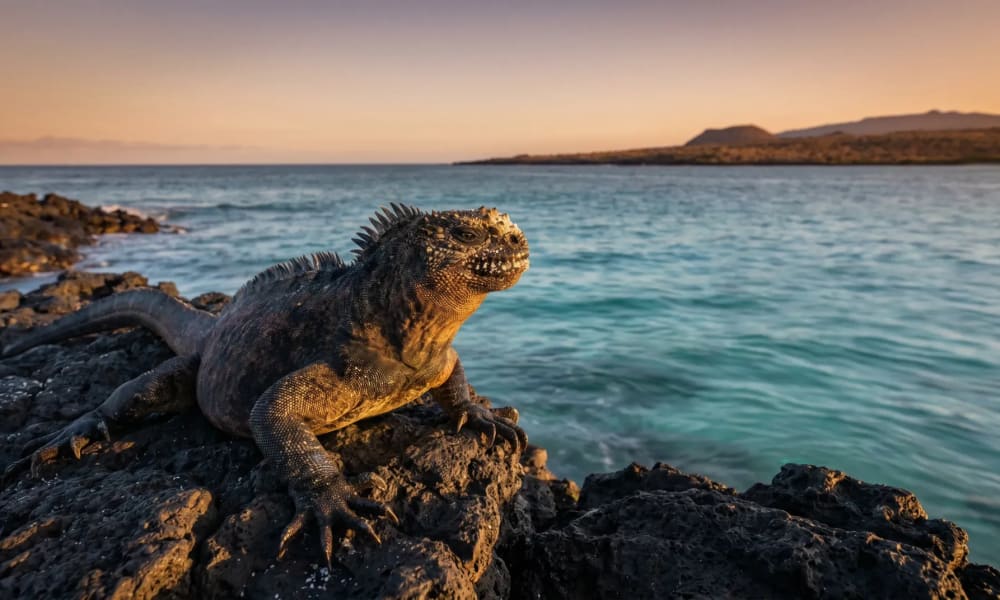
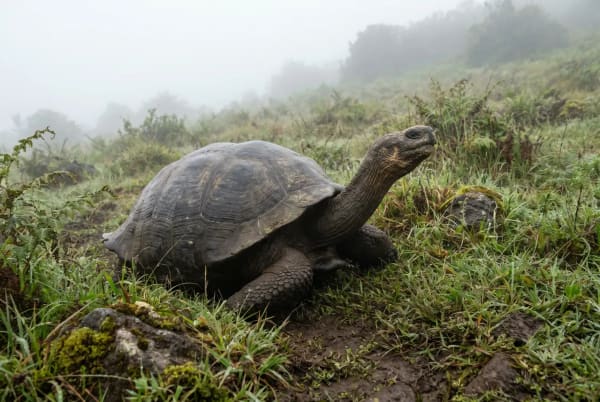
The warm season coincides with the drier season on the islands. Air temperatures run 26–30 °C, water temperatures 23–26 °C. Seas are calm — ideal for families with children, snorkelers, and first-time Galápagos visitors. Giant tortoises begin laying eggs in the lowlands; hatchling season runs from December to March. Marine iguanas are in full breeding mode, and sea lion pups born from October onward reach their most playful phase during the warm season.
Cool season (June to November) — diving, hammerheads, whale sharks
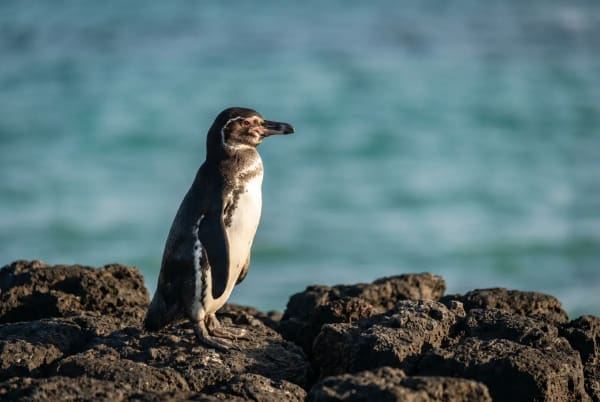
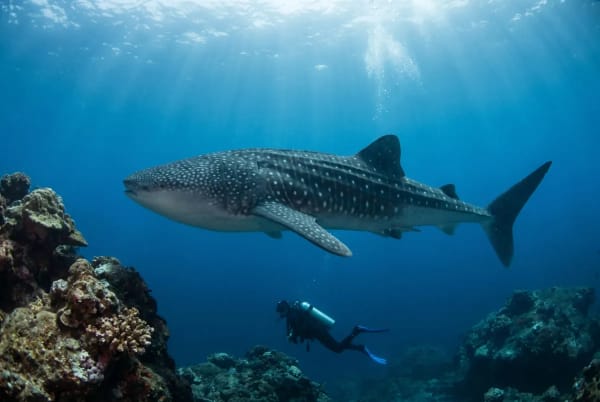
The garúa season brings cooler air temperatures (22–26 °C) and water temperatures of just 19–22 °C — wetsuits are essential for divers. In return, the Humboldt Current pumps nutrients into the surrounding waters and triggers a spectacular pelagic season: hammerhead schools at Wolf and Darwin Island, whale sharks (predominantly pregnant females — a phenomenon found nowhere else in the world), Galápagos penguins in full activity, and flightless cormorant courtship. Waved albatrosses breed on Española from April to December.
Transition months May and November
May and November are the insider picks. Both transition months combine calm seas with active wildlife — breeding colonies are still occupied, the water is clear, and the seas aren't too rough. Visitor numbers run below the peak months, and cruise lines frequently offer 10–25% discounts. IGTOA naturalist guides consistently name May as their favorite month.
The hammerhead question
Some sources say hammerheads are visible year-round on Galápagos. That's true — but only partially. A small resident population lives year-round at Wolf and Darwin Island. The spectacular schools with hundreds of hammerheads, however, are migratory and appear reliably from July to November. For divers with a hammerhead wish list, the cool season is essential.
Wildlife calendar: what you'll see and when
The table below bundles the most important wildlife highlights, climate data, and visitor density month by month. It doesn't replace a guidebook, but it gives you the fastest orientation for your planning.
| Month | Water temp. | Wildlife highlights | Visitors | Recommended for |
|---|---|---|---|---|
| Jan | 24–26 °C | Tortoise hatching, marine iguana breeding, sea lion pups | high | Families, snorkelers |
| Feb | 25–26 °C | Flamingo courtship, clear visibility, penguins active | medium | Families, first-time visitors |
| Mar | 25–26 °C | Waved albatrosses return to Española, tortoise hatching | medium | Families, photographers |
| Apr | 24–25 °C | Waved albatross courtship, blue-footed booby dance, peak underwater visibility | medium | Photographers, divers |
| May | 22–24 °C | Transition: breeding colonies active, seas still calm — insider pick | low | All traveler types |
| Jun | 21–23 °C | Garúa begins, waved albatross feeding chicks, first hammerheads | medium | Divers, photographers |
| Jul | 19–22 °C | Hammerhead schools, whale sharks arrive, penguins very active | high | Divers, wildlife |
| Aug | 19–22 °C | Whale shark peak, hammerheads, possible humpback whale sightings | high | Divers |
| Sep | 19–21 °C | Sea lion pups, hammerheads, best diving visibility — fewest visitors | low | Divers, photographers |
| Oct | 19–22 °C | Sea lion pups, whale sharks still around, penguins in top form | low | Divers, photographers |
| Nov | 21–24 °C | Transition: wildlife still active, seas calming — insider pick | low | All traveler types |
| Dec | 23–25 °C | Tortoise egg-laying, marine iguana breeding, Christmas peak from Dec 20 | very high | Families (before Dec 20) |
Best time to visit by traveler profile
Instead of a one-size-fits-all recommendation, it pays to look at your own travel profile. Four target groups, four very different optimal months:
Families with children
Best months: January to April (avoid December 20 to January 5 because of peak-season pricing). Warm water (25 °C), calm seas, plenty of wildlife moments right at the boat (sea lion pups, young marine iguanas). Snorkeling conditions are ideal, and most yachts accept children from age 6.
Divers (advanced + liveaboard)
Best months: July to November. Hammerhead schools, whale sharks, Galápagos sharks, manta rays — the nutrient-rich cool season is the only pelagic season worldwide where 90% of whale shark sightings are pregnant females (peer-reviewed). Wolf and Darwin Island are reachable only by liveaboard — book 12 to 18 months in advance. More in our cruise guide .
Photography and birdwatching
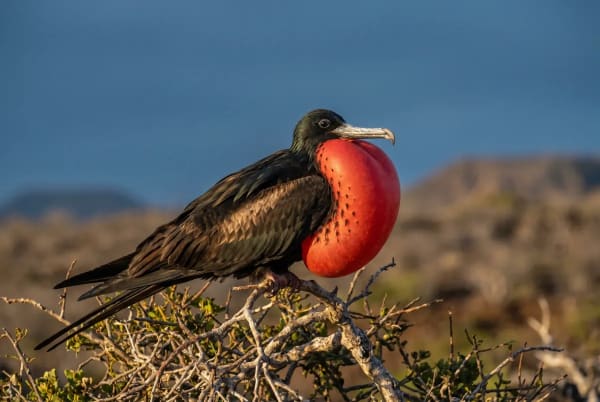
Best months: April to August. Breeding colonies are in full activity — waved albatrosses (Española), blue-footed booby courtship dance, frigatebirds with inflated throat pouches, Nazca boobies. The light in the early cool season is intense and high in contrast.
First-time visitors with a general nature interest
Best months: May or November. Both transition months offer the best of both worlds — active breeding colonies, clear visibility, calm seas, lower visitor numbers, and frequent cruise discounts.
Our recommendation
If you're flexible and don't have a specific wildlife target, choose May or November. The combination of active wildlife, calm seas, low occupancy, and more attractive prices isn't matched in any other month — and even seasoned Galápagos naturalists keep naming May as their favorite time of year.
Galápagos travel timing for divers
Galápagos ranks among the world's top three dive destinations — but not every month delivers the full spectacle. The pelagic big game arrives with the Humboldt Current in the cool season.
- July to November: hammerhead schools at Wolf and Darwin (often 50–200 animals per school)
- July to October: whale sharks — Galápagos has the highest share of pregnant females among whale shark sightings worldwide
- June to December: Galápagos sharks, Galápagos bull sharks, eagle rays, mola mola
- Year-round: resident hammerheads (small population), marine iguanas, sea lions, sea turtles, manta rays
- Wolf and Darwin Island: reachable only by liveaboard, 12–18 months booking lead time, advanced level (strong currents, 5 mm wetsuit minimum)
Best time for combining Ecuador and Galápagos
A Galápagos trip combines elegantly with mainland Ecuador — the climate cycles match surprisingly well. The Andes (Quito, Otavalo, Baños) have a pronounced dry season from June to September, which overlaps exactly with the Galápagos diving season. If you want to combine the mainland with Galápagos, July and August offer the classic double-header: Andean dry season plus Galápagos pelagic action. For families with a snorkeling focus, February to April pairs the warm Galápagos season with the second Andean dry phase. The Amazon (Yasuní, Cuyabeno) is a year-round destination, with slightly less rain between August and March.
High season on Galápagos — and what it costs
Galápagos has three clear high seasons, when prices climb noticeably and availability tightens:
- Christmas/New Year (December 20 to January 5): the year's highest prices, with 30–50% premiums over shoulder season. Families should — if possible — shift to mid-January through mid-February.
- Easter (the week around Good Friday): noticeable premium, especially for Spanish-speaking families from Latin America.
- July and August: European summer holidays plus peak diving season — the busiest time for liveaboards.
Booking lead time by trip type (as of May 2026):
| Trip type | Recommended lead time | High-season lead time |
|---|---|---|
| Tourist Superior cruise (8 days) | 3–6 months | 6–9 months |
| First-Class cruise (8 days) | 6–9 months | 9–12 months |
| Luxury yacht / 16 pax | 9–12 months | 12–15 months |
| Liveaboard Wolf & Darwin | 12–18 months | 15–18 months |
| Individual island hopping | 4–8 weeks | 3–4 months |
More on the booking logic in our cruise guide . For mandatory fees (USD 200 National Park, USD 20 Transit Control Card), see entry rules .
Galápagos climate table — all 12 months at a glance
| Month | Air temp. | Water temp. | Rainy days | Sun hours | Season |
|---|---|---|---|---|---|
| Jan | 26–30 °C | 24–26 °C | 6 | 6 | warm/wet |
| Feb | 27–31 °C | 25–26 °C | 8 | 6 | warm/wet (highest rainfall) |
| Mar | 27–31 °C | 25–26 °C | 7 | 6 | warm/wet |
| Apr | 26–30 °C | 24–25 °C | 5 | 7 | warm, clear visibility |
| May | 25–28 °C | 22–24 °C | 3 | 6 | transition — insider pick |
| Jun | 22–26 °C | 21–23 °C | 2 | 5 | garúa begins |
| Jul | 21–25 °C | 19–22 °C | 2 | 5 | cool, misty mornings |
| Aug | 21–25 °C | 19–22 °C | 2 | 5 | cool, often overcast |
| Sep | 21–25 °C | 19–21 °C | 2 | 5 | cool, fewest visitors |
| Oct | 22–26 °C | 19–22 °C | 2 | 5 | cool, wildlife peak |
| Nov | 23–27 °C | 21–24 °C | 3 | 6 | transition — insider pick |
| Dec | 25–29 °C | 23–25 °C | 5 | 6 | warm/wet (high season from Dec 20) |
Daily averages. Water temperatures vary by island — the western islands (Isabela, Fernandina) run 1–2 °C cooler year-round due to the Cromwell Undercurrent.
Frequently asked questions about the best time to visit Galápagos
Galápagos is a year-round destination. The warm season (December to May) suits families and snorkelers — calm seas, water temperatures of 23–26 °C. The cool season (June to November) is the diving season, with hammerheads, whale sharks, and penguin activity. May and November are the underrated transition months: calm seas, active wildlife, and usually better prices.
Hammerhead schools of 50 to 200 animals appear reliably from July to November at Wolf and Darwin Island — a small resident population lives there year-round. Whale sharks visit Galápagos from July to October; remarkably, more than 90% of the whale sharks sighted are pregnant females — a phenomenon found nowhere else on Earth. Both species are accessible only by liveaboard dive cruise.
In the warm season (December to May), water temperatures run 23–26 °C — snorkeling is comfortable without a wetsuit. In the cool season (June to November), they drop to 19–22 °C — 5 mm wetsuit recommended. The western islands (Isabela, Fernandina) run 1–2 °C cooler year-round than the east, due to the Cromwell Undercurrent.
The three high seasons are Christmas/New Year (Dec 20 to Jan 5), Easter, and July/August. Tourist Superior cruises need 3–6 months of lead time, First Class 6–9, luxury yachts 9–12, and liveaboards at Wolf and Darwin even 12–18 months. Island hopping trips can often be set up with as little as 4–8 weeks of lead time.
The lowest prices fall in May, September, October, and early November — shoulder season with 10–25% discounts on cruises common. May also delivers active wildlife and calm seas, which is why even seasoned naturalist guides name it as their favorite month.
Yes — the climate cycles align well. July and August combine the Andean dry season (Quito, Otavalo, Baños) with the Galápagos diving season. February to April pairs the warm Galápagos season with the second Andean dry phase. The Amazon is a year-round destination.
Plan your Galápagos trip individually
The right travel time is just one piece — what matters is that yacht choice, route, island-hopping component, and travel window all align. We know the islands from firsthand experience and plan your Galápagos trip individually — tailored to your travel window and your wildlife priorities. Get a free, no-obligation quote .
More Galápagos guides
- Galápagos cruise guide — classes, routes, operators
- Galápagos entry rules — TCC, National Park fee, process
- Galápagos giant tortoises — 12 species, viewing spots
- Region: Santa Cruz · Isabela · Española · San Cristóbal · Floreana
Your dream holiday, tailor-made by true connoisseurs.
From the first spark of inspiration to the moment you return home full of stories, we’re by your side – whether by phone, email or WhatsApp, whenever you need us. Every journey we design is as unique as you are: individually crafted with exclusive privileges and exceptional arrangements that make your experience truly unforgettable.
Experts for your trip

You might also like this
This image was generated with AI.

This image was generated with AI.
This image was generated with AI.