


Chapada Diamantina
Brazil's hiking paradise in the heart of Bahia
Brazil's hiking paradise in the heart of Bahia
Table mountains, crystal caves, and Brazil’s highest waterfall: The Chapada Diamantina is the quiet counterpart to Salvador — a highland that tells the story of Bahia anew.

Best travel time
May to September
What is the Chapada Diamantina?
The Chapada Diamantina is a 1,521 square kilometer national park in the highlands of Bahia, about 420 kilometers west of Salvador da Bahia. The name — Portuguese for 'Diamond Plateau' — recalls the diamond rush of the 19th century that made the region the world's most important diamond supplier for three decades. Today, the Chapada Diamantina is considered one of the most beautiful hiking areas in South America: table mountains, waterfalls up to 340 meters high, crystal caves, swamp landscapes, and a biodiversity arising from the rare meeting of three biomes — Caatinga, Cerrado, and Atlantic rainforest.
The Parque Nacional da Chapada Diamantina was established by decree in 1985 and is now one of the most important nature destinations for international travelers to Brazil. Anyone already planning Salvador will find a convenient addition in the Chapada: Both regions are located in Bahia, can be reached in a day — and form one of Brazil's richest cultural contrasts. An Afro-Brazilian coastal city meets a deserted highland. Colonial bustle gives way to the call of a hummingbird over the canyon rim.
Highlights: What makes Chapada Diamantina unique
Cachoeira da Fumaça — Brazil’s highest waterfall
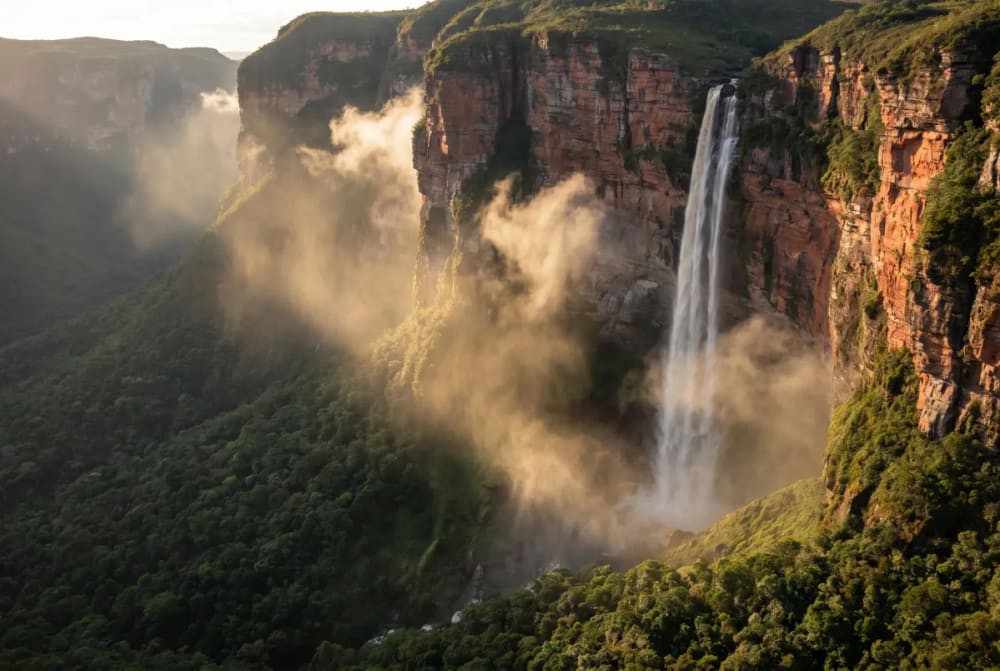
With 340 meters, the Cachoeira da Fumaça is the highest waterfall in Brazil. Its name — in German 'smoke fall' — becomes clear at first glance: The wind carries the water so finely atomized away that it never reaches the ground in a solid stream. Anyone wishing to see the cascade from above starts in the village of Vale do Capão, 60 kilometers from Lençóis, and walks about 4.5 hours on a moderate circular route. The alternative from below is a three-day trek from Lençóis — physically demanding, scenic the experience of the trip.
Morro do Pai Inácio — Table mountain panorama in 20 minutes
The Morro do Pai Inácio is the most famous viewpoint of the Chapada and is directly located at the federal highway BR-242, 27 kilometers from Lençóis. The ascent takes about 20 minutes and rewards with a 360-degree view over the surrounding table mountains — particularly impressive at sunset when the light bathes the red rock in orange and gold. Anyone wanting to take a single photo moment from the Chapada should plan the Morro do Pai Inácio for late afternoon. A local guide is not required, the path is well marked.
Poço Azul & Poço Encantado — Crystal caves with light beams
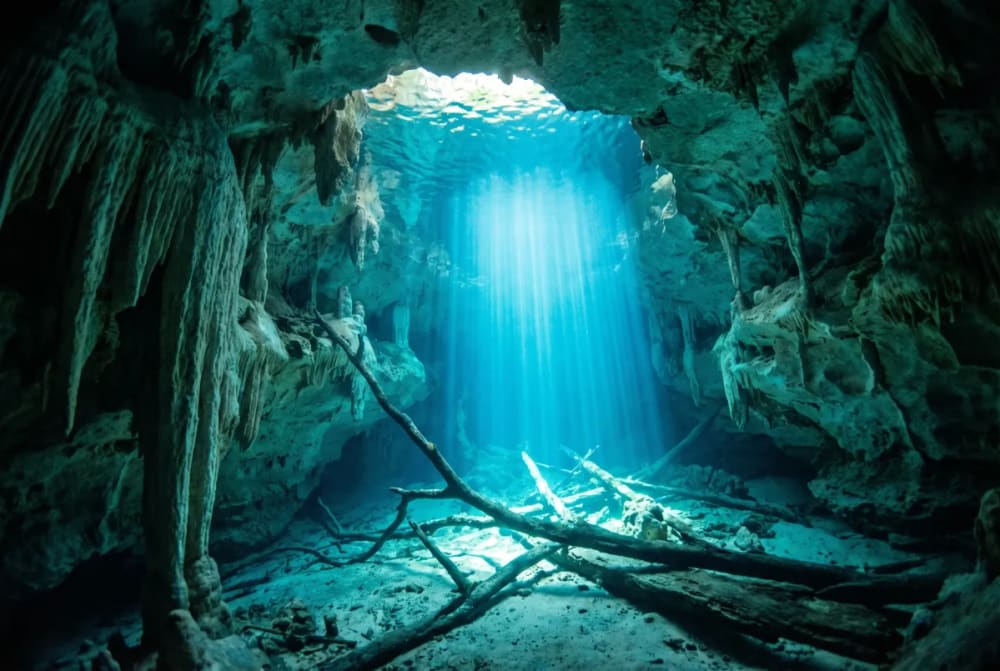
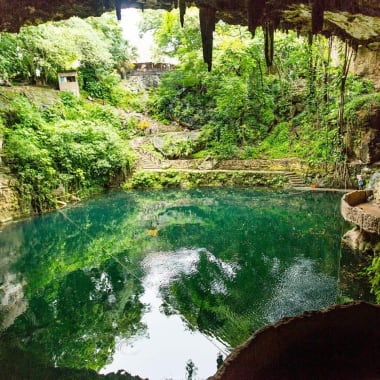
The two underwater caves Poço Azul and Poço Encantado are the most visually spectacular event of the Chapada — and its biggest travel planning puzzle. From April to October, a direct sunbeam falls through a rock opening into the crystal-clear cave water, which is up to 61 meters deep, causing it to glow in an unreal blue. The Poço Encantado charges 30 Reais for entry and is limited to 200 daily visitors; the Poço Azul costs 70 Reais (including snorkeling equipment) and offers 50 percent discount to travelers aged 60 and above. Both caves are located 80 to 100 kilometers from Lençóis and are best visited as part of a guided day tour — with departure early in the morning so that you are on site within the narrow time window.
Gruta da Torrinha — the second-largest aragonite flower in the world
The Gruta da Torrinha is an underrated gem. The 1,750-meter-long karst cave houses the world’s second-largest aragonite flower — an extraordinarily rare crystal formation of fine, flower-like carbonate crystals. Entry costs only 20 Reais, a private tour for up to four people 150 Reais. Anyone who has been to the better-known Gruta da Lapa Doce will find Torrinha the more rewarding stop: fewer visitors, deeper geology, denser atmosphere. There is also a daily upper limit of 200 persons here — early start recommended.
Marimbus — the Pantanal of Bahia
The Marimbus wetlands are often called the 'Pantanal of Bahia', and the comparison is accurate. More than 200 bird species live here, as well as caimans, water turtles, herons, and lily fields that begin to shine in the morning light. The landscape is best traversed by canoe or boat, accompanied by a local guide who finds the animals before you see them. Anyone seeking a slow counterpoint to the steep trekking days should plan Marimbus for a morning between two hikes.
Birdlife and flora of three biomes
The Chapada Diamantina counts 370 bird species, including the endemic hummingbird Augastes lumachellus, which is found nowhere else in the world. The vegetation changes over a short distance: orchids and bromeliads on the cliffs, dry Caatinga in the west, dense Atlantic rainforest in the gorges. For hobby ornithologists, the morning start is worthwhile — the best observations lie between six and nine o'clock. For detailed hiking planning, our Packing List Brazil is helpful.
Lençóis — the gateway to the Chapada Diamantina
Lençóis is the natural base camp for the Chapada Diamantina and one of the most beautiful colonial towns in Brazil. Between 1845 and 1871, Lençóis was the world's largest diamond producer and at times the third largest city in Bahia — so significant that a French vice-consulate was even established here to coordinate mineral exports. 570 buildings have been under the protection of Brazil's IPHAN since 1973.
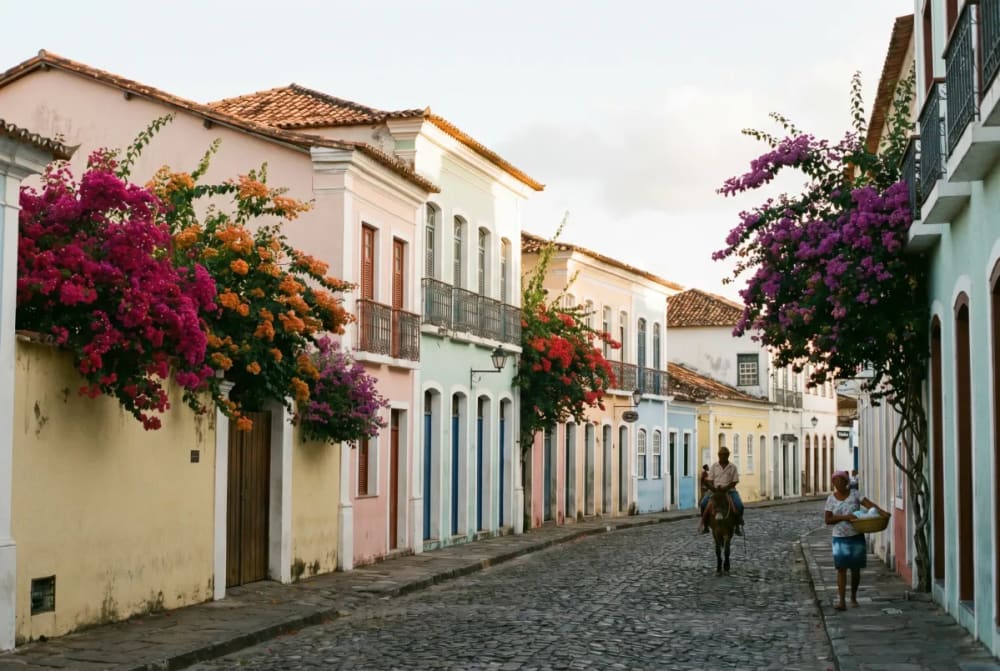
Today Lençóis has about 10,000 inhabitants and lives from ecotourism. Cobblestone alleys, pastel-colored facades, and the lively Rua das Pedras with restaurants and small galleries make the city a place where one enjoys staying even without a hiking plan for a few days. In the evening, a small live band often plays in one of the bars on Rua das Pedras; in the morning, the bakeries in the square smell of fresh pão de queijo.
For premium travelers, two establishments have been set up: the 4-star boutique hotel Canto das Águas directly on the river (from 207 USD per night, Booking rating 9.1) and the Hotel de Lençóis in the historic center. Both work with local guides and agencies that we know personally. Anyone wishing to schedule a more relaxed half day may visit the Lapão Cave — the second-largest quartzite cave in South America — about a 45-minute walk from the center.
Hiking and trekking in the Chapada Diamantina
The Chapada Diamantina is not a place for day trips. The distances between attractions are considerable, the paths challenging. Anyone wanting to see the best should plan at least three, better four to five days. More than 70 percent of the hiking trails in the national park are under 1,400 meters — altitude sickness is not an issue here, fitness and good footwear are.
Vale do Pati — the Great Route
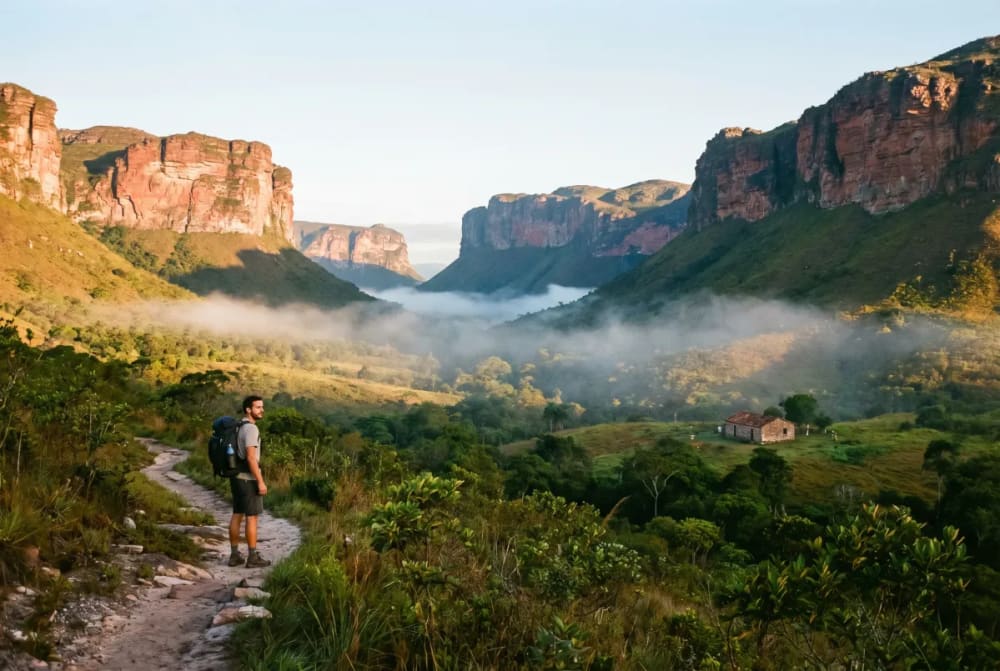
The Vale do Pati is considered by many to be one of the most beautiful multi-day treks in South America. For three to five days, one hikes through the green valley between high table mountains, staying overnight in simple accommodations run by local families — the so-called Casas de Apoio — and gets to know the lifestyle of the mountain dwellers: farmers who have lived in the valley for three generations, coffee over an open fire, starry skies without a single light. The route requires good basic fitness, not extreme technical skills. You carry your own luggage or have it transported by a mule. A three-day all-inclusive package with guide, meals, and accommodation starts at about 422 USD per person.
Day tours from Lençóis
For those not planning a multi-day tour, there are five popular options from Lençóis: (1) Morro do Pai Inácio combined with Gruta da Lapa Doce and Poço do Diabo, (2) Poço Azul and Poço Encantado with a stop in the colonial village of Mucugê, (3) Cachoeira da Fumaça from above from Vale do Capão, (4) Marimbus boat trip with bird watching and (5) Ribeirão do Meio and Serrano waterfalls as a relaxing afternoon directly from the venue. Almost all tours are half- or full-day and cost between 60 and 120 Reais per person — an uncomplicated entry into the Chapada without trekking ambitions.
Which route is right for you?
For premium travelers aged 40 and above with medium fitness, a combination is recommended: two to three day tours plus a two-day light version of the Vale do Pati with luggage transport and more comfortable accommodation on the first day. A local guide is officially required for many trails and always recommended — they know the current water levels, optimal light times for the caves, and safe paths in the off-season. Local guides cost 200 to 300 Reais per day for groups of up to six people. We provide English-speaking, partly German-speaking guides with many years of Chapada experience — let us know, we will plan your route together with you .
Combine Chapada with Salvador de Bahia
The combination of Salvador de Bahia and Chapada Diamantina is the classic Bahia tour: three to four days in the colonial old town Pelourinho, beach, and Afro-Brazilian culture — then four to five days in the highlands, silence, and hiking. Both places are 420 kilometers apart, reachable in a flight or an afternoon bus, and complement each other into one of the most contrasting tours in Brazil. The Paraguaçu River, whose source area is in the Chapada, flows directly in front of Salvador into the Bay of All Saints — both scenically and narratively a beautiful connection.
Anyone with more time can extend the route into the Brazilian Northeast (Lençóis Maranhenses, Fernando de Noronha) or combine the Chapada with the Pantanal and the Amazon into a three-week nature triangle. Our Brazil Individual Tours show how these components can be logically linked.
Best travel time for the Chapada Diamantina
The best travel time for the Chapada Diamantina is the dry season from May to September. In these months, the humidity is low, the trails are safely passable, and the beam of light in Poço Azul and Poço Encantado can be observed between April and October — most reliably between May and September. Daytime temperatures range from 22 to 28 degrees Celsius, and at night it can cool down to 12 to 15 degrees. A light fleece jacket is therefore essential in every suitcase.
The rainy season from December to February brings heavy rainfall. Many waterfalls are particularly spectacular then, but Poço Azul and Poço Encantado may be closed due to water murkiness, and some trails may become slippery or closed due to sudden flash floods. The months of March, April, October, and November are shoulder season with mixed results: fewer visitors, but less reliable weather. A comprehensive overview of all regions can be found in our guide to the best travel time in Brazil .
Getting to Chapada Diamantina
You typically reach the Chapada Diamantina via Salvador. Three options are available:
- Bus from Salvador: Daily departures from the Terminal Rodoviário (around 8, 11, and 23 o'clock), travel time 7 to 8 hours, price from 100 Reais (about 17 to 18 euros). The night bus at 23 o'clock saves a hotel day — in the morning you arrive in Lençóis and have the whole day ahead of you. Please book seats online during the peak season.
- Private transfer: About 5 to 6 hours via the highways BR-324 and BR-242. Private transfers for small groups cost from 150 to 200 USD — reasonable for two or three, significantly more comfortable than the bus and flexible with stopovers.
- Flight Salvador (SSA) → Lençóis (LEC): Azul Airlines operates the route twice a week (as of late 2025), flight time one hour and ten minutes, prices from 84 USD. Those with little time can save a whole travel day with the flight. Capacities are limited — book early.
For international arrival see Travel and flights to Brazil . Information on visas and vaccinations can be found in the guides Entry and Visa and Vaccinations and Health. The Chapada itself is considered very safe — more on that in the guide Safety in Brazil.
Plan Chapada Diamantina individually
The Chapada Diamantina rewards individual planning. We do not put you in a group tour, but put together your route from highlights, trekking variants, and rest days — including hand-picked accommodations in Lençóis or in Vale do Capão, experienced private guides, and a well-thought-out mix of transportation (flight there, private transfer back or vice versa). Our combinations with Salvador and the Brazilian Northeast are particularly popular:
- Brazil Northeast: Lençóis Maranhenses & Salvador — 14 days Bahia and Northeast with a Chapada stage
- Brazil Highlights: Amazonas, Pantanal, Northeast — Nature triangle with optional Chapada extension
- Brazil intensive (3 weeks) — the grand tour with Chapada as a highland chapter
- Brazil Nature: Pantanal & Fernando de Noronha — Premium alternative with Chapada component
For personal consultation and a tailored offer contact our Brazil team — we usually respond within 24 hours.
Frequently asked questions about Chapada Diamantina
How many days should I plan for the Chapada Diamantina?
At least three days for the main attractions — Morro do Pai Inácio, a Poço, and a waterfall. With four to five days, you gain time for longer hikes and less pressure between the individual destinations. The Chapada is not a place for day trips: The distances between the sights are considerable, and you need time to truly experience the highlands.
Do I need a local guide?
For many trails in the national park, a guide is officially required and strongly recommended for safety reasons. A good guide knows the current water levels of the pools, the best light times in the caves, and the safe paths in the off-season. We provide English-speaking — partly German-speaking — guides with many years of experience in the Chapada.
When should I not travel to Chapada Diamantina?
The months of December to February are the main rainy season. Poço Azul and Poço Encantado may be closed due to water murkiness, and some trails may become slippery or temporarily closed. March and April are still humid. Anyone wanting to see the light beam in the crystal caves should travel between May and September — then the experience is the most reliable.
How do I get from Salvador to Chapada Diamantina?
Three options: Bus from the Terminal Rodoviário in 7 to 8 hours (from 17 euros; the night bus at 23 o'clock saves a hotel day), private transfer in 5 to 6 hours (from 150 USD for small groups), or flight with Azul Airlines twice weekly to Lençóis (one hour ten minutes, from 84 USD). The flight is the most time-saving option — capacity is limited, early booking is worthwhile.
Is Chapada Diamantina suitable for untrained hikers?
Yes, with the right program planning. There are easy hikes like the Serrano waterfall (2 to 3 hours) or Ribeirão do Meio (45 minutes walk from the center of Lençóis). The Morro do Pai Inácio is moderate with a 20-minute ascent. Good footwear, water, and basic fitness are the minimum requirements — extreme trekking experience is not necessary.
What does a visit to Chapada Diamantina cost?
Entrance to the national park is free. Individual attractions have separate fees: Poço Encantado 30 Reais, Poço Azul 70 Reais (including equipment, 50 percent discount from 60 years), Gruta da Torrinha from 20 Reais. Guided day tours cost 60 to 120 Reais per person, local guides 200 to 300 Reais per day for groups of up to six people. Accommodations in Lençóis: mid-range pousadas from 65 USD per night, premium hotels like Canto das Águas from 207 USD. A daily budget of 80 to 150 euros per person — accommodation, food, transport, and activities combined — is realistic for the Chapada Diamantina. Detailed cost comparisons can be found in our guide Costs and Budget Brazil.
To book a trip or for more information, contact us. We'll help you plan and guide you through your upcoming adventure!
Frequently asked questions about Chapada Diamantina
At least three days for the main attractions — Morro do Pai Inácio, a Poço, and a waterfall. With four to five days, you gain time for longer hikes and less pressure between the individual destinations. The Chapada is not a place for day trips: The distances between the sights are considerable, and you need time to truly experience the highlands.
For many trails in the national park, a guide is officially required and strongly recommended for safety reasons. A good guide knows the current water levels of the pools, the best light times in the caves, and the safe paths in the off-season. We provide English-speaking — partly German-speaking — guides with many years of experience in the Chapada.
The months of December to February are the main rainy season. Poço Azul and Poço Encantado may be closed due to water murkiness, and some trails may become slippery or temporarily closed. March and April are still humid. Anyone wanting to see the light beam in the crystal caves should travel between May and September — then the experience is the most reliable.
Three options: Bus from the Terminal Rodoviário in 7 to 8 hours (from 17 euros; the night bus at 23 o'clock saves a hotel day), private transfer in 5 to 6 hours (from 150 USD for small groups), or flight with Azul Airlines twice weekly to Lençóis (one hour ten minutes, from 84 USD). The flight is the most time-saving option — capacity is limited, early booking is worthwhile.
Yes, with the right program planning. There are easy hikes like the Serrano waterfall (2 to 3 hours) or Ribeirão do Meio (45 minutes walk from the center of Lençóis). The Morro do Pai Inácio is moderate with a 20-minute ascent. Good footwear, water, and basic fitness are the minimum requirements — extreme trekking experience is not necessary.
Entrance to the national park is free. Individual attractions have separate fees: Poço Encantado 30 Reais, Poço Azul 70 Reais (including equipment, 50 percent discount from 60 years), Gruta da Torrinha from 20 Reais. Guided day tours cost 60 to 120 Reais per person, local guides 200 to 300 Reais per day for groups of up to six people. Accommodations in Lençóis: mid-range pousadas from 65 USD per night, premium hotels like Canto das Águas from 207 USD. A daily budget of 80 to 150 euros per person — accommodation, food, transport, and activities combined — is realistic for the Chapada Diamantina. Detailed cost comparisons can be found in our guide Costs and Budget Brazil.