


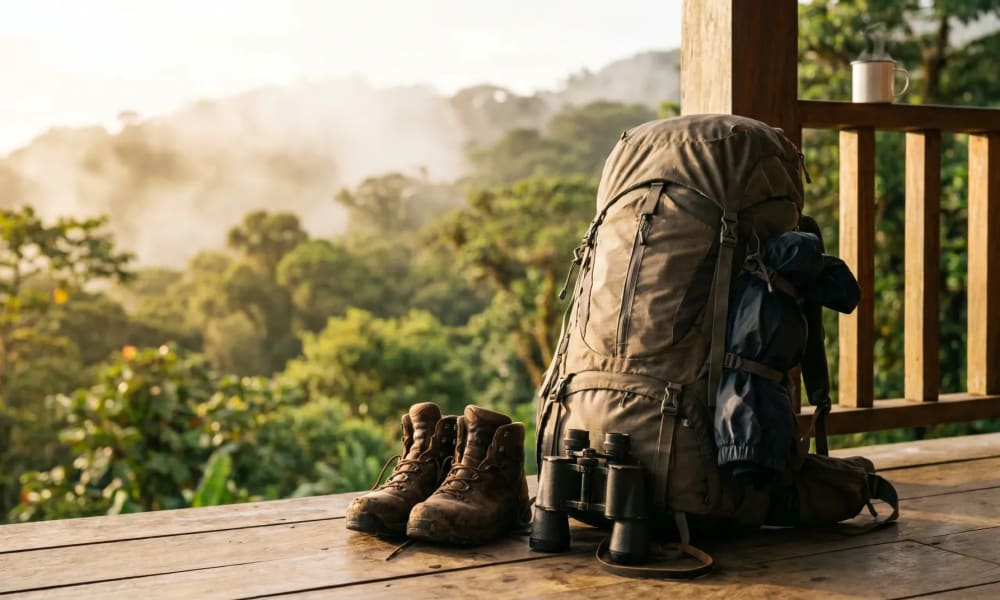
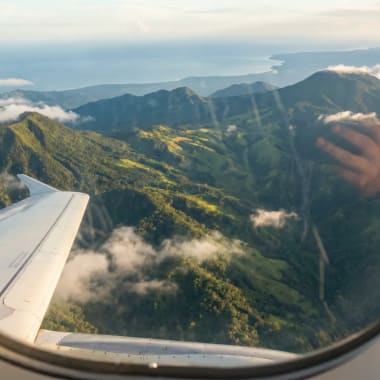
This image was generated with AI.
Packing list Costa Rica: What really belongs in the luggage
For rainforest, beach & cloud forest
For rainforest, beach & cloud forest
Anyone packing only t-shirts for Costa Rica will find themselves freezing in the mist at 14 °C in Monteverde. Costa Rica does not have seasons in the European sense — but four very different climate zones: lowland rainforest (28 °C, 90% humidity), Caribbean coast (25–30 °C), cloud forest at 1,400 meters (14–22 °C, constantly humid), and Pacific coast (24–35 °C, sunny during dry season). This packing list is based on a simple principle: layers instead of heavy clothing, neutral colors for wildlife sightings, a good pair of binoculars. More on the best travel time .

Clothing by climate zone — the layering principle
In Costa Rica, you switch within a day's journey between rainforest heat, mountain coolness, and beach heat. The biggest mistake is cotton: it absorbs moisture, dries slowly, and starts to smell after 24 hours. Functional fabrics (polyester, nylon) and especially merino wool dry 3–4 times faster, are more breathable, and odor-free. Three layers are enough for every climate zone.
| Region | Altitude | Day temperature | Recommended clothing |
|---|---|---|---|
| Guanacaste / Pacific North | 0–200 m | 24–35 °C | Light, UV protection, rash guard |
| Manuel Antonio / Pacific Middle | 0–100 m | 25–32 °C | Light, quick-drying |
| Arenal / La Fortuna | 500–800 m | 22–28 °C | Light + fleece for evenings |
| Monteverde Cloud Forest | 1,400–1,800 m | 14–20 °C | Layers required, fleece + rain jacket |
| Tortuguero / Caribbean | 0 m | 25–30 °C | Light, long-sleeved (mosquitoes!) |
| Corcovado / Osa | 0–300 m | 26–32 °C | Bright long-sleeve synthetic |
Lowland rainforest and Pacific coast
Lightweight, breathable functional shirts (3–4 pieces), quick-drying pants or long trekking pants with zip-off function (2 pieces), shorts (2 pieces), functional underwear (5–6 days' worth is enough — laundry in lodges is cheap).
Caribbean coast
Like the Pacific, but with an emphasis on long-sleeved tops in the evening — mosquitoes are more intense on the Caribbean, especially in Tortuguero and Cahuita during the rainy season.
Cloud forest (Monteverde, 1,400 m)
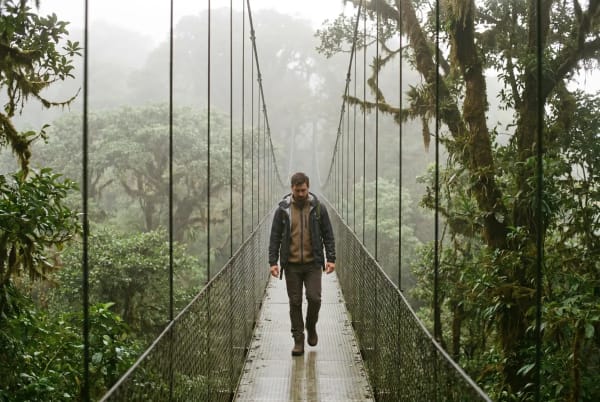
It is underestimated how cool it is here. The annual average temperature is 18 °C, with humidity at 74–97%. You need: a warm fleece jacket (fleece 200, not 100), a waterproof rain jacket (breathable, at least 10,000 mm water column), long trekking pants, and a scarf. Whoever wears only shorts in the cloud forest will have wet legs from drizzle after an hour of hiking.
Neutral colors for wildlife
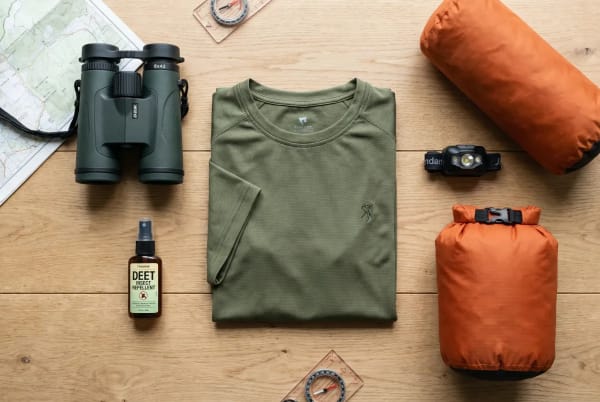
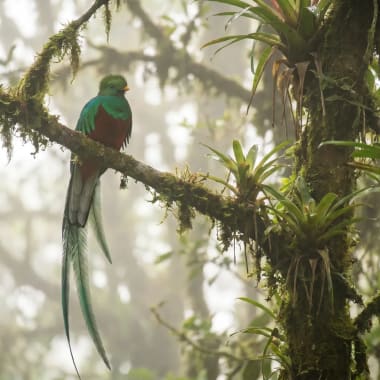
A scientific study (Sci. Rep. 2020) showed that birds react significantly more shyly to bright red, white, and yellow clothing — neutral tones (olive green, khaki, sand) increase the approach distance for animal sightings measurably. Anyone planning a wildlife tour — quetzals in Monteverde, macaws in Carara, tapirs in Corcovado — packs at least one olive green or khaki functional shirt combination. Avoid camouflage patterns — Costa Rica regulates camo clothing in some protected areas, and the look is strange to local guides.
Insider tip: Quick-drying beats cotton
A cotton t-shirt often doesn't dry completely in the lowland rainforest for 24 hours. Functional fiber (polyester) is dry after 4–6 hours, merino after 2–3. If you hike for three days in Corcovado, you will smell strongly in cotton by the second evening — in merino only by the sixth. Three merino shirts replace ten cotton shirts.
Shoes for Costa Rica
Three pairs are enough for any Costa Rica trip:
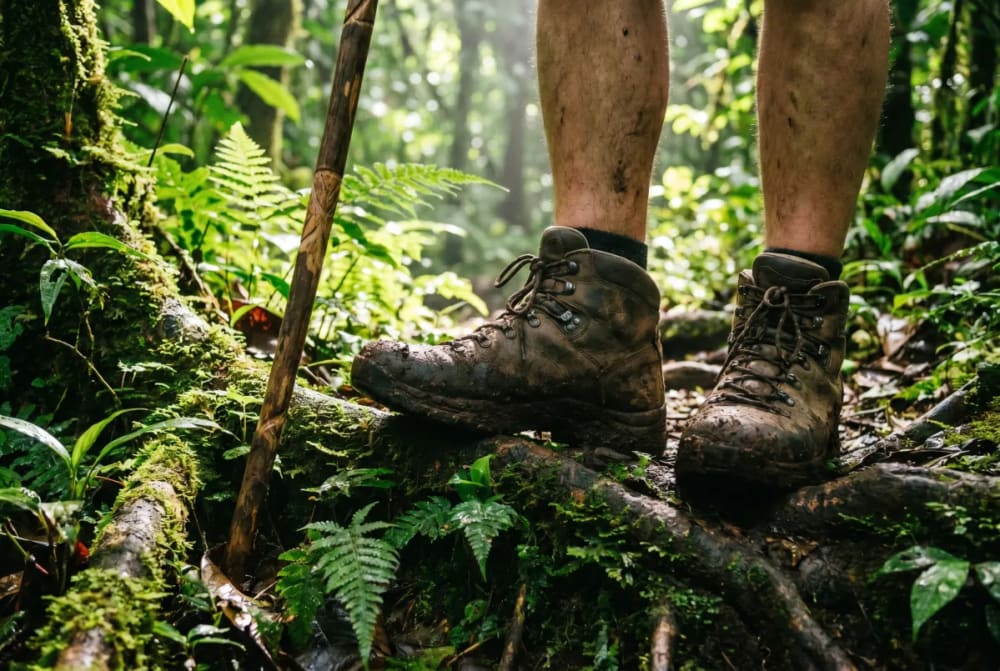
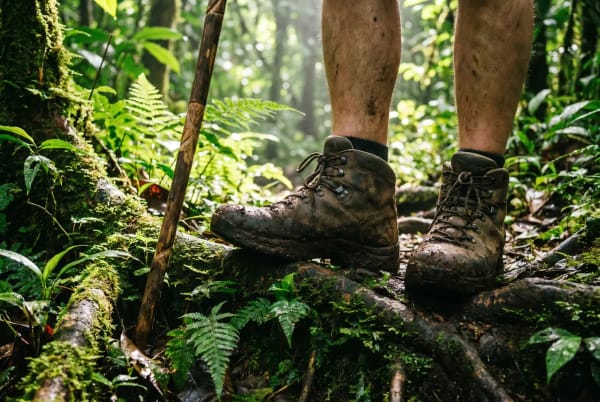
- Trekking or trail runners (mid-high, good grip) — for national parks, hikes, hanging bridges in Monteverde. Example models: Salomon X Ultra 4 GTX, Lowa Renegade GTX, Merrell Moab. Important: NO Gore-Tex on rainforest tours — at 90% humidity, sweat does not escape, and the shoe becomes wet inside. Breathable trail runners without a membrane dry faster.
- Sturdy trekking sandals (Teva, Chaco, Keen) — for boat tours in Tortuguero, beaches with sharp stones, easy hikes, lodge routine.
- Flip-flops — for the beach and lodge pool. Cheap to buy on-site if you want to save luggage space.
In the rainy season, often two pairs of hiking shoes are worthwhile — one will definitely get wet on a Tortuguero trail or Corcovado path and won’t dry overnight in the lodge’s humidity. Anyone who only takes one pair will learn this on the first hike.
Rain gear
In the green season, a strong afternoon shower typically falls. You need:
- Breathable rain jacket (at least 10,000 mm water column, ideally with a hood)
- Rain poncho (light, packable) — for hikes, as it also protects the backpack
- Dry bag (10–20 liters) — mandatory for boat tours in Tortuguero and canoe tours in Corcovado; also for day trips in the rainy season (electronics, passports)
- Rain cover for the day backpack
Hardshell anoraks are overkill — the short, heavy tropical showers do not test Gore-Tex Pro; they require fast drying.
Sun and mosquito protection
Mosquito protection: DEET 30–50% or Icaridin 20%
Costa Rica has recorded increased Dengue case numbers in 2024 and 2025 — the Aedes aegypti mosquito is active during the day, especially in the lowlands (Tortuguero, Pacific coast, Osa). Recommendation from the WHO and the CDC: DEET 30–50% or Icaridin (Picaridin) 20%. Both active ingredients provide protection for 6–8 hours. Permethrin for pre-treating clothing is hardly common in Germany, standard for tropical trips in the USA — a permethrin spray treatment of trekking pants and long-sleeved shirts before the trip is very effective.
Important: If Dengue is suspected, DO NOT take Ibuprofen
If you get a fever in Costa Rica and dengue cannot be ruled out, NEVER take Ibuprofen or acetylsalicylic acid (aspirin) — both hinder blood clotting and can be life-threatening in hemorrhagic dengue. Paracetamol is safe. With a fever over 38 °C after mosquito bites: see a doctor. Costa Rica's medical care is good, ask a guide or lodge manager if in doubt.
Sunscreen: SPF 50+, reef-safe
Costa Rica lies almost on the equator — the UV index reaches 11+ year-round (extreme). Sunscreen SPF 50+ is mandatory, ideally with physical filters (zinc oxide). Reef-safe has now become legally relevant for many beaches in Costa Rica: avoid oxybenzone and octinoxate. Local brands like Capuchino Surf Screen (available in tourist centers) are reef-safe — alternatively, bring Stream2Sea or Badger from Germany. Sunscreen in Costa Rica is significantly more expensive than in Germany (often 25–30 USD for 200 ml).
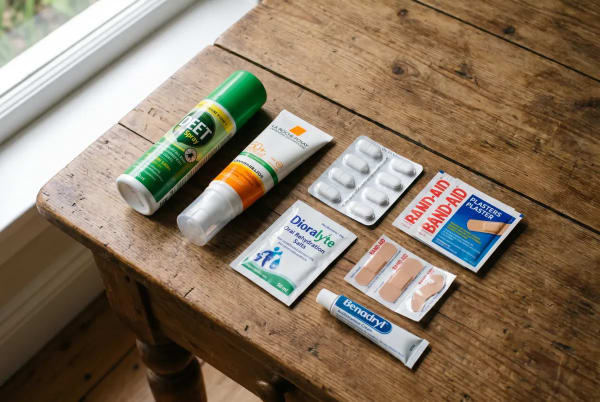
Travel pharmacy
| Medication / Item | Purpose |
|---|---|
| Paracetamol | Pain, fever (dengue-safe) |
| Ibuprofen | only outside dengue risk |
| Loperamide | Travel diarrhea (acute) |
| Rehydration salts (ORS) | Electrolyte loss due to diarrhea/heat |
| Antihistamine | Insect bites, allergic reactions |
| Wound disinfectant | Cuts, small wounds |
| Band-aids, gauze bandages | Wound care |
| Hydrocortisone cream 1% | Insect bites, skin irritations |
| Travel sickness medication | for boat tours |
| Water disinfection (Micropur) | optional, tap water mostly safe |
Pharmacies in San José and tourist centers are well-stocked — the travel pharmacy is a backup, not a substitute for medical care. For longer trips or stays in Corcovado/Tortuguero (where the nearest pharmacy can be 2 hours away by boat), it is worth supplementing. More in the vaccination and health guide.
Electronics and 110 volts
Costa Rica uses 110 volts, 60 Hz with plugs type A and B (two flat pins, optional grounding pin) — identical to the USA. Costa Rica does NOT use 220V, contrary to what is often incorrectly stated online.
- Travel adapter type A/B is mandatory (plugs type C/F do not fit)
- Check dual-voltage devices: If "100–240V" is on the power supply → works on 110V without issues. Devices only for 230V (old hair dryers, straighteners) can be damaged.
- Power bank (10,000+ mAh) for day trips without a power outlet
- USB multi-plug with 3–4 outputs — saves adapter chaos
- Headlamp (USB rechargeable) — for night tours, lodge power outages, Tortuguero turtles
- Dry bag for electronics on boat tours
Anyone combining Costa Rica with Colombia or Panama: Both countries also use 110V type A/B — no adapter change necessary.
Wildlife Gear: Binoculars and Optics
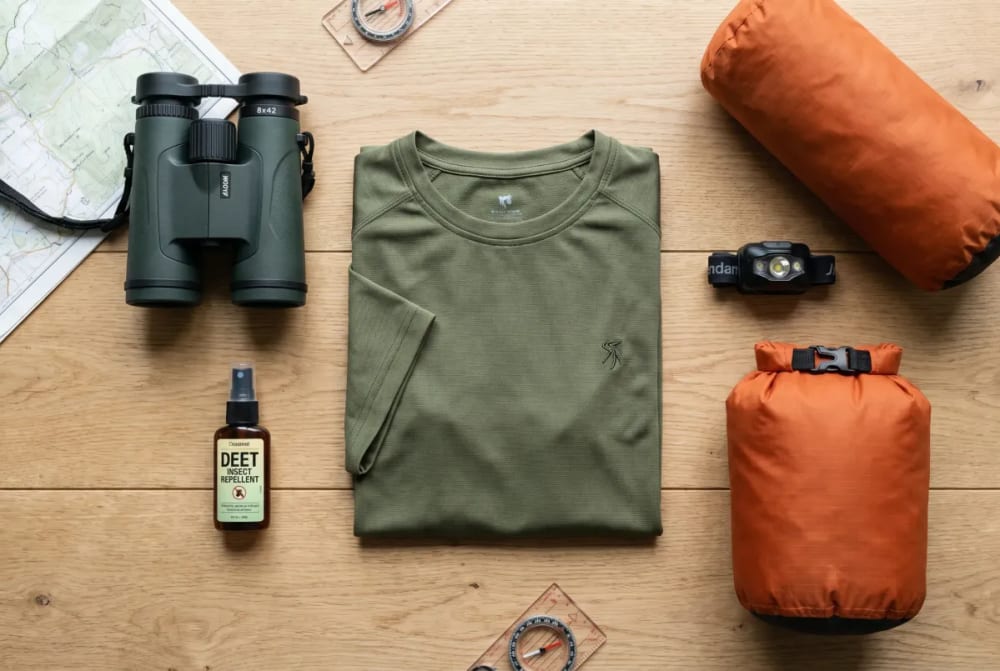
Costa Rica without binoculars is a wasted opportunity. Quetzal, toucan, macaw, sloth, and monkeys sit in tree heights of 10–25 meters — without binoculars you mostly see just a colorful spot. Recommendation:
- Binoculars 8x42 — the optimal combination of 8x magnification (good stability without a tripod) and 42 mm lens (enough brightness for twilight, cloud forest). 10x42 has more magnification, but higher risk of shake for beginners.
- Waterproof — mandatory. Costa Rica's rain comes quickly.
- Weight under 700 g for daypack
- Brand recommendations (Mid-Range, €200–500): Nikon Monarch M5/M7, Vortex Diamondback HD, Celestron Nature DX
- Spotting apps: Merlin Bird ID (free, bird identification by photo and sound), iNaturalist (all animals and plants)
For those who do not want to invest over 200 euros: Many eco-lodges offer binocular rental or integrated naturalist tours with equipment. Inquire directly when booking.
Rainy season vs. dry season — what changes
| Equipment | Dry season (Dec–April) | Rainy season (May–Nov) |
|---|---|---|
| Rain jacket | Optional | Mandatory |
| Dry Bag | Recommended | Mandatory |
| Hiking shoes | 1 pair | 2 pairs (one dries, one is used) |
| Insect repellent | Daily | Intensive, all-day |
| Sunscreen | Daily | Daily (even when cloudy) |
| Binoculars | Highly recommended | Recommended — wildlife is more active |
| Fleece (for altitude) | Mandatory from 1,000 m | Mandatory from 800 m |
What is better left at home
- Heavy hardshell anorak — excessive, heavy, and not breathable
- Camouflage pattern clothing — seems strange, regulated in some protected areas
- Flashy jewelry, expensive watches — particularly not advisable in downtown San José
- Plastic bottles — many lodges are plastic-free; bring a reusable bottle
- Original passport on every day trip — a copy is usually sufficient; original in lodge safe
- German hair dryers without dual voltage — do not work on 110V or get damaged
- Heavy hard-shell suitcases — SANSA domestic flights allow only 12 kg of soft luggage
- Drones — strictly prohibited in national parks, penalties are high
Backpack size
For 2–3 weeks in Costa Rica, a trekking backpack of 50–60 liters plus a 25-liter daypack is sufficient. Brand recommendations: Osprey Farpoint 55, Deuter Aircontact 55+10, Patagonia Black Hole Duffel. Those planning SANSA domestic flights should keep the 12 kg limit in mind — prioritize lightweight materials. Hard-shell suitcases work on the main routes (rental cars), but are cumbersome on lodge trails.
Your Costa Rica packing list — tailored to your route
A packing list is always a compromise between completeness and overview. We tailor our recommendations for our travelers to the specific route — family beach holiday in Manuel Antonio requires different items than Corcovado trekking or a honeymoon tour focusing on lodges. Request advice for your individual Costa Rica trip .
Frequently asked questions about the Costa Rica packing list
Costa Rica uses type A and B sockets with 110 volts, 60 Hz — identical to the USA. German plugs (type C/F) do not fit. A type A/B travel adapter is mandatory (5–15 €). Devices with dual voltage (label '100–240V') only need the adapter, no voltage converter. Hair dryers and straighteners designed for 230V can be damaged — check power supply specifications before traveling.
Monteverde is located at 1,400–1,800 meters and is almost always cloudy and humid — temperatures 14–22 °C. You need: warm fleece jacket (Fleece 200), breathable rain jacket, long trekking pants, hiking shoes with tread, lightweight scarf. Shorts and t-shirts are insufficient in the cloud forest — many travelers are surprised how cool it is there.
Yes — and it is the second most frequently forgotten mandatory item after insect repellent. Quetzal, toucan, macaw, and sloth sit in tree heights of 10–25 meters. Without binoculars you mostly see just a colorful spot. Recommended: 8x42, waterproof, brands Nikon Monarch M5/M7, Vortex Diamondback HD or Celestron Nature DX (€200–500). Many eco-lodges offer rentals — inquire when booking.
Neutral tones — olive green, khaki, sand. A scientific study (Sci. Rep. 2020) showed that birds react more shyly to bright red, white, and yellow clothing than to neutral colors. Avoid camouflage patterns — Costa Rica regulates camo in some protected areas. Pack at least one olive green or khaki functional outfit.
Yes. In the rainy season (May–November) rain jacket and dry bag are mandatory (optional in dry season), two pairs of hiking shoes are sensible (one dries while the other is used). Insect repellent is more intensively required — dengue mosquitoes are more active in the rainy season. Sunscreen remains mandatory all year round (UV index 11+ even when cloudy).
Three pairs are sufficient: trekking or trail runners (national parks, hikes), sturdy trekking sandals (boat tours, beach with stones, lodge), flip-flops (pool, beach). In the rainy season, two pairs of hiking shoes are worthwhile — one is guaranteed to get wet and will not dry overnight in the lodge's humidity. Important: Prefer hiking shoes without Gore-Tex — the membrane does not dry in the lowland rain forest.
DEET 30–50% or Icaridin 20% must be brought from Germany — good concentrations are often difficult to find or significantly more expensive in Costa Rica. Permethrin spray (pre-treatment of clothing) is rarely found in Germany, standard in the USA. WHO/CDC recommend 6–8 hours of protection per application. In case of dengue suspicion: never ibuprofen — only paracetamol.
For 2–3 weeks, 50–60 liters trekking backpack plus 25 liters daypack are ideal. Important: Those planning SANSA domestic flights (Drake Bay, Tortuguero) have a strict limit of 12 kg of soft luggage per person — no hard-shell suitcase. Brand recommendations: Osprey Farpoint 55, Deuter Aircontact 55+10. Laundry service in lodges is inexpensive (5–10 USD per load) — less clothing than expected is sufficient.
More Costa Rica guides
- Best travel time for Costa Rica — dry season, rainy season, and wildlife calendar
- Travel & flights to Costa Rica — direct flights and SANSA domestic flights
- Costa Rica national parks — Manuel Antonio, Corcovado, and all major parks
- Region: Monteverde cloud forest · Corcovado & Osa Peninsula · Tortuguero · Manuel Antonio · Arenal & La Fortuna
Your dream holiday, tailor-made by true connoisseurs.
From the first spark of inspiration to the moment you return home full of stories, we’re by your side – whether by phone, email or WhatsApp, whenever you need us. Every journey we design is as unique as you are: individually crafted with exclusive privileges and exceptional arrangements that make your experience truly unforgettable.
Experts for your trip

You might also like this
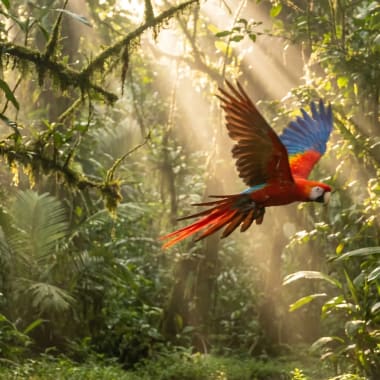
This image was generated with AI.
This image was generated with AI.
This image was generated with AI.