


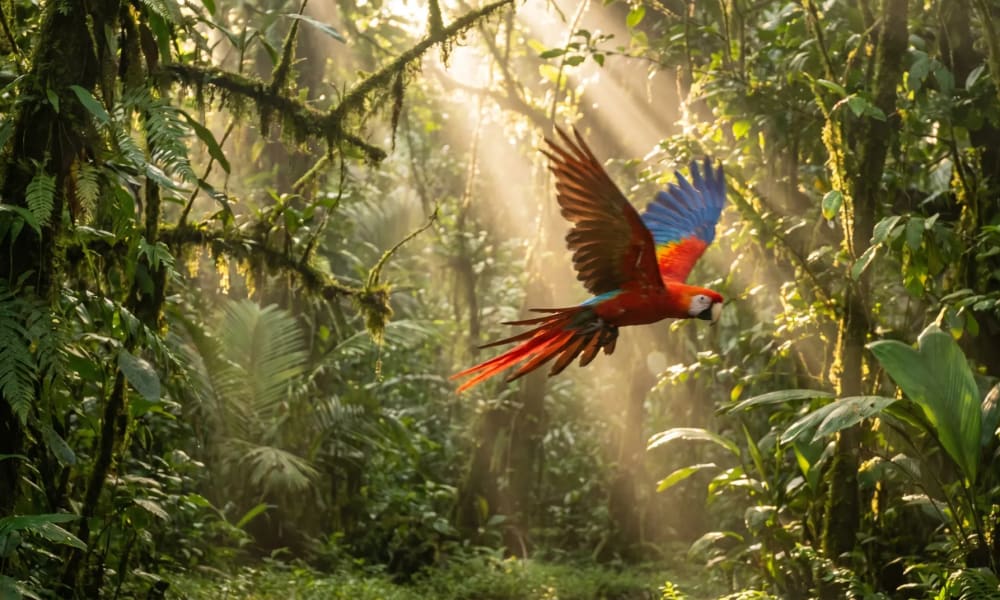
This image was generated with AI.
Costa Rica National Parks
Manuel Antonio, Corcovado, Tortuguero & all major parks
Manuel Antonio, Corcovado, Tortuguero & all major parks
Costa Rica is a world champion in nature conservation: about 30 protected areas, 26 of which are designated as national parks, cover about 26% of the land area — no other country on Earth places a higher percentage of its area under protection. Here, 6% of all known species live on only 0.03% of the world's land area. This guide presents the twelve most important parks — with up-to-date entrance fees, best travel times, and specific booking tips. More on the overall Costa Rica trip and on the best travel time .

Quick comparison: The 12 most important national parks
| Park | Region | Best time | Entrance (USD) | Difficulty | Guide required |
|---|---|---|---|---|---|
| Manuel Antonio | Mid-Pacific | Dec–April | 18 | Easy | No |
| Corcovado | Osa Peninsula | Dec–April | 15 + guide | Hard | Yes |
| Tortuguero | North Caribbean | Jul–Oct (turtles) | 15 | Easy | Turtle tour: Yes |
| Monteverde Cloud Forest | Highlands | Feb–May (Quetzal) | 16–29 | Easy–Medium | Recommended |
| Arenal Volcano | Central North | Feb–April | 15 | Easy | No |
| Rincón de la Vieja | Guanacaste | Dec–April | 15 | Easy–Medium | No |
| Tenorio / Río Celeste | North Pacific | Dec–April | 12 | Medium | Recommended |
| Cahuita | South Caribbean | Feb–April, Sep–Oct | 0 (donation) – 15 | Easy | No |
| Marino Ballena | South Pacific | Aug–Oct, Dec–March | 15–18 | Easy | No |
| Santa Rosa | Guanacaste | Dec–April | 15 | Easy | No |
| Chirripó | Talamanca | Feb–April | 18–22 + hut | Very hard | Recommended |
| Carara | Mid-Pacific | All year round | 12 | Easy | No |
Top 12 national parks of Costa Rica in detail
Manuel Antonio — smallest and most visited park
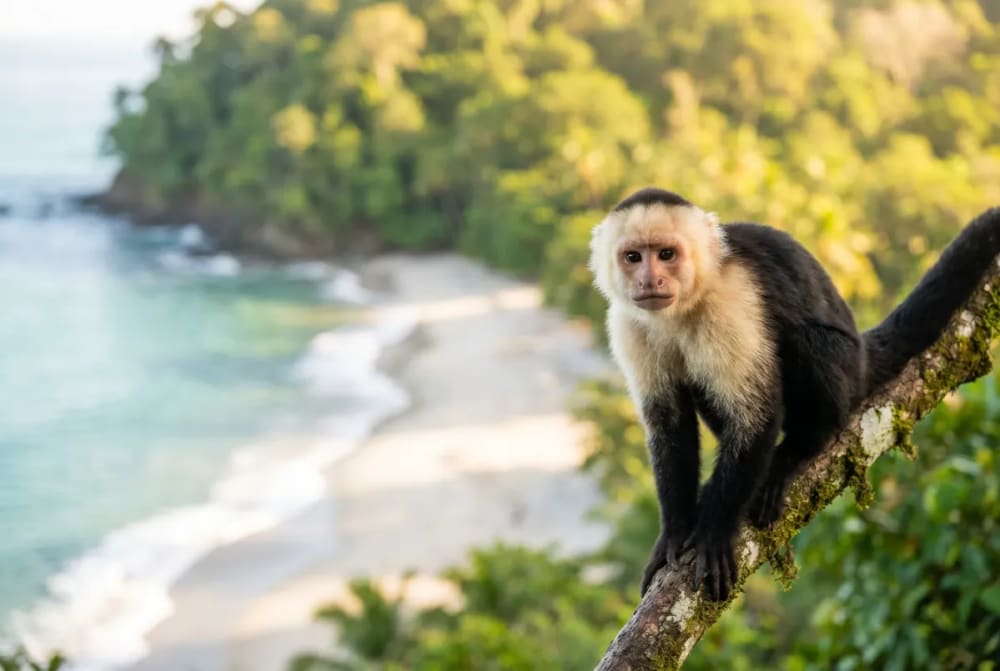
At only 19.83 km², Manuel Antonio is Costa Rica's smallest — and at the same time, most visited — national park. Three species of monkeys live here: capuchin, howler, and the endemic titi monkey. Three beaches offer safe swimming: Playa Manuel Antonio (Blue Flag certified), Playa Espadilla Sur, and Playa Biesanz. The iconic tombolo formation Punta Catedral connects a former island with the mainland.
Entrance: about 18 USD adults, 9 USD children. Open Wednesday to Monday (closed Tuesday — many sources mistakenly state Monday). Tickets during high season must be booked online in advance via sinac.go.cr — daily quota is limited. Best time: December to April. Early morning hours (7 am park opening) are cooler, less crowded, and yield more animal sightings. More on the region: Manuel Antonio .
Corcovado — the most biologically intense place on Earth
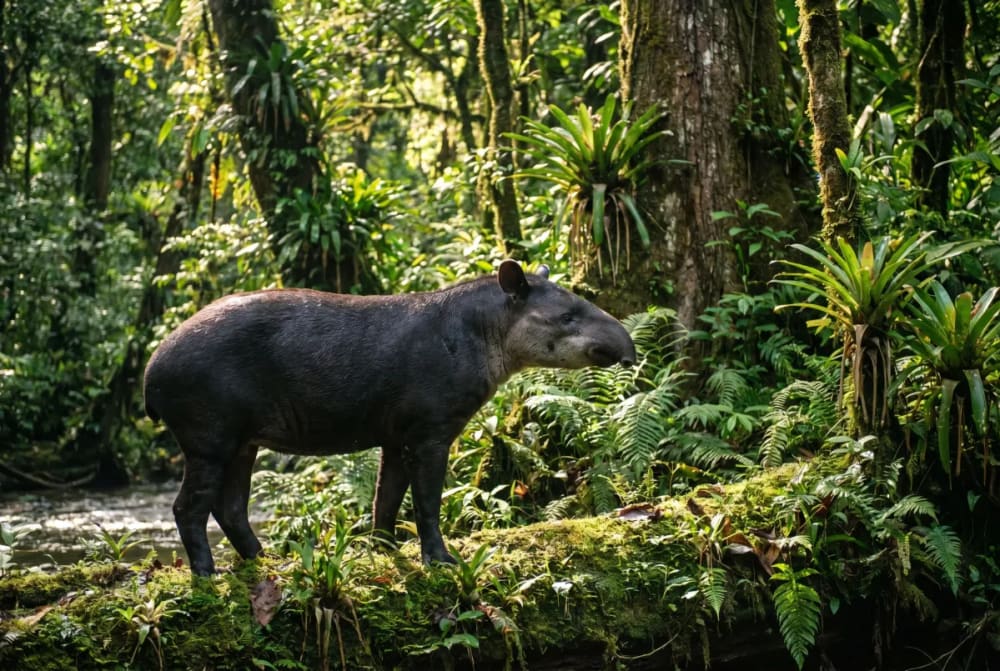
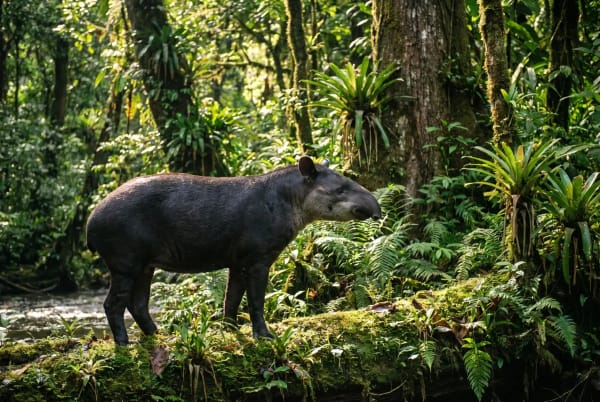
National Geographic called Corcovado the "most biologically intense place on Earth" — on 0.001% of the Earth's surface live 2.5% of global biodiversity. All four species of monkeys in Costa Rica, tapirs, macaws, four species of monkeys, and with a bit of luck, jaguar tracks. Four ranger stations control the park: La Leona, Sirena (with overnight stays), Los Patos, and San Pedrillo.
Entrance: about 15 USD plus guide required since 2014 (50–120 USD per day, often included in tour packages). Sirena station must be booked months in advance via sinac.go.cr — capacity is strictly limited. Best time: December to April; during the rainy season, the trails can be knee-deep in mud. Day tours from Drake Bay (boat transfer + 4–6 hours trail) are the easiest option for first-time visitors. Multi-day Sirena tours are demanding and a highlight of any Costa Rica trip. Corcovado & Osa Peninsula in detail .
Corcovado: book permits early
Sirena Station has a strict daily limit. During the high season (December to April), spots are booked 4 to 6 months in advance. Those who want to experience Corcovado intensively should plan the booking as the first travel component — everything else can be arranged around it. We take care of permits, guides, and logistics for our guests in a package. Request consultation .
Tortuguero — the Amazon of the Caribbean coast
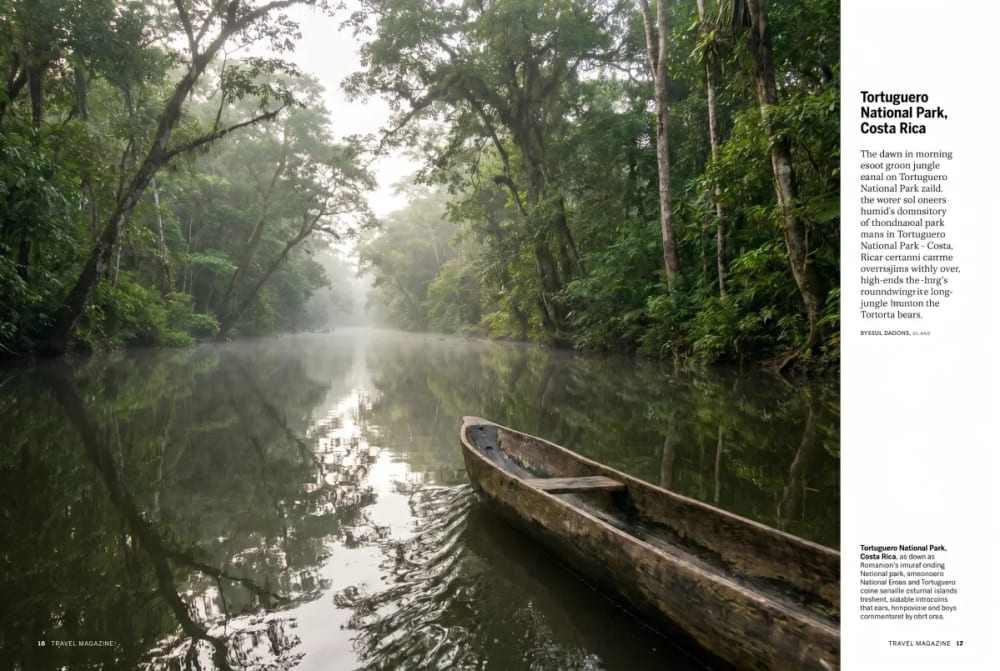
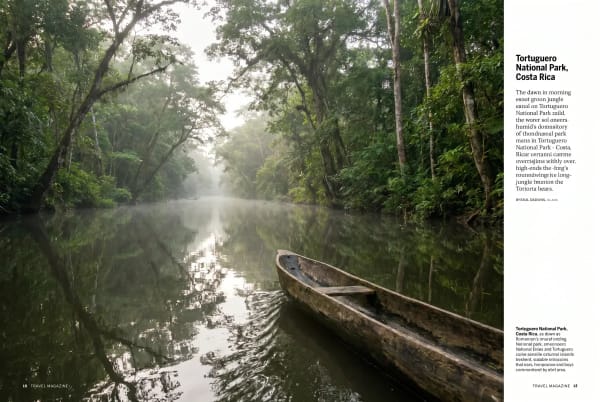
Tortuguero is Costa Rica's Caribbean wilderness: 460 kilometers of canals, 76,937 hectares of protected rainforest, 442 bird species, and the most important Atlantic nesting site for the green sea turtle (22,000 to 50,000 nests annually). Leatherback turtles, hawksbill turtles, and loggerhead turtles also lay their eggs here. Access is only by boat (3 to 4 hours from Limón or Moín) or small plane (35 min from San José).
Entrance: approx. 15 USD; turtle night tour additionally 20 USD. Best time: July to October (green sea turtle), March to May (leatherback turtle). Turtle tours are only permitted with an authorized SINAC guide, a maximum of 8 people per group, observation with red-filtered lamps. Tortuguero region in detail .
Monteverde Cloud Forest — where clouds drift through the forest
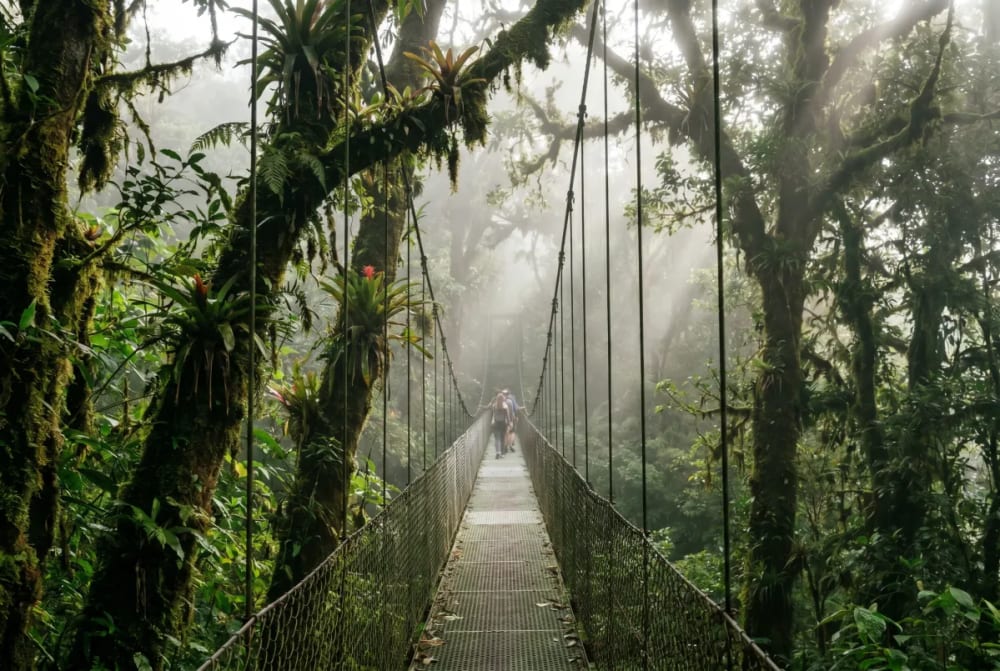
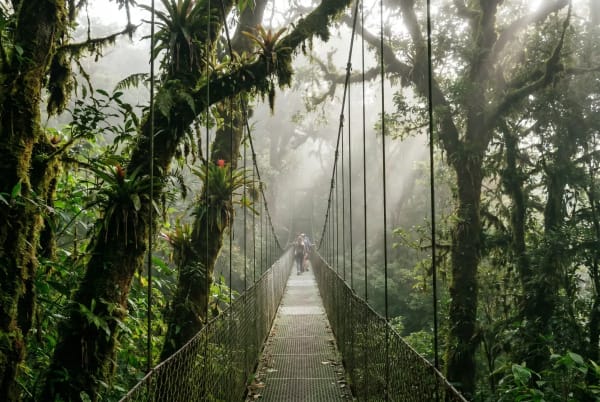
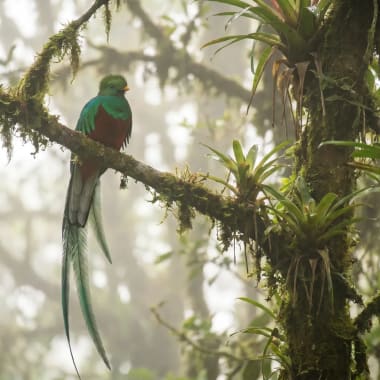
Three reserves share Monteverde's cloud forest: the main reserve (10,500 ha), Santa Elena (310 ha) and Curi-Cancha (83 ha). The main reserve introduced a new online ticketing system in December 2025: three fixed routes, max. 26 people per time slot, no walk-ins allowed anymore. The Quaker community founded Monteverde in 1951 — today it supports a unique educational tourism model.
Entrance: main reserve 29 USD per route (online via cloudforestmonteverde.com), Santa Elena 16 USD, Curi-Cancha 25 USD. Best time: February to May (Quetzal breeding season). Even though Monteverde is more famous — for Quetzal sightings, San Gerardo de Dota is more reliable. More about the region: Monteverde Cloud Forest .
Arenal Volcano — Costa Rica's most iconic cone
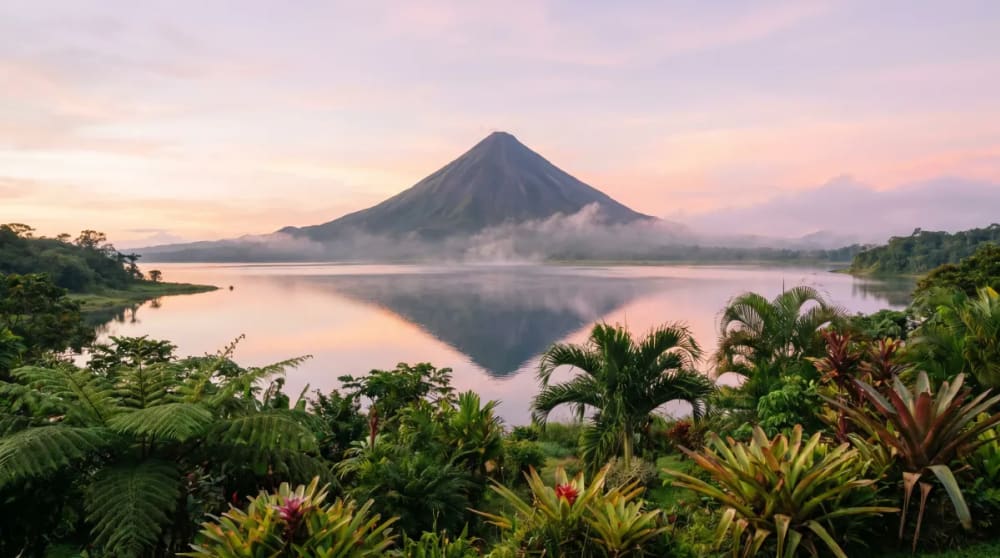
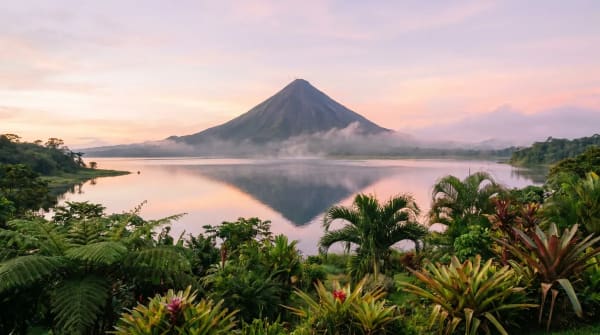
The Arenal Volcano — 1,670 meters, almost perfectly cone-shaped — erupted for 42 years without interruption (1968 to 2010), the tenth longest documented eruption in the world. Since 2010, it has been in a period of calm, but not extinct. The 12,124-hectare national park protects the lava fields of the historical eruptions, and the Sendero Las Coladas trail leads through hardened lava flows. The Arenal-1968-Private Reserve located right at the park entrance offers the most spectacular views of the volcano (entrance 26 USD, separate).
Entrance: 15 USD adults, 5 USD children. Open 8 AM to 4 PM (volcano sector) or until 5 PM (peninsula sector). Only credit cards accepted, no cash. Best time: February to April (clearest visibility) and early mornings before the cloud ring settles around the cone. Arenal & La Fortuna region .
Rincón de la Vieja — active volcano with mud lakes
In Guanacaste, it still boils: Rincón de la Vieja is an active volcano with fumaroles, bubbling mud lakes (pailas) and hot springs. The main access Las Pailas leads on a 4.5 km loop through the geothermal zone. The historic Hacienda Guachipelín is the most well-known lodge base and starting point for horseback riding and canopy tours.
Entrance: approx. 12–15 USD. Open: Las Pailas Tuesday to Sunday (closed Monday), Santa María sector Thursday to Monday. Access: 25 km from Liberia, 30–40 minutes drive; 4x4 recommended for some access roads during the rainy season. Best time: December to April. Check volcanic status before traveling (IMN Costa Rica) — during increased activity, the park may be closed on short notice.
Tenorio / Río Celeste — the most turquoise water in the world
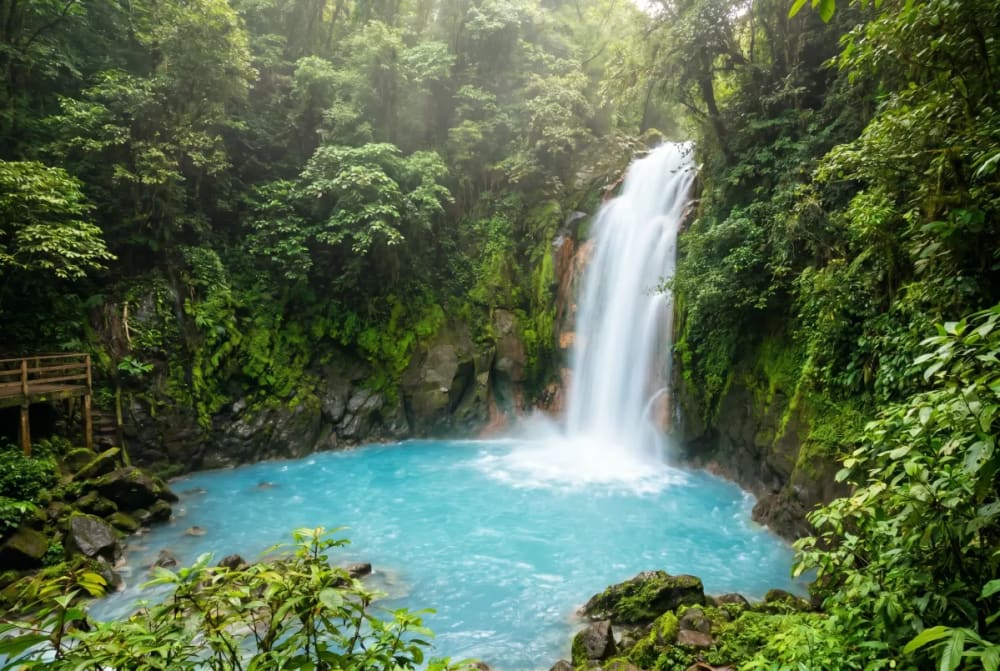
The Río Celeste owes its surreal turquoise color to a chemical reaction: aluminum silicates from two converging streams react with sulfur compounds from the Tenorio volcano. The result: a waterfall that looks like Photoshop, and a local Kichwa legend that says God washed his brush in the river. The park spans 12,819 hectares and protects a largely untouched highland rainforest.
Entrance: approx. 12 USD. Best time: December to April (most intense blue coloring — after heavy rain, the water may become murky). Important: The lower waterfall platform has been closed since mid-2025 due to erosion damage — the waterfall is only visible from the upper viewpoint. Access: 1.5 hours from La Fortuna; 4x4 recommended during the rainy season.
Cahuita — coral reef and Afro-Caribbean culture
Costa Rica's only national park with voluntary entrance: at the main entrance Kelly Creek you make a donation (5–15 USD recommended), at the southern entrance Puerto Vargas a regular entrance fee of 15 USD is charged. The park includes 11.5 km of coral reef — Costa Rica's best snorkeling reef — as well as a 7 km beach trail through palm-fringed Caribbean rainforest. Monkeys, sloths, and the village of Cahuita with its Afro-Caribbean reggae culture enhance the experience.
Best time: February to April and September to October (Caribbean dry seasons). Bring snorkeling gear or rent in the village — no rentals directly in the park.
Marino Ballena — humpback whales and tombolo beach
The Marine National Park in Bahía Ballena near Uvita is Costa Rica's most reliable humpback whale watching spot — and the only place globally where whales from both hemispheres pass by in the same year (North Pacific December to March, Antarctica July to October). Its landmark: at low tide, a tombolo sandbank forms in the shape of a whale's tail.
Entrance: 15–18 USD park, whale watching boat tour from 60 USD per person. Highlight: August and September (southern population), January and February (northern). Access: 170 km from San José, about 3 hours, with Uvita as the base.
Santa Rosa — dry forest and olive ridley arribada
Costa Rica's oldest national park (founded 1971) protects Central America's only large-scale preserved tropical dry forest. Historically significant is Hacienda Santa Rosa, the site of the battle in 1856 against U.S. mercenary troops of William Walker. Playa Nancite in the park is among the world's largest mass landings (arribada) of the olive ridley turtle — up to 100,000 animals come simultaneously to lay their eggs.
Entrance: approx. 15 USD. Best time: December to April (dry forest in full effect), September to October (turtle arribada). 35 km south of Liberia. Can be easily combined with Rincón de la Vieja.
Chirripó — highest peak in Central America
Cerro Chirripó (3,821 m) is the highest mountain in Costa Rica and Central America. With clear visibility from the summit, you can see both oceans at the same time. The park protects páramo vegetation, glacial lakes from the last ice age, and Costa Rica's toughest trekking experience. CRESTONES Base Camp is the only cabin — overnight stay there is mandatory for the summit climb.
Entrance: 18–22 USD/day plus 25–35 USD/night in the cabin. Booking: online via SINAC, several months in advance, daily quota strictly limited. Difficulty: very demanding — 20 km each way, 2,000 meters elevation gain, at least 2 days. Best time: February to April (driest summit conditions). Guide is not mandatory, but highly recommended — orientation in the páramo is difficult in fog.
Carara — where macaws greet the Pacific
Carara is located in an ecological transition zone between dry and wet forest — and therefore hosts an extraordinary biodiversity. Carara is especially famous for the largest population of scarlet macaws on the Pacific coast of Costa Rica. Daily migrations of the macaws to nest occur at sunrise and dusk at the nearby Tárcoles Bridge — also known for Costa Rica's largest crocodile population (often 15–20 animals visible at the same time).
Entrance: approx. 12 USD. Best time: year-round (macaws always present), dry season more pleasant for hiking. Access: 90 km from San José (1.5 hrs) — ideal first stop after arrival at SJO.
Entrance, tickets, and booking
Costa Rica's national parks are managed by the SINAC (National System of Conservation Areas). The official booking portal is sinac.go.cr — through this system, entrance tickets for most parks are issued.
| Booking modality | Parks |
|---|---|
| Online required (daily limit) | Manuel Antonio (high season), Monteverde main reserve, Corcovado Sirena, Chirripó |
| Online recommended, walk-in possible | Tortuguero, Arenal, Tenorio, Marino Ballena |
| Walk-in problem-free | Cahuita, Carara, Santa Rosa, Rincón de la Vieja |
Payment: Almost all park entrances accept only credit cards. Make sure your card is activated for foreign transactions. Cash often works only at voluntary entrances like Cahuita Kelly Creek.
High season note: Between December 20 and January 5, as well as during Semana Santa (Holy Week), popular parks (Manuel Antonio, Corcovado Sirena, Chirripó) are often fully booked. Book 4 to 6 months in advance.
Which national park fits your travel style?
| Travel type | Top recommendation | Additionally |
|---|---|---|
| Families with children | Manuel Antonio, Arenal | Cahuita (snorkeling), Tortuguero (turtles) |
| Wildlife fans | Corcovado, Tortuguero | Monteverde (quetzal), Carara (macaws) |
| Bird watchers | Monteverde, San Gerardo, Carara | Corcovado, Tortuguero |
| Active vacationers | Chirripó, Rincón de la Vieja | Arenal (canyoning) |
| Honeymoon | Manuel Antonio, Marino Ballena | Tenorio (Río Celeste) |
| Beach & nature | Cahuita, Manuel Antonio | Marino Ballena (whales) |
| Culture enthusiasts | Santa Rosa (history), Cahuita (Afro-Caribbean) | Monteverde (Quaker) |
A Costa Rica nature highlights round trip connects Manuel Antonio, Monteverde, Arenal, and Tortuguero in 14 days — the classic first Costa Rica trip. Those with more time should incorporate Corcovado into a 3-week tour. Families often benefit from a dedicated Costa Rica family trip with shorter stages.
Your individual park selection
Not every park fits every trip — and not every booking is trivial. We know the SINAC booking logic, the seasonal peculiarities, and the lodge options directly at the park entrance. Request non-binding consultation .
Frequently asked questions about Costa Rica's national parks
Costa Rica has 26 official national parks and around 30 protected areas of different categories. About 26% of the country's area is protected — no other country has a higher percentage. The parks are managed by SINAC (National System of Conservation Areas).
Manuel Antonio is the most family-friendly choice: short developed trails, monkeys and sloths in sight, safe swimming beaches, lodges with pools right by the park. The Arenal Volcano is also suitable — flat trails, thermal springs in the evening, short drives from La Fortuna.
No. You can explore Manuel Antonio, Arenal, Cahuita, Rincón de la Vieja, Marino Ballena, Carara, and Santa Rosa independently. For Corcovado, there has been a strict guide requirement since 2014. Turtle tours in Tortuguero also require an authorized guide. Tenorio/Río Celeste is advisable with a guide. Monteverde and Chirripó can be done without a guide but are much more rewarding with one.
Tickets for most parks are booked through the SINAC portal sinac.go.cr. For Manuel Antonio in the high season, online pre-booking is mandatory. Monteverde main reserve has had its own online system since December 2025 (cloudforestmonteverde.com). Corcovado Sirena Station: booking months in advance. At almost all entrances, only credit cards are accepted.
Green sea turtles come ashore to lay eggs from July to October — peak in August and September with up to 22,000 nests per season. Leatherback turtles come earlier: March to May. Turtle night tours are only possible with an authorized SINAC guide, in groups of a maximum of 8 people, using red-filtered lamps.
Corcovado is worth it for anyone seeking unspoiled primary rainforest and maximum wildlife density. Difficulty level is high: high humidity year-round, trails knee-deep in mud during the rainy season, hours through undeveloped terrain. Beginner option: day tour from Drake Bay (boat transfer + 4 to 6 hours of trail). Multi-day Sirena tours are challenging and a highlight of any Costa Rica trip.
At the main entrance Kelly Creek, there is no mandatory entrance fee — a donation of 5–15 USD is common. At the southern entrance Puerto Vargas, a regular entrance fee of about 15 USD applies. Thus, Cahuita is the only Costa Rica national park with partially voluntary admission. The 11.5 km coral reef off the coast is Costa Rica's best snorkeling spot.
Most parks cost between 12 and 20 USD for foreign visitors. Exceptions: Monteverde main reserve 29 USD per route, Corcovado 15 USD plus guide costs, Chirripó 18–22 USD plus cabin accommodation. Children typically pay 5–9 USD. Almost all parks accept only credit cards.
More Costa Rica guides
- Best travel time Costa Rica — Month after month
- Arrival & Flights to Costa Rica — Direct flight and SANSA
- Packing list Costa Rica — What really belongs in the luggage
- Region: Manuel Antonio · Corcovado & Osa Peninsula · Tortuguero · Monteverde Cloud Forest · Arenal & La Fortuna
Your dream holiday, tailor-made by true connoisseurs.
From the first spark of inspiration to the moment you return home full of stories, we’re by your side – whether by phone, email or WhatsApp, whenever you need us. Every journey we design is as unique as you are: individually crafted with exclusive privileges and exceptional arrangements that make your experience truly unforgettable.
Experts for your trip

You might also like this
This image was generated with AI.
This image was generated with AI.
This image was generated with AI.