



Nature Pure in Costa Rica
Costa Rica between Cloud Forest, Osa Peninsula & Pacific Luxury
Costa Rica between Cloud Forest, Osa Peninsula & Pacific Luxury
Costa Rica is a country in a state of nature: In an area smaller than Bavaria, more animal and plant species live than in all of North America combined. This journey takes you across the most diverse ecosystems of the country – from the smoking volcanic cone of Arenal to the floating cloud forests of Monteverde to the golden Pacific beaches of Guanacaste and the impenetrable rainforest of the Osa Peninsula.
Everywhere you are accompanied by the sounds and colors of the tropics: the calls of howler monkeys in the treetops, the call of toucans, the distant roar of the Pacific. Some regions present themselves to you with well-kept paths and comfortable lodges, others remain raw and original – it is exactly this range that makes Costa Rica so special. Let yourself be enchanted by a country where 'Pura Vida' is more than just a saying.
- The active Arenal Volcano and the mystical cloud forests of Monteverde
- Dreamy Pacific beaches and humpback whale sightings off Guanacaste
- Untouched jungle and extraordinary biodiversity on the Osa Peninsula
Price
on request
Best time to travel
November - May
Flight time
approx. 11 hours from FRA
Recommended Duration
from 15 days


We plan your trip individually for you
This is what your 15 day round trip could look like
Itinerary


San José & Central Valley
Surrounded by the gentle hills of the Central Valley, San José lies at about 1,150 meters above sea level – mild mountain climate, lush coffee plantations and a first glimpse of the volcanic landscapes that shape the region. The city itself is calm yet vibrant, with colonial architecture and the greenery of the surrounding mountains always in view. Here begins your journey through a country that unites one of the highest biodiversities on Earth in the smallest space.

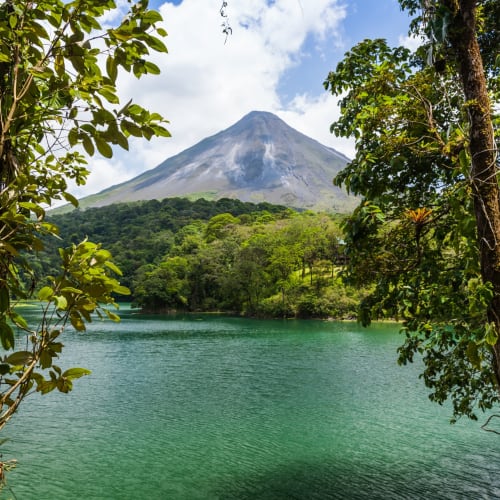
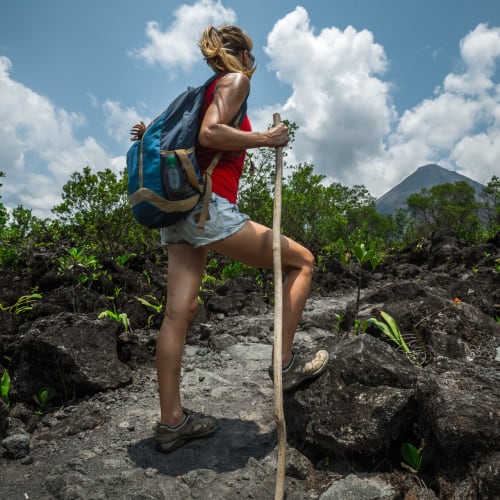

Arenal Volcano – Smoking Giant in the Rainforest
Arenal is Costa Rica's most famous volcano – a flawlessly symmetrical cone that spewed lava until the 1960s and often lies shrouded in smoke even today. Around its base, a mosaic of primary forest from the Cordillera Tilarán, cooled lava fields, waterfalls, and hot springs fed directly from the volcanic underground stretches out. Just a few kilometers from the bare crater rim, dense rainforest begins again – a contrast that makes the geological power of the region palpable. Sloths, toucans, and countless bird species live in the surrounding forests, while the volcano itself depending on the weather can either be completely hidden or appear in full splendor.

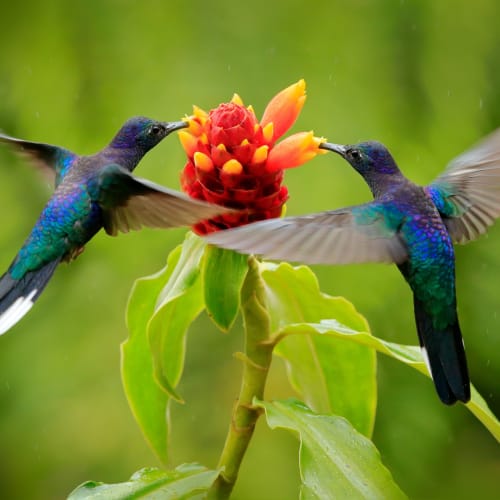

Cloud Forest Monteverde – Life above the Clouds
Situated at an altitude between 1,400 and 1,700 meters, Monteverde lies in the clouds – a cloud forest where moisture is constantly pulled through the treetops in fine veils. Hardly any ecosystem on Earth is richer in species: over 400 bird species, almost 500 butterfly species, and around 100 mammal species, some of them endangered, share a dense weave of mosses, orchids, and bromeliads here. The typical hanging bridges of Costa Rica allow a rare view at eye level with the canopy, where the actual life of the forest takes place. The cool, damp mountain air and the almost soundless silence among the clouds make Monteverde one of the most atmospheric places in Costa Rica.


Pacific Coast Guanacaste – Sun, Sea & Dry Forest
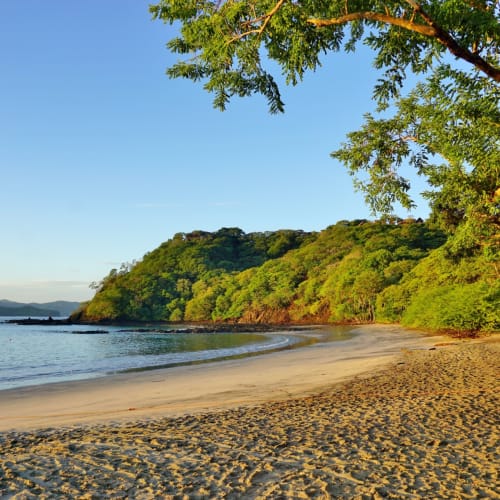
In the northwest of Costa Rica, the landscape completely transforms: Instead of rainforest, tropical dry forest and the golden beaches of the Papagayo Peninsula dominate the picture. The province of Guanacaste is one of the sunniest regions in the country, with quiet bays, turquoise waters, and a coastline that is ideal for exploring the sea. Between December and March, humpback whales migrate along the coast to give birth to their young here – one of the most impressive natural spectacles in Costa Rica. Dense vegetation just behind the beach ensures that even on the coast, the jungle is never far away.


Manuel Antonio – Rainforest meets Pacific
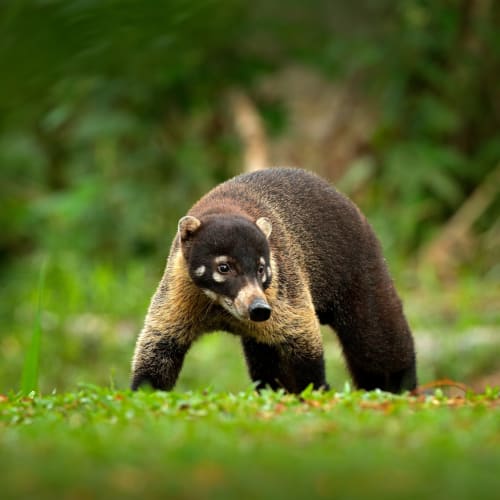
Nowhere in Costa Rica are rainforest and sea so close together as in Manuel Antonio: The same-named national park, one of the smallest but most biodiverse in the country, stretches all the way to palm-fringed bays along the Pacific. Over 100 mammal species live here, from curious capuchin monkeys to sluggish sloths that barely let themselves be disturbed. The combination of dense palm forest, white sandy beaches, and the constant concert of bird calls and cicada songs makes this region one of the most intense nature experiences of the entire trip.


Osa Peninsula – Costa Rica's Last Wilderness
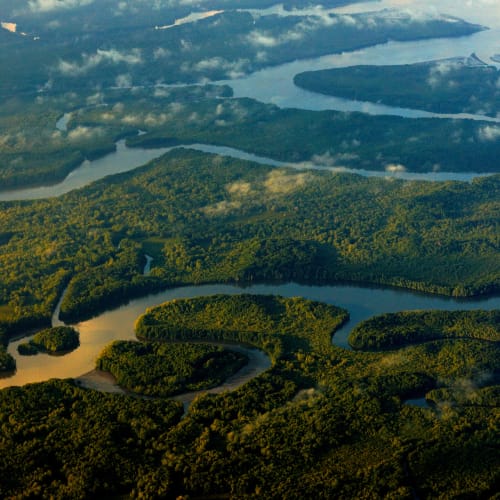
The Osa Peninsula is known among nature enthusiasts as one of the biologically most intense areas on Earth – National Geographic once counted it among the most species-rich places in the world. In Corcovado National Park, the heart of the peninsula, one of the last large primary rainforests of Central America extends, protected and barely explored. Jaguars, tapirs, and macaws live here alongside countless other species that have long disappeared elsewhere in Costa Rica. The remoteness of the region is intentional: Where no roads lead, nature remains what it is meant to be – untouched. At the end of the journey, you take this image home: dense greenery that stretches to the horizon, and the knowledge that Costa Rica has deliberately preserved its wildest side.

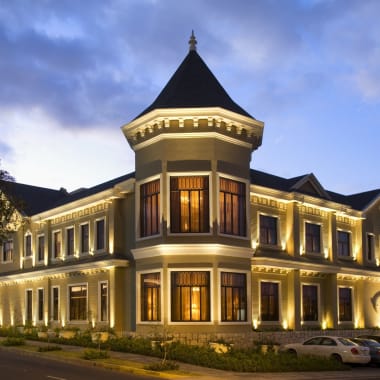
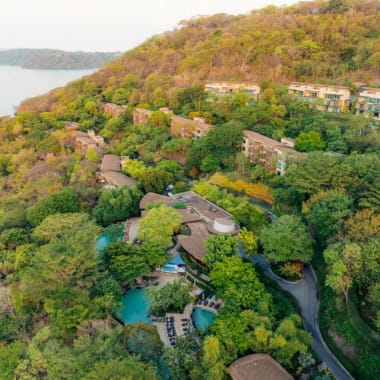
The accommodations




What makes us special
With us you always come first!
Contact person

Senior Travel Designer


You might also like this

Costa Rica
Discover Costa Rica exclusively
- San José & Central Valley
- Pacuare Rainforest & Rafting
- Manuel Antonio & South Pacific
from 14 days
on request
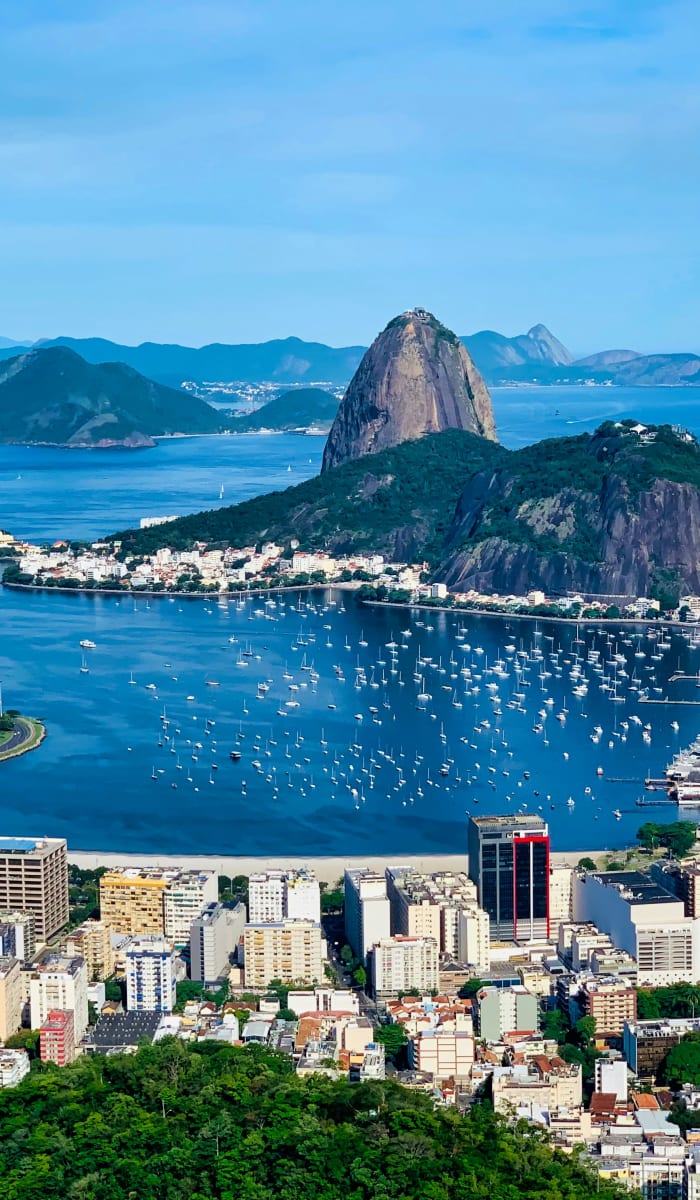
Brazil
Experience Brazil's Highlights
- Rio de Janeiro
- Iguazu Falls
- Amazon Rainforest
- Salvador & Praia do Forte
from 17 days
on request
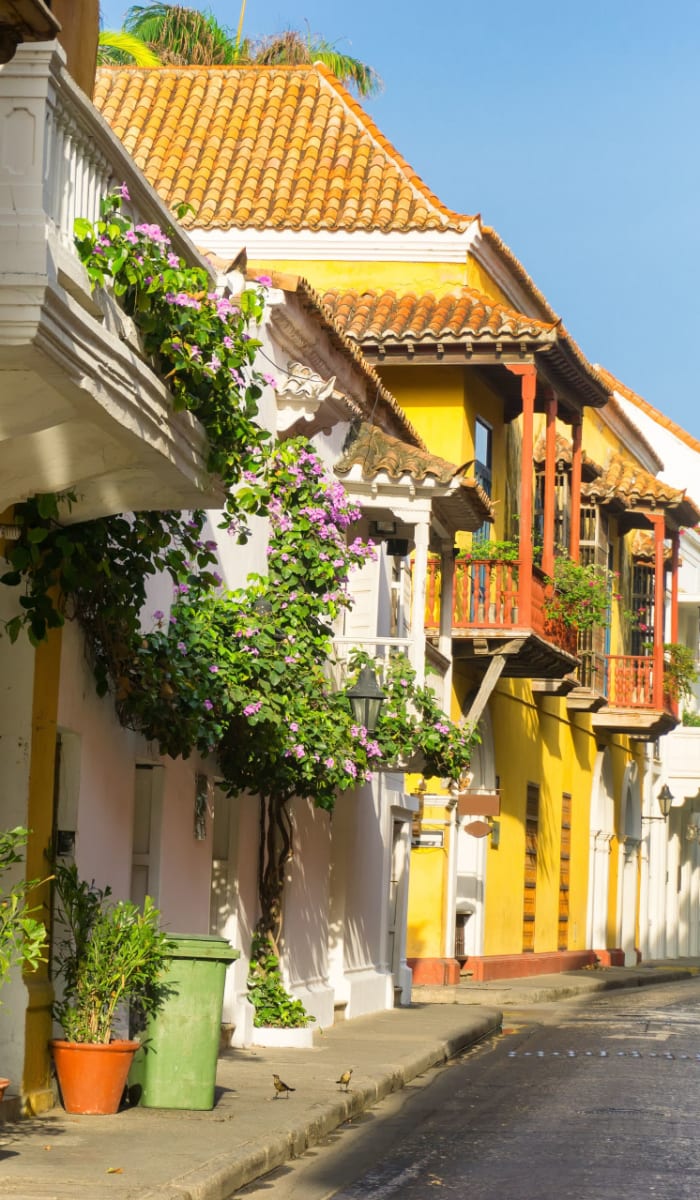
Colombia
Discover Colombia: Culture & Caribbean
- Bogotá & Andes
- Coffee Triangle Experience
- Isla Barú & Playa Blanca
from 13 days
on request