


Tinajani
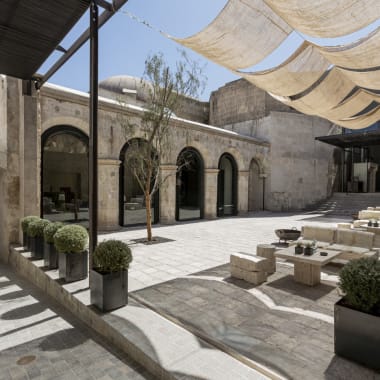
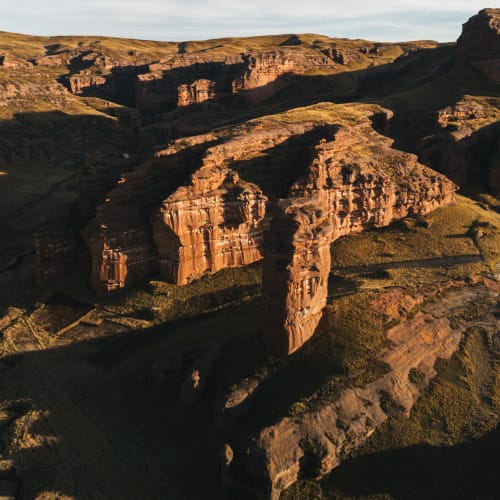
Tinajani is the most remote and at 3,895 meters the highest house of the Peruvian family brand Andean – right in the Tinajani Canyon, which the locals call Cañón de los Guardianes, because its sandstone pillars are said to be petrified giants. A former sheep farm has become a private nature reserve of about 150 hectares, in the center of which stands the Casona: a mud building with a thatched roof from the 1890s, restored by siblings Ignacio and Sandra Masías. Surrounding it are six Campamentos, built on stilts to touch the ground as little as possible. The Galpón, an open community lounge, is where the evening winds down. Those who stay here do so in a place where hardly anything can be heard other than the wind.
Details
Country
Peru
Location
Tinajani Canyon
Price
from €620 per night/person
Best travel time
April - June & September - October


Rooms
Six Campamentos group around the Casona, each consisting of two connected tents: a sleeping tent with its own bathroom and a living tent with a sofa bed. They are built on stilts so that the ground beneath remains untouched. Inside, there is a wood stove and locally made furniture, while the beds are adorned with Peruvian cotton and alpaca blankets, and carpets from Arequipa cover the floor. Each Campamento has a private deck with a hot tub – the best spot in the house once it gets dark.


Cuisine
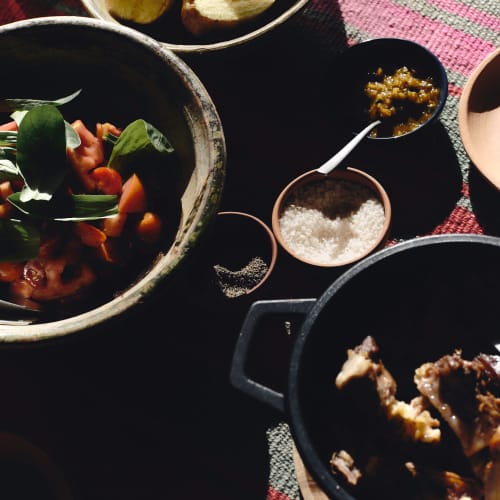
Meals are served in the Casona, the mud building with a thatched roof from the 1890s, which forms the center of the camp. The plates feature what the highlands have to offer, prepared according to regional recipes. The Galpón, a large open community lounge, is the place for a drink before or after – under the open sky with a view into the canyon. Since the camp has only six units, the whole experience feels more like a community house than a hotel restaurant.



Activities
The program is created on-site and depends on the weather, mood, and fitness. The list includes hikes through the canyon, an excursion to the centuries-old Qolle tree at dusk, bird watching on the cliffs, and the path to the forest of Puya Raimondii, the largest bromeliads in the world. Culturally, there are visits to the pottery workshops of Pucará, where the characteristic bulls are made, and along the Cordillera route to communities that still live their traditions today. The most popular program point, however, needs no guide: reading the Andean sky from your own hot tub.


Location
The Tinajani Canyon is located in the southern highlands of Peru, on the route between Cusco, Lake Titicaca, and the Colca Valley – a region that few travelers visit. The landscape was shaped by a prehistoric lake; what remains are red sandstone towers and rock arches along the Tinajani River, reminiscent of the American Southwest. In the area, Puya Raimondii grow, the largest bromeliads in the world, and nearby Pucará, families have been crafting ceramic bulls for generations, which stand on the roofs of the Altiplano. The best travel time is the dry season from May to September: during the day, temperatures can reach up to 19 degrees, while at night it can drop to minus two degrees. It is precisely these clear nights that make the starry sky over the canyon one of the best in Peru.