



Galapagos Safari Camp
In the highlands of Santa Cruz, where the road ends and the view stretches over the Galápagos National Park down to the Pacific Ocean, lies the Galapagos Safari Camp. The family-run tent camp extends over 55 hectares of renaturalized private land that borders directly on the National Park. Giant tortoises wander across the grounds and endemic birds sit in the trees around the Main Lodge, making wildlife observation part of the daily routine rather than a scheduled activity. As a land-based alternative to cruises and fixed group tours, the camp focuses on tailor-made safaris. How small and consciously understated the camp remains is already shown by the pool nestled among the moss-covered trees: intentionally small and unheated, in line with the house's philosophy of 'Appropriate Luxury'. In the evening, a path leads to the rustic viewpoint, where sunsets over the offshore islands transition into an extraordinarily clear starry sky.
Details
Country
Ecuador
Location
Galapagos Islands
Price
from €950 per night/person
Best time to travel
All year round


Rooms
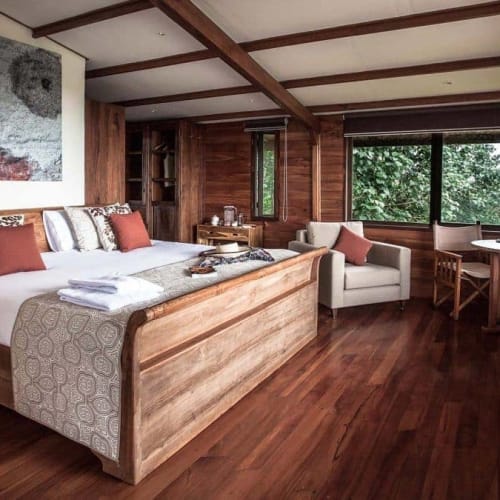
The nine safari tents are distributed over a wooded slope, their curved roofs resembling the shells of giant tortoises from the air. With living areas ranging from 70 to 114 square meters, including private decks, the accommodations range from the classic safari tent for two to three guests to the Family Suite for six. The Family Safari Tents connect two separate sleeping areas via a shared living space, while the Family Suite offers three bedrooms each with its own bathroom and is the only solid structure located at ground level next to the lodge. All tents are oriented towards the Galápagos National Park and the Pacific, capturing the natural air currents of the highlands, so ceiling fans suffice instead of air conditioning. The decor follows the classic African safari style with spacious interiors, a hammock on the private wooden deck, and an en-suite bathroom with solar-powered hot water. Wooden floors and wooden furniture give the Family Suite a particularly homely character.



Culinary
The kitchen works with what the islands and the Ecuadorian mainland offer fresh daily, creating a new four-course tasting menu every evening. Ecuadorian recipes are presented in a reduced form, such as Wahoo ceviche with sweet potato or grouper in coconut sauce. The team recommends a curated selection of South American wines, served either indoors at the long hardwood table or outdoors on the veranda. The morning begins with Galápagos coffee and fresh fruits with a wide view over the national park, while lunch is served according to the day's schedule, either on board or as a picnic. In the afternoon, the host discusses the dinner menu with the guests, so alternatives and registered dietary preferences can be easily accommodated.


Activities
The days are put together jointly with a safari designer and are tailored to interests, fitness levels, and weather. From the camp, boat trips go to uninhabited islands like North Seymour or Bartolomé, where a guided snorkeling tour and lunch on board are already included. A certified naturalist guide accompanies guests on all paths in the national park, naming endemic species, contextualizing their behavior, and adapting the rhythm of the tour to the group. Around Santa Cruz, options include kayaking through the mangroves, bike trips on the island’s country roads, and surf lessons where one shares the waves with marine iguanas. At the camp itself, offerings range from a ceviche demonstration with the head chef to a mixology class with the bar chief to a tasting of Ecuadorian To'ak chocolate, supplemented by private yoga sessions on the Observatory Deck. It gets calmer on the guided walk around the property, passing by the cocoa and yuca plantations and ending with the planting of a native tree.


Location
The Galapagos Safari Camp is located in the central highlands of Santa Cruz Island, strategically positioned between the north and south coasts. The journey to the estate begins at Baltra Airport and goes via the Itabaca Channel directly to the island. From there, it takes about 40 minutes by car southward, past the agricultural land of Bellavista, to the higher edges of the national park. The urban center and main dock of Puerto Ayora are around a 30-minute drive away, allowing for a seamless combination of explorations in the island's interior and daily boat excursions.
Contact person

Senior Travel Designer


